Volume 14, Issue 3 (Summer 2026)
Iran J Health Sci 2026, 14(3): 249-256 |
Back to browse issues page




Download citation:
BibTeX | RIS | EndNote | Medlars | ProCite | Reference Manager | RefWorks
Send citation to:


BibTeX | RIS | EndNote | Medlars | ProCite | Reference Manager | RefWorks
Send citation to:
Rances D C, Refugio A B C, Santos A J C, Siy S M A, Sumbilon H N A, Villanueva S D C, et al . Factors Influencing Coping Strategies Among University Students: A Quantitative Study. Iran J Health Sci 2026; 14 (3) :249-256
URL: http://jhs.mazums.ac.ir/article-1-1005-en.html
URL: http://jhs.mazums.ac.ir/article-1-1005-en.html
Desiree C. Rances 
 , Adrian Bruce C. Refugio , Alfonso Joaquin C. Santos , Stuart Michael A. Siy , Hayley Natalie A. Sumbilon , Sofia Dianne C. Villanueva , Abeguel D. Villegas , Ira Velle J. Vios , Arrian Jhon L. Wahing , Gabrielle R. Zapanta , Paolo B. Araune *
  , Roviech John M. Echeveria
, Adrian Bruce C. Refugio , Alfonso Joaquin C. Santos , Stuart Michael A. Siy , Hayley Natalie A. Sumbilon , Sofia Dianne C. Villanueva , Abeguel D. Villegas , Ira Velle J. Vios , Arrian Jhon L. Wahing , Gabrielle R. Zapanta , Paolo B. Araune * , Roviech John M. Echeveria
Department of Mathematics, College of Arts and Sciences, Xavier University-Ateneo de Cagayan, Cagayan, Philippines. , paraune@xu.edu.ph
Full-Text [PDF 644 kb]
(33 Downloads)
| Abstract (HTML) (315 Views)
Full-Text: (14 Views)
Introduction
University education brings both positive experiences and significant challenges. Academic demands that exceed a student’s capabilities often lead to an overwhelming workload driven by the pressure to excel in examinations and academic requirements. These pressures negatively affect students’ adjustment and coping mechanisms, ultimately influencing their overall well-being [1, 2]. Managing these academic demands may evoke negative emotional, cognitive, behavioral, and physiological responses when students experience excessive strain or burden [3].
A crucial factor in understanding how college students handle these demands is their choice of coping techniques. These strategies reflect how students manage challenges and unpleasant emotions. Research has shown that students who engage in negative coping strategies, such as substance abuse, experience greater difficulties compared to those who utilize positive coping mechanisms, such as socialization and physical activity [4, 5].
The impact of academic stress on students’ lives is substantial and may affect various aspects of health and academic functioning. Several studies [6-8] reported that academic stress contributes to depression, headaches, sleep disturbances, and decreased psychological well-being. Higher levels of stress were also associated with poorer academic performance and lower grades [9]. Therefore, understanding and managing these stressors are essential for promoting students’ academic success and overall well-being.
Recent studies have emphasized the increasing prevalence of academic stress among college students worldwide. According to the 2015 American College Health Association-National College Health Assessment survey, approximately three out of four college students reported feeling overwhelmed by academic responsibilities [10]. Similarly, 87% of Gen Z college students in the United States identified education as their primary source of stress [11]. These findings highlight the growing need to investigate coping strategies utilized by university students in managing academic-related stress.
Coping behaviors among university students may differ according to individual and environmental factors, such as sex, sleep patterns, family structure, and academic workload. Understanding these differences is important in identifying how students manage academic-related stress and challenges. Despite the growing concern regarding coping behaviors among young adults, limited studies have simultaneously examined vaping, stress eating, and binge-watching among university students in the Philippine setting.
This study analyzed the factors influencing coping strategies among young adults. Specifically, the researchers sought to determine the relationship between respondents’ characteristics, including sex, hours of sleep, family structure, academic workload, and coping strategies, such as vaping, stress eating, and binge-watching. The novelty of this study lies in the simultaneous examination of multiple coping behaviors and influencing factors among university students in Northern Mindanao, Philippines, an area that remains limited in existing local literature.
Materials and Methods
Research design
This study utilized a quantitative cross-sectional design to examine the factors influencing coping strategies among young adults. The study investigated the relationship between respondents’ characteristics, including sex, hours of sleep, family structure, and academic workload, and coping strategies, such as vaping, stress eating, and binge-watching using inferential statistical analyses, including t-test and ANOVA. Similar to the study conducted by Ramachandiran and Dhanapal [12], the present study employed a quantitative approach to describe relationships between stress-related variables and coping behaviors among university students.
Sample, sample size, and sampling technique
The respondents in this study were randomly selected young adults attending a university in Northern Mindanao during the 2023–2024 school year. The inclusion criteria were male and female students aged 18 years and older. The exclusion criteria included students diagnosed with eating disorders, undergoing psychological treatment, or having dietary restrictions due to medical conditions. The researchers utilized a stratified random sampling technique to ensure equitable representation across population strata, thereby enhancing the accuracy and fairness of the sample. Cochran’s formula was employed to determine the sample size for each year level in the college, resulting in a total sample size of 617 students or respondents drawn from the college’s four levels: 185 students from level 1, 141 from level 2, 152 from level 3, and 139 from level 4.
Data collection process
After securing approval from the university authorities, informed consent was obtained from the respondents prior to data collection. The survey questionnaire was administered online through a QR code to ensure confidentiality and convenience for the participants.
Instrument
A researcher-made questionnaire was utilized in this study. The instrument underwent face and content validation by three experts prior to data collection. A pilot test involving at least 30 respondents was conducted to assess the reliability and feasibility of the questionnaire. The questionnaire consisted of two sections: The first section included 13 items regarding demographic characteristics and academic workload, while the second section contained 15 items assessing coping strategies related to stress eating, binge-watching, and vaping using a 4-point Likert scale. Scores ranged from 1 to 4 for each item, with higher scores indicating greater utilization of the coping strategy. The questionnaire demonstrated excellent internal consistency, with Cronbach’s α values of 0.91 for stress eating, 0.917 for binge-watching, and 0.934 for vaping.
Data analysis
Descriptive statistics were used to summarize the respondents’ characteristics. Inferential statistics, including independent t-test and analysis of variance (ANOVA), were utilized to determine significant differences in coping strategies according to respondents’ characteristics. Effect sizes were also considered in interpreting the magnitude of significant differences observed in the study.
Results
A total of 617 university students participated in the study. The respondents were categorized according to sex, hours of sleep, family structure, year level, and current total number of academic units enrolled.
Table 1 presents the t-test results of respondents’ coping strategies according to sex.
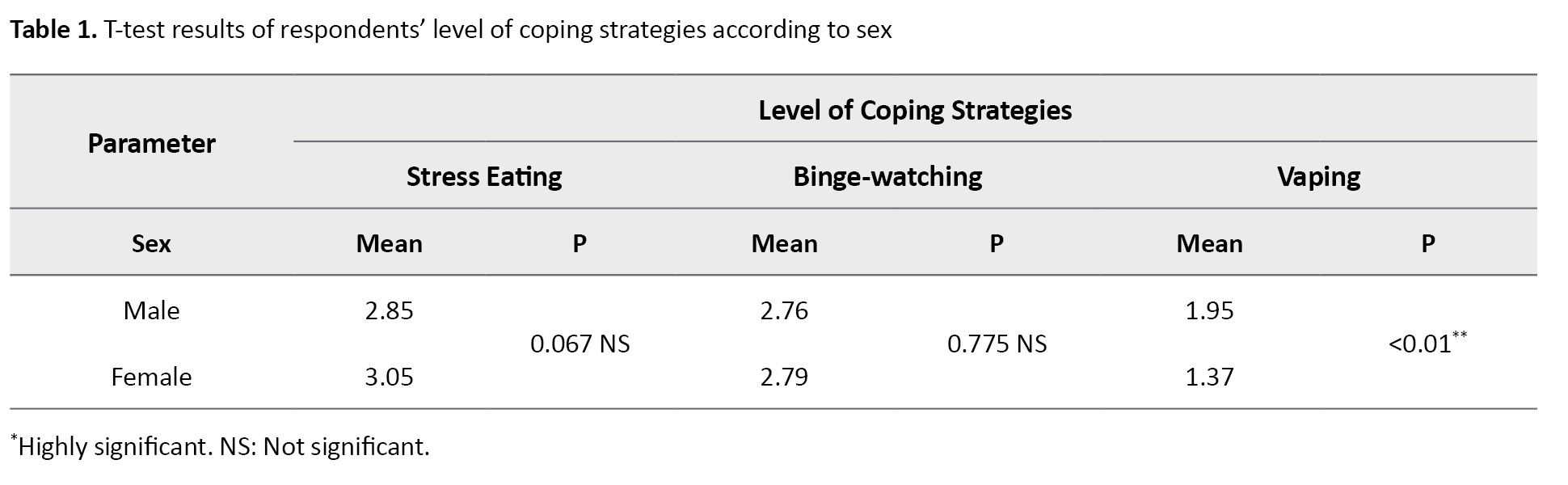
No significant differences were observed between males and females in stress eating (P=0.067) or binge-watching (P=0.775). However, vaping showed a highly significant difference according to sex (P<0.01), with male respondents obtaining higher mean scores than females (Table 1).
Table 2 presents the ANOVA results of respondents’ coping strategies according to hours of sleep.
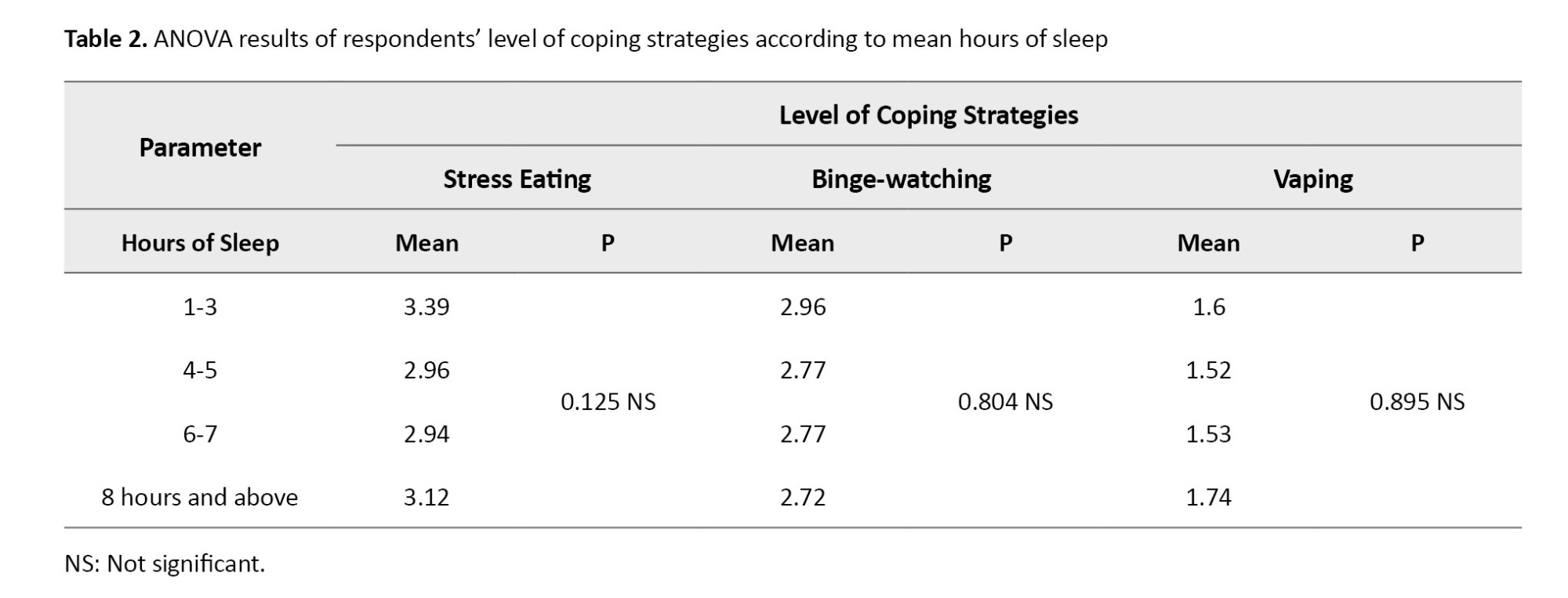
The findings revealed no significant differences in stress eating (P=0.125), binge-watching (P=0.804), and vaping (P=0.895) according to respondents’ average hours of sleep.
Table 3 shows the ANOVA results of respondents’ coping strategies according to family structure.
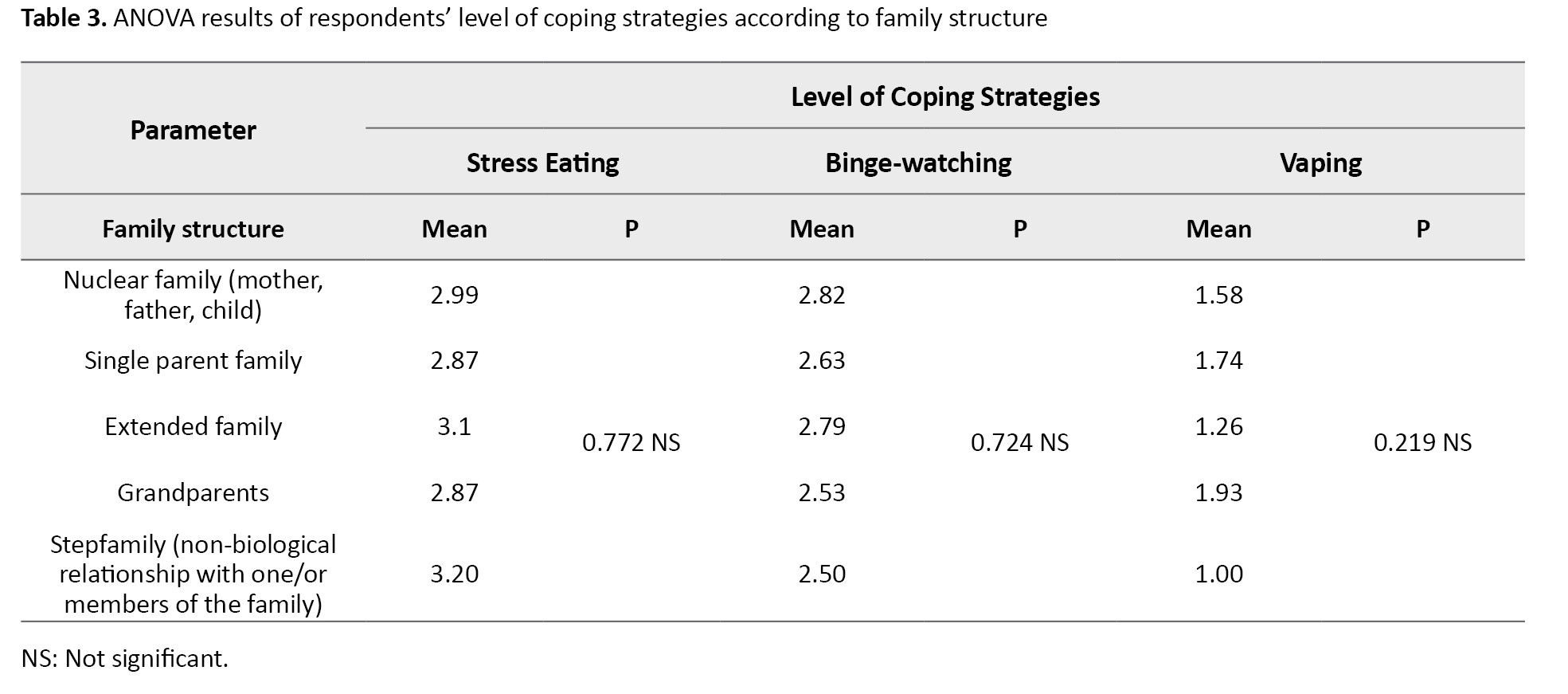
The results indicated no significant differences in stress eating (P=0.772), binge-watching (P=0.724), and vaping (P=0.219) based on family structure.
Table 4 presents the ANOVA results of respondents’ coping strategies according to year level.
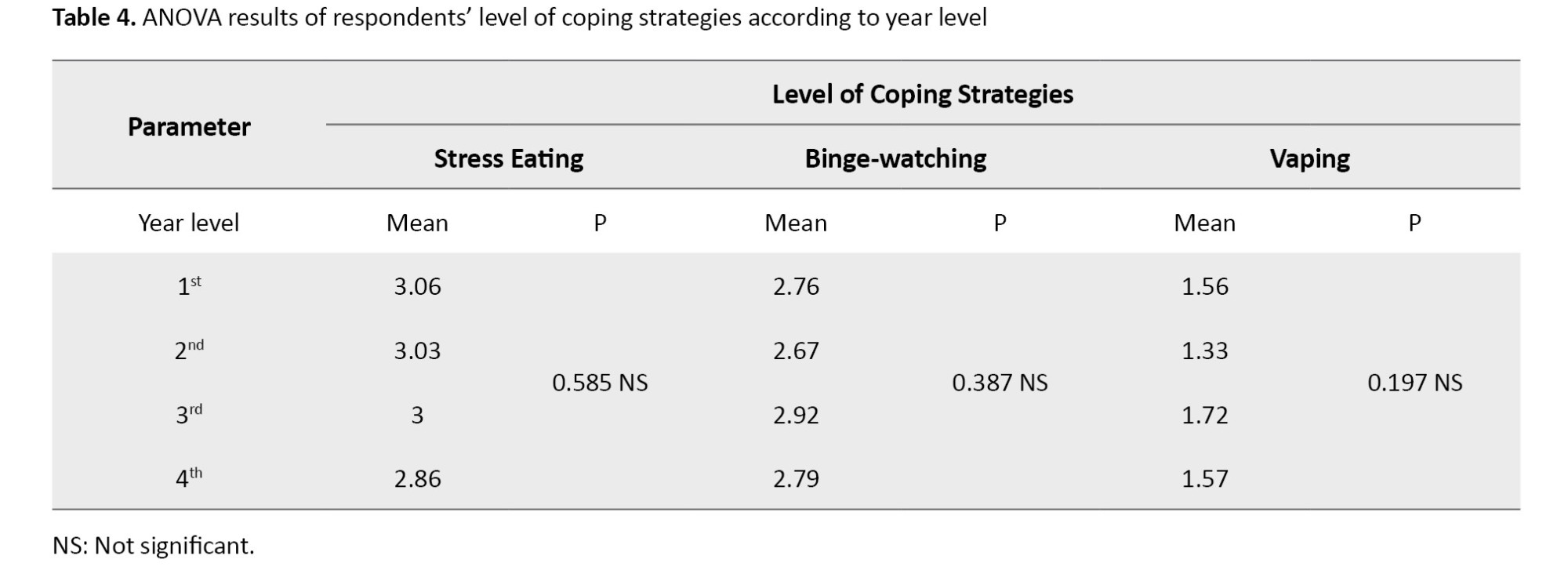
No significant differences were found in stress eating (P=0.585), binge-watching (P=0.387), and vaping (P=0.197) among the different year levels.
Table 5 presents the ANOVA results of respondents’ coping strategies according to the current total number of academic units enrolled.
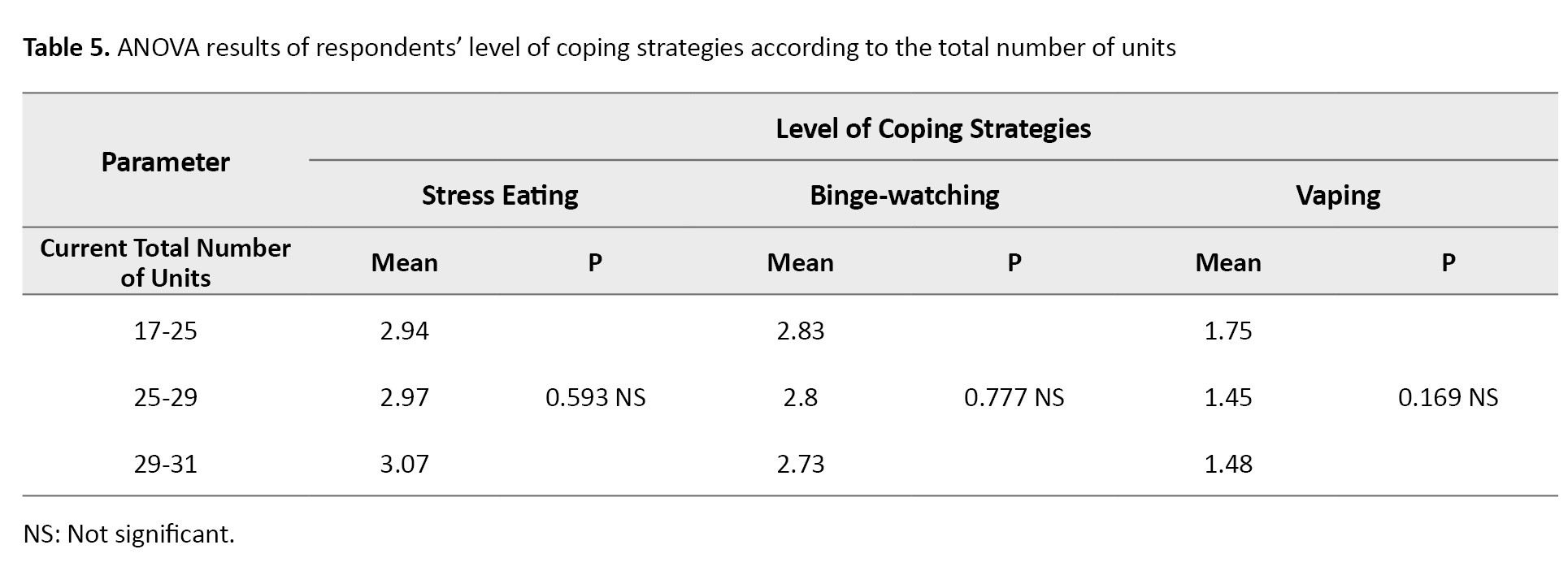
The findings showed no significant differences in stress eating (P=0.593), binge-watching (P=0.777), and vaping (P=0.169) according to the current total number of academic units enrolled.
Discussion
This study aimed to examine the factors influencing coping strategies among university students, particularly stress eating, binge-watching, and vaping, in relation to sex, hours of sleep, family structure, year level, and academic workload. The findings showed that vaping behavior significantly differed according to sex, whereas stress eating and binge-watching did not demonstrate significant differences. Additionally, hours of sleep, family structure, year level, and academic workload were not significantly associated with the coping strategies examined in this study.
The higher vaping behavior among male respondents was consistent with previous studies reporting that men were more likely to use e-cigarettes than women [13]. Among adults in the United States, men demonstrated higher rates of e-cigarette use compared to women [13]. Younger individuals often perceive e-cigarettes as less harmful and use them for enjoyment or stress relief [14]. Neuroimaging findings also suggest that men’s reward systems may respond more strongly to smoking-related stimuli, which may contribute to increased vaping tendencies among males [15].
In contrast, no significant sex differences were observed in stress eating and binge-watching behaviors. Previous studies reported that women were more likely than men to engage in stress eating as a coping response [16]. However, the present findings did not support this difference, suggesting that both male and female students may similarly utilize food-related coping behaviors during stressful situations. Similarly, available statistics on binge-watching behaviors indicated relatively comparable viewing patterns between males and females [17]. The limited local literature regarding binge-watching among university students highlights the need for further investigation in the Philippine context.
Regarding hours of sleep, the present study found no significant association between sleep duration and coping strategies. Previous studies suggested that sleep quality and eating behaviors may have a reciprocal relationship [18]. However, findings by Siraj [19] also reported no significant relationship between binge-watching and sleep quality among college students, which supports the current results. These findings may indicate that coping behaviors among university students are influenced by multiple psychological and environmental factors beyond sleep duration alone.
The findings also suggested that family structure was not significantly associated with stress eating, binge-watching, and vaping behaviors. Previous studies proposed that family instability and experiences, such as divorce may increase stress levels and contribute to binge-watching behaviors as a coping mechanism [20]. Family support and interconnectedness were also reported to influence vaping behaviors among young adults [21]. However, the present study did not observe significant differences according to family structure, possibly indicating that coping behaviors among university students are shaped by broader personal and social influences beyond family composition.
Similarly, year level and academic workload did not significantly influence the coping strategies examined in the study. Previous research indicated that academic stress and burnout may increase throughout academic progression [22], and exposure to academic demands may contribute to stress among university students [23]. Anxiety associated with academic stress may also encourage disengagement coping behaviors, such as excessive eating [24]. Moreover, increasing age among university students has been associated with binge-watching tendencies [25], while vaping behaviors have been reported among young adults aged 18–25 years old [26]. Despite these observations in previous literature, the present findings suggest that coping behaviors may remain relatively similar across year levels and academic workloads.
Previous studies have also shown that increased academic demands may influence students’ coping behaviors [27]. Academic procrastination and attempts to avoid perceived academic pressures have been associated with binge-watching behaviors among students [28]. Additionally, unhealthy eating behaviors have been linked to academic stress and adverse health outcomes among university students [29]. However, the current findings suggest that the number of academic units alone may not be a sufficient predictor of stress eating, binge-watching, or vaping behaviors.
The findings of this study have implications for nursing practice, education, and community health initiatives. Healthcare professionals and educators may benefit from developing programs that promote healthy coping strategies and stress management among university students regardless of sex, family structure, year level, or academic workload. Preventive interventions focusing on vaping awareness, healthy lifestyle behaviors, and mental health support may help improve students’ overall well-being.
This study has several limitations. First, the study utilized a cross-sectional design, which limits the establishment of causal relationships among variables. Second, the data were collected using a self-reported questionnaire, which may be subject to response bias. Third, the study was conducted in a single university in Northern Mindanao, which may limit the generalizability of the findings to other student populations. Future studies may consider including multiple institutions and additional psychosocial variables to further explore coping behaviors among university students.
Conclusion
The study’s analyses revealed insightful patterns regarding coping strategies among young adults. While gender significantly influenced vaping behavior, stress eating and binge-watching did not show significant differences based on sex. Additionally, factors, like hours of sleep, family structure, academic workload, and units enrolled did not significantly impact coping strategies. These findings suggest that young adults tend to utilize similar coping mechanisms regardless of these variables. From a clinical perspective, individualized counseling and interventions tailored to specific coping behaviors are crucial for promoting healthier stress management strategies. Further research could explore the nuanced interactions between coping strategies and diverse influencing factors to enhance targeted support for individuals navigating stress-related challenges in university settings.
Ethical Considerations
Compliance with ethical guidelines
This study was approved by the Research Ethics Board of Xavier University–Ateneo de Cagayan, Cagayan, Philippines (Code: XU REC Package No. NSG-2024001287). Informed consent was obtained from all participants before their inclusion in the study.
Funding
This research did not receive any grant from funding agencies in the public, commercial, or non-profit sectors.
Authors contributions
Conceptualization, data analysis, and writing the orogonal draft: Desiree C. Rances, Adrian Bruce C. Refugio, Alfonso Joaquin C. Santos, Stuart Michael A. Siy, Gabrielle R. Zapanta, Roviech John M. Echeveria, and Paolo B. Araune; study design and data collection, review and editing: Hayley Natalie A. Sumbilon, Sofia Dianne C. Villanueva, Abeguel D. Villegas, Ira Velle J. Vios, and Arrian Jhon L. Wahing; Data interpretation and investigation: Desiree C. Rances, Adrian Bruce C. Refugio, Abeguel D. Villegas, Ira Velle J. Vios, Arrian Jhon L. Wahing, and Gabrielle R. Zapanta; Final approval: All authors.
Conflict of interest
The authors declared no conflict of interest.
Acknowledgements
The authors would like to express their gratitude to all participants in this study for their time and cooperation.
University education brings both positive experiences and significant challenges. Academic demands that exceed a student’s capabilities often lead to an overwhelming workload driven by the pressure to excel in examinations and academic requirements. These pressures negatively affect students’ adjustment and coping mechanisms, ultimately influencing their overall well-being [1, 2]. Managing these academic demands may evoke negative emotional, cognitive, behavioral, and physiological responses when students experience excessive strain or burden [3].
A crucial factor in understanding how college students handle these demands is their choice of coping techniques. These strategies reflect how students manage challenges and unpleasant emotions. Research has shown that students who engage in negative coping strategies, such as substance abuse, experience greater difficulties compared to those who utilize positive coping mechanisms, such as socialization and physical activity [4, 5].
The impact of academic stress on students’ lives is substantial and may affect various aspects of health and academic functioning. Several studies [6-8] reported that academic stress contributes to depression, headaches, sleep disturbances, and decreased psychological well-being. Higher levels of stress were also associated with poorer academic performance and lower grades [9]. Therefore, understanding and managing these stressors are essential for promoting students’ academic success and overall well-being.
Recent studies have emphasized the increasing prevalence of academic stress among college students worldwide. According to the 2015 American College Health Association-National College Health Assessment survey, approximately three out of four college students reported feeling overwhelmed by academic responsibilities [10]. Similarly, 87% of Gen Z college students in the United States identified education as their primary source of stress [11]. These findings highlight the growing need to investigate coping strategies utilized by university students in managing academic-related stress.
Coping behaviors among university students may differ according to individual and environmental factors, such as sex, sleep patterns, family structure, and academic workload. Understanding these differences is important in identifying how students manage academic-related stress and challenges. Despite the growing concern regarding coping behaviors among young adults, limited studies have simultaneously examined vaping, stress eating, and binge-watching among university students in the Philippine setting.
This study analyzed the factors influencing coping strategies among young adults. Specifically, the researchers sought to determine the relationship between respondents’ characteristics, including sex, hours of sleep, family structure, academic workload, and coping strategies, such as vaping, stress eating, and binge-watching. The novelty of this study lies in the simultaneous examination of multiple coping behaviors and influencing factors among university students in Northern Mindanao, Philippines, an area that remains limited in existing local literature.
Materials and Methods
Research design
This study utilized a quantitative cross-sectional design to examine the factors influencing coping strategies among young adults. The study investigated the relationship between respondents’ characteristics, including sex, hours of sleep, family structure, and academic workload, and coping strategies, such as vaping, stress eating, and binge-watching using inferential statistical analyses, including t-test and ANOVA. Similar to the study conducted by Ramachandiran and Dhanapal [12], the present study employed a quantitative approach to describe relationships between stress-related variables and coping behaviors among university students.
Sample, sample size, and sampling technique
The respondents in this study were randomly selected young adults attending a university in Northern Mindanao during the 2023–2024 school year. The inclusion criteria were male and female students aged 18 years and older. The exclusion criteria included students diagnosed with eating disorders, undergoing psychological treatment, or having dietary restrictions due to medical conditions. The researchers utilized a stratified random sampling technique to ensure equitable representation across population strata, thereby enhancing the accuracy and fairness of the sample. Cochran’s formula was employed to determine the sample size for each year level in the college, resulting in a total sample size of 617 students or respondents drawn from the college’s four levels: 185 students from level 1, 141 from level 2, 152 from level 3, and 139 from level 4.
Data collection process
After securing approval from the university authorities, informed consent was obtained from the respondents prior to data collection. The survey questionnaire was administered online through a QR code to ensure confidentiality and convenience for the participants.
Instrument
A researcher-made questionnaire was utilized in this study. The instrument underwent face and content validation by three experts prior to data collection. A pilot test involving at least 30 respondents was conducted to assess the reliability and feasibility of the questionnaire. The questionnaire consisted of two sections: The first section included 13 items regarding demographic characteristics and academic workload, while the second section contained 15 items assessing coping strategies related to stress eating, binge-watching, and vaping using a 4-point Likert scale. Scores ranged from 1 to 4 for each item, with higher scores indicating greater utilization of the coping strategy. The questionnaire demonstrated excellent internal consistency, with Cronbach’s α values of 0.91 for stress eating, 0.917 for binge-watching, and 0.934 for vaping.
Data analysis
Descriptive statistics were used to summarize the respondents’ characteristics. Inferential statistics, including independent t-test and analysis of variance (ANOVA), were utilized to determine significant differences in coping strategies according to respondents’ characteristics. Effect sizes were also considered in interpreting the magnitude of significant differences observed in the study.
Results
A total of 617 university students participated in the study. The respondents were categorized according to sex, hours of sleep, family structure, year level, and current total number of academic units enrolled.
Table 1 presents the t-test results of respondents’ coping strategies according to sex.
No significant differences were observed between males and females in stress eating (P=0.067) or binge-watching (P=0.775). However, vaping showed a highly significant difference according to sex (P<0.01), with male respondents obtaining higher mean scores than females (Table 1).
Table 2 presents the ANOVA results of respondents’ coping strategies according to hours of sleep.
The findings revealed no significant differences in stress eating (P=0.125), binge-watching (P=0.804), and vaping (P=0.895) according to respondents’ average hours of sleep.
Table 3 shows the ANOVA results of respondents’ coping strategies according to family structure.
The results indicated no significant differences in stress eating (P=0.772), binge-watching (P=0.724), and vaping (P=0.219) based on family structure.
Table 4 presents the ANOVA results of respondents’ coping strategies according to year level.
No significant differences were found in stress eating (P=0.585), binge-watching (P=0.387), and vaping (P=0.197) among the different year levels.
Table 5 presents the ANOVA results of respondents’ coping strategies according to the current total number of academic units enrolled.
The findings showed no significant differences in stress eating (P=0.593), binge-watching (P=0.777), and vaping (P=0.169) according to the current total number of academic units enrolled.
Discussion
This study aimed to examine the factors influencing coping strategies among university students, particularly stress eating, binge-watching, and vaping, in relation to sex, hours of sleep, family structure, year level, and academic workload. The findings showed that vaping behavior significantly differed according to sex, whereas stress eating and binge-watching did not demonstrate significant differences. Additionally, hours of sleep, family structure, year level, and academic workload were not significantly associated with the coping strategies examined in this study.
The higher vaping behavior among male respondents was consistent with previous studies reporting that men were more likely to use e-cigarettes than women [13]. Among adults in the United States, men demonstrated higher rates of e-cigarette use compared to women [13]. Younger individuals often perceive e-cigarettes as less harmful and use them for enjoyment or stress relief [14]. Neuroimaging findings also suggest that men’s reward systems may respond more strongly to smoking-related stimuli, which may contribute to increased vaping tendencies among males [15].
In contrast, no significant sex differences were observed in stress eating and binge-watching behaviors. Previous studies reported that women were more likely than men to engage in stress eating as a coping response [16]. However, the present findings did not support this difference, suggesting that both male and female students may similarly utilize food-related coping behaviors during stressful situations. Similarly, available statistics on binge-watching behaviors indicated relatively comparable viewing patterns between males and females [17]. The limited local literature regarding binge-watching among university students highlights the need for further investigation in the Philippine context.
Regarding hours of sleep, the present study found no significant association between sleep duration and coping strategies. Previous studies suggested that sleep quality and eating behaviors may have a reciprocal relationship [18]. However, findings by Siraj [19] also reported no significant relationship between binge-watching and sleep quality among college students, which supports the current results. These findings may indicate that coping behaviors among university students are influenced by multiple psychological and environmental factors beyond sleep duration alone.
The findings also suggested that family structure was not significantly associated with stress eating, binge-watching, and vaping behaviors. Previous studies proposed that family instability and experiences, such as divorce may increase stress levels and contribute to binge-watching behaviors as a coping mechanism [20]. Family support and interconnectedness were also reported to influence vaping behaviors among young adults [21]. However, the present study did not observe significant differences according to family structure, possibly indicating that coping behaviors among university students are shaped by broader personal and social influences beyond family composition.
Similarly, year level and academic workload did not significantly influence the coping strategies examined in the study. Previous research indicated that academic stress and burnout may increase throughout academic progression [22], and exposure to academic demands may contribute to stress among university students [23]. Anxiety associated with academic stress may also encourage disengagement coping behaviors, such as excessive eating [24]. Moreover, increasing age among university students has been associated with binge-watching tendencies [25], while vaping behaviors have been reported among young adults aged 18–25 years old [26]. Despite these observations in previous literature, the present findings suggest that coping behaviors may remain relatively similar across year levels and academic workloads.
Previous studies have also shown that increased academic demands may influence students’ coping behaviors [27]. Academic procrastination and attempts to avoid perceived academic pressures have been associated with binge-watching behaviors among students [28]. Additionally, unhealthy eating behaviors have been linked to academic stress and adverse health outcomes among university students [29]. However, the current findings suggest that the number of academic units alone may not be a sufficient predictor of stress eating, binge-watching, or vaping behaviors.
The findings of this study have implications for nursing practice, education, and community health initiatives. Healthcare professionals and educators may benefit from developing programs that promote healthy coping strategies and stress management among university students regardless of sex, family structure, year level, or academic workload. Preventive interventions focusing on vaping awareness, healthy lifestyle behaviors, and mental health support may help improve students’ overall well-being.
This study has several limitations. First, the study utilized a cross-sectional design, which limits the establishment of causal relationships among variables. Second, the data were collected using a self-reported questionnaire, which may be subject to response bias. Third, the study was conducted in a single university in Northern Mindanao, which may limit the generalizability of the findings to other student populations. Future studies may consider including multiple institutions and additional psychosocial variables to further explore coping behaviors among university students.
Conclusion
The study’s analyses revealed insightful patterns regarding coping strategies among young adults. While gender significantly influenced vaping behavior, stress eating and binge-watching did not show significant differences based on sex. Additionally, factors, like hours of sleep, family structure, academic workload, and units enrolled did not significantly impact coping strategies. These findings suggest that young adults tend to utilize similar coping mechanisms regardless of these variables. From a clinical perspective, individualized counseling and interventions tailored to specific coping behaviors are crucial for promoting healthier stress management strategies. Further research could explore the nuanced interactions between coping strategies and diverse influencing factors to enhance targeted support for individuals navigating stress-related challenges in university settings.
Ethical Considerations
Compliance with ethical guidelines
This study was approved by the Research Ethics Board of Xavier University–Ateneo de Cagayan, Cagayan, Philippines (Code: XU REC Package No. NSG-2024001287). Informed consent was obtained from all participants before their inclusion in the study.
Funding
This research did not receive any grant from funding agencies in the public, commercial, or non-profit sectors.
Authors contributions
Conceptualization, data analysis, and writing the orogonal draft: Desiree C. Rances, Adrian Bruce C. Refugio, Alfonso Joaquin C. Santos, Stuart Michael A. Siy, Gabrielle R. Zapanta, Roviech John M. Echeveria, and Paolo B. Araune; study design and data collection, review and editing: Hayley Natalie A. Sumbilon, Sofia Dianne C. Villanueva, Abeguel D. Villegas, Ira Velle J. Vios, and Arrian Jhon L. Wahing; Data interpretation and investigation: Desiree C. Rances, Adrian Bruce C. Refugio, Abeguel D. Villegas, Ira Velle J. Vios, Arrian Jhon L. Wahing, and Gabrielle R. Zapanta; Final approval: All authors.
Conflict of interest
The authors declared no conflict of interest.
Acknowledgements
The authors would like to express their gratitude to all participants in this study for their time and cooperation.
References
- Barbayannis G, Bandari M, Zheng X, Baquerizo H, Pecor KW, Ming X. Academic stress and mental well-being in college students: Correlations, affected groups, and COVID-19. Frontiers in Psychology. 2022; 13:886344. [DOI:10.3389/fpsyg.2022.886344] [PMID] [PMCID]
- Pérez-Jorge D, Boutaba-Alehyan M, González-Contreras AI, Pérez-Pérez I. Examining the effects of academic stress on student well-being in higher education. Humanities and Social Sciences Communications. 2025; 12:449. [DOI:10.1057/s41599-025-04698-y]
- Iqra. A systematic review of academic stress intended to improve the educational journey of learners. Methods in Psychology. 2024; 11:100163. [DOI:10.1016/j.metip.2024.100163]
- Crego A, Carrillo-Diaz M, Armfield JM, Romero M. Stress and academic performance in dental students: The role of coping strategies and examination-related self-efficacy. Journal of Dental Education. 2016; 80(2):165-72. [DOI:10.1002/j.0022-0337.2016.80.2.tb06072.x] [PMID]
- Makarowski R, Piotrowski A, Predoiu R, Görner K, Predoiu A, Mitrache G, et al. Stress and coping during the COVID-19 pandemic among martial arts athletes: A cross-cultural study. Archives of Budo. 2020; 16:161-71. [Link]
- Deng Y, Cherian J, Khan NU, Kumari K, Sial MS, Comite U, Gavurova B, Popp J. Family and academic stress and their impact on students’ depression level and academic performance. Frontiers in Psychiatry. 2022; 13:869337. [DOI:10.3389/fpsyt.2022.869337] [PMID] [PMCID]
- Deng J, Zhang L, Cao G, Yin H. Effects of adolescent academic stress on sleep quality: Mediating effect of negative affect and moderating role of peer relationships. Current Psychology. 2023; 42(6):4381-4390. [DOI:10.1007/s12144-021-01803-7]
- Al Battashi N, Al Omari O, Sawalha M, Al Maktoumi S, Alsuleitini A, Al Qadire M. The relationship between smartphone use, insomnia, stress, and anxiety among university students: A cross-sectional study. Clinical Nursing Research. 2021; 30(6):734-740. [DOI:10.1177/1054773820983161] [PMID]
- Pascoe MC, Hetrick SE, Parker AG. The impact of stress on students in secondary school and higher education. International Journal of Adolescence and Youth. 2020; 25(1):104-12. [DOI:10.1080/02673843.2019.1596823]
- Liu CH, Stevens C, Wong SH, Yasui M, Chen JA. The prevalence and predictors of mental health diagnoses and suicide among US college students: Implications for addressing disparities in service use. Depression and Anxiety. 2019; 36(1):8-17. [DOI:10.1002/da.22830] [PMID] [PMCID]
- American Psychological Association. Stress in America™ 2020: A national mental health crisis. Washington: American Psychological Association; 2020. [Link]
- Ramachandiran M, Dhanapal S. Academic stress among university students: A quantitative study of Generation Y and Z’s perception. Pertanika Journal of Social Sciences and Humanities. 2018; 26(3):2115-28. [Link]
- Kramarow EA, Elgaddal N. Current electronic cigarette use among adults aged 18 and over: United States, 2021. National Center for Health Statistics Data Brief. 2023; 475:1-8. [DOI:10.15620/cdc:129966] [PMCID]
- Dahal R, Bhattarai A, Adhikari K. Age and sex-related patterns of electronic cigarette use in the general population: Supporting a de novo substance use pattern. Population Medicine. 2022; 4(December):32. [DOI:10.18332/popmed/157270]
- National Institute on Drug Abuse. Are there sex differences in tobacco smoking [Internet]? 2020 [2020 January 1]. Available from: [Link]
- MedicalNewsToday. How do I stop stress eating [Internet]? 2018 [Updated 2018 February 15]. Available from: [Link]
- Singh S. Netflix subscribers (2026): Users, revenue & growth stats [Internet]. 2026 [Updated 2026 March 10]. Available from: [Link]
- Saleh-Ghadimi S, Dehghan P, Abbasalizad Farhangi M, Asghari-Jafarabadi M, Jafari-Vayghan H. Could emotional eating act as a mediator between sleep quality and food intake in female students? BioPsychoSocial Medicine. 2019; 13(1):15. [DOI:10.1186/s13030-019-0154-3] [PMID] [PMCID]
- Siraj N. Binge watching and sleep quality among college students. International Journal of Indian Psychology. 2022; 11(1):1. [Link]
- Boursier V, Musetti A, Gioia F, Flayelle M, Billieux J, Schimmenti A. Is watching TV series an adaptive coping strategy during the COVID-19 pandemic? Insights from an italian community sample. Frontiers in Psychiatry. 2021; 12:599859. [DOI:10.3389/fpsyt.2021.599859] [PMID]
- Donaldson CD, Stupplebeen DA, Fecho CL, et al. Nicotine vaping for relaxation and coping: Race/ethnicity differences and social connectedness mechanisms. Addictive Behaviors. 2022; 132:107365. [DOI:10.1016/j.addbeh.2022.107365] [PMID]
- Sveinsdóttir H, Flygenring BG, Svavarsdóttir MH, Thorsteinsson HS, Kristófersson GK, Bernharðsdóttir J, et al. Predictors of university nursing students burnout at the time of the COVID-19 pandemic: A cross-sectional study. Nurse Education Today. 2021;106:105070. [DOI:10.1016/j.nedt.2021.105070] [PMID] [PMCID]
- Sharififard F, Asayesh H, Hosseini HMH, Sepahvandi M. Motivation, self-efficacy, stress, and academic performance correlation with academic burnout among nursing students. Journal of Nursing and Midwifery Sciences. 2020; 7(2):88-93. [DOI:10.4103/jnms.jnms_30_19]
- Savitsky B, Findling Y, Ereli A, Hendel T. Anxiety and coping strategies among nursing students during the COVID-19 pandemic. Nurse Education in Practice. 2020; 46:102809. [DOI:10.1016/j.nepr.2020.102809] [PMID] [PMCID]
- Starosta J, Izydorczyk B. Understanding the phenomenon of binge-watching: A systematic review. International Journal of Environmental Research and Public Health. 2020; 17(12):4469. [DOI:10.3390/ijerph17124469] [PMID] [PMCID]
- Tattan-Birch H, Jackson SE, Kock L, Dockrell M, Brown J. Rapid growth in disposable e-cigarette vaping among young adults in Great Britain from 2021 to 2022: A repeat cross-sectional survey. Addiction. 2023; 118(2):382-6. [DOI:10.1111/add.16044] [PMID] [PMCID]
- Jääskeläinen T, López-Íñiguez G, Lehikoinen K. Experienced workload, stress, and coping among professional students in higher music education: An explanatory mixed methods study in Finland and the United Kingdom. Psychology of Music. 2022; 50(6):1853-76. [DOI:10.1177/03057356211070325]
- Vaterlaus JM, Spruance LA, Frantz K, Kruger JS. College student television binge-watching: Conceptualization, gratifications, and perceived consequences. Social Science Journal. 2019; 56(4):470-9. [DOI:10.1016/j.soscij.2018.10.004]
- Caso D, Miriam C, Rosa F, Mark C. Unhealthy eating and academic stress: The moderating effect of eating style and BMI. Health Psychology Open. 2020; 7(2):2055102920975274. [DOI:10.1177/2055102920975274] [PMID] [PMCID]
Type of Study: Original Article |
Subject:
Health Education
Send email to the article author
| Rights and permissions | |
 |
This work is licensed under a Creative Commons Attribution-NonCommercial 4.0 International License. |

This is an open access article distributed under the terms of the Creative Commons Attribution License (CC-By-NC), which permits use, distribution, and reproduction in any medium, provided the original work is properly cited and is not used for commercial purposes.
Contact Information