Volume 14, Issue 3 (Summer 2026)
Iran J Health Sci 2026, 14(3): 311-320 |
Back to browse issues page



Ethics code: IR.MUK.REC.1400.095


Download citation:
BibTeX | RIS | EndNote | Medlars | ProCite | Reference Manager | RefWorks
Send citation to:


BibTeX | RIS | EndNote | Medlars | ProCite | Reference Manager | RefWorks
Send citation to:
Abdi N, Rostami A, Zrezadeh Y, Moghadam N F. Prevalence and Associated Factors of Elder Abuse Among Kurdish Seniors in Sanandaj County, Iran; A Cross-sectional Study Among Community-dwelling Elderly. Iran J Health Sci 2026; 14 (3) :311-320
URL: http://jhs.mazums.ac.ir/article-1-1070-en.html
URL: http://jhs.mazums.ac.ir/article-1-1070-en.html


Student Research Committee, Hamadan University of Medical Sciences, Hamadan, Iran. , naz.moghadam.97@gmail.com
Full-Text [PDF 737 kb]
(41 Downloads)
| Abstract (HTML) (302 Views)
Full-Text: (17 Views)
Introduction
With the continuous advancement of healthcare services and the increasing life expectancy, the global elderly population is steadily rising [1]. By the year 2050, it is estimated that the number of older adults worldwide will exceed 1.2 billion [2]. Iran is also undergoing a rapid demographic transition toward an aging society. According to the latest statistics released by the National Statistical Center of Iran, in 2024, approximately 6.4 million individuals, out of a total population of 85.9 million, were aged 65 years and older [3]. This number is projected to surpass 20 million by 2050 [4].
The growing older adult population presents specific challenges across social, economic, and health care dimensions. Disengagement theory suggests that aging is often accompanied by a gradual withdrawal from social roles and reduced social participation, which may contribute to social isolation and increased dependency on caregivers [5]. Physical disabilities, caregivers’ dependency, economic inflation, economic difficulties, cognitive disorders, lack of social support, and inadequate healthcare policies are among the major factors contributing to elder abuse among older adults [6-8].
Elder abuse represents one of the most significant public health concerns affecting older adults [9]. According to the World Health Organization (WHO), elder abuse is defined as a single or repeated acts, including the failure to act appropriately, occurring within any relationship in which there is an expectation of trust and cause harm or distress to an older person. Elder abuse may manifest in various forms, including physical, sexual, psychological, emotional, or financial abuse [10]. Findings from an umbrella review conducted in 2024 revealed that the estimated global prevalence of elder abuse varies widely, ranging from 1.1% to 78% [11]. This variation can be attributed to differences in study methodologies and cultural contexts across communities. These findings highlight the importance of further investigating elder abuse among Kurdish older adults, which remains a relatively underexplored area of research. According to statistics from the United States, every individual aged 65 and over is likely to experience at least one form of elder abuse annually [12].
In Iran, despite the cultural emphasis on respecting older adults, the prevalence of elder abuse has been reported at high rates. A meta-analysis reported that approximately 55% of older adults in Iran experience some form of abuse [13]. In a cross-sectional study by Maleki et al. 71.1% of older adults residing in Qazvin reported having experienced mistreatment [14]. Similarly, Nemati-Vakilabad et al. found a prevalence rate of 75.4% among older adults living in Ardabil [15].
Failure to address elder abuse can lead to a decline in the quality of life among them, the development of mental health disorders, such as depression, increased rates of hospitalization, a heavier burden on the healthcare system, and ultimately, higher mortality rates [9, 16]. Given that elder abuse is a complex and multifactorial phenomenon, it appears to be influenced by various factors, including cultural norms, religion, societal values, and collective beliefs. To fully understand this issue, it is essential to delve into people’s underlying beliefs and lifestyles [15]. In Kurdish society, older adults are traditionally regarded as respected members of the family and are often viewed as symbols of wisdom and experience. Nevertheless, strong collectivist values and family-centered cultural norms may contribute to the concealment and underreporting of elder abuse, as domestic problems are frequently considered private family matters [17]. Also, evidence suggests that the prevalence of elder abuse is significantly associated with factors, such as advanced age, chronic illnesses, lower socioeconomic status, and a lack of awareness [18]. Therefore, cultural characteristics within Kurdish communities may function as both protective and risk-related factors. Previous studies among Kurdish older adults in Iran have also highlighted the role of changing sociocultural values and family interactions in the experience of elder abuse [17].
Although elder abuse has increasingly become a public health concern in Iran, evidence regarding its prevalence and associated factors among Kurdish older adults remains limited. Considering the unique sociocultural characteristics, family dynamics, and collective values within Kurdish communities, investigating elder abuse in this population may provide important context-specific insights. Therefore, the present study aimed to examine the prevalence of elder abuse and its associated factors among community-dwelling Kurdish older adults in Sanandaj County, Iran.
Materials and Methods
Study design, setting, and population
This descriptive-analytical, cross-sectional study was conducted among 422 older adults residing in Sanandaj County, located in Kurdistan Province, a western border region of Iran with a predominantly Kurdish population. Data were collected using a convenience sampling method in public places, such as markets, parks, and mosques from September 2022 to August 2023. This approach was selected to facilitate access to community-dwelling older adults in the study area, while also allowing them to respond without the presence of family members or close relatives. The inclusion criteria were being 65 years or older and being willing to participate in the study. The exclusion criteria were self-reported cognitive or psychiatric disorders and residence in a nursing home. No standardized cognitive screening tool or formal psychiatric assessment was used. Eligibility was determined based on participants’ self-report and their ability to communicate effectively and respond to the study questions during recruitment. The sample size was estimated assuming an expected prevalence of 50%, a 95% confidence level, and a 5% margin of error. After accounting for a potential 10% non-response rate, the required sample size was estimated to be 422 participants.
Data collection
For literate participants, the questionnaires were self-administered, while the researcher remained available to provide clarification when needed. For participants who were illiterate or unable to complete the questionnaire due to sensory impairments, such as visual problems, data were collected through face-to-face interviews conducted by a trained member of the research team. Before data collection, the interviewer, Asra Rostami, received training from the project manager, Dr. Nasrin Abdi, an associate professor at the Faculty of Nursing, on participant recruitment, communication with older adults, and standardized questionnaire administration. The interviewer first spent a few minutes speaking with each participant to establish rapport, explain the purpose of the study, assure the confidentiality of their responses, and obtain informed consent before administering the questionnaire.
Instruments
Data were collected using two instruments: A demographic information form and the elder abuse questionnaire.
Demographic information form
A researcher-developed demographic information form was used to collect participants’ sociodemographic and health-related characteristics, including age, gender, marital status, education level, occupation, income satisfaction, number of children, living arrangement, and underlying diseases.
Elder abuse questionnaire
The elder abuse questionnaire was translated into Persian and psychometrically evaluated by Rashidi et al. using the health-related quality of life (HRQOL) translation protocol in 2017. Construct validity was assessed through exploratory factor analysis, and reliability was confirmed with a Cronbach’s α of 0.8 and an intraclass correlation coefficient (ICC) of 0.81. The Persian version demonstrated acceptable validity and reliability for use among Iranian older adults. It consists of 13 items across three domains: physical abuse (4 items), psychological abuse (5 items), and financial abuse (4 items). Responses are recorded using dichotomous (yes/no) options. This questionnaire was selected to minimize respondent burden, thereby reducing fatigue and helping older adults remain attentive while completing the questionnaire. Overall elder abuse was defined as reporting at least one positive response to any item across the three abuse domains [19].
Statistical analysis
Data analysis was performed using descriptive statistics, including frequencies, percentages, Mean±SD, to summarize participant characteristics and study variables. Inferential analyses were conducted using independent-samples t-tests, one-way ANOVA for comparisons of continuous variables across groups, and chi-square tests for categorical variables. Data normality was assessed using the Shapiro-Wilk test prior to conducting parametric analyses. Statistical significance was set at P<0.05. All analyses were performed using STATA software, version 14.
Results
The mean age of the older adults participating in this study was 72.17±6.65 years. The majority of participants were male (62.32%, n=263), married (74.4%, n=314), retired (28.7%, n=121), and illiterate (66.4%, n=280). Most older adults (65.64%, n=277) reported low satisfaction with their income status (Table 1).
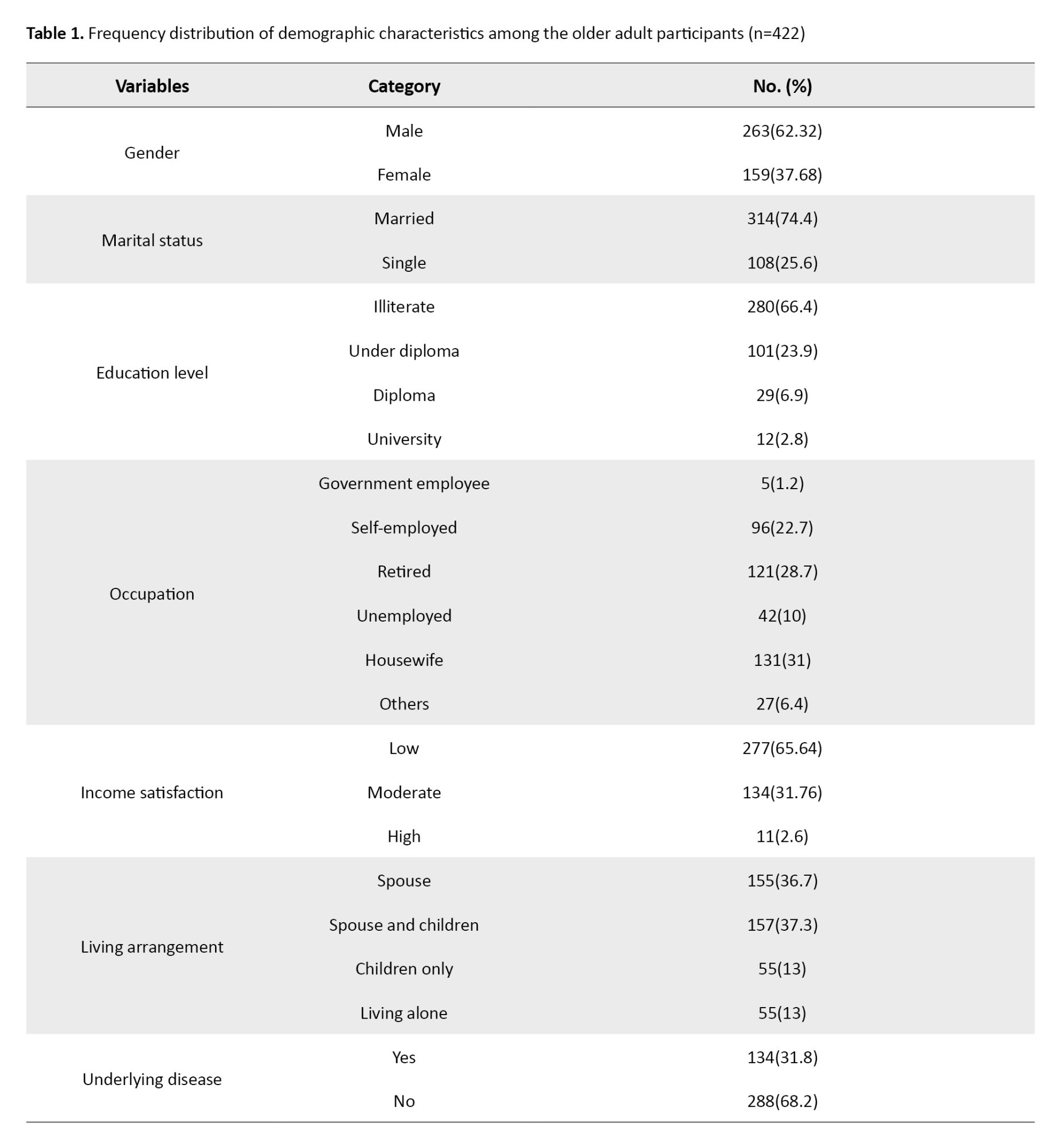
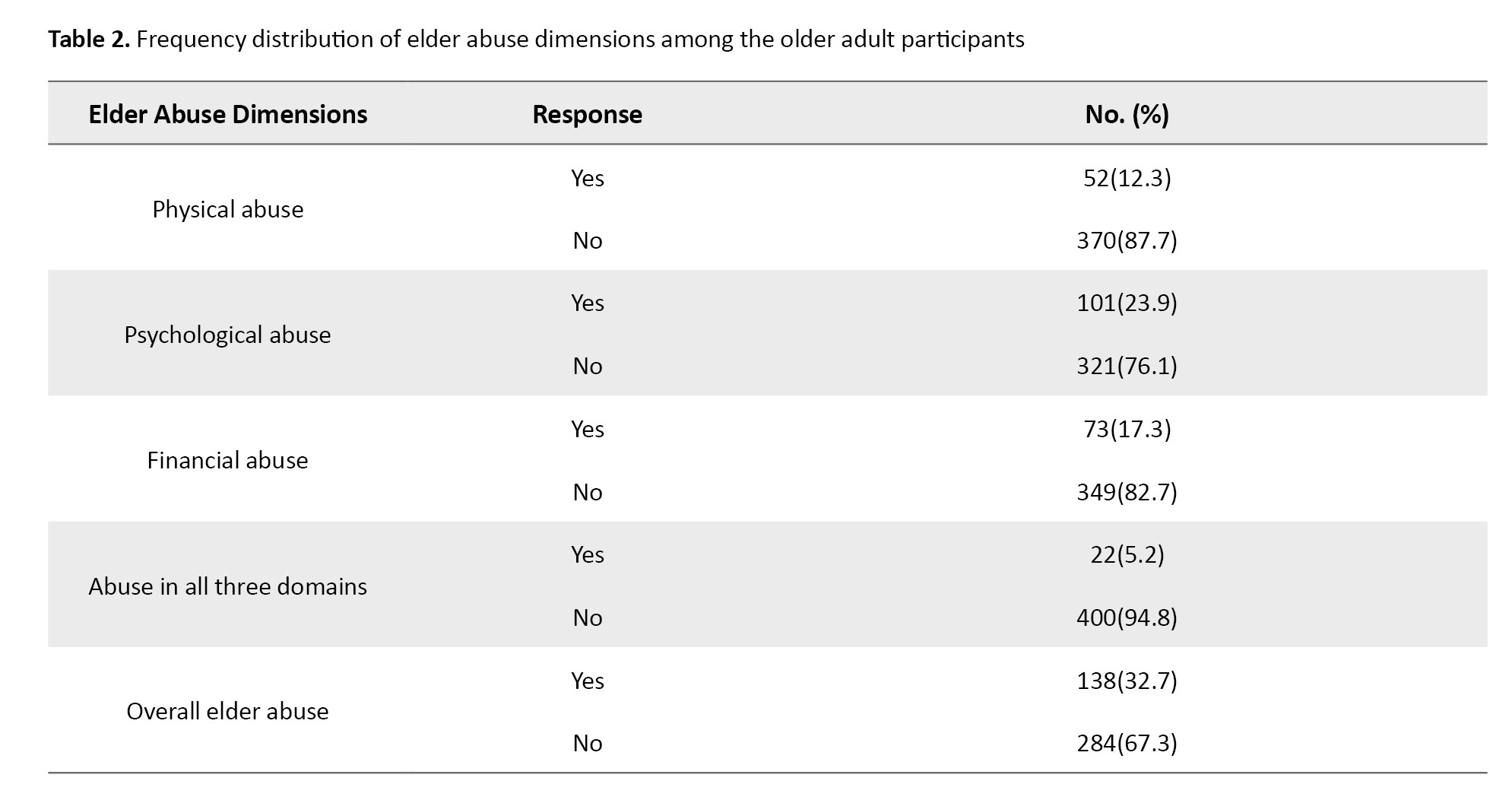
Most older adults in the study (74%, n=312) lived with their spouse or with both their spouse and children. Psychological abuse was reported by 23.9% of the participants, financial abuse by 17.3%, and physical abuse by 12.3%. Overall, 32.7% (n=138) of participants reported experiencing at least one type of elder abuse (Table 2).
The results of the inferential analysis indicated a marginally significant association between gender and the prevalence of physical abuse (P=0.050), as well as significant associations between gender and the prevalence of psychological abuse, financial abuse, and experiencing all three types of abuse (P<0.05). Female participants reported significantly higher levels of psychological and financial abuse. In addition, single older adults experienced significantly more physical and psychological abuse compared to their married counterparts (P<0.05). No statistically significant associations were found between the dimensions of elder abuse and the participants’ education level, income satisfaction, age, or number of children (P>0.05) (Table 3).
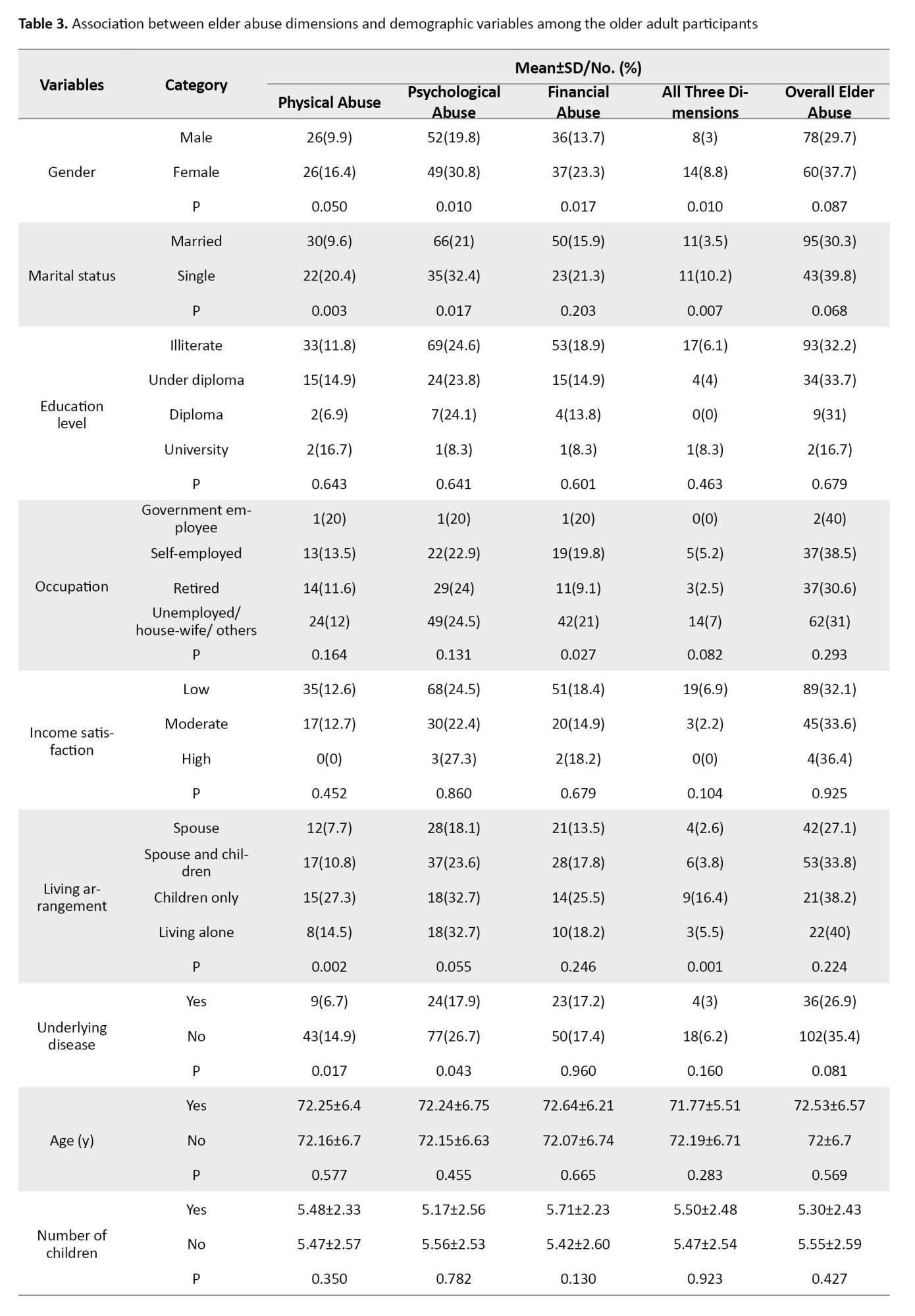
The values in the table are P from subgroup comparisons. The chi-square test was used for gender, marital status, education level, occupation, income satisfaction, living arrangement, and underlying disease. Age and number of children were compared using the independent samples t-test. P<0.05 was considered statistically significant, whereas P=0.050 was considered marginally significant.
Discussion
In today’s world, elder abuse is an emerging social issue that poses a serious threat to the quality of life and survival of older adults, particularly in developing countries. Given the importance and notable prevalence of this issue, the present study was conducted to assess the prevalence of elder abuse and its associated factors among Kurdish older adults residing in Sanandaj County from September 2022 to August 2023. The present study identified a considerable burden of elder abuse among Kurdish older adults, with psychological abuse being the most frequently reported form and physical abuse the least common.
In a cross-sectional study of 312 older adults attending health care centers in Tehran, the capital of Iran, Rohani et al. reported an elder abuse prevalence of 77.9% [20]. Similarly, Nemati-Vakilabad et al., in another cross-sectional analytical study of 500 community-dwelling older adults in Ardabil, northwestern Iran, found that 75.4% of participants had experienced at least one form of elder abuse [15]. The lower prevalence of elder abuse observed in the present study should be interpreted with caution, as it may represent a double-edged sword. In the cultural context of Kurdistan Province, family structures are often extended, and older adults typically live with their children or within larger family units. This type of living arrangement may offer strong social support for the elderly [18]. On the other hand, the strong cultural emphasis on family honor and preserving dignity may serve as significant barriers to reporting elder abuse [21]. Previous studies in Iran have suggested that older adults may avoid reporting abuse because family matters are often considered private. Emotional dependence on family members, fear of worsening family conflicts, and concerns about social reputation may further contribute to underreporting [8]. In more urbanized settings, such as Tehran, although intergenerational cohabitation has become less common, better supportive infrastructures for older adults exist. They have greater access to healthcare centers, and are generally more informed. Consequently, the likelihood of identifying elder abuse may be higher. Therefore, both traditional and modern social contexts present distinct advantages and challenges in managing elder abuse [22, 23]. A recent study from southern Iran similarly reported a low level of elder abuse, suggesting that regional cultural contexts may influence the occurrence or disclosure of elder abuse [24].
In the study by Nemati-Vakilabad et al. emotional neglect was reported as the most common type of elder abuse. However, in the present study, psychological abuse emerged as the most frequently reported form. It is worth noting that both studies identified physical abuse as the least common type of elder abuse [15]. Similarly, a systematic review of studies conducted in different regions of Iran identified emotional neglect as the most prevalent form of elder abuse [13]. The differences in reported findings may partly be explained by differences in the questionnaires used across studies. Rohani et al. [20] and Vakilabad et al. [15] used the domestic elder abuse questionnaire, which assesses elder abuse across a broader range of dimensions. In contrast, the questionnaire used in the present study included only physical, psychological, and financial abuse domains, which may have contributed to the lower prevalence observed. Notably, emotional neglect was not assessed by this questionnaire. However, the questionnaire placed particular emphasis on psychological abuse, with five of thirteen items related to this domain [19].
Data analysis revealed that women experienced significantly higher rates of elder abuse compared to men. This finding is consistent with previous Iranian studies that have also reported higher rates of elder abuse among older women [8, 23]. One possible explanation is that older women are more likely to experience economic dependency and limited financial resources, which may increase their vulnerability to abuse. In support of this interpretation, female gender, homemaker status, poor economic conditions, and unemployment have been identified as factors associated with elder abuse among Iranian older adults [8, 22, 23, 25]. In line with the present study, Maleki et al. in a cross-sectional study of 540 community-dwelling older adults in Qazvin, reported a significant association between elder abuse and poor financial status [14]. Older adults with underlying health conditions, such as hypertension, thyroid disorders, diabetes, and cardiovascular diseases also experienced significantly higher rates of elder abuse. In other words, having chronic illnesses increases the likelihood of experiencing physical and psychological abuse among older adults. These findings may be explained by factors, such as reduced self-care capacity, increased dependency on caregivers especially in advanced age, financial inability to afford treatment, and caregiver physical and emotional burnout [13, 26]. One possible explanation is that older adults with chronic diseases often require more assistance from family members for daily care. Increased caregiving responsibilities may lead to caregiver stress and fatigue, which could contribute to a higher risk of neglect and other forms of elder abuse. Similar findings have been reported in previous Iranian studies [22, 23, 25].
Overall, the management and prevention of elder abuse require a multifaceted and comprehensive approach, as this phenomenon is not merely an individual or family issue, but is deeply rooted in the social and cultural structures of societies. One of the key solutions is to raise public awareness about the current situation and various forms of elder abuse. Many people remain unaware of the serious impact of neglect, verbal humiliation, or financial deprivation on older adults. Public education through media, schools, and social institutions can help shift societal attitudes toward older individuals, fostering a culture of respect and care. In other words, such efforts may reduce the widespread perception of older adults as an economic burden [25]. In Iran, there appear to be significant gaps in the identification, follow-up, and prosecution of elder abuse cases. Developing more comprehensive legislation, clearly defining legal boundaries, and establishing specialized legal and judicial mechanisms for addressing elder abuse could play an important preventive and protective role.
Limitations
The findings should be interpreted with caution because the cross-sectional design does not permit conclusions about causal relationships between elder abuse and the demographic characteristics examined. In addition, the analyses were limited to bivariate comparisons and did not adjust for potential confounding variables. Therefore, the observed associations should be interpreted as crude associations rather than independent effects. Furthermore, the use of convenience sampling in public settings may have resulted in the underrepresentation of less mobile, homebound, socially isolated or institutionalized older adults. Therefore, the findings may have been underestimated and should be generalized with caution. The questionnaire covered only physical, psychological, and financial abuse, but emotional neglect was not captured in this study. In addition, the use of both self-administered and interviewer-administered questionnaires may have introduced information and social desirability biases, particularly given the sensitive nature of elder abuse. Cognitive and psychiatric disorders were identified based on self-report rather than a standardized screening tool or clinical assessment. Therefore, some participants with an undiagnosed condition may have been included, which could have affected the accuracy of their responses.
Conclusion
Elder abuse remains an important social and public health concern among older adults and was associated with several demographic, economic, and health-related factors in the present study. To address this issue, coordinated efforts across healthcare, social support, and policy sectors are recommended. A practical starting point would be to integrate a brief set of elder abuse screening questions into routine visits at comprehensive health centers, particularly for older adults who are financially dependent, socially isolated, or reliant on family members for daily care. Those with positive screening results could then be referred through a clear pathway to social workers, counseling services, or other available support resources. Alongside screening, family caregivers could receive brief, needs-based training on managing caregiver strain, communicating with older adults, and recognizing behaviors that may constitute abuse. These recommendations are consistent with international approaches to elder abuse prevention, which emphasize raising awareness, providing caregiver support and education, identifying abuse early, and strengthening community-based support services. Altogether, such interventions may contribute to empowering older adults and enhancing their quality of life. Nevertheless, the findings should be interpreted with caution given the use of convenience sampling and the limited representativeness of the study sample.
Ethical Considerations
Compliance with ethical guidelines
The study was approved by the Research Ethics Committee of Kurdistan University of Medical Sciences, Sanandaj, Iran (Code: IR.MUK.REC.1400.095). Prior to data collection, participants were informed about the study objectives, the confidentiality of their data, their right to access the study results upon request, and their right to withdraw from the study at any time without consequences. Written informed consent was obtained from all participants before enrollment.
Funding
This study was extracted from the MD thesis of Asra Rostami, approved by the Department of Medical Education, Faculty of Medicine, Kurdistan University of Medical Sciences, Sanandaj, Iran.
Authors contributions
Project administration: Nasrin Abdi; Data access and verification: Yadolah Zarezadeh; Data collection: Asra Rostami; Writing the original draft: Nasrin Abdi and Nazanin Fard Moghadam; Review and editing: Nasrin Abdi and Yadolah Zarezadeh; Final approval: All authors.
Conflict of interest
The authors declared no conflict of interest.
Acknowledgements
The authors would like to thank all older adults who participated in this study.
With the continuous advancement of healthcare services and the increasing life expectancy, the global elderly population is steadily rising [1]. By the year 2050, it is estimated that the number of older adults worldwide will exceed 1.2 billion [2]. Iran is also undergoing a rapid demographic transition toward an aging society. According to the latest statistics released by the National Statistical Center of Iran, in 2024, approximately 6.4 million individuals, out of a total population of 85.9 million, were aged 65 years and older [3]. This number is projected to surpass 20 million by 2050 [4].
The growing older adult population presents specific challenges across social, economic, and health care dimensions. Disengagement theory suggests that aging is often accompanied by a gradual withdrawal from social roles and reduced social participation, which may contribute to social isolation and increased dependency on caregivers [5]. Physical disabilities, caregivers’ dependency, economic inflation, economic difficulties, cognitive disorders, lack of social support, and inadequate healthcare policies are among the major factors contributing to elder abuse among older adults [6-8].
Elder abuse represents one of the most significant public health concerns affecting older adults [9]. According to the World Health Organization (WHO), elder abuse is defined as a single or repeated acts, including the failure to act appropriately, occurring within any relationship in which there is an expectation of trust and cause harm or distress to an older person. Elder abuse may manifest in various forms, including physical, sexual, psychological, emotional, or financial abuse [10]. Findings from an umbrella review conducted in 2024 revealed that the estimated global prevalence of elder abuse varies widely, ranging from 1.1% to 78% [11]. This variation can be attributed to differences in study methodologies and cultural contexts across communities. These findings highlight the importance of further investigating elder abuse among Kurdish older adults, which remains a relatively underexplored area of research. According to statistics from the United States, every individual aged 65 and over is likely to experience at least one form of elder abuse annually [12].
In Iran, despite the cultural emphasis on respecting older adults, the prevalence of elder abuse has been reported at high rates. A meta-analysis reported that approximately 55% of older adults in Iran experience some form of abuse [13]. In a cross-sectional study by Maleki et al. 71.1% of older adults residing in Qazvin reported having experienced mistreatment [14]. Similarly, Nemati-Vakilabad et al. found a prevalence rate of 75.4% among older adults living in Ardabil [15].
Failure to address elder abuse can lead to a decline in the quality of life among them, the development of mental health disorders, such as depression, increased rates of hospitalization, a heavier burden on the healthcare system, and ultimately, higher mortality rates [9, 16]. Given that elder abuse is a complex and multifactorial phenomenon, it appears to be influenced by various factors, including cultural norms, religion, societal values, and collective beliefs. To fully understand this issue, it is essential to delve into people’s underlying beliefs and lifestyles [15]. In Kurdish society, older adults are traditionally regarded as respected members of the family and are often viewed as symbols of wisdom and experience. Nevertheless, strong collectivist values and family-centered cultural norms may contribute to the concealment and underreporting of elder abuse, as domestic problems are frequently considered private family matters [17]. Also, evidence suggests that the prevalence of elder abuse is significantly associated with factors, such as advanced age, chronic illnesses, lower socioeconomic status, and a lack of awareness [18]. Therefore, cultural characteristics within Kurdish communities may function as both protective and risk-related factors. Previous studies among Kurdish older adults in Iran have also highlighted the role of changing sociocultural values and family interactions in the experience of elder abuse [17].
Although elder abuse has increasingly become a public health concern in Iran, evidence regarding its prevalence and associated factors among Kurdish older adults remains limited. Considering the unique sociocultural characteristics, family dynamics, and collective values within Kurdish communities, investigating elder abuse in this population may provide important context-specific insights. Therefore, the present study aimed to examine the prevalence of elder abuse and its associated factors among community-dwelling Kurdish older adults in Sanandaj County, Iran.
Materials and Methods
Study design, setting, and population
This descriptive-analytical, cross-sectional study was conducted among 422 older adults residing in Sanandaj County, located in Kurdistan Province, a western border region of Iran with a predominantly Kurdish population. Data were collected using a convenience sampling method in public places, such as markets, parks, and mosques from September 2022 to August 2023. This approach was selected to facilitate access to community-dwelling older adults in the study area, while also allowing them to respond without the presence of family members or close relatives. The inclusion criteria were being 65 years or older and being willing to participate in the study. The exclusion criteria were self-reported cognitive or psychiatric disorders and residence in a nursing home. No standardized cognitive screening tool or formal psychiatric assessment was used. Eligibility was determined based on participants’ self-report and their ability to communicate effectively and respond to the study questions during recruitment. The sample size was estimated assuming an expected prevalence of 50%, a 95% confidence level, and a 5% margin of error. After accounting for a potential 10% non-response rate, the required sample size was estimated to be 422 participants.
Data collection
For literate participants, the questionnaires were self-administered, while the researcher remained available to provide clarification when needed. For participants who were illiterate or unable to complete the questionnaire due to sensory impairments, such as visual problems, data were collected through face-to-face interviews conducted by a trained member of the research team. Before data collection, the interviewer, Asra Rostami, received training from the project manager, Dr. Nasrin Abdi, an associate professor at the Faculty of Nursing, on participant recruitment, communication with older adults, and standardized questionnaire administration. The interviewer first spent a few minutes speaking with each participant to establish rapport, explain the purpose of the study, assure the confidentiality of their responses, and obtain informed consent before administering the questionnaire.
Instruments
Data were collected using two instruments: A demographic information form and the elder abuse questionnaire.
Demographic information form
A researcher-developed demographic information form was used to collect participants’ sociodemographic and health-related characteristics, including age, gender, marital status, education level, occupation, income satisfaction, number of children, living arrangement, and underlying diseases.
Elder abuse questionnaire
The elder abuse questionnaire was translated into Persian and psychometrically evaluated by Rashidi et al. using the health-related quality of life (HRQOL) translation protocol in 2017. Construct validity was assessed through exploratory factor analysis, and reliability was confirmed with a Cronbach’s α of 0.8 and an intraclass correlation coefficient (ICC) of 0.81. The Persian version demonstrated acceptable validity and reliability for use among Iranian older adults. It consists of 13 items across three domains: physical abuse (4 items), psychological abuse (5 items), and financial abuse (4 items). Responses are recorded using dichotomous (yes/no) options. This questionnaire was selected to minimize respondent burden, thereby reducing fatigue and helping older adults remain attentive while completing the questionnaire. Overall elder abuse was defined as reporting at least one positive response to any item across the three abuse domains [19].
Statistical analysis
Data analysis was performed using descriptive statistics, including frequencies, percentages, Mean±SD, to summarize participant characteristics and study variables. Inferential analyses were conducted using independent-samples t-tests, one-way ANOVA for comparisons of continuous variables across groups, and chi-square tests for categorical variables. Data normality was assessed using the Shapiro-Wilk test prior to conducting parametric analyses. Statistical significance was set at P<0.05. All analyses were performed using STATA software, version 14.
Results
The mean age of the older adults participating in this study was 72.17±6.65 years. The majority of participants were male (62.32%, n=263), married (74.4%, n=314), retired (28.7%, n=121), and illiterate (66.4%, n=280). Most older adults (65.64%, n=277) reported low satisfaction with their income status (Table 1).
Most older adults in the study (74%, n=312) lived with their spouse or with both their spouse and children. Psychological abuse was reported by 23.9% of the participants, financial abuse by 17.3%, and physical abuse by 12.3%. Overall, 32.7% (n=138) of participants reported experiencing at least one type of elder abuse (Table 2).
The results of the inferential analysis indicated a marginally significant association between gender and the prevalence of physical abuse (P=0.050), as well as significant associations between gender and the prevalence of psychological abuse, financial abuse, and experiencing all three types of abuse (P<0.05). Female participants reported significantly higher levels of psychological and financial abuse. In addition, single older adults experienced significantly more physical and psychological abuse compared to their married counterparts (P<0.05). No statistically significant associations were found between the dimensions of elder abuse and the participants’ education level, income satisfaction, age, or number of children (P>0.05) (Table 3).
The values in the table are P from subgroup comparisons. The chi-square test was used for gender, marital status, education level, occupation, income satisfaction, living arrangement, and underlying disease. Age and number of children were compared using the independent samples t-test. P<0.05 was considered statistically significant, whereas P=0.050 was considered marginally significant.
Discussion
In today’s world, elder abuse is an emerging social issue that poses a serious threat to the quality of life and survival of older adults, particularly in developing countries. Given the importance and notable prevalence of this issue, the present study was conducted to assess the prevalence of elder abuse and its associated factors among Kurdish older adults residing in Sanandaj County from September 2022 to August 2023. The present study identified a considerable burden of elder abuse among Kurdish older adults, with psychological abuse being the most frequently reported form and physical abuse the least common.
In a cross-sectional study of 312 older adults attending health care centers in Tehran, the capital of Iran, Rohani et al. reported an elder abuse prevalence of 77.9% [20]. Similarly, Nemati-Vakilabad et al., in another cross-sectional analytical study of 500 community-dwelling older adults in Ardabil, northwestern Iran, found that 75.4% of participants had experienced at least one form of elder abuse [15]. The lower prevalence of elder abuse observed in the present study should be interpreted with caution, as it may represent a double-edged sword. In the cultural context of Kurdistan Province, family structures are often extended, and older adults typically live with their children or within larger family units. This type of living arrangement may offer strong social support for the elderly [18]. On the other hand, the strong cultural emphasis on family honor and preserving dignity may serve as significant barriers to reporting elder abuse [21]. Previous studies in Iran have suggested that older adults may avoid reporting abuse because family matters are often considered private. Emotional dependence on family members, fear of worsening family conflicts, and concerns about social reputation may further contribute to underreporting [8]. In more urbanized settings, such as Tehran, although intergenerational cohabitation has become less common, better supportive infrastructures for older adults exist. They have greater access to healthcare centers, and are generally more informed. Consequently, the likelihood of identifying elder abuse may be higher. Therefore, both traditional and modern social contexts present distinct advantages and challenges in managing elder abuse [22, 23]. A recent study from southern Iran similarly reported a low level of elder abuse, suggesting that regional cultural contexts may influence the occurrence or disclosure of elder abuse [24].
In the study by Nemati-Vakilabad et al. emotional neglect was reported as the most common type of elder abuse. However, in the present study, psychological abuse emerged as the most frequently reported form. It is worth noting that both studies identified physical abuse as the least common type of elder abuse [15]. Similarly, a systematic review of studies conducted in different regions of Iran identified emotional neglect as the most prevalent form of elder abuse [13]. The differences in reported findings may partly be explained by differences in the questionnaires used across studies. Rohani et al. [20] and Vakilabad et al. [15] used the domestic elder abuse questionnaire, which assesses elder abuse across a broader range of dimensions. In contrast, the questionnaire used in the present study included only physical, psychological, and financial abuse domains, which may have contributed to the lower prevalence observed. Notably, emotional neglect was not assessed by this questionnaire. However, the questionnaire placed particular emphasis on psychological abuse, with five of thirteen items related to this domain [19].
Data analysis revealed that women experienced significantly higher rates of elder abuse compared to men. This finding is consistent with previous Iranian studies that have also reported higher rates of elder abuse among older women [8, 23]. One possible explanation is that older women are more likely to experience economic dependency and limited financial resources, which may increase their vulnerability to abuse. In support of this interpretation, female gender, homemaker status, poor economic conditions, and unemployment have been identified as factors associated with elder abuse among Iranian older adults [8, 22, 23, 25]. In line with the present study, Maleki et al. in a cross-sectional study of 540 community-dwelling older adults in Qazvin, reported a significant association between elder abuse and poor financial status [14]. Older adults with underlying health conditions, such as hypertension, thyroid disorders, diabetes, and cardiovascular diseases also experienced significantly higher rates of elder abuse. In other words, having chronic illnesses increases the likelihood of experiencing physical and psychological abuse among older adults. These findings may be explained by factors, such as reduced self-care capacity, increased dependency on caregivers especially in advanced age, financial inability to afford treatment, and caregiver physical and emotional burnout [13, 26]. One possible explanation is that older adults with chronic diseases often require more assistance from family members for daily care. Increased caregiving responsibilities may lead to caregiver stress and fatigue, which could contribute to a higher risk of neglect and other forms of elder abuse. Similar findings have been reported in previous Iranian studies [22, 23, 25].
Overall, the management and prevention of elder abuse require a multifaceted and comprehensive approach, as this phenomenon is not merely an individual or family issue, but is deeply rooted in the social and cultural structures of societies. One of the key solutions is to raise public awareness about the current situation and various forms of elder abuse. Many people remain unaware of the serious impact of neglect, verbal humiliation, or financial deprivation on older adults. Public education through media, schools, and social institutions can help shift societal attitudes toward older individuals, fostering a culture of respect and care. In other words, such efforts may reduce the widespread perception of older adults as an economic burden [25]. In Iran, there appear to be significant gaps in the identification, follow-up, and prosecution of elder abuse cases. Developing more comprehensive legislation, clearly defining legal boundaries, and establishing specialized legal and judicial mechanisms for addressing elder abuse could play an important preventive and protective role.
Limitations
The findings should be interpreted with caution because the cross-sectional design does not permit conclusions about causal relationships between elder abuse and the demographic characteristics examined. In addition, the analyses were limited to bivariate comparisons and did not adjust for potential confounding variables. Therefore, the observed associations should be interpreted as crude associations rather than independent effects. Furthermore, the use of convenience sampling in public settings may have resulted in the underrepresentation of less mobile, homebound, socially isolated or institutionalized older adults. Therefore, the findings may have been underestimated and should be generalized with caution. The questionnaire covered only physical, psychological, and financial abuse, but emotional neglect was not captured in this study. In addition, the use of both self-administered and interviewer-administered questionnaires may have introduced information and social desirability biases, particularly given the sensitive nature of elder abuse. Cognitive and psychiatric disorders were identified based on self-report rather than a standardized screening tool or clinical assessment. Therefore, some participants with an undiagnosed condition may have been included, which could have affected the accuracy of their responses.
Conclusion
Elder abuse remains an important social and public health concern among older adults and was associated with several demographic, economic, and health-related factors in the present study. To address this issue, coordinated efforts across healthcare, social support, and policy sectors are recommended. A practical starting point would be to integrate a brief set of elder abuse screening questions into routine visits at comprehensive health centers, particularly for older adults who are financially dependent, socially isolated, or reliant on family members for daily care. Those with positive screening results could then be referred through a clear pathway to social workers, counseling services, or other available support resources. Alongside screening, family caregivers could receive brief, needs-based training on managing caregiver strain, communicating with older adults, and recognizing behaviors that may constitute abuse. These recommendations are consistent with international approaches to elder abuse prevention, which emphasize raising awareness, providing caregiver support and education, identifying abuse early, and strengthening community-based support services. Altogether, such interventions may contribute to empowering older adults and enhancing their quality of life. Nevertheless, the findings should be interpreted with caution given the use of convenience sampling and the limited representativeness of the study sample.
Ethical Considerations
Compliance with ethical guidelines
The study was approved by the Research Ethics Committee of Kurdistan University of Medical Sciences, Sanandaj, Iran (Code: IR.MUK.REC.1400.095). Prior to data collection, participants were informed about the study objectives, the confidentiality of their data, their right to access the study results upon request, and their right to withdraw from the study at any time without consequences. Written informed consent was obtained from all participants before enrollment.
Funding
This study was extracted from the MD thesis of Asra Rostami, approved by the Department of Medical Education, Faculty of Medicine, Kurdistan University of Medical Sciences, Sanandaj, Iran.
Authors contributions
Project administration: Nasrin Abdi; Data access and verification: Yadolah Zarezadeh; Data collection: Asra Rostami; Writing the original draft: Nasrin Abdi and Nazanin Fard Moghadam; Review and editing: Nasrin Abdi and Yadolah Zarezadeh; Final approval: All authors.
Conflict of interest
The authors declared no conflict of interest.
Acknowledgements
The authors would like to thank all older adults who participated in this study.
References
- Atim LM, Kaggwa MM, Mamum MA, Kule M, Ashaba S, Maling S. Factors associated with elder abuse and neglect in rural Uganda: A cross-sectional study of community older adults attending an outpatient clinic. Plos One. 2023; 18(2):e0280826. [DOI:10.1371/journal.pone.0280826] [PMID] [PMCID]
- Rudnicka E, Napierała P, Podfigurna A, Męczekalski B, Smolarczyk R, Grymowicz M. The World Health Organization (WHO) approach to healthy ageing. Maturitas. 2020; 139:6-11. [DOI:10.1016/j.maturitas.2020.05.018] [PMID]
- StatisticalCenterofIran. Iran's population profile-1403 (Persian) [Internet]. 2024 [Updated 2024 August 1]. Available from: [Link]
- Mehri N, Messkoub M, Kunkel S. Trends, determinants and the implications of population aging in Iran. Ageing International. 2020; 45(4):327-43. [DOI:10.1007/s12126-020-09364-z]
- Cumming E, Dean LR, Newell DS, McCaffrey I. Disengagement-A tentative theory of aging. Sociometry. 1960; 23(1):23-35. [DOI:10.2307/2786135]
- National Research Council. Elder mistreatment: Abuse, neglect, and exploitation in an aging America. Washington: National Academies Press; 2003. [Link]+
- Wiklund N, Ludvigsson M, Nägga K, Simmons J. Elder abuse and life-course victimization in hospitalized older adults in Sweden: Prevalence and associations with mental ill-health. BMC Geriatrics. 2022; 22(1):929. [DOI:10.1186/s12877-022-03638-8] [PMID] [PMCID]
- Seutodan Hagh H, Rezaeipandari H, Mousavi S, Allahverdipour H. Prevalence and gender differences of elder abuse among community-dwelling older adults in Tabriz, Iran. Iranian Journal of Ageing. 2021; 15(4):458-71. [DOI:10.32598/sija.15.4.1124.1]
- Zhang LP, Du YG, Dou HY, Liu J. The prevalence of elder abuse and neglect in rural areas: A systematic review and meta-analysis. European Geriatric Medicine. 2022; 13(3):585-96. [DOI:10.1007/s41999-022-00628-2] [PMID]
- World Health Organization (WHO). Abuse of older people [Internet]. 2024 [Updated 2024 June 15]. Available from: [Link]
- Juhász B, Khan KS, Cano-Ibáñez N, Bueno-Cavanillas A, Triviño-Juárez JM. Prevalence of elder abuse in the community and care settings: An umbrella review. Semergen. 2024; 50(6):102209. [DOI:10.1016/j.semerg.2024.102209] [PMID]
- Nursing Home Abuse Center. Elder abuse statistics [Internet]. 2024 [Updated 2024 March 15]. Available from: [Link]
- Delpasand T, Behbood A, Faghihi A. Elder abuse prevalence in Iran: A systematic review and meta-analysis. Journal of Advanced Biomedical Sciences. 2023; 13(1):1-12. [DOI:10.18502/jabs.v13i1.12072]
- Maleki M, Motalebi SA, Ranjbaran M, Hosseinigolafshani S. Prevalence of elder abuse and its correlated factors in Iranian community-dowelling older adults: A cross-sectional study. BMC Geriatrics. 2025; 25(1):1-13. [DOI:10.1186/s12877-025-05995-6] [PMID] [PMCID]
- Nemati-Vakilabad R, Khalili Z, Ghanbari-Afra L, Mirzaei A. The prevalence of elder abuse and risk factors: A cross-sectional study of community older adults. BMC Geriatrics. 2023; 23(1):616. [DOI:10.1186/s12877-023-04307-0] [PMID] [PMCID]
- Yunus RM, Hairi NN, Choo WY. Consequences of elder abuse and neglect: A systematic review of observational studies. Trauma, Violence, & Abuse. 2019; 20(2):197-213. [DOI:10.1177/1524838017692798] [PMID] [PMCID]
- Cabi M. The formation of modern kurdish society in Iran. London: I.B. Tauris; 2021. [Link]
- Khosravi N, Rezaei M, Matlabi H. Elder abuse and its sociocultural factors from the perspectives of Kurdish rural older people: Does gender matter? Health Care Women International. 2019; 40(10):1031-46. [DOI:10.1080/07399332.2018.1534236] [PMID]
- Rashidi Fakari F, Ebadi A, Ozgoli G, Kariman N, Mohamadizeidi B. [Evaluation of psychometric properties of Persian version of geriatric Mistreatment scale in the elderly living in Tehran In 2017-2018: A descriptive study (Persian)]. Journal of Rafsanjan University of Medical Sciences. 2020; 19(3):265-78. [DOI:10.29252/jrums.19.3.265]
- Rohani M, Dehdari T, Hosseinyrad M, Alaei M. The frequency of domestic elder abuse in Tehran city, Iran, in 2018. Iranian Journal of Ageing. 2019; 14(3):368-79. [DOI:10.32598/sija.13.10.560]
- Tajvar M, Grundy E, Fletcher A, Allen E, Karami B. Role of family factors in provision and perception of social support for older people in Iran: A cross-sectional survey. BMC Primary Care. 2023; 24(1):279. [DOI:10.1186/s12875-023-02236-w] [PMID] [PMCID]
- Siadat S, Motamedi N. Prevalence of elder abuse and its related factors in Isfahan, Iran. Iranian Journal of Psychiatry and Behavioral Sciences. 2024; 18(1):e137699. [DOI:10.5812/ijpbs-137699]
- Salarvand S, Azizi Z, Bitaraf S, Momeni-Safarabad N. Prevalence of self-reported domestic elder abuse and its relation with personality traits of older people and their family caregivers. Archives of Iranian medicine. 2024; 27(6):323-33. [DOI:10.34172/aim.28107]
- Bordbar S, Ahmadinejad P, Bahmaei J, Vejdani M, Yusefi AR. Examining the severity of disability and vulnerability among older adults and its impact on elder abuse: A cross-sectional study. Scientific Reports. 2025; 15(1):16999. [DOI:10.1038/s41598-025-02049-0] [PMID] [PMCID]
- Motahedi S, Khajeh M, Khosravi A, Mirhosseini S, Ebrahimi H. Prevalence of elder abuse and its related factors in Iran: A community-based study. Current Psychology. 2023; 42(21):17960-7. [DOI:10.1007/s12144-022-03024-y]
- Naseripoor S, Jorbonyan A, Moosazadeh M, Ilali ES. Association of personality traits and self-efficacy with caregiver burden in family caregivers of frail elderly: A cross-sectional study. Iranian Journal of Health Sciences. 2026; 14(1):35-46. [DOI:10.32598/ijhs.14.1.1227.1]
Type of Study: Original Article |
Subject:
Geriatrics
Send email to the article author
| Rights and permissions | |
 |
This work is licensed under a Creative Commons Attribution-NonCommercial 4.0 International License. |

This is an open access article distributed under the terms of the Creative Commons Attribution License (CC-By-NC), which permits use, distribution, and reproduction in any medium, provided the original work is properly cited and is not used for commercial purposes.
Contact Information