Volume 14, Issue 2 (Spring 2026)
Iran J Health Sci 2026, 14(2): 109-114 |
Back to browse issues page



Ethics code: xxxx
Clinical trials code: xxxx


Download citation:
BibTeX | RIS | EndNote | Medlars | ProCite | Reference Manager | RefWorks
Send citation to:


BibTeX | RIS | EndNote | Medlars | ProCite | Reference Manager | RefWorks
Send citation to:
Asdaghi Jahromi I, Faghani Makrani N, Babaei Nesami Z, Shabankhani K. Articaine for Cesarean Section: A Narrative Review of Its Potential Role in Spinal Anesthesia. Iran J Health Sci 2026; 14 (2) :109-114
URL: http://jhs.mazums.ac.ir/article-1-1087-en.html
URL: http://jhs.mazums.ac.ir/article-1-1087-en.html


Department of Anesthesiology, Faculty of Medicine, Mazandaran University of Medical Sciences, Sari, Iran , kshabankhani@gmail.com
Keywords: Articaine, Cesarean section, Neuraxial block, Spinal anesthesia, Clinical pharmacokinetics
Full-Text [PDF 603 kb]
(275 Downloads)
| Abstract (HTML) (1124 Views)
Full-Text: (73 Views)
Introduction
The use of articaine in neuraxial blocks has attracted growing interest due to its promising pharmacokinetic profile, including rapid onset and clearance [1]. However, despite these advantages, its clinical application in spinal and epidural anesthesia remains less extensively studied compared to other local anesthetics, such as bupivacaine and ropivacaine. A key research gap is the limited clinical evidence regarding the safety and efficacy of articaine in obstetric spinal anesthesia [2].
This review critically evaluates the available literature on articaine’s pharmacodynamics, efficacy, safety, and potential advantages in neuraxial anesthesia, with an emphasis on its comparative performance against established agents.
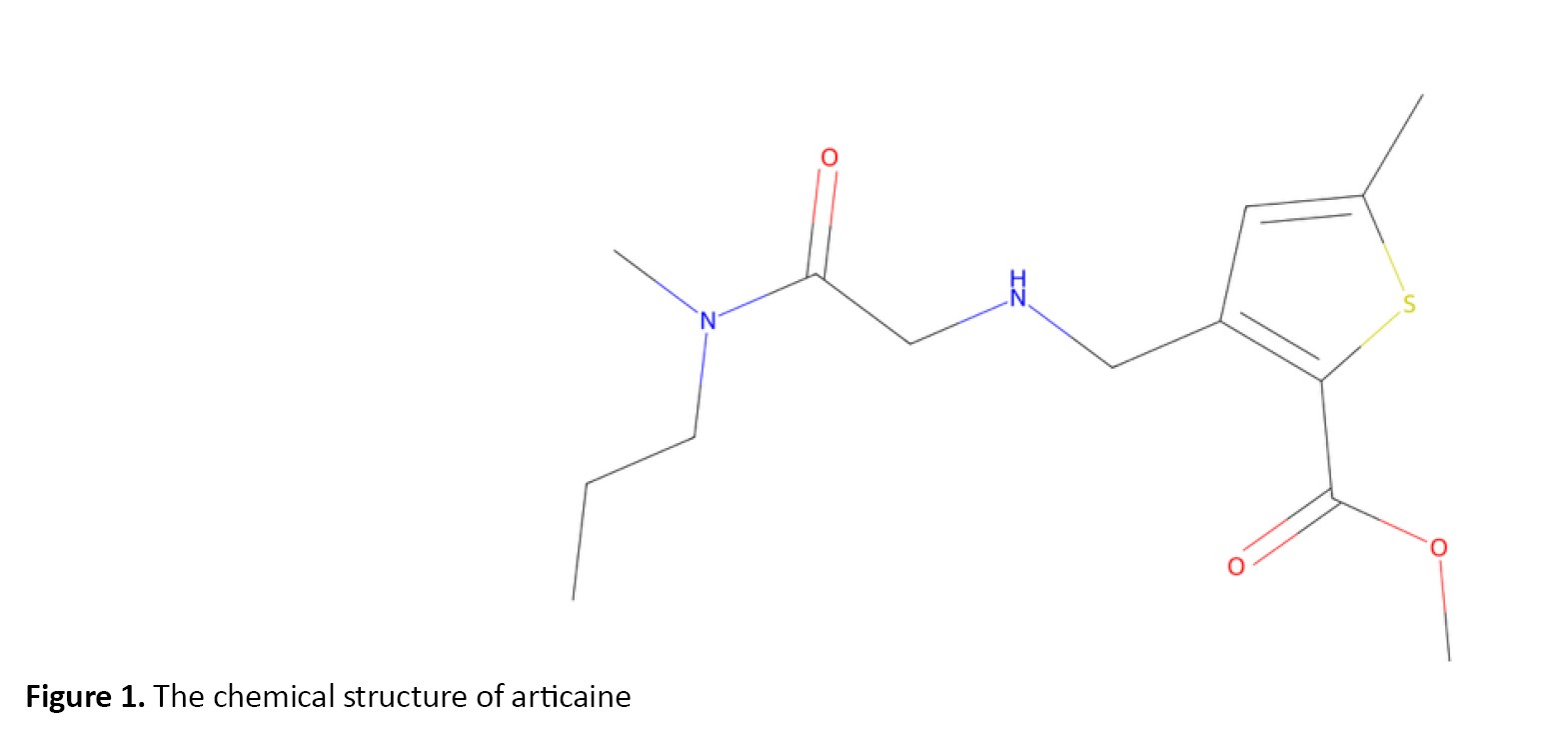
Articaine, chemically known as 4-methyl-3-(2-propylamino-propionamido)-thiophene-2-carboxylate hydrochloride, belongs to the amide group of local anesthetics (Figure 1).
The use of articaine in neuraxial blocks has attracted growing interest due to its promising pharmacokinetic profile, including rapid onset and clearance [1]. However, despite these advantages, its clinical application in spinal and epidural anesthesia remains less extensively studied compared to other local anesthetics, such as bupivacaine and ropivacaine. A key research gap is the limited clinical evidence regarding the safety and efficacy of articaine in obstetric spinal anesthesia [2].
This review critically evaluates the available literature on articaine’s pharmacodynamics, efficacy, safety, and potential advantages in neuraxial anesthesia, with an emphasis on its comparative performance against established agents.
Articaine, chemically known as 4-methyl-3-(2-propylamino-propionamido)-thiophene-2-carboxylate hydrochloride, belongs to the amide group of local anesthetics (Figure 1).
Structurally, it is unique among amide anesthetics because it contains a thiophene ring, whereas others feature a benzene ring. This thiophene ring increases articaine’s lipophilicity, enhancing its ability to penetrate nerve membranes and contributing to its rapid onset of action [3].
Another distinguishing feature of articaine is its ester side chain, which plays a crucial role in its metabolism. While most amide local anesthetics are metabolized solely in the liver, articaine is also partially metabolized by plasma esterases, allowing for faster breakdown and clearance from the body. This dual metabolic pathway differentiates articaine from other commonly used local anesthetics and contributes to its relatively short plasma half-life, approximately 20 to 30 minutes [3, 4].
Similar to other local anesthetics, articaine exerts its effect by blocking sodium channels on nerve membranes, thereby inhibiting the propagation of action potentials [5]. This results in the interruption of nerve signal transmission, leading to the desired sensory and motor blockade. Articaine’s high lipid solubility enables it to penetrate nerve membranes more rapidly than other local anesthetics, facilitating a faster onset of action. Additionally, articaine has been reported to produce dense sensory blocks with minimal motor blockade in certain clinical applications, which could have advantages in neuraxial anesthesia, where selective sensory blockades are often desired [2, 6].
The pharmacokinetics of articaine are characterized by its rapid onset, intermediate duration, and rapid clearance. Once administered, articaine is rapidly absorbed into systemic circulation, where it is hydrolyzed by plasma esterases to its primary inactive metabolite, articainic acid. This ester hydrolysis accounts for the rapid breakdown of articaine, resulting in a short plasma half-life. The remainder of the drug is metabolized in the liver by cytochrome P450 enzymes, and its metabolites are primarily excreted through the kidneys [7]. Articaine’s pharmacokinetic properties make it particularly appealing for spinal anesthesia in cesarean sections, where rapid onset, sufficient surgical anesthesia, and early maternal recovery are critical. Its rapid onset (3–5 minutes) ensures timely establishment of sensory block, an advantage in both elective and urgent obstetric settings [8]. Compared to longer-acting agents such as bupivacaine, articaine allows for an earlier return of motor function and ambulation, facilitating quicker maternal-infant bonding and a shorter hospital stay [9]. This early mobilization may reduce postoperative complications such as deep vein thrombosis, which is especially beneficial in postpartum patients. The rapid metabolism of articaine reduces its potential for systemic toxicity, a major concern with the use of long-acting local anesthetics, such as bupivacaine. This property is particularly relevant in neuraxial anesthesia, where the risk of local anesthetic systemic toxicity is always present due to the potential for inadvertent intravascular injection or systemic absorption from the epidural space [7].
Materials and Methods
This study was conducted as a narrative review aimed to summarize and synthesize available evidence on the pharmacology, efficacy, and safety of articaine in neuraxial anesthesia, with a particular focus on spinal anesthesia for cesarean sections. A comprehensive literature search was performed in PubMed, Embase, and the Cochrane Library. Articles published between January 1995 and March 2025 were considered. The search strategy included combinations of the following keywords and medical subject headings (MeSH): “articaine,” “spinal anesthesia,” “epidural anesthesia,” “neuraxial block,” “cesarean section,” “obstetric anesthesia,” and “local anesthetics.” No language restrictions were applied. The reference lists of relevant articles were manually screened to identify additional eligible studies. Studies were included if they evaluated intrathecal or epidural administration of articaine, reported clinical, pharmacokinetic, pharmacodynamic, or safety outcomes, involved human subjects or relevant animal models, and were available as full-text articles.
Studies were excluded if they were conference abstracts without full text, editorials, expert opinions without original data, or articles not relevant to neuraxial anesthesia. Duplicate records were identified and removed. All retrieved references were imported into EndNote (Clarivate Analytics) for management and removal of duplicate records. Data were manually extracted by the authors and included study design, patient population, type of surgery, articaine dose and concentration, onset and duration of sensory and motor block, maternal and neonatal outcomes, and reported adverse effects.
Given the narrative nature of this review and the heterogeneity of the study designs, a formal risk-of-bias assessment was not performed. However, studies were critically appraised based on methodological quality, sample size, clinical relevance, and consistency of reported outcomes.
Results
Several clinical studies have evaluated the efficacy of articaine in spinal anesthesia, particularly for lower-limb and lower-abdominal surgeries [10]. Nine clinical trials evaluating intrathecal articaine for spinal anesthesia were identified, primarily involving lower-limb, urologic, and ambulatory surgeries, with sample sizes ranging from 30 to 120 patients. Across these studies, articaine at doses of 60–84 mg (5% hyperbaric) produced surgical sensory block within 3–5 minutes. The duration of effective anesthesia ranged from 70 to 85 minutes, which was consistently sufficient for the procedures performed [1].
In a study comparing articaine with bupivacaine for spinal anesthesia in patients undergoing elective knee surgery, articaine demonstrated a significantly faster onset of both sensory and motor blockade. Patients receiving articaine also exhibited quicker recovery of motor function, allowing for earlier ambulation and discharge compared to those who received bupivacaine. The duration of sensory block provided by articaine was comparable to that of bupivacaine, although slightly shorter, which could be beneficial for procedures where an extended motor block is undesirable [11].
Another study explored the use of articaine for spinal anesthesia during urological surgery. The results showed that articaine provided reliable and effective anesthesia, with a rapid onset and intermediate duration, which was adequate for the procedures performed (Table 1).
.jpg)
Moreover, patients reported minimal discomfort during recovery, and there was a notable absence of prolonged motor blockade, which is often a concern with other longer-acting local anesthetics [11, 12].
The use of articaine for epidural anesthesia is less well-documented, though some clinical experiences suggest that it may be a viable option for certain procedures. Articaine’s rapid onset and intermediate duration make it suitable for outpatient surgeries, such as hernia repairs, where precise control of anesthesia duration is necessary [13].
A small study examining the use of epidural articaine for labor analgesia reported satisfactory pain relief with minimal adverse effects. The study highlighted that articaine’s relatively short duration of action could be advantageous in scenarios where re-dosing is acceptable and desirable for better analgesic control. However, its shorter duration may also be a limitation in cases requiring extended pain relief, where longer-acting agents, such as ropivacaine or bupivacaine, may be preferred.
Articaine’s favorable safety profile is largely attributed to its rapid metabolism and clearance, which reduce the risk of systemic toxicity. Unlike longer-acting anesthetics, such as bupivacaine, which have a higher risk of accumulation and toxicity, Articaine’s dual metabolic pathways (hepatic and ester hydrolysis) enable it to be quickly eliminated from the bloodstream.
In clinical studies, the incidence of systemic toxicity with articaine use in neuraxial blocks has been low. The short plasma half-life reduces the risk of central nervous system and cardiovascular complications, which are more commonly associated with longer-acting local anesthetics [14]. Additionally, because articaine is partially metabolized by plasma esterases, patients with impaired hepatic function are less likely to experience delayed clearance and toxicity compared to those receiving other amide local anesthetics [15]. Another undesirable incident is transient neurological symptoms (TNS), which are defined as pain originating in the gluteal region and radiating to both lower extremities and appearing within up to 24 hours after full recovery [16] (Table 1).
One of the primary concerns with the use of articaine in neuraxial blocks is the potential for neurotoxicity, particularly with intrathecal administration. Although articaine is considered safe for peripheral nerve blocks and dental anesthesia, its neurotoxicity when used in spinal anesthesia has not been fully established [17]. Animal studies have suggested that articaine may have neurotoxic effects when administered in high concentrations or with repeated doses, raising concerns about its safety in neuraxial applications [18]. However, the clinical relevance of these findings is uncertain, as the doses used in these studies were often higher than those typically administered in clinical practice. To date, no large-scale human studies have conclusively demonstrated neurotoxicity associated with articaine use in spinal or epidural anesthesia. Nonetheless, until further research clarifies this issue, articaine should be used with caution in neuraxial blocks, particularly in high-risk populations [7, 19].
Allergic reactions to articaine are rare; however, as with any local anesthetic, there is a risk of hypersensitivity reactions, particularly in individuals with a history of allergies to local anesthetics [20]. Articaine’s ester metabolite (articainic acid) could theoretically cause allergic reactions in individuals sensitive to ester local anesthetics, though this is uncommon. When administering articaine in neuraxial blocks, clinicians should be vigilant for signs of allergic reactions and have appropriate interventions available [21].
One of the most significant advantages of Articaine in neuraxial anesthesia is its rapid onset of action, which is typically faster than that of other commonly used local anesthetics. This can be especially useful in situations where rapid block onset is critical, such as in emergency cesarean sections or other urgent surgeries [15, 19]. Articaine’s intermediate duration of action can be both an advantage and a limitation, depending on the clinical scenario. For short to medium-duration procedures, articaine offers adequate anesthesia without the prolonged motor blockade that can delay recovery and discharge [10, 22]. This characteristic makes it particularly appealing for ambulatory surgeries and day-case procedures, where fast recovery and early mobilization are desired [23, 24]. The rapid metabolism of articaine by both hepatic and plasma pathways results in a shorter half-life, reducing the risk of systemic toxicity [25]. This feature is especially important in neuraxial blocks, where inadvertent systemic absorption can lead to serious complications. Articaine’s shorter duration of action also reduces the likelihood of prolonged motor blockade and other postoperative complications, such as urinary retention and deep vein thrombosis [15, 2]. Studies comparing articaine to other local anesthetics for spinal anesthesia have shown that patients receiving articaine recover motor function faster [22]. This could be beneficial in procedures that require early mobilization, such as lower-limb surgeries or cesarean sections, where reducing the risk of thromboembolic events through early ambulation is a priority [15]. Although the literature on articaine use specifically in cesarean sections is limited, emerging data suggest its effectiveness. In a randomized controlled trial (RCT), Yurtlu and Kaya (2013) compared articaine, ropivacaine, and their combination for epidural anesthesia in cesarean section. They found that articaine provided reliable sensory blockade with favorable maternal hemodynamics and neonatal Apgar scores [19]. These findings, while preliminary, support further exploration of articaine’s role in obstetric anesthesia, especially when a short-acting agent with minimal motor blockade is desirable. Future research should prioritize well-designed, adequately powered RCTs in pregnant populations. Key priority areas include determining optimal intrathecal dosing, comprehensively assessing maternal hemodynamic effects, evaluating neonatal outcomes beyond Apgar scores, and systematically monitoring for neurotoxicity and TNS. Comparative studies with commonly used agents such as bupivacaine and ropivacaine are essential to define articaine’s appropriate clinical role.
Discussion
Despite its potential advantages, the use of articaine in neuraxial anesthesia is limited by the lack of extensive clinical data. Safety is paramount in obstetric anesthesia, where both maternal and fetal well-being must be ensured. Articaine’s dual metabolic pathways (hepatic and plasma esterases) confer a lower risk of systemic toxicity, making it a safer option in patients with altered hepatic function often seen in pregnancy [7]. Moreover, the rapid clearance may reduce neonatal exposure in case of inadvertent systemic absorption, although this requires further validation [27]. Importantly, the absence of significant neurotoxicity in available human studies provides cautious optimism about its suitability for spinal administration in cesarean delivery, though more large-scale obstetric studies are warranted. Most studies on Articaine’s use in spinal and epidural anesthesia are small and lack the robust evidence needed to establish it as a first-line agent for neuraxial blocks. Larger, multicenter RCTs are necessary to definitively determine articaine’s safety and efficacy in these settings [21]. Articaine’s relatively short duration of action may be a limitation for longer surgical procedures, where extended sensory and motor blockade are required. In such cases, longer-acting anesthetics, such as bupivacaine or ropivacaine, may be more appropriate to avoid the need for re-dosing or the addition of adjuncts to prolong the block [24]. As previously discussed, the potential for neurotoxicity remains a concern, especially when using articaine in neuraxial blocks. While there is no conclusive evidence of neurotoxicity in humans, the findings from animal studies suggest that articaine should be used with caution, particularly when higher concentrations are required or when multiple doses are administered [21, 28].
Conclusion
Current evidence suggests that articaine possesses pharmacologic characteristics—rapid onset, intermediate duration of action, and rapid systemic metabolism—that may make it a suitable option for spinal anesthesia in selected cesarean section cases. Clinical studies conducted primarily in non-obstetric populations, along with limited obstetric data, indicate that intrathecal articaine can provide reliable surgical anesthesia with earlier motor recovery and without clear evidence of increased maternal or neonatal risk at clinically used doses. However, the existing evidence is not sufficient to support routine use of articaine for cesarean spinal anesthesia. Data specific to pregnant patients remain limited, and high-quality RCTs comparing articaine with established agents, such as bupivacaine, are lacking. Safety concerns, particularly regarding neurotoxicity and optimal dosing, require further investigation. At present, articaine may be considered a selective alternative in clinical settings where rapid onset and early postoperative recovery are prioritized, provided that its use is guided by careful patient selection and appropriate dosing. Until robust obstetric evidence becomes available, widespread clinical adoption should be approached with caution. Further well-designed clinical trials focusing on maternal and neonatal outcomes are essential to define articaine’s definitive role in cesarean spinal anesthesia.
Ethical Considerations
Compliance with ethical guidelines
This article is a narrative review with no human or animal sample.
Funding
This research did not receive any grant from funding agencies in the public, commercial, or non-profit sectors.
Authors contributions
Investigation, data curation and writing the original draft: Iman Asdaghi Jahromi and Nafiseh Faghani Makrani; Conceptualization, supervision, review and editing: Keihan Shabankhani and Zeinab Babaei Nesami; Final approval: All authors.
Conflict of interest
The authors declared no conflict of interest.
Acknowledgements
The authors thank all researchers whose work contributed to the literature reviewed in this article.
Another distinguishing feature of articaine is its ester side chain, which plays a crucial role in its metabolism. While most amide local anesthetics are metabolized solely in the liver, articaine is also partially metabolized by plasma esterases, allowing for faster breakdown and clearance from the body. This dual metabolic pathway differentiates articaine from other commonly used local anesthetics and contributes to its relatively short plasma half-life, approximately 20 to 30 minutes [3, 4].
Similar to other local anesthetics, articaine exerts its effect by blocking sodium channels on nerve membranes, thereby inhibiting the propagation of action potentials [5]. This results in the interruption of nerve signal transmission, leading to the desired sensory and motor blockade. Articaine’s high lipid solubility enables it to penetrate nerve membranes more rapidly than other local anesthetics, facilitating a faster onset of action. Additionally, articaine has been reported to produce dense sensory blocks with minimal motor blockade in certain clinical applications, which could have advantages in neuraxial anesthesia, where selective sensory blockades are often desired [2, 6].
The pharmacokinetics of articaine are characterized by its rapid onset, intermediate duration, and rapid clearance. Once administered, articaine is rapidly absorbed into systemic circulation, where it is hydrolyzed by plasma esterases to its primary inactive metabolite, articainic acid. This ester hydrolysis accounts for the rapid breakdown of articaine, resulting in a short plasma half-life. The remainder of the drug is metabolized in the liver by cytochrome P450 enzymes, and its metabolites are primarily excreted through the kidneys [7]. Articaine’s pharmacokinetic properties make it particularly appealing for spinal anesthesia in cesarean sections, where rapid onset, sufficient surgical anesthesia, and early maternal recovery are critical. Its rapid onset (3–5 minutes) ensures timely establishment of sensory block, an advantage in both elective and urgent obstetric settings [8]. Compared to longer-acting agents such as bupivacaine, articaine allows for an earlier return of motor function and ambulation, facilitating quicker maternal-infant bonding and a shorter hospital stay [9]. This early mobilization may reduce postoperative complications such as deep vein thrombosis, which is especially beneficial in postpartum patients. The rapid metabolism of articaine reduces its potential for systemic toxicity, a major concern with the use of long-acting local anesthetics, such as bupivacaine. This property is particularly relevant in neuraxial anesthesia, where the risk of local anesthetic systemic toxicity is always present due to the potential for inadvertent intravascular injection or systemic absorption from the epidural space [7].
Materials and Methods
This study was conducted as a narrative review aimed to summarize and synthesize available evidence on the pharmacology, efficacy, and safety of articaine in neuraxial anesthesia, with a particular focus on spinal anesthesia for cesarean sections. A comprehensive literature search was performed in PubMed, Embase, and the Cochrane Library. Articles published between January 1995 and March 2025 were considered. The search strategy included combinations of the following keywords and medical subject headings (MeSH): “articaine,” “spinal anesthesia,” “epidural anesthesia,” “neuraxial block,” “cesarean section,” “obstetric anesthesia,” and “local anesthetics.” No language restrictions were applied. The reference lists of relevant articles were manually screened to identify additional eligible studies. Studies were included if they evaluated intrathecal or epidural administration of articaine, reported clinical, pharmacokinetic, pharmacodynamic, or safety outcomes, involved human subjects or relevant animal models, and were available as full-text articles.
Studies were excluded if they were conference abstracts without full text, editorials, expert opinions without original data, or articles not relevant to neuraxial anesthesia. Duplicate records were identified and removed. All retrieved references were imported into EndNote (Clarivate Analytics) for management and removal of duplicate records. Data were manually extracted by the authors and included study design, patient population, type of surgery, articaine dose and concentration, onset and duration of sensory and motor block, maternal and neonatal outcomes, and reported adverse effects.
Given the narrative nature of this review and the heterogeneity of the study designs, a formal risk-of-bias assessment was not performed. However, studies were critically appraised based on methodological quality, sample size, clinical relevance, and consistency of reported outcomes.
Results
Several clinical studies have evaluated the efficacy of articaine in spinal anesthesia, particularly for lower-limb and lower-abdominal surgeries [10]. Nine clinical trials evaluating intrathecal articaine for spinal anesthesia were identified, primarily involving lower-limb, urologic, and ambulatory surgeries, with sample sizes ranging from 30 to 120 patients. Across these studies, articaine at doses of 60–84 mg (5% hyperbaric) produced surgical sensory block within 3–5 minutes. The duration of effective anesthesia ranged from 70 to 85 minutes, which was consistently sufficient for the procedures performed [1].
In a study comparing articaine with bupivacaine for spinal anesthesia in patients undergoing elective knee surgery, articaine demonstrated a significantly faster onset of both sensory and motor blockade. Patients receiving articaine also exhibited quicker recovery of motor function, allowing for earlier ambulation and discharge compared to those who received bupivacaine. The duration of sensory block provided by articaine was comparable to that of bupivacaine, although slightly shorter, which could be beneficial for procedures where an extended motor block is undesirable [11].
Another study explored the use of articaine for spinal anesthesia during urological surgery. The results showed that articaine provided reliable and effective anesthesia, with a rapid onset and intermediate duration, which was adequate for the procedures performed (Table 1).
Moreover, patients reported minimal discomfort during recovery, and there was a notable absence of prolonged motor blockade, which is often a concern with other longer-acting local anesthetics [11, 12].
The use of articaine for epidural anesthesia is less well-documented, though some clinical experiences suggest that it may be a viable option for certain procedures. Articaine’s rapid onset and intermediate duration make it suitable for outpatient surgeries, such as hernia repairs, where precise control of anesthesia duration is necessary [13].
A small study examining the use of epidural articaine for labor analgesia reported satisfactory pain relief with minimal adverse effects. The study highlighted that articaine’s relatively short duration of action could be advantageous in scenarios where re-dosing is acceptable and desirable for better analgesic control. However, its shorter duration may also be a limitation in cases requiring extended pain relief, where longer-acting agents, such as ropivacaine or bupivacaine, may be preferred.
Articaine’s favorable safety profile is largely attributed to its rapid metabolism and clearance, which reduce the risk of systemic toxicity. Unlike longer-acting anesthetics, such as bupivacaine, which have a higher risk of accumulation and toxicity, Articaine’s dual metabolic pathways (hepatic and ester hydrolysis) enable it to be quickly eliminated from the bloodstream.
In clinical studies, the incidence of systemic toxicity with articaine use in neuraxial blocks has been low. The short plasma half-life reduces the risk of central nervous system and cardiovascular complications, which are more commonly associated with longer-acting local anesthetics [14]. Additionally, because articaine is partially metabolized by plasma esterases, patients with impaired hepatic function are less likely to experience delayed clearance and toxicity compared to those receiving other amide local anesthetics [15]. Another undesirable incident is transient neurological symptoms (TNS), which are defined as pain originating in the gluteal region and radiating to both lower extremities and appearing within up to 24 hours after full recovery [16] (Table 1).
One of the primary concerns with the use of articaine in neuraxial blocks is the potential for neurotoxicity, particularly with intrathecal administration. Although articaine is considered safe for peripheral nerve blocks and dental anesthesia, its neurotoxicity when used in spinal anesthesia has not been fully established [17]. Animal studies have suggested that articaine may have neurotoxic effects when administered in high concentrations or with repeated doses, raising concerns about its safety in neuraxial applications [18]. However, the clinical relevance of these findings is uncertain, as the doses used in these studies were often higher than those typically administered in clinical practice. To date, no large-scale human studies have conclusively demonstrated neurotoxicity associated with articaine use in spinal or epidural anesthesia. Nonetheless, until further research clarifies this issue, articaine should be used with caution in neuraxial blocks, particularly in high-risk populations [7, 19].
Allergic reactions to articaine are rare; however, as with any local anesthetic, there is a risk of hypersensitivity reactions, particularly in individuals with a history of allergies to local anesthetics [20]. Articaine’s ester metabolite (articainic acid) could theoretically cause allergic reactions in individuals sensitive to ester local anesthetics, though this is uncommon. When administering articaine in neuraxial blocks, clinicians should be vigilant for signs of allergic reactions and have appropriate interventions available [21].
One of the most significant advantages of Articaine in neuraxial anesthesia is its rapid onset of action, which is typically faster than that of other commonly used local anesthetics. This can be especially useful in situations where rapid block onset is critical, such as in emergency cesarean sections or other urgent surgeries [15, 19]. Articaine’s intermediate duration of action can be both an advantage and a limitation, depending on the clinical scenario. For short to medium-duration procedures, articaine offers adequate anesthesia without the prolonged motor blockade that can delay recovery and discharge [10, 22]. This characteristic makes it particularly appealing for ambulatory surgeries and day-case procedures, where fast recovery and early mobilization are desired [23, 24]. The rapid metabolism of articaine by both hepatic and plasma pathways results in a shorter half-life, reducing the risk of systemic toxicity [25]. This feature is especially important in neuraxial blocks, where inadvertent systemic absorption can lead to serious complications. Articaine’s shorter duration of action also reduces the likelihood of prolonged motor blockade and other postoperative complications, such as urinary retention and deep vein thrombosis [15, 2]. Studies comparing articaine to other local anesthetics for spinal anesthesia have shown that patients receiving articaine recover motor function faster [22]. This could be beneficial in procedures that require early mobilization, such as lower-limb surgeries or cesarean sections, where reducing the risk of thromboembolic events through early ambulation is a priority [15]. Although the literature on articaine use specifically in cesarean sections is limited, emerging data suggest its effectiveness. In a randomized controlled trial (RCT), Yurtlu and Kaya (2013) compared articaine, ropivacaine, and their combination for epidural anesthesia in cesarean section. They found that articaine provided reliable sensory blockade with favorable maternal hemodynamics and neonatal Apgar scores [19]. These findings, while preliminary, support further exploration of articaine’s role in obstetric anesthesia, especially when a short-acting agent with minimal motor blockade is desirable. Future research should prioritize well-designed, adequately powered RCTs in pregnant populations. Key priority areas include determining optimal intrathecal dosing, comprehensively assessing maternal hemodynamic effects, evaluating neonatal outcomes beyond Apgar scores, and systematically monitoring for neurotoxicity and TNS. Comparative studies with commonly used agents such as bupivacaine and ropivacaine are essential to define articaine’s appropriate clinical role.
Discussion
Despite its potential advantages, the use of articaine in neuraxial anesthesia is limited by the lack of extensive clinical data. Safety is paramount in obstetric anesthesia, where both maternal and fetal well-being must be ensured. Articaine’s dual metabolic pathways (hepatic and plasma esterases) confer a lower risk of systemic toxicity, making it a safer option in patients with altered hepatic function often seen in pregnancy [7]. Moreover, the rapid clearance may reduce neonatal exposure in case of inadvertent systemic absorption, although this requires further validation [27]. Importantly, the absence of significant neurotoxicity in available human studies provides cautious optimism about its suitability for spinal administration in cesarean delivery, though more large-scale obstetric studies are warranted. Most studies on Articaine’s use in spinal and epidural anesthesia are small and lack the robust evidence needed to establish it as a first-line agent for neuraxial blocks. Larger, multicenter RCTs are necessary to definitively determine articaine’s safety and efficacy in these settings [21]. Articaine’s relatively short duration of action may be a limitation for longer surgical procedures, where extended sensory and motor blockade are required. In such cases, longer-acting anesthetics, such as bupivacaine or ropivacaine, may be more appropriate to avoid the need for re-dosing or the addition of adjuncts to prolong the block [24]. As previously discussed, the potential for neurotoxicity remains a concern, especially when using articaine in neuraxial blocks. While there is no conclusive evidence of neurotoxicity in humans, the findings from animal studies suggest that articaine should be used with caution, particularly when higher concentrations are required or when multiple doses are administered [21, 28].
Conclusion
Current evidence suggests that articaine possesses pharmacologic characteristics—rapid onset, intermediate duration of action, and rapid systemic metabolism—that may make it a suitable option for spinal anesthesia in selected cesarean section cases. Clinical studies conducted primarily in non-obstetric populations, along with limited obstetric data, indicate that intrathecal articaine can provide reliable surgical anesthesia with earlier motor recovery and without clear evidence of increased maternal or neonatal risk at clinically used doses. However, the existing evidence is not sufficient to support routine use of articaine for cesarean spinal anesthesia. Data specific to pregnant patients remain limited, and high-quality RCTs comparing articaine with established agents, such as bupivacaine, are lacking. Safety concerns, particularly regarding neurotoxicity and optimal dosing, require further investigation. At present, articaine may be considered a selective alternative in clinical settings where rapid onset and early postoperative recovery are prioritized, provided that its use is guided by careful patient selection and appropriate dosing. Until robust obstetric evidence becomes available, widespread clinical adoption should be approached with caution. Further well-designed clinical trials focusing on maternal and neonatal outcomes are essential to define articaine’s definitive role in cesarean spinal anesthesia.
Ethical Considerations
Compliance with ethical guidelines
This article is a narrative review with no human or animal sample.
Funding
This research did not receive any grant from funding agencies in the public, commercial, or non-profit sectors.
Authors contributions
Investigation, data curation and writing the original draft: Iman Asdaghi Jahromi and Nafiseh Faghani Makrani; Conceptualization, supervision, review and editing: Keihan Shabankhani and Zeinab Babaei Nesami; Final approval: All authors.
Conflict of interest
The authors declared no conflict of interest.
Acknowledgements
The authors thank all researchers whose work contributed to the literature reviewed in this article.
References
- Snoeck M. Articaine: A review of its use for local and regional anesthesia. Local and Regional Anesthesia. 2012; 5:23-33. [DOI:10.2147/LRA.S16682] [PMID]
- Kakroudi SH, Mehta S, Millar BJ. Articaine hydrochloride: Is it the solution? Dental Update. 2015; 42(1):88-93. [DOI:10.12968/denu.2015.42.1.88] [PMID]
- Isen DA. Articaine: Pharmacology and clinical use of a recently approved local anesthetic. Dentistry Today. 2000; 19(11):72-7. [PMID]
- Saraghi M, Hersh EV. Articaine: An update on its benefits and risks. General Dentistry. 2022; 70(3):13-6. [PMID]
- Wang GK, Calderon J, Jaw SJ, Wang SY. State-dependent block of na+ channels by articaine via the local anesthetic receptor. Journal of Membrane Biology. 2009; 229(1):1-9. [DOI:10.1007/s00232-009-9170-8] [PMID]
- Luo W, Zheng K, Kuang H, Li Z, Wang J, Mei J. The potential of articaine as new generation of local anesthesia in dental clinics: A review. Medicine (Baltimore). 2022; 101(48):e32089. [DOI:10.1097/MD.0000000000032089] [PMID]
- Hopman AJG, Baart JA, Brand HS. Articaine and neurotoxicity-a review. British Dental Journal. 2017; 223(7):501-6. [DOI:10.1038/sj.bdj.2017.782] [PMID]
- Tortamano IP, Siviero M, Lee S, Sampaio RM, Simone JL, Rocha RG. Onset and duration period of pulpal anesthesia of articaine and lidocaine in inferior alveolar nerve block. Brazilian Dental Journal. 2013; 24(4):371-4. [DOI:10.1590/0103-6440201302072] [PMID]
- Kung J, McDonagh M, Sedgley CM. Does articaine provide an advantage over lidocaine in patients with symptomatic irreversible pulpitis? A systematic review and meta-analysis. Journal of Endodontics. 2015; 41(11):1784-94. [DOI:10.1016/j.joen.2015.07.001] [PMID]
- Dijkstra T, Reesink JA, Verdouw BC, Van der Pol WS, Feberwee T, Vulto AG. Spinal anaesthesia with articaine 5% vs bupivacaine 0.5% for day-case lower limb surgery: A double-blind randomized clinical trial. British Journal of Anaesthesia. 2008; 100(1):104-8. [DOI:10.1093/bja/aem332] [PMID]
- Yapp KE, Hopcraft MS, Parashos P. Articaine: A review of the literature. British Dental Journal. 2011; 210(7):323-9. [DOI:10.1038/sj.bdj.2011.240] [PMID]
- O’Donnell BD, Iohom G. Regional anesthesia techniques for ambulatory orthopedic surgery. Current Opinion in Anaesthesiology. 2008; 21(6):723-8. [DOI:10.1097/ACO.0b013e328314b665] [PMID]
- Bachmann M, Pere P, Kairaluoma P, Rosenberg PH, Kallio H. Comparison of hyperbaric and plain articaine in spinal anaesthesia for open inguinal hernia repair. British Journal of Anaesthesia. 2008; 101(6):848-54. [DOI:10.1093/bja/aen294] [PMID]
- Albalawi F, Lim JC, DiRenzo KV, Hersh EV, Mitchell CH. Effects of lidocaine and articaine on neuronal survival and recovery. Anesthesia Progress. 2018; 65(2):82-8. [DOI:10.2344/anpr-65-02-02] [PMID]
- Gozdemir M, Muslu B, Sert H, Usta B, Demircioglu RI, Kasikara H. Transient neurological symptoms after spinal anesthesia. Clinical and Investigative Medicine. Medecine Clinique et Experimentale. 2016; 39(6):27512. [DOI:10.25011/cim.v39i6.27512] [PMID]
- Forget P, Borovac JA, Thackeray EM, Pace NL. Transient neurological symptoms (TNS) following spinal anaesthesia with lidocaine versus other local anaesthetics in adult surgical patients: A network meta-analysis. The Cochrane Database of Systematic Reviews. 2019; 12(12):Cd003006. [DOI:10.1002/14651858.CD003006.pub4] [PMID]
- Malinovsky JM. Is 4% articaine suitable for spinal anaesthesia? European Journal of Anaesthesiology. 2012; 29(1):5-6. [DOI:10.1097/EJA.0b013e32834de295]
- Hillerup S, Bakke M, Larsen JO, Thomsen CE, Gerds TA. Concentration-dependent neurotoxicity of articaine: an electrophysiological and stereological study of the rat sciatic nerve. Anesthesia & Analgesia. 2011; 112(6):1330-8. [DOI:10.1213/ANE.0b013e3182172a2e] [PMID]
- Yurtlu DA, Kaya K. Ropivacaine, articaine or combination of ropivacaine and articaine for epidural anesthesia in cesarean section: a randomized, prospective, double-blinded study. Brazilian Journal of Anesthesiology. 2013; 63(1):85-91. [DOI:10.1016/S0034-7094(13)70200-9] [PMID]
- Speca SJ, Boynes SG, Cuddy MA. Allergic reactions to local anesthetic formulations. Dental Clinics of North America. 2010; 54(4):655-64. [DOI:10.1016/j.cden.2010.06.006] [PMID]
- Becker DE, Reed KL. Local anesthetics: Review of pharmacological considerations. Anesthesia Progress. 2012; 59(2):90-103. [DOI:10.2344/0003-3006-59.2.90] [PMID]
- Hendriks MP, de Weert CJ, Snoeck MM, Hu HP, Pluim MA, Gielen MJ. Plain articaine or prilocaine for spinal anaesthesia in day-case knee arthroscopy: A double-blind randomized trial. BJA: British Journal of Anaesthesia. 2008; 102(2):259-63. [DOI:10.1093/bja/aen357] [PMID]
- Förster JG. Short-acting spinal anesthesia in the ambulatory setting. Current Opinion in Anaesthesiology. 2014; 27(6):597-604. [DOI:10.1097/ACO.0000000000000126] [PMID]
- Förster JG, Rosenberg PH. Revival of old local anesthetics for spinal anesthesia in ambulatory surgery. Current Opinion in Anaesthesiology. 2011; 24(6):633-7. [DOI:10.1097/ACO.0b013e32834aca1b] [PMID]
- Oertel R, Rahn R, Kirch W. Clinical Pharmacokinetics of Articaine. Clinical Pharmacokinetics. 1997; 33(6):417-25. [DOI:10.2165/00003088-199733060-00002] [PMID]
- Shetty SS, Jayaraj R, Riahi SM, Parthipady K. Articaine Efficacy. Journal of the American Dental Association (1939). 2021; 152(5):341. [DOI:10.1016/j.adaj.2021.03.017] [PMID]
- Elheeny AAH. Articaine efficacy and safety in young children below the age of four years: An equivalent parallel randomized control trial. International Journal of Paediatric Dentistry. 2020; 30(5):547-55. [DOI:10.1111/ipd.12640] [PMID]
- Li L, Sun DL. Adverse effects of articaine versus lidocaine in pediatric dentistry: A meta-analysis. The Journal of Clinical Pediatric Dentistry. 2023; 47(6):21-9. [DOI:10.22514/jocpd.2023.078] [PMID]
Type of Study: Review Article |
Subject:
Maternal and Child Health
Send email to the article author
| Rights and permissions | |
 |
This work is licensed under a Creative Commons Attribution-NonCommercial 4.0 International License. |

This is an open access article distributed under the terms of the Creative Commons Attribution License (CC-By-NC), which permits use, distribution, and reproduction in any medium, provided the original work is properly cited and is not used for commercial purposes.
Contact Information