Volume 14, Issue 3 (Summer 2026)
Iran J Health Sci 2026, 14(3): 285-300 |
Back to browse issues page



Ethics code: IR.UMSHA.REC.1401.308


Download citation:
BibTeX | RIS | EndNote | Medlars | ProCite | Reference Manager | RefWorks
Send citation to:


BibTeX | RIS | EndNote | Medlars | ProCite | Reference Manager | RefWorks
Send citation to:
Mortazavi Z, Azizi A, Seidi M, Matinpour H, Mortazavi S S. Experiences of Individuals With Disabilities in Vocational Rehabilitation Settings: Components Influencing Sleep Quality. Iran J Health Sci 2026; 14 (3) :285-300
URL: http://jhs.mazums.ac.ir/article-1-1100-en.html
URL: http://jhs.mazums.ac.ir/article-1-1100-en.html


Social Determinants of Health Research Center, Institute of Health Sciences and Technology, Hamadan University of Medical Sciences, Hamadan, Iran. & Student Research Committee, University of Social Welfare and Rehabilitation Sciences, Tehran, Iran. , s.mortazavi.ot@gmail.com
Keywords: Sleep, Persons with disabilities, Rehabilitation centers, Vocational rehabilitation, Qualitative research
Full-Text [PDF 1884 kb]
(30 Downloads)
| Abstract (HTML) (271 Views)
Discussion
This study explored the multidimensional factors affecting sleep quality in 18 males with disabilities working in Iranian SWVRCs. The findings, organized into personal and environmental domains, revealed that sleep quality is not a standalone symptom but a product of interacting physical, psychological, social, economic, and occupational conditions. The discussion follows the order of the categories identified in the results, linking each to existing evidence and highlighting gaps between local practices and international standards where relevant.
Personal factors
Physical condition emerged as a pervasive barrier. Participants consistently described musculoskeletal pain—including back, knee, neck, and hand pain—that was exacerbated by prolonged static postures and physical fatigue, delayed sleep onset, and caused nocturnal awakenings. This finding aligns with the well-documented bidirectional relationship between pain and sleep [29]. Disability-specific nighttime symptoms, such as muscle spasms and limb numbness, further disrupted rest. These findings underscore that pain management and ergonomic accommodation are foundational sleep interventions in this population. The fact that this pain was frequently linked to poorly designed workstations—an environmental factor—illustrates the inseparability of the personal and environmental domains.
Psychological state encompassed both protective and disruptive elements. Emotional well-being— including a sense of relaxation and satisfaction after completing tasks—facilitated sleep, consistent with evidence that positive affect enhances sleep quality [6]. Conversely, emotional distress (anxiety about work performance, future uncertainty, and rumination) was a major driver of pre-sleep cognitive arousal, supporting the hyperarousal model of insomnia. The salience of guilt over children’s unmet needs and perceived stigma highlights how societal exclusion becomes internalized, generating chronic vigilance that disrupts sleep [30]. For individuals undergoing vocational rehabilitation, psychological distress is not merely an intrapsychic issue; it is also amplified by economic marginalization and disability-related discrimination.
Knowledge and competence—comprising vocational skills and an understanding of workplace expectations—served as cognitive resources that reduced uncertainty and anxiety. When participants mastered job-related steps or clearly understood the center’s regulations, their pre-sleep worry diminished, consistent with self-determination theory’s emphasis on competence as a basic need for well-being [31]. This finding suggests that structured onboarding, transparent communication of expectations, and stepwise skill-building are not only vocational tools but also sleep-promoting strategies.
Environmental factors
The physical sleep environment at the centers was unanimously described as detrimental, owing to overcrowding, noise, poor lighting, uncomfortable temperatures, and inadequate bedding. These conditions violate basic sleep hygiene principles [32] and stand in stark contrast to international best practices, which recommend quiet, private, and adjustable sleeping quarters in institutional settings. Participants’ reliance on self-supplied items, like eye masks and earplugs reflects both unmet institutional responsibility and personal resilience. Dietary influences—including hunger, caffeine consumption, and heavy meals—further point to modifiable center-level factors that could immediately improve sleep. Addressing the physical sleep environment is the most tangible and ethically urgent intervention.
The social environment exhibited a clear duality. Positive peer interactions—including joking, laughing, and teamwork—created a sense of belonging that extended into the night, corroborating meta-analytic evidence that perceived social support improves sleep [33]. Conversely, interpersonal conflicts and instructors’ harsh, intimidating communication were associated with stress, nightmares, and sleep difficulties. The critical role of supervisor behavior echoes research showing that supervisor support for sleep enhances workplace safety and well-being [34]. In the present setting, respectful coaching fostered safety, while authoritarian behavior was a source of nocturnal distress. This contrast underscores a pressing need for communication training among vocational instructors, which international total worker health frameworks already prioritize [35].
Economic environment acted as a chronic, unavoidable stressor. Fear of unsold products, constant calculations related to debts, hopelessness about income, and the burden of training-related loans kept participants awake night after night. The strong association between financial strain and poor sleep is magnified in this context by the precarious nature of workshop-based production, in which income depends on unstable sales [23]. No participant reported having access to financial counseling or debt relief, revealing a critical gap in the rehabilitation model. International best practices increasingly integrate financial wellness into vocational support, yet this dimension is completely absent from the studied centers.
The occupational environment influenced sleep through both ergonomic and psychosocial pathways. Broken tools, inappropriate desk heights, and unsuitable chairs directly contributed to the pain and fatigue described in the personal domain, thereby creating a vicious cycle. This finding mirrors evidence that suboptimal ergonomics are associated with musculoskeletal disorders and impaired sleep [36]. On the psychosocial side, a sense of belonging, healthy competition, and the motivation to please instructors provided participants with a valued occupational identity that promoted sleep. However, the fear of dismissal or failure to learn a trade generated profound anxiety, echoing findings that unfavorable workplace psychosocial conditions and limited psychosocial resources are associated with an increased risk of sleep disturbances. Work, therefore, functioned both as a sleep-enhancing anchor and as a sleep-disrupting threat, depending on the balance between support and precarity.
Daily life and family factors further shaped sleep. Structured daily routines and independence in self-care were protective, whereas forgetting to take pain medication led to sleepless nights. Digital games and stimulating media delayed sleep onset, consistent with research on screen time and sleep in young adults [37]. Family responsibilities, although a source of meaning, often became nocturnal worries about fulfilling obligations or making loved ones proud, illustrating the emotional weight carried by workers with disabilities.
Synthesis and context
The findings reinforce the biopsychosocial model of sleep, demonstrating that sleep quality in vocational rehabilitation is determined by an interplay of physical, cognitive, emotional, social, economic, and occupational factors. The stark gap between participants’ lived experiences and international standards—particularly regarding the physical environment, staff communication, and economic security—highlights systemic deficiencies. In settings where best practice calls for integrated sleep health programming, the studied SWVRCs entirely lacked such attention, leaving individuals to navigate sleep disturbances through personal coping strategies alone.
Synthesis with existing literature
Our findings align with several established studies and extend them to the specific context of disabled workers in Iranian vocational rehabilitation settings. The biopsychosocial model of sleep [38] is supported by our identification of interconnected personal (pain and anxiety), environmental (crowding and noise), and occupational (task-related stress) factors affecting sleep quality.
Consistent with previous research, we found that occupational factors significantly influence sleep outcomes. Studies have reported that mental workload, burnout and work fatigue [39], shift type [40], working conditions [41, 42], and employee work behaviors [26]affect sleep quality. Similarly, the bidirectional relationship between pain and sleep [29] and the role of anxiety and depression in sleep disturbances [38] were confirmed in our sample. A study of construction workers in Iran also reported significant correlations between poor sleep quality, increased job stress (r=-0.165, P<0.05), and decreased job satisfaction (r=0.333, P<0.01), reinforcing the critical link between occupational conditions and sleep outcomes [43].
Our study makes unique contributions specific to workers with disabilities in SWVRCs. First, fear of authority figures and a lack of clarity regarding rules emerged as distinct stressors that are not prominently featured in studies of non-disabled workers. This finding aligns with recent research showing that workers with episodic disabilities face pervasive stigma and disbelief regarding their conditions, as well as significant barriers to accessing workplace accommodations [43]. Second, although the American Occupational Therapy Association (AOTA) recognizes sleep and work as primary occupations [44], our findings suggest that, in Iranian SWVRCs, sleep is rarely addressed as an occupational priority, representing a gap between professional guidelines and local practice. Third, we identified both beneficial and disruptive pathways between work and sleep. Work improved sleep when it provided structure, social support, and a sense of purpose, consistent with studies showing that daytime activities enhance motivation, reduce psychological harm, and improve sleep quality [45], and that work fosters social connections that positively influence sleep [33]. However, work disrupted sleep when it introduced pain, fear of authority figures, financial stress, or performance pressure, consistent with research highlighting the dual role of occupational engagement in promoting well-being while also contributing to stress [46, 47].
In summary, although our findings confirm established relationships between occupational factors and sleep quality, they extend the literature by identifying disability-specific stressors in vocational rehabilitation contexts and highlighting gaps between international best practices and their local implementation in Iran.
Implications for practice and policy
At the practice level, centers should implement routine sleep quality screening and integrate evidence-based psychological support, particularly cognitive-behavioral strategies for managing anxiety, guilt, and stigma. Immediate environmental modifications are essential, including providing comfortable individual bedding, reducing noise and overcrowding, and ensuring appropriate lighting and temperature. Ergonomic workstations must be introduced to break the pain–sleeplessness cycle. Staff training in respectful, supportive communication is non-negotiable, given its direct impact on residents’ nocturnal well-being. Financial counseling and the establishment of a fund to offset training equipment costs would directly address the economic stress that undermines sleep. Structurally, predictable daily schedules and calming evening activities should replace stimulating screen-based leisure. At the policy level, minimum infrastructure standards for sleeping accommodations in rehabilitation settings must be mandated and enforced. Job security frameworks that reduce the pervasive fear of dismissal, and integration of financial wellness programs into vocational rehabilitation, are equally critical.
Limitations
The exclusively male sample limits the transferability of the findings to women with disabilities, who face additional sleep challenges, such as caregiving responsibilities and safety concerns in mixed-gender settings. The uneven distribution of disability types—predominantly physical—restricts insight into the specific needs of individuals with sensory or intellectual disabilities. All data were self-reported; future research should incorporate objective measures, like actigraphy. The study was conducted in a single Iranian province, further limiting the generalizability of the findings.
Future research directions
Future studies should include women and a more balanced representation of disability types to capture the full spectrum of experiences. Multi-stakeholder research involving center administrators, vocational coaches, and family members is needed to understand systemic barriers and facilitators. Intervention research evaluating the effectiveness of integrated sleep health programs—combining environmental upgrades, staff communication training, and financial support—within vocational rehabilitation is urgently warranted. Finally, longitudinal designs could clarify the causal pathways between occupational engagements, economic stability, and sleep quality over time. Ensuring restorative sleep for PWDs in vocational settings is both a clinical necessity and a social justice imperative. It requires a holistic, rights-based approach that addresses the structural, economic, and interpersonal determinants of health.
Conclusion
This study demonstrates that sleep quality among PWDs in Iranian vocational rehabilitation centers is shaped by an intricate network of personal and environmental factors, including pain, psychological distress, knowledge deficits, inadequate physical environments, interpersonal dynamics, economic insecurity, and occupational conditions. The findings highlight that sleep is not an isolated clinical issue but a reflection of the broader conditions of rehabilitation and employment.
Ethical Considerations
Compliance with ethical guidelines
This study complied with the ethical principles recommended by the Research Ethics Committee of Hamadan University of Medical Sciences, Hamadan, Iran (Code: IR.UMSHA.REC.1401.308) and the Helsinki Declaration. All interview participants received comprehensive written information about the study objectives and procedures. Written informed consent was obtained from each participant prior to their involvement.
Funding
This work was part of a research project, supported by Hamadan University of Medical Sciences, Hamadan, Iran (Grant No.: 140104282960). The funding source had no role in the study design, data collection, data analysis, data interpretation, or preparation of the manuscript.
Authors contributions
Conceptualization and study design: Masoumeh Seidi and Saideh Sadat Mortazavi; Data collection and formal analysis: Zahra Mortazavi and Hossein Matinpour; Writing the original draft: Zahra Mortazavi and Saideh Sadat Mortazavi; Review and editing: Azim Azizi; Final approval: All authors.
Conflict of interest
The authors declared no competing interests.
Acknowledgements
The authors would like to sincerely thank all staff members at the participating rehabilitation centers, the Welfare Departments of Malayer and Nahavand, and the Vice-Chancellor for Research and Technology at Hamadan University of Medical Sciences, Hamadan, Iran, for their valuable support and contributions to this study.
Full-Text: (14 Views)
Introduction
According to the World Health Organization (WHO), disability is an umbrella term for impairments, activity limitations, and participation restrictions, denoting the negative aspects of the interaction between an individual with a health condition and that individual’s contextual components (environmental and personal components) [1]. People with disabilities (PWDs) include those who have long-term physical, mental, intellectual, or sensory impairments, which in interaction with various barriers, may hinder their full and effective participation in society on an equal basis with others [1]. Clinical studies indicate that approximately 40% of people with intellectual disability meet diagnostic criteria for comorbid mental health disorders, a prevalence rate that is at least two-fold higher than that observed in the neurotypical population [1]. In Iran, approximately 4% of the population is PWDs, with an unemployment rate exceeding 63% [2]. Furthermore, mental health comorbidities—prevalent among PWDs [3]—are often undiagnosed and untreated in Iranian rehabilitation settings due to limited specialized services, potentially compounding various health outcomes [3, 4]. Work provides social connections, independence, income, and meaningful engagement [5]. However, PWDs face substantial barriers to employment participation. Community encouragement can enhance self-efficacy and confidence in their ability to work [6]. Furthermore, vocational rehabilitation programs are essential for preparing individuals with disabilities to transition to work and achieve quality employment, thereby supporting their community integration [7]. In Iran, vocational centers administered by the State Welfare Organization provide expanding training opportunities. The Job Support Service Center operates two distinct types of services: support production workshops and vocational rehabilitation centers (SWVRCs). The latter employs licensed job coaches who deliver multidisciplinary interventions to match individuals with disabilities to suitable job conditions and facilitate stable employment based on skill development [8]. The consequences of empowering work include increased adaptive behavior, enhanced social interaction, greater satisfaction, heightened respect for others, and improved independence [4]. Work has a significant impact on the lives of adults with disabilities, providing social, emotional, and financial benefits [9, 10].
Sleep is essential for health, safety, and work performance, impacting cognitive abilities [11] and emotional well-being [12, 13]. Poor sleep quality can lead to negative emotions and disrupt daily functioning, resulting in relationship loss and decreased occupational balance [14-17]. Young adults should aim for seven to nine hours of sleep for optimal health [18]. Sleep quality in individuals with disabilities is a key factor in improving their health and overall quality of life (QoL). Recent studies indicate that individuals with disabilities face significant sleep disturbances due to various reasons, including physical, emotional, and social challenges [19-21]. A study by Kołtuniuk et al. found that 66% of individuals with disabilities experience sleep disorders [22]. Specifically, research has shown that environmental and social challenges, such as limited access to healthcare and social services, as well as financial pressures, can lead to inadequate sleep quality [23, 24]. Research indicates that higher job satisfaction is associated with better sleep quality among employees [12], and job quality significantly influences sleep quality, with better job conditions leading to improved sleep quality [25]. However, a meta-analysis demonstrated that while both sleep quality and quantity are negatively associated with workload, these two dimensions of sleep show notably different relationships with occupational correlates, suggesting that findings may vary depending on how sleep is conceptualized and measured [26]. Sleep quality is closely linked to occupational performance, and for PWDs, poor sleep can impair attention, productivity, and workplace safety—components critical to successful vocational rehabilitation.
In Iran, PWDs working in SWVRC may face unique occupational and environmental challenges that affect their sleep. However, no prior study has examined these components within Iran’s specific cultural and social context. This gap justifies a qualitative inquiry into the lived experiences of Iranian PWDs in SWVRCs. Accordingly, this study aimed to explore the components affecting sleep quality from the perspective of PWDs working in supportive workshops and vocational rehabilitation centers using qualitative content analysis.
Materials and Methods
Design
This qualitative exploratory study used conventional content analysis. This method was chosen over thematic or phenomenological approaches because it is particularly suitable for identifying specific, recurring components from narrative data when existing theory is limited—aligning directly with the study’s aim to explore diverse influences on sleep quality among PWDs in SWVRCs.
Participants and recruitment
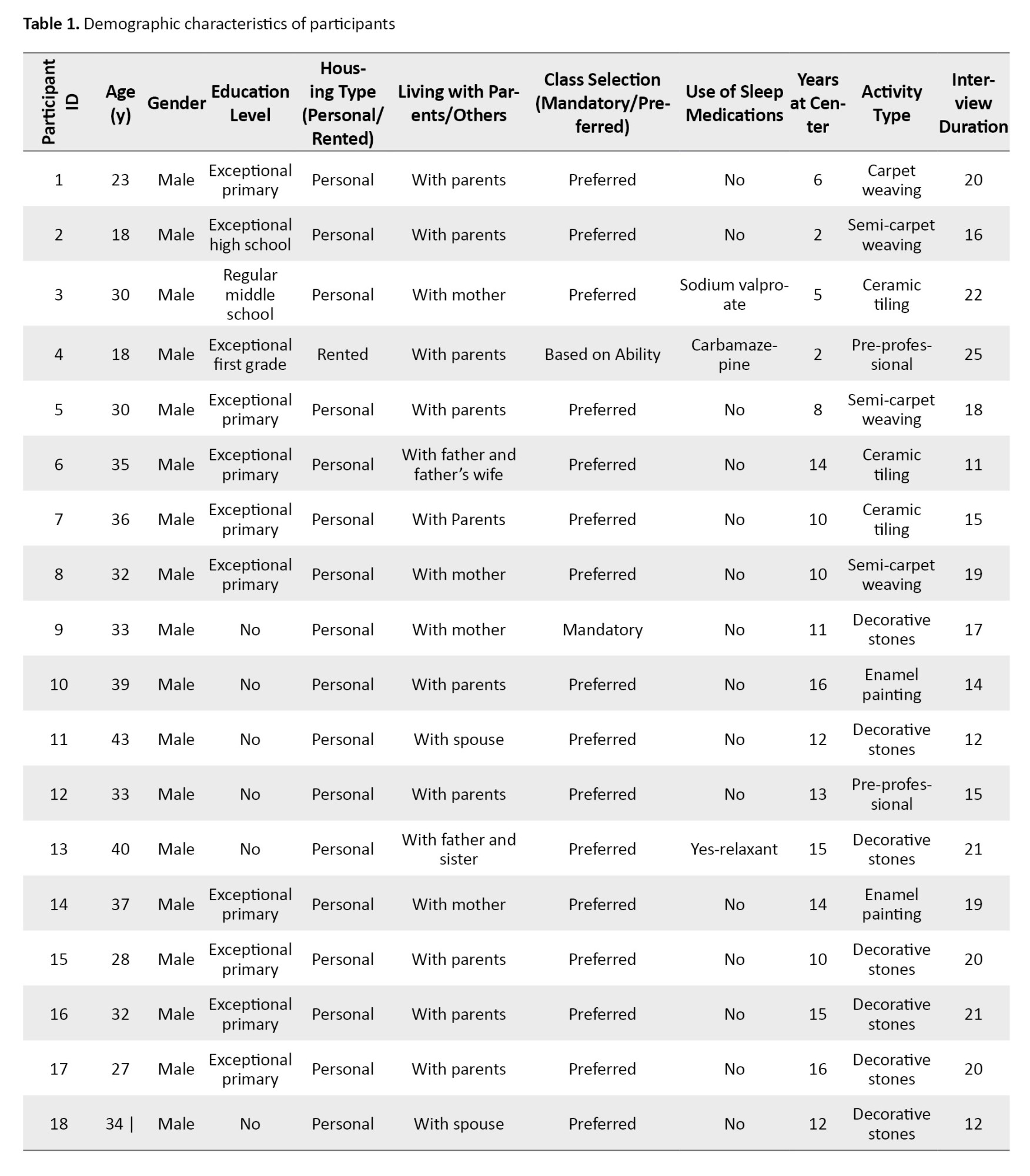
Participants were purposively sampled from SWVRCs in Malayer and Nahavand, Iran, between April and October 2024. All participants were male, reflecting the actual demographic composition of the centers, as no female individuals with disabilities were enrolled in these SWVRCs during the study period, and were aged 18–43 years (mean: 31.05±6.89). Disability types were sampled purposively to include physical, intellectual, sensory, and psychosocial impairments, aiming for maximum variation rather than convenience. The inclusion criteria required active engagement in vocational rehabilitation programs to ensure relevant occupational insights. The exclusive inclusion of male participants limits the representativeness of findings for females with disabilities; a constraint addressed in the limitations section (Table 1).
Inclusion and exclusion criteria
Inclusion criteria: (a) a documented disability (physical, intellectual, sensory, or psychosocial); (b) age 15–45 years; (c) active attendance at the SWVRC for at least three months; (d) the ability to speak Persian; and (e) self-reported absence of substance use (drugs or alcohol) that could affect sleep patterns.
Exclusion criteria: (a) unwillingness to continue the interview; (b) emergence of acute psychological distress during the interview requiring immediate intervention; and (c) inability to participate in a semi-structured interview due to severe cognitive or communication impairments (e.g. profound intellectual disability or non-verbal status without alternative means of communication).
The initial protocol considered excluding individuals with “family issues” (defined as ongoing domestic violence, recent bereavement, or family-imposed barriers to center attendance). However, due to the subjective nature of this criterion, the lack of a validated definition, and the risk of selection bias, it was not applied in the final study. No participant was excluded on this basis. Similarly, pre-existing mental health conditions (e.g. depression, anxiety) were not excluded, as they frequently co-occur with disability and are directly relevant to sleep quality.
Pilot interviews and data saturation
Two pilot interviews were conducted to refine the interview guide. Data were then collected through semi-structured interviews. Saturation was achieved after 15 interviews, defined as the point at which no new codes, subcategories, or main categories emerged. To confirm robustness, three additional interviews were conducted, which yielded no new data.
The interviews were conducted face-to-face and individually, ensuring psychological security and privacy for individuals with disabilities to freely share their experiences. The process began with warm-up questions, such as asking participants to introduce themselves, to help them feel comfortable. The initial general interview question posed to participants was: “Can you describe your experiences regarding the quality of your sleep?” Follow-up questions were used to delve deeper into specific aspects, including components affecting sleep quality, changes in sleep quality since starting work in SWVRCs, the impact of daily stressors on sleep quality, and methods employed to improve sleep quality. Exploratory questions were also used to obtain further insights, such as asking participants to provide examples of specific instances in which particular components affected their sleep quality; describing the influence of social interactions at work on sleep; examining the impact of the work environment and working conditions on sleep quality; exploring how work schedules and hours affected sleep timing and quality; and assessing the role of support and counseling provided by vocational rehabilitation centers in improving sleep quality. Probing questions were employed to clarify any ambiguities in the participants’ responses.
All interviews were audio-recorded with the informed consent of participants to ensure accurate transcription and analysis. The duration of each interview averaged between 30 and 50 minutes, and the content was transcribed immediately after each session. To ensure trustworthiness and rigor in the qualitative analysis, an initial subset of transcripts (25%) was double-coded independently by two researchers. Inter-coder reliability was assessed through consensus meetings, where discrepancies were discussed and resolved, and the coding framework was refined accordingly. The remaining transcripts were coded by the primary researcher, with regular peer debriefing sessions to maintain consistency. These questions and procedures facilitated a comprehensive understanding of the lived experiences of PWDs regarding the components influencing their sleep quality.
Data analysis
Coder team composition and training
The research team consisted of three coders: Two PhD candidates in rehabilitation counseling with prior training in qualitative methods, and the principal investigator (PI) with over eight years of experience in qualitative research on disability and employment. All coders completed a two-day training workshop on data analysis using the approach proposed by Elo and Kyngäs, including practice coding of two mock interviews that were not included in the main study. Intercoder agreement during the training exceeded 85%.
Data analysis procedure
The recorded content was transcribed on the same day as each interview. Data analysis followed the inductive conventional content analysis approach proposed by Elo and Kyngäs. Primary codes were extracted using MAXQDA software, version 2022. Initially, meaningful words and sentences were identified and labeled as open codes in accordance with the study’s objectives. Subsequently, these open codes were grouped according to semantic affinity, and categories and subcategories were developed based on similarities and differences in their meanings. This systematic coding process is widely recognized as a rigorous method for qualitative data analysis in health sciences research [27].
Inter-coder reliability procedures
All transcripts were independently coded by two coders (the two PhD candidates). Inter-coder reliability was assessed using MAXQDA’s coding comparison function, which calculates Cohen’s Kappa coefficient. The average Kappa across all transcripts was 0.87 (range: 0.82–0.92), indicating excellent agreement. Discrepancies were resolved through consensus meetings moderated by the PI, where each disagreement was discussed until agreement was reached. The final coding framework was documented in a codebook.
Member checking and feedback incorporation
Following the preliminary analysis, a member-checking session was conducted with eight participants (approximately 30% of the sample) who volunteered to review their coded interview summaries. Participants were asked to confirm whether the identified categories accurately reflected their experiences. Five participants provided minor clarifications (e.g. specifying that “noise” primarily referred to traffic sounds rather than workplace noise), which were incorporated into the final category descriptions. No substantial revisions requiring the restructuring of the main categories were requested. Three participants reported complete agreement and suggested no changes.
Rigor (trustworthiness)
To ensure the trustworthiness of the data, several strategies were employed according to Lincoln and Guba’s criteria [28]. Credibility was established by sharing the transcribed interviews with the participants and revising the findings based on their feedback through the member-checking process. This process validated the data and interpretations and ensured an accurate representation of the participants’ perspectives.
Dependability was ensured by having the interview transcripts and extracted codes reviewed by the research team and by an expert with a PhD. in health education who was familiar with qualitative studies. Their feedback was incorporated during the coding and analysis processes, thereby establishing consistency in the research process.
Confirmability was achieved through consensus among the research team members and the creation of an audit trail, which ensured that the findings were shaped by the participants’ responses rather than by researcher bias.
Reflexivity and bias management: Given the potential for researcher-participant familiarity (as some researchers had prior interactions with participants through vocational rehabilitation centers), several strategies were employed to manage bias. The lead researcher maintained a reflexive journal throughout the study, documenting field notes immediately after each interview, including personal reflections, assumptions, and potential influences on data collection and analysis. Regular peer debriefing sessions were held weekly among the research team to critically examine emerging interpretations and challenge any preconceptions. Additionally, bracketing was practiced during the coding phase. Before analyzing the data, the primary coder explicitly documented known assumptions about sleep challenges among persons with disabilities and revisited these notes throughout the analysis to minimize their influence. Any instances in which prior familiarity might have affected the interpretation were discussed openly during team meetings and documented in the audit trail.
Transferability was enhanced by providing a detailed description of all procedures used to collect and analyze the data. This allowed others to review the research process and determine the applicability of the study in different settings.
Results
The study included 18 male participants with disabilities, with a mean age of 31.05±6.89 years. Physical disabilities were the most frequent (66.7%), followed by visual disabilities (16.7%), hearing disabilities (11.1%), and mild intellectual disabilities (5.6%). Because the sample was exclusively male and disability types were unevenly distributed, the findings should be interpreted with caution and are not directly generalizable to women or individuals with other disability profiles. Data saturation was reached after the 15th interview; three additional interviews confirmed that no new concepts emerged, yielding a final sample of 18 participants (Table 1).
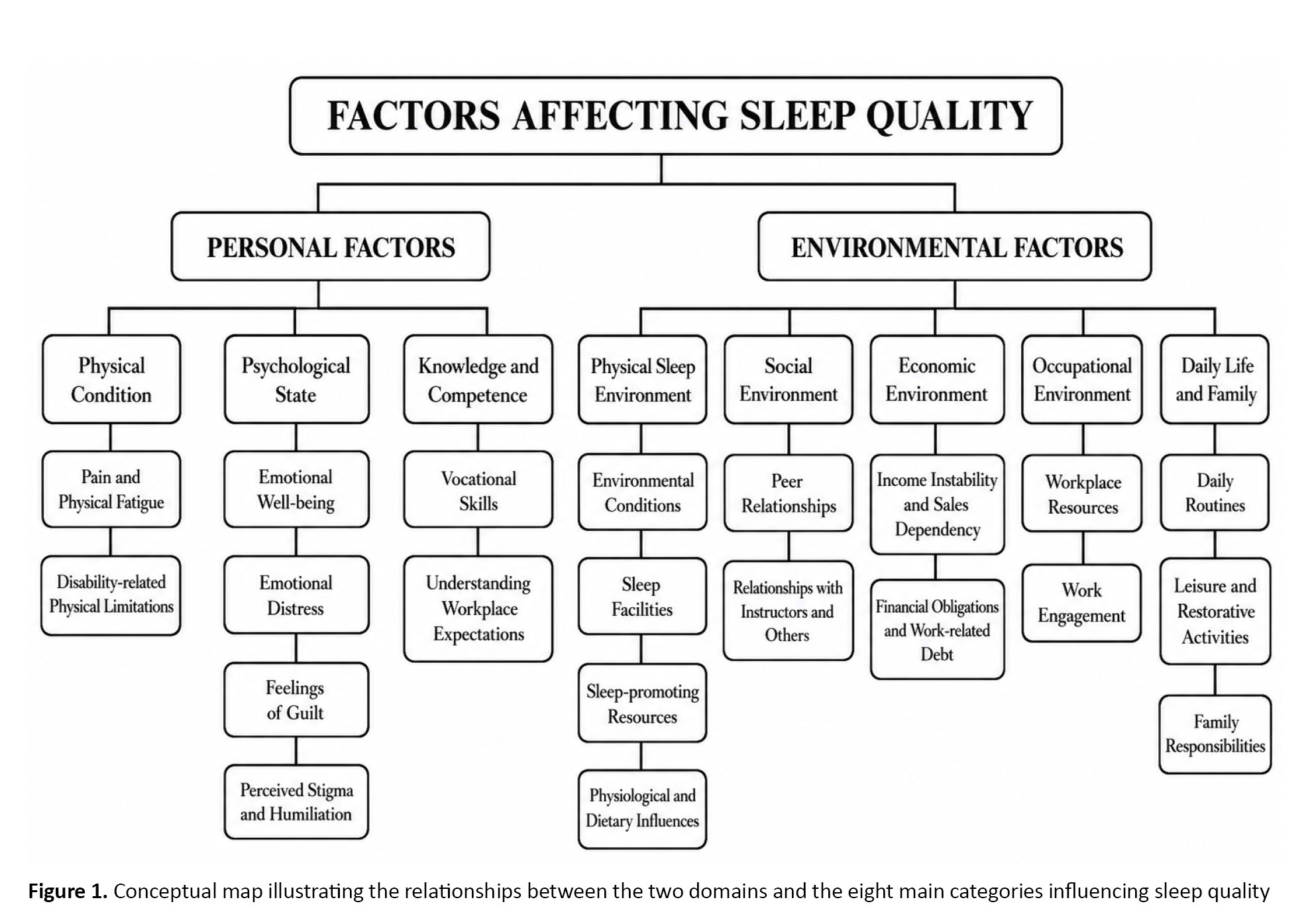
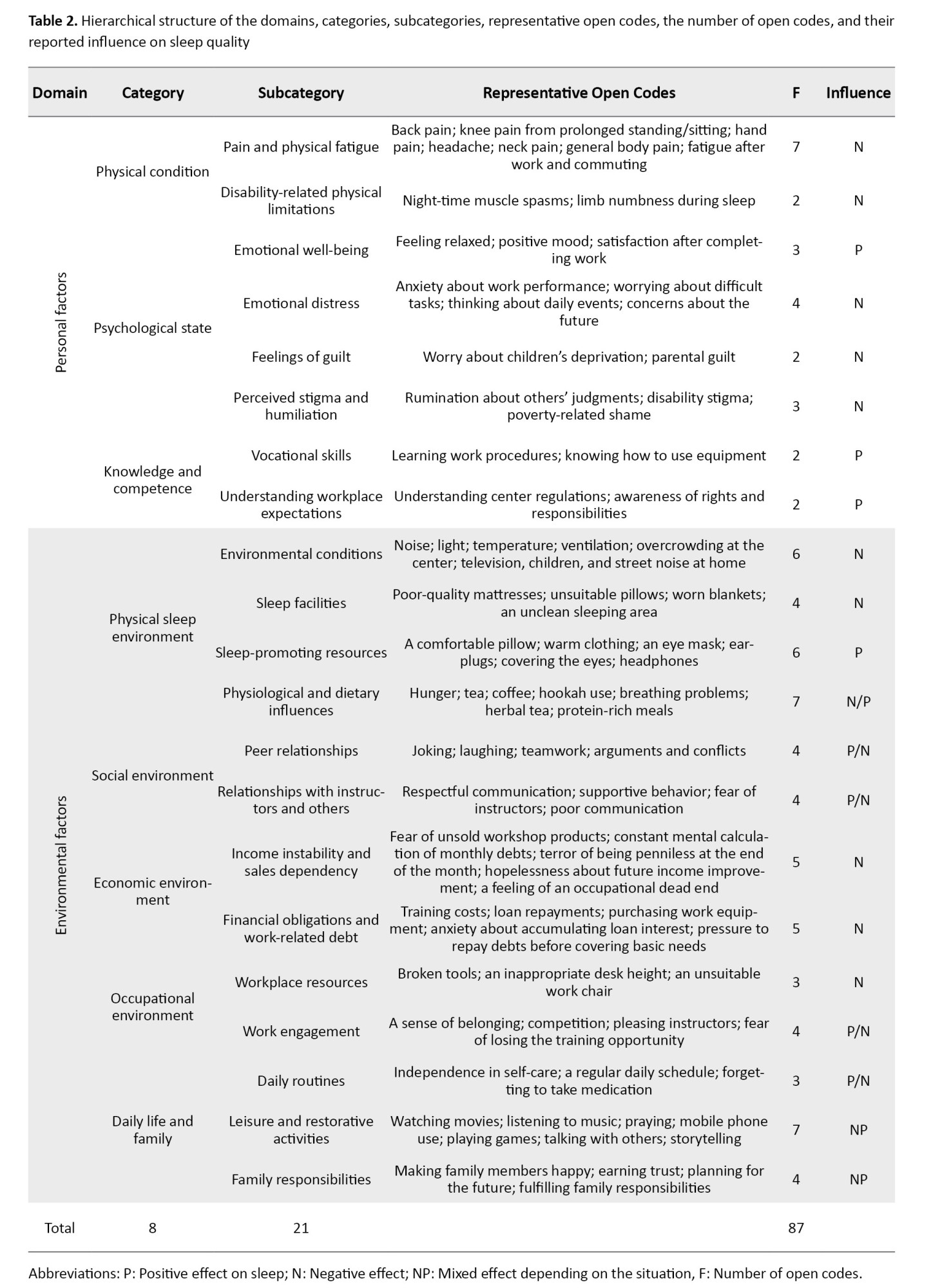
Analysis of the interview transcripts generated 1135 meaning units. From these, 87 open codes, 21 subcategories, and 8 categories were abstracted. The categories were organized under two domains: Personal factors and environmental factors. Table 2 presents the domains, categories, subcategories, representative open codes, the number of open codes per subcategory (n), and the reported direction of influence on sleep quality (Table 2).
Personal factors
This domain comprised three categories: Physical condition, psychological state, and knowledge and competence.
Physical condition
Participants described a range of bodily experiences that directly interfered with sleep. Two subcategories were identified.
Pain and physical fatigue: Musculoskeletal pain was the most frequently mentioned physical barrier to sleep. Participants reported back pain, knee pain from prolonged standing or sitting, hand pain, headache, neck pain, and generalized body aches. Fatigue after work and commuting was also described as contributing to physical exhaustion. Although pain made it difficult to fall asleep or maintain sleep, some participants noted that profound physical tiredness could occasionally help them sleep despite the pain.
Participant 11: “After work my neck hurts so bad, I can’t sleep.” Disability-related physical limitations: Specific impairments gave rise to nighttime symptoms, such as muscle spasms and limb numbness during sleep. These involuntary events were described as sudden and disruptive to rest. Participant 8: “Sometimes my leg goes numb in the middle of the night and it wakes me up.”
Psychological state
Emotional and cognitive affective experiences that shaped participants’ nights formed four subcategories.
Emotional well-being: Feeling relaxed, being in a positive mood, and experiencing satisfaction after completing work tasks were all associated with easier sleep onset and more continuous sleep.
Participant 2: “Since I came here, my life has become more organized, and I feel supported by the counsellor, my family and my friends.”
Emotional distress: Anxiety about work performance, stress related to difficult tasks, rumination about daily events, and persistent worry about the future were repeatedly mentioned as causes of pre-sleep mental restlessness and nighttime awakenings.
Participant 16: “I was so nervous about the work, I couldn’t sleep—I cried every day.”
Participant 12: “At the beginning, the job was so hard, I really couldn’t sleep.”
Feelings of guilt: A few participants described lying awake, consumed by thoughts about their children’s unmet needs. The weight of parental guilt was reported as an intrusive preoccupation that delayed sleep.
Participant 14: “I lie in bed thinking that my kids don’t have what others have. That thought just won’t let me sleep.”
Perceived stigma and humiliation: Rumination about the judgments of others, the stigma attached to disability, and shame related to poverty kept participants’ minds active at night. Participants described these thoughts as an exhausting mental loop.
Participant 10: “At first, I was worried because I did not know how to do the tasks properly. When I gradually learned the work steps and how to use the tools, I felt more confident and calm. Now I go to bed with a quieter mind and sleep better.”
Knowledge and competence
Two subcategories captured the role of understanding and skill in sleep-related experiences.
Vocational skills: Learning work procedures step by step and becoming familiar with tools and equipment gave participants a sense of progress and personal control. This reduction in uncertainty was described as calming and conducive to sleep.
Participant 15: “A patient trainer makes me feel calm, and I sleep better.”
Understanding workplace expectations: Having clear knowledge of the center’s regulations, rights, and responsibilities helped participants avoid interpersonal tensions and feel secure about their daily routines. This clarity was reported to reduce pre-sleep worry.
Participant 3: “When I know exactly what time I have to be there and what’s expected, I’m not so worried and can sleep.”
Environmental factors
This domain contained five categories: Physical sleep environment, social environment, economic environment, occupational environment, and daily life and family.
Physical sleep environment
Four subcategories described aspects of the immediate surroundings that affected participants’ ability to rest.
Environmental conditions: At the center, noise, unsuitable lighting, uncomfortable temperature, poor ventilation, and overcrowding in shared sleeping areas were uniformly described as making rest impossible. At home, noise from television, children playing, and street traffic caused further disturbance.
Participant 16: “The noise, the lights, people coming and going... you just can’t rest.”
Sleep facilities: The beds, mattresses, pillows, and blankets supplied by the center were consistently reported as worn, uncomfortable, or unclean. Participants directly connected these poor-quality facilities to their inability to sleep well.
Participant 17: “The mattress is too hard and the pillow does not support my neck. I wake up several times during the night because I cannot find a comfortable position, and I feel tired the next morning.”
Sleep-promoting resources: To compensate for inadequate facilities, some participants used personal items, such as comfortable pillows, warm clothing, eye masks, earplugs, or a cloth to cover their eyes. These self-supplied aids were described as effective in improving sleep.
Participant 2: “I tell people, if you can’t sleep, just cover your eyes with a cloth and put earphones in.”
Physiological and dietary influences: Hunger, consumption of tea, coffee, or hookah, and breathing difficulties triggered by allergens were associated with poorer sleep. In contrast, not being hungry, drinking herbal tea, and eating protein-rich foods were described as helpful.
Participant 2: “When I eat heavy, greasy food at night, my stomach burns and I can’t sleep. But when I have a cup of chamomile tea instead, I feel calm and can rest.”
Social environment
Two subcategories addressed the interpersonal dimension of the center.
Peer relationships: Joking, laughing, and teamwork created a sense of enjoyment that lasted into the night and facilitated sleep. Arguments and conflicts, in contrast, left participants tense and unable to settle.
Participant 9: “On days when we joke and laugh together at the center, we’re happy and we sleep better at night.”
Participant 15: “When we fight at the center, I can’t sleep.”
Relationships with instructors and others: Respectful communication and supportive behavior from staff were linked to feelings of safety and better sleep. Fear of coaches, harsh language, and poor communication were connected to nightmares, headaches, and stress that interfered with rest.
Participant 4: “When the coaches treat us respectfully, I feel calm and I sleep well. Harsh behavior just makes me anxious and ruins my sleep.”
Economic environment
Financial pressures formed two subcategories, both of which were described solely as negative influences on sleep.
Income instability and sales dependency (5 open codes): Participants reported fears that the products they made would not sell, constant mental calculation of monthly debts, fear of reaching the end of the month without money, hopelessness about improving their future income, and a general feeling of an occupational dead end. These worries were said to keep them awake night after night.
Participant 15: “I work hard to make these products, but I always worry that no one will buy them. At night, I keep thinking about whether I will earn enough money.”
Financial obligations and work-related debt: Training costs, loan repayments, the need to purchase work equipment, anxiety about accumulating interest on loans, and the pressure to repay debts before covering basic needs were all identified as severe, chronic stressors that delayed sleep and caused frequent nighttime awakenings.
Participant 11: “Sometimes I need tools and equipment to improve my work, but we cannot afford them. When I go to bed, I think about the money I owe and the things I cannot provide, and my mind stays awake.”
Occupational environment
Two subcategories captured work-specific resources and engagement, which were treated here as part of the wider environmental context.
Workplace resources: Broken tools, excessively high desks, and unsuitable work chairs caused pain in the hands, back, and neck. This pain was directly identified as the reason participants could not sleep after a day of work.
Participant 5: “The equipment is not designed according to our needs and abilities. Some tools are too high or too low, and many are not adapted to our disabilities. Sometimes even a simple task requires much more effort, which makes the work more difficult for us.”
Work engagement: Having a sense of belonging, experiencing a degree of healthy competition, and wanting to please instructors gave participants a valued occupational identity. This identity was reported to improve sleep. However, the fear of being dismissed or failing to learn a trade generated anxiety that disrupted rest.
Participant 6: “Thinking that I’m employed like everyone else makes me feel good, and I sleep better at night.”
Participant 12: “I’m afraid they’ll kick me out. What would I tell my family? What if I don’t learn a trade?” (No change—already natural and concise.”
Daily life and family
Three subcategories covered routines, leisure, and responsibilities outside immediate work tasks.
Daily routines: Independence in self-care and a predictable daily schedule were associated with better sleep. However, forgetting to take prescribed painkillers led to pain that prevented sleep.
Participant 4: “When I forget my medication, I can’t sleep.”
Leisure and restorative activities: Activities, such as watching movies, listening to music, and praying had mixed effects: they could help induce sleep or, depending on the content, keep participants awake. Mobile phone use and digital games were consistently reported to delay sleep onset, although participants continued them for enjoyment. Talking with others and storytelling were described as relaxing and sleep-promoting.
Participant 12: “When I can’t sleep, I put on a song and wear my headphones.”
Participant 17: “Phone games keep you awake. I know, but I enjoy them.”
Family responsibilities: The desire to make family members happy, earn their trust, secure their future, and fulfil family obligations was a powerful motivator but also a source of stress. Participants described lying awake while thinking about these responsibilities.
Participant 9: “I work hard because I want my mother happy. But sometimes the stress wakes me up at night.”
Participant 3: “When [staff member] shows my work to my mother and she smiles, I feel calm” (Figure 1).
According to the World Health Organization (WHO), disability is an umbrella term for impairments, activity limitations, and participation restrictions, denoting the negative aspects of the interaction between an individual with a health condition and that individual’s contextual components (environmental and personal components) [1]. People with disabilities (PWDs) include those who have long-term physical, mental, intellectual, or sensory impairments, which in interaction with various barriers, may hinder their full and effective participation in society on an equal basis with others [1]. Clinical studies indicate that approximately 40% of people with intellectual disability meet diagnostic criteria for comorbid mental health disorders, a prevalence rate that is at least two-fold higher than that observed in the neurotypical population [1]. In Iran, approximately 4% of the population is PWDs, with an unemployment rate exceeding 63% [2]. Furthermore, mental health comorbidities—prevalent among PWDs [3]—are often undiagnosed and untreated in Iranian rehabilitation settings due to limited specialized services, potentially compounding various health outcomes [3, 4]. Work provides social connections, independence, income, and meaningful engagement [5]. However, PWDs face substantial barriers to employment participation. Community encouragement can enhance self-efficacy and confidence in their ability to work [6]. Furthermore, vocational rehabilitation programs are essential for preparing individuals with disabilities to transition to work and achieve quality employment, thereby supporting their community integration [7]. In Iran, vocational centers administered by the State Welfare Organization provide expanding training opportunities. The Job Support Service Center operates two distinct types of services: support production workshops and vocational rehabilitation centers (SWVRCs). The latter employs licensed job coaches who deliver multidisciplinary interventions to match individuals with disabilities to suitable job conditions and facilitate stable employment based on skill development [8]. The consequences of empowering work include increased adaptive behavior, enhanced social interaction, greater satisfaction, heightened respect for others, and improved independence [4]. Work has a significant impact on the lives of adults with disabilities, providing social, emotional, and financial benefits [9, 10].
Sleep is essential for health, safety, and work performance, impacting cognitive abilities [11] and emotional well-being [12, 13]. Poor sleep quality can lead to negative emotions and disrupt daily functioning, resulting in relationship loss and decreased occupational balance [14-17]. Young adults should aim for seven to nine hours of sleep for optimal health [18]. Sleep quality in individuals with disabilities is a key factor in improving their health and overall quality of life (QoL). Recent studies indicate that individuals with disabilities face significant sleep disturbances due to various reasons, including physical, emotional, and social challenges [19-21]. A study by Kołtuniuk et al. found that 66% of individuals with disabilities experience sleep disorders [22]. Specifically, research has shown that environmental and social challenges, such as limited access to healthcare and social services, as well as financial pressures, can lead to inadequate sleep quality [23, 24]. Research indicates that higher job satisfaction is associated with better sleep quality among employees [12], and job quality significantly influences sleep quality, with better job conditions leading to improved sleep quality [25]. However, a meta-analysis demonstrated that while both sleep quality and quantity are negatively associated with workload, these two dimensions of sleep show notably different relationships with occupational correlates, suggesting that findings may vary depending on how sleep is conceptualized and measured [26]. Sleep quality is closely linked to occupational performance, and for PWDs, poor sleep can impair attention, productivity, and workplace safety—components critical to successful vocational rehabilitation.
In Iran, PWDs working in SWVRC may face unique occupational and environmental challenges that affect their sleep. However, no prior study has examined these components within Iran’s specific cultural and social context. This gap justifies a qualitative inquiry into the lived experiences of Iranian PWDs in SWVRCs. Accordingly, this study aimed to explore the components affecting sleep quality from the perspective of PWDs working in supportive workshops and vocational rehabilitation centers using qualitative content analysis.
Materials and Methods
Design
This qualitative exploratory study used conventional content analysis. This method was chosen over thematic or phenomenological approaches because it is particularly suitable for identifying specific, recurring components from narrative data when existing theory is limited—aligning directly with the study’s aim to explore diverse influences on sleep quality among PWDs in SWVRCs.
Participants and recruitment
Participants were purposively sampled from SWVRCs in Malayer and Nahavand, Iran, between April and October 2024. All participants were male, reflecting the actual demographic composition of the centers, as no female individuals with disabilities were enrolled in these SWVRCs during the study period, and were aged 18–43 years (mean: 31.05±6.89). Disability types were sampled purposively to include physical, intellectual, sensory, and psychosocial impairments, aiming for maximum variation rather than convenience. The inclusion criteria required active engagement in vocational rehabilitation programs to ensure relevant occupational insights. The exclusive inclusion of male participants limits the representativeness of findings for females with disabilities; a constraint addressed in the limitations section (Table 1).
Inclusion and exclusion criteria
Inclusion criteria: (a) a documented disability (physical, intellectual, sensory, or psychosocial); (b) age 15–45 years; (c) active attendance at the SWVRC for at least three months; (d) the ability to speak Persian; and (e) self-reported absence of substance use (drugs or alcohol) that could affect sleep patterns.
Exclusion criteria: (a) unwillingness to continue the interview; (b) emergence of acute psychological distress during the interview requiring immediate intervention; and (c) inability to participate in a semi-structured interview due to severe cognitive or communication impairments (e.g. profound intellectual disability or non-verbal status without alternative means of communication).
The initial protocol considered excluding individuals with “family issues” (defined as ongoing domestic violence, recent bereavement, or family-imposed barriers to center attendance). However, due to the subjective nature of this criterion, the lack of a validated definition, and the risk of selection bias, it was not applied in the final study. No participant was excluded on this basis. Similarly, pre-existing mental health conditions (e.g. depression, anxiety) were not excluded, as they frequently co-occur with disability and are directly relevant to sleep quality.
Pilot interviews and data saturation
Two pilot interviews were conducted to refine the interview guide. Data were then collected through semi-structured interviews. Saturation was achieved after 15 interviews, defined as the point at which no new codes, subcategories, or main categories emerged. To confirm robustness, three additional interviews were conducted, which yielded no new data.
The interviews were conducted face-to-face and individually, ensuring psychological security and privacy for individuals with disabilities to freely share their experiences. The process began with warm-up questions, such as asking participants to introduce themselves, to help them feel comfortable. The initial general interview question posed to participants was: “Can you describe your experiences regarding the quality of your sleep?” Follow-up questions were used to delve deeper into specific aspects, including components affecting sleep quality, changes in sleep quality since starting work in SWVRCs, the impact of daily stressors on sleep quality, and methods employed to improve sleep quality. Exploratory questions were also used to obtain further insights, such as asking participants to provide examples of specific instances in which particular components affected their sleep quality; describing the influence of social interactions at work on sleep; examining the impact of the work environment and working conditions on sleep quality; exploring how work schedules and hours affected sleep timing and quality; and assessing the role of support and counseling provided by vocational rehabilitation centers in improving sleep quality. Probing questions were employed to clarify any ambiguities in the participants’ responses.
All interviews were audio-recorded with the informed consent of participants to ensure accurate transcription and analysis. The duration of each interview averaged between 30 and 50 minutes, and the content was transcribed immediately after each session. To ensure trustworthiness and rigor in the qualitative analysis, an initial subset of transcripts (25%) was double-coded independently by two researchers. Inter-coder reliability was assessed through consensus meetings, where discrepancies were discussed and resolved, and the coding framework was refined accordingly. The remaining transcripts were coded by the primary researcher, with regular peer debriefing sessions to maintain consistency. These questions and procedures facilitated a comprehensive understanding of the lived experiences of PWDs regarding the components influencing their sleep quality.
Data analysis
Coder team composition and training
The research team consisted of three coders: Two PhD candidates in rehabilitation counseling with prior training in qualitative methods, and the principal investigator (PI) with over eight years of experience in qualitative research on disability and employment. All coders completed a two-day training workshop on data analysis using the approach proposed by Elo and Kyngäs, including practice coding of two mock interviews that were not included in the main study. Intercoder agreement during the training exceeded 85%.
Data analysis procedure
The recorded content was transcribed on the same day as each interview. Data analysis followed the inductive conventional content analysis approach proposed by Elo and Kyngäs. Primary codes were extracted using MAXQDA software, version 2022. Initially, meaningful words and sentences were identified and labeled as open codes in accordance with the study’s objectives. Subsequently, these open codes were grouped according to semantic affinity, and categories and subcategories were developed based on similarities and differences in their meanings. This systematic coding process is widely recognized as a rigorous method for qualitative data analysis in health sciences research [27].
Inter-coder reliability procedures
All transcripts were independently coded by two coders (the two PhD candidates). Inter-coder reliability was assessed using MAXQDA’s coding comparison function, which calculates Cohen’s Kappa coefficient. The average Kappa across all transcripts was 0.87 (range: 0.82–0.92), indicating excellent agreement. Discrepancies were resolved through consensus meetings moderated by the PI, where each disagreement was discussed until agreement was reached. The final coding framework was documented in a codebook.
Member checking and feedback incorporation
Following the preliminary analysis, a member-checking session was conducted with eight participants (approximately 30% of the sample) who volunteered to review their coded interview summaries. Participants were asked to confirm whether the identified categories accurately reflected their experiences. Five participants provided minor clarifications (e.g. specifying that “noise” primarily referred to traffic sounds rather than workplace noise), which were incorporated into the final category descriptions. No substantial revisions requiring the restructuring of the main categories were requested. Three participants reported complete agreement and suggested no changes.
Rigor (trustworthiness)
To ensure the trustworthiness of the data, several strategies were employed according to Lincoln and Guba’s criteria [28]. Credibility was established by sharing the transcribed interviews with the participants and revising the findings based on their feedback through the member-checking process. This process validated the data and interpretations and ensured an accurate representation of the participants’ perspectives.
Dependability was ensured by having the interview transcripts and extracted codes reviewed by the research team and by an expert with a PhD. in health education who was familiar with qualitative studies. Their feedback was incorporated during the coding and analysis processes, thereby establishing consistency in the research process.
Confirmability was achieved through consensus among the research team members and the creation of an audit trail, which ensured that the findings were shaped by the participants’ responses rather than by researcher bias.
Reflexivity and bias management: Given the potential for researcher-participant familiarity (as some researchers had prior interactions with participants through vocational rehabilitation centers), several strategies were employed to manage bias. The lead researcher maintained a reflexive journal throughout the study, documenting field notes immediately after each interview, including personal reflections, assumptions, and potential influences on data collection and analysis. Regular peer debriefing sessions were held weekly among the research team to critically examine emerging interpretations and challenge any preconceptions. Additionally, bracketing was practiced during the coding phase. Before analyzing the data, the primary coder explicitly documented known assumptions about sleep challenges among persons with disabilities and revisited these notes throughout the analysis to minimize their influence. Any instances in which prior familiarity might have affected the interpretation were discussed openly during team meetings and documented in the audit trail.
Transferability was enhanced by providing a detailed description of all procedures used to collect and analyze the data. This allowed others to review the research process and determine the applicability of the study in different settings.
Results
The study included 18 male participants with disabilities, with a mean age of 31.05±6.89 years. Physical disabilities were the most frequent (66.7%), followed by visual disabilities (16.7%), hearing disabilities (11.1%), and mild intellectual disabilities (5.6%). Because the sample was exclusively male and disability types were unevenly distributed, the findings should be interpreted with caution and are not directly generalizable to women or individuals with other disability profiles. Data saturation was reached after the 15th interview; three additional interviews confirmed that no new concepts emerged, yielding a final sample of 18 participants (Table 1).
Analysis of the interview transcripts generated 1135 meaning units. From these, 87 open codes, 21 subcategories, and 8 categories were abstracted. The categories were organized under two domains: Personal factors and environmental factors. Table 2 presents the domains, categories, subcategories, representative open codes, the number of open codes per subcategory (n), and the reported direction of influence on sleep quality (Table 2).
Personal factors
This domain comprised three categories: Physical condition, psychological state, and knowledge and competence.
Physical condition
Participants described a range of bodily experiences that directly interfered with sleep. Two subcategories were identified.
Pain and physical fatigue: Musculoskeletal pain was the most frequently mentioned physical barrier to sleep. Participants reported back pain, knee pain from prolonged standing or sitting, hand pain, headache, neck pain, and generalized body aches. Fatigue after work and commuting was also described as contributing to physical exhaustion. Although pain made it difficult to fall asleep or maintain sleep, some participants noted that profound physical tiredness could occasionally help them sleep despite the pain.
Participant 11: “After work my neck hurts so bad, I can’t sleep.” Disability-related physical limitations: Specific impairments gave rise to nighttime symptoms, such as muscle spasms and limb numbness during sleep. These involuntary events were described as sudden and disruptive to rest. Participant 8: “Sometimes my leg goes numb in the middle of the night and it wakes me up.”
Psychological state
Emotional and cognitive affective experiences that shaped participants’ nights formed four subcategories.
Emotional well-being: Feeling relaxed, being in a positive mood, and experiencing satisfaction after completing work tasks were all associated with easier sleep onset and more continuous sleep.
Participant 2: “Since I came here, my life has become more organized, and I feel supported by the counsellor, my family and my friends.”
Emotional distress: Anxiety about work performance, stress related to difficult tasks, rumination about daily events, and persistent worry about the future were repeatedly mentioned as causes of pre-sleep mental restlessness and nighttime awakenings.
Participant 16: “I was so nervous about the work, I couldn’t sleep—I cried every day.”
Participant 12: “At the beginning, the job was so hard, I really couldn’t sleep.”
Feelings of guilt: A few participants described lying awake, consumed by thoughts about their children’s unmet needs. The weight of parental guilt was reported as an intrusive preoccupation that delayed sleep.
Participant 14: “I lie in bed thinking that my kids don’t have what others have. That thought just won’t let me sleep.”
Perceived stigma and humiliation: Rumination about the judgments of others, the stigma attached to disability, and shame related to poverty kept participants’ minds active at night. Participants described these thoughts as an exhausting mental loop.
Participant 10: “At first, I was worried because I did not know how to do the tasks properly. When I gradually learned the work steps and how to use the tools, I felt more confident and calm. Now I go to bed with a quieter mind and sleep better.”
Knowledge and competence
Two subcategories captured the role of understanding and skill in sleep-related experiences.
Vocational skills: Learning work procedures step by step and becoming familiar with tools and equipment gave participants a sense of progress and personal control. This reduction in uncertainty was described as calming and conducive to sleep.
Participant 15: “A patient trainer makes me feel calm, and I sleep better.”
Understanding workplace expectations: Having clear knowledge of the center’s regulations, rights, and responsibilities helped participants avoid interpersonal tensions and feel secure about their daily routines. This clarity was reported to reduce pre-sleep worry.
Participant 3: “When I know exactly what time I have to be there and what’s expected, I’m not so worried and can sleep.”
Environmental factors
This domain contained five categories: Physical sleep environment, social environment, economic environment, occupational environment, and daily life and family.
Physical sleep environment
Four subcategories described aspects of the immediate surroundings that affected participants’ ability to rest.
Environmental conditions: At the center, noise, unsuitable lighting, uncomfortable temperature, poor ventilation, and overcrowding in shared sleeping areas were uniformly described as making rest impossible. At home, noise from television, children playing, and street traffic caused further disturbance.
Participant 16: “The noise, the lights, people coming and going... you just can’t rest.”
Sleep facilities: The beds, mattresses, pillows, and blankets supplied by the center were consistently reported as worn, uncomfortable, or unclean. Participants directly connected these poor-quality facilities to their inability to sleep well.
Participant 17: “The mattress is too hard and the pillow does not support my neck. I wake up several times during the night because I cannot find a comfortable position, and I feel tired the next morning.”
Sleep-promoting resources: To compensate for inadequate facilities, some participants used personal items, such as comfortable pillows, warm clothing, eye masks, earplugs, or a cloth to cover their eyes. These self-supplied aids were described as effective in improving sleep.
Participant 2: “I tell people, if you can’t sleep, just cover your eyes with a cloth and put earphones in.”
Physiological and dietary influences: Hunger, consumption of tea, coffee, or hookah, and breathing difficulties triggered by allergens were associated with poorer sleep. In contrast, not being hungry, drinking herbal tea, and eating protein-rich foods were described as helpful.
Participant 2: “When I eat heavy, greasy food at night, my stomach burns and I can’t sleep. But when I have a cup of chamomile tea instead, I feel calm and can rest.”
Social environment
Two subcategories addressed the interpersonal dimension of the center.
Peer relationships: Joking, laughing, and teamwork created a sense of enjoyment that lasted into the night and facilitated sleep. Arguments and conflicts, in contrast, left participants tense and unable to settle.
Participant 9: “On days when we joke and laugh together at the center, we’re happy and we sleep better at night.”
Participant 15: “When we fight at the center, I can’t sleep.”
Relationships with instructors and others: Respectful communication and supportive behavior from staff were linked to feelings of safety and better sleep. Fear of coaches, harsh language, and poor communication were connected to nightmares, headaches, and stress that interfered with rest.
Participant 4: “When the coaches treat us respectfully, I feel calm and I sleep well. Harsh behavior just makes me anxious and ruins my sleep.”
Economic environment
Financial pressures formed two subcategories, both of which were described solely as negative influences on sleep.
Income instability and sales dependency (5 open codes): Participants reported fears that the products they made would not sell, constant mental calculation of monthly debts, fear of reaching the end of the month without money, hopelessness about improving their future income, and a general feeling of an occupational dead end. These worries were said to keep them awake night after night.
Participant 15: “I work hard to make these products, but I always worry that no one will buy them. At night, I keep thinking about whether I will earn enough money.”
Financial obligations and work-related debt: Training costs, loan repayments, the need to purchase work equipment, anxiety about accumulating interest on loans, and the pressure to repay debts before covering basic needs were all identified as severe, chronic stressors that delayed sleep and caused frequent nighttime awakenings.
Participant 11: “Sometimes I need tools and equipment to improve my work, but we cannot afford them. When I go to bed, I think about the money I owe and the things I cannot provide, and my mind stays awake.”
Occupational environment
Two subcategories captured work-specific resources and engagement, which were treated here as part of the wider environmental context.
Workplace resources: Broken tools, excessively high desks, and unsuitable work chairs caused pain in the hands, back, and neck. This pain was directly identified as the reason participants could not sleep after a day of work.
Participant 5: “The equipment is not designed according to our needs and abilities. Some tools are too high or too low, and many are not adapted to our disabilities. Sometimes even a simple task requires much more effort, which makes the work more difficult for us.”
Work engagement: Having a sense of belonging, experiencing a degree of healthy competition, and wanting to please instructors gave participants a valued occupational identity. This identity was reported to improve sleep. However, the fear of being dismissed or failing to learn a trade generated anxiety that disrupted rest.
Participant 6: “Thinking that I’m employed like everyone else makes me feel good, and I sleep better at night.”
Participant 12: “I’m afraid they’ll kick me out. What would I tell my family? What if I don’t learn a trade?” (No change—already natural and concise.”
Daily life and family
Three subcategories covered routines, leisure, and responsibilities outside immediate work tasks.
Daily routines: Independence in self-care and a predictable daily schedule were associated with better sleep. However, forgetting to take prescribed painkillers led to pain that prevented sleep.
Participant 4: “When I forget my medication, I can’t sleep.”
Leisure and restorative activities: Activities, such as watching movies, listening to music, and praying had mixed effects: they could help induce sleep or, depending on the content, keep participants awake. Mobile phone use and digital games were consistently reported to delay sleep onset, although participants continued them for enjoyment. Talking with others and storytelling were described as relaxing and sleep-promoting.
Participant 12: “When I can’t sleep, I put on a song and wear my headphones.”
Participant 17: “Phone games keep you awake. I know, but I enjoy them.”
Family responsibilities: The desire to make family members happy, earn their trust, secure their future, and fulfil family obligations was a powerful motivator but also a source of stress. Participants described lying awake while thinking about these responsibilities.
Participant 9: “I work hard because I want my mother happy. But sometimes the stress wakes me up at night.”
Participant 3: “When [staff member] shows my work to my mother and she smiles, I feel calm” (Figure 1).
Discussion
This study explored the multidimensional factors affecting sleep quality in 18 males with disabilities working in Iranian SWVRCs. The findings, organized into personal and environmental domains, revealed that sleep quality is not a standalone symptom but a product of interacting physical, psychological, social, economic, and occupational conditions. The discussion follows the order of the categories identified in the results, linking each to existing evidence and highlighting gaps between local practices and international standards where relevant.
Personal factors
Physical condition emerged as a pervasive barrier. Participants consistently described musculoskeletal pain—including back, knee, neck, and hand pain—that was exacerbated by prolonged static postures and physical fatigue, delayed sleep onset, and caused nocturnal awakenings. This finding aligns with the well-documented bidirectional relationship between pain and sleep [29]. Disability-specific nighttime symptoms, such as muscle spasms and limb numbness, further disrupted rest. These findings underscore that pain management and ergonomic accommodation are foundational sleep interventions in this population. The fact that this pain was frequently linked to poorly designed workstations—an environmental factor—illustrates the inseparability of the personal and environmental domains.
Psychological state encompassed both protective and disruptive elements. Emotional well-being— including a sense of relaxation and satisfaction after completing tasks—facilitated sleep, consistent with evidence that positive affect enhances sleep quality [6]. Conversely, emotional distress (anxiety about work performance, future uncertainty, and rumination) was a major driver of pre-sleep cognitive arousal, supporting the hyperarousal model of insomnia. The salience of guilt over children’s unmet needs and perceived stigma highlights how societal exclusion becomes internalized, generating chronic vigilance that disrupts sleep [30]. For individuals undergoing vocational rehabilitation, psychological distress is not merely an intrapsychic issue; it is also amplified by economic marginalization and disability-related discrimination.
Knowledge and competence—comprising vocational skills and an understanding of workplace expectations—served as cognitive resources that reduced uncertainty and anxiety. When participants mastered job-related steps or clearly understood the center’s regulations, their pre-sleep worry diminished, consistent with self-determination theory’s emphasis on competence as a basic need for well-being [31]. This finding suggests that structured onboarding, transparent communication of expectations, and stepwise skill-building are not only vocational tools but also sleep-promoting strategies.
Environmental factors
The physical sleep environment at the centers was unanimously described as detrimental, owing to overcrowding, noise, poor lighting, uncomfortable temperatures, and inadequate bedding. These conditions violate basic sleep hygiene principles [32] and stand in stark contrast to international best practices, which recommend quiet, private, and adjustable sleeping quarters in institutional settings. Participants’ reliance on self-supplied items, like eye masks and earplugs reflects both unmet institutional responsibility and personal resilience. Dietary influences—including hunger, caffeine consumption, and heavy meals—further point to modifiable center-level factors that could immediately improve sleep. Addressing the physical sleep environment is the most tangible and ethically urgent intervention.
The social environment exhibited a clear duality. Positive peer interactions—including joking, laughing, and teamwork—created a sense of belonging that extended into the night, corroborating meta-analytic evidence that perceived social support improves sleep [33]. Conversely, interpersonal conflicts and instructors’ harsh, intimidating communication were associated with stress, nightmares, and sleep difficulties. The critical role of supervisor behavior echoes research showing that supervisor support for sleep enhances workplace safety and well-being [34]. In the present setting, respectful coaching fostered safety, while authoritarian behavior was a source of nocturnal distress. This contrast underscores a pressing need for communication training among vocational instructors, which international total worker health frameworks already prioritize [35].
Economic environment acted as a chronic, unavoidable stressor. Fear of unsold products, constant calculations related to debts, hopelessness about income, and the burden of training-related loans kept participants awake night after night. The strong association between financial strain and poor sleep is magnified in this context by the precarious nature of workshop-based production, in which income depends on unstable sales [23]. No participant reported having access to financial counseling or debt relief, revealing a critical gap in the rehabilitation model. International best practices increasingly integrate financial wellness into vocational support, yet this dimension is completely absent from the studied centers.
The occupational environment influenced sleep through both ergonomic and psychosocial pathways. Broken tools, inappropriate desk heights, and unsuitable chairs directly contributed to the pain and fatigue described in the personal domain, thereby creating a vicious cycle. This finding mirrors evidence that suboptimal ergonomics are associated with musculoskeletal disorders and impaired sleep [36]. On the psychosocial side, a sense of belonging, healthy competition, and the motivation to please instructors provided participants with a valued occupational identity that promoted sleep. However, the fear of dismissal or failure to learn a trade generated profound anxiety, echoing findings that unfavorable workplace psychosocial conditions and limited psychosocial resources are associated with an increased risk of sleep disturbances. Work, therefore, functioned both as a sleep-enhancing anchor and as a sleep-disrupting threat, depending on the balance between support and precarity.
Daily life and family factors further shaped sleep. Structured daily routines and independence in self-care were protective, whereas forgetting to take pain medication led to sleepless nights. Digital games and stimulating media delayed sleep onset, consistent with research on screen time and sleep in young adults [37]. Family responsibilities, although a source of meaning, often became nocturnal worries about fulfilling obligations or making loved ones proud, illustrating the emotional weight carried by workers with disabilities.
Synthesis and context
The findings reinforce the biopsychosocial model of sleep, demonstrating that sleep quality in vocational rehabilitation is determined by an interplay of physical, cognitive, emotional, social, economic, and occupational factors. The stark gap between participants’ lived experiences and international standards—particularly regarding the physical environment, staff communication, and economic security—highlights systemic deficiencies. In settings where best practice calls for integrated sleep health programming, the studied SWVRCs entirely lacked such attention, leaving individuals to navigate sleep disturbances through personal coping strategies alone.
Synthesis with existing literature
Our findings align with several established studies and extend them to the specific context of disabled workers in Iranian vocational rehabilitation settings. The biopsychosocial model of sleep [38] is supported by our identification of interconnected personal (pain and anxiety), environmental (crowding and noise), and occupational (task-related stress) factors affecting sleep quality.
Consistent with previous research, we found that occupational factors significantly influence sleep outcomes. Studies have reported that mental workload, burnout and work fatigue [39], shift type [40], working conditions [41, 42], and employee work behaviors [26]affect sleep quality. Similarly, the bidirectional relationship between pain and sleep [29] and the role of anxiety and depression in sleep disturbances [38] were confirmed in our sample. A study of construction workers in Iran also reported significant correlations between poor sleep quality, increased job stress (r=-0.165, P<0.05), and decreased job satisfaction (r=0.333, P<0.01), reinforcing the critical link between occupational conditions and sleep outcomes [43].
Our study makes unique contributions specific to workers with disabilities in SWVRCs. First, fear of authority figures and a lack of clarity regarding rules emerged as distinct stressors that are not prominently featured in studies of non-disabled workers. This finding aligns with recent research showing that workers with episodic disabilities face pervasive stigma and disbelief regarding their conditions, as well as significant barriers to accessing workplace accommodations [43]. Second, although the American Occupational Therapy Association (AOTA) recognizes sleep and work as primary occupations [44], our findings suggest that, in Iranian SWVRCs, sleep is rarely addressed as an occupational priority, representing a gap between professional guidelines and local practice. Third, we identified both beneficial and disruptive pathways between work and sleep. Work improved sleep when it provided structure, social support, and a sense of purpose, consistent with studies showing that daytime activities enhance motivation, reduce psychological harm, and improve sleep quality [45], and that work fosters social connections that positively influence sleep [33]. However, work disrupted sleep when it introduced pain, fear of authority figures, financial stress, or performance pressure, consistent with research highlighting the dual role of occupational engagement in promoting well-being while also contributing to stress [46, 47].
In summary, although our findings confirm established relationships between occupational factors and sleep quality, they extend the literature by identifying disability-specific stressors in vocational rehabilitation contexts and highlighting gaps between international best practices and their local implementation in Iran.
Implications for practice and policy
At the practice level, centers should implement routine sleep quality screening and integrate evidence-based psychological support, particularly cognitive-behavioral strategies for managing anxiety, guilt, and stigma. Immediate environmental modifications are essential, including providing comfortable individual bedding, reducing noise and overcrowding, and ensuring appropriate lighting and temperature. Ergonomic workstations must be introduced to break the pain–sleeplessness cycle. Staff training in respectful, supportive communication is non-negotiable, given its direct impact on residents’ nocturnal well-being. Financial counseling and the establishment of a fund to offset training equipment costs would directly address the economic stress that undermines sleep. Structurally, predictable daily schedules and calming evening activities should replace stimulating screen-based leisure. At the policy level, minimum infrastructure standards for sleeping accommodations in rehabilitation settings must be mandated and enforced. Job security frameworks that reduce the pervasive fear of dismissal, and integration of financial wellness programs into vocational rehabilitation, are equally critical.
Limitations
The exclusively male sample limits the transferability of the findings to women with disabilities, who face additional sleep challenges, such as caregiving responsibilities and safety concerns in mixed-gender settings. The uneven distribution of disability types—predominantly physical—restricts insight into the specific needs of individuals with sensory or intellectual disabilities. All data were self-reported; future research should incorporate objective measures, like actigraphy. The study was conducted in a single Iranian province, further limiting the generalizability of the findings.
Future research directions
Future studies should include women and a more balanced representation of disability types to capture the full spectrum of experiences. Multi-stakeholder research involving center administrators, vocational coaches, and family members is needed to understand systemic barriers and facilitators. Intervention research evaluating the effectiveness of integrated sleep health programs—combining environmental upgrades, staff communication training, and financial support—within vocational rehabilitation is urgently warranted. Finally, longitudinal designs could clarify the causal pathways between occupational engagements, economic stability, and sleep quality over time. Ensuring restorative sleep for PWDs in vocational settings is both a clinical necessity and a social justice imperative. It requires a holistic, rights-based approach that addresses the structural, economic, and interpersonal determinants of health.
Conclusion
This study demonstrates that sleep quality among PWDs in Iranian vocational rehabilitation centers is shaped by an intricate network of personal and environmental factors, including pain, psychological distress, knowledge deficits, inadequate physical environments, interpersonal dynamics, economic insecurity, and occupational conditions. The findings highlight that sleep is not an isolated clinical issue but a reflection of the broader conditions of rehabilitation and employment.
Ethical Considerations
Compliance with ethical guidelines
This study complied with the ethical principles recommended by the Research Ethics Committee of Hamadan University of Medical Sciences, Hamadan, Iran (Code: IR.UMSHA.REC.1401.308) and the Helsinki Declaration. All interview participants received comprehensive written information about the study objectives and procedures. Written informed consent was obtained from each participant prior to their involvement.
Funding
This work was part of a research project, supported by Hamadan University of Medical Sciences, Hamadan, Iran (Grant No.: 140104282960). The funding source had no role in the study design, data collection, data analysis, data interpretation, or preparation of the manuscript.
Authors contributions
Conceptualization and study design: Masoumeh Seidi and Saideh Sadat Mortazavi; Data collection and formal analysis: Zahra Mortazavi and Hossein Matinpour; Writing the original draft: Zahra Mortazavi and Saideh Sadat Mortazavi; Review and editing: Azim Azizi; Final approval: All authors.
Conflict of interest
The authors declared no competing interests.
Acknowledgements
The authors would like to sincerely thank all staff members at the participating rehabilitation centers, the Welfare Departments of Malayer and Nahavand, and the Vice-Chancellor for Research and Technology at Hamadan University of Medical Sciences, Hamadan, Iran, for their valuable support and contributions to this study.
References
- Totsika V, Liew A, Absoud M, Adnams C, Emerson E. Mental health problems in children with intellectual disability. The Lancet Child & Adolescent Health. 2022; 6(6):432-44. [DOI:10.1016/S2352-4642(22)00067-0] [PMID]
- Dalir E. Reviewing and presenting the Appropriate Employment Model for the Disabled Based on the indigenous advantages of Ardabil province. Social Welfare Quarterly. 2023; 23(90):325-64. [DOI:10.32598/refahj.23.90.4306.1]
- Needham J, Beggs R, van de Mortel TF. Supporting learners in prison healthcare work-integrated learning settings through simulation: A cross-sectional study. BMC Nursing. 2023; 22(1):322. [DOI:10.1186/s12912-023-01506-3] [PMID] [PMCID]
- Douglas AD, Zaidi MY, Maatman TK, Choi JN, Meagher AD. Caring for incarcerated patients: Can it ever be equal? Journal of Surgical Education. 2021; 78(6):e154-60. [DOI:10.1016/j.jsurg.2021.06.009] [PMID]
- Hajebrahimi A, Alimohammadzadeh K, Hosseini SM, Maher A, Bahadori M. Barriers to healthcare delivery in Iranian prisons: A qualitative study. International Journal of Prisoner Health. 2020; 16(4):373-88. [DOI:10.1108/IJPH-01-2020-0008.] [PMID]
- Ong AD, Kim S, Young S, Steptoe A. Positive affect and sleep: A systematic review. Sleep Medicine Reviews. 2017; 35:21-32. [DOI:10.1016/j.smrv.2016.07.006.] [PMID]
- Dodur HMS, Çalişkan B. Parent-to-parent support perception and Parent-Child relationship in parents of children with special Needs: The mediating role of quality of life. Children and Youth Services Review. 2024; 166:107925. [DOI:10.1016/j.childyouth.2024.107925]
- Khajehnoori Y, Jamshidi Z. [Humanitarian approach based on the fundamental rights of prisoners (Persian)]. The Quarterly Journal of Judicial Law Views. 2023; 28(102):23-48. [DOI:10.22034/jlvi.2024.1998654.0]
- Driscoll LC. The provision of healthcare for older adults in a massachusetts jail/house of correction: Perspectiv erspectives from Providers [doctoral dissertation]. Boston: University of Massachusetts; 2024. [Link]
- Bui J, Wendt M, Bakos A. Understanding and addressing health disparities and health needs of justice-involved populations. Public Health Report. 2019; 134(1_suppl):3S-7S. [DOI:10.1177/0033354918813089] [PMID] [PMCID]
- Edge C, Stockley MR, Swabey ML, King ME, Decodts MF, Hard J, et al. Secondary care clinicians and staff have a key role in delivering equivalence of care for prisoners: A qualitative study of prisoners’ experiences. EClinicalMedicine. 2020; 24(100416):1-5. [DOI:10.1016/j.eclinm.2020.100416] [PMID] [PMCID]
- Smith A. Recidivism: Prison management’s focus on the mental well-being of offenders [doctoral dissertation]. Nashville: Trevecca Nazarene University; 2023. [Link]
- Brooks KC, Makam AN, Haber LA. Caring for hospitalized incarcerated patients: physician and nurse experience. Journal of General Internal Medicine. 2022; 37(2):1-3. [DOI:10.1007/s11606-020-06510-w] [PMID] [PMCID]
- Isaac Caro A. Aproximación a la enfermería penitenciaria: una revisión integradora. Revista Española de Sanidad Penitenciaria. 2021; 23(2):76-85. [DOI:10.18176/resp.00034] [PMID] [PMCID]
- Gholampour M. problematization of prisoners’ right to physical health? critical discourse analysis of criminal justice system’authorities of Iran. Criminal Law and Criminology Studies. 2022; 52(1):122-99. [DOI:10.22059/jqclcs.2023.352307.1804]
- Kalantari S, Modanloo M, Ebadi A, Khoddam H. Concept analysis of conscience-based nursing care: A hybrid approach of Schwartz-Barcott and Kim’s hybrid model. BMC Medical Ethics. 2024; 25(1):70. [DOI:10.1186/s12910-024-01070-8] [PMID] [PMCID]
- Hajebrahimi A, Hosseini SM, Maher A, Bahadori M. [The different structures of healthcare for prisoners: A review study (Persian)]. Studies in Medical Sciences. 2020; 31(3):230-9. [Link]
- Brooke J, Rybacka M, Sarwan S, Ojo O. An exploration of nursing students’ lived experience of clinical placement in adult male prisons: A phenomenological study. Journal of Advanced Nursing. 2024; 81(3):1517-28. [DOI:10.1111/jan.16355] [PMID] [PMCID]
- Browne E, King J, Surtees A. Sleep in people with and without intellectual disabilities: A systematic review and meta-analysis. Journal of Intellectual Disability Research. 2024; 68(1):1-22. [DOI:10.1111/jir.13093Digital Object Identifier (DOI)] [PMID]
- Chien M-Y, Chen H-C. Poor sleep quality is independently associated with physical disability in older adults. Journal of Clinical Sleep Medicine. 2015; 11(3):225-32. [DOI:10.5664/jcsm.4532] [PMID] [PMCID]
- Surtees AD, Oliver C, Jones CA, Evans DL, Richards C. Sleep duration and sleep quality in people with and without intellectual disability: A meta-analysis. Sleep Medicine Reviews. 2018; 40:135-50. [DOI:10.1016/j.smrv.2017.11.003.] [PMID]
- Kołtuniuk A, Kazimierska-Zając M, Pogłódek D, Chojdak-Łukasiewicz J. Sleep disturbances, degree of disability and the quality of life in multiple sclerosis patients. International Journal of Environmental Research and Public Health. 2022; 19(6):3271. [DOI:10.3390/ijerph19063271] [PMID] [PMCID]
- Papadopoulos D, Sosso FE, Khoury T, Surani SR. Sleep disturbances are mediators between socioeconomic status and health: A scoping review. International Journal of Mental Health and Addiction. 2022; 20(1):480-504. [DOI:10.1007/s11469-020-00378-x.]
- Seo WH, Kwon JH, Eun Sh, Kim G, Han K, Choi BM. Effect of socio-economic status on sleep. Journal of Paediatrics and Child Health. 2017; 53(6):592-7. [DOI:10.1111/jpc.13485] [PMID]
- Panozzo S, Bryan T, Collins A, Marco D, Lethborg C, Philip JA. Complexities and constraints in end-of-life care for hospitalized prisoner patients. Journal of Pain and Symptom Management. 2020; 60(5):984-91. [DOI:10.1016/j.jpainsymman.2020.05.024] [PMID]
- Litwiller B, Snyder LA, Taylor WD, Steele LM. The relationship between sleep and work: A meta-analysis. Journal of Applied psychology. 2017; 102(4):682. [DOI:10.1037/apl0000169.] [PMID]
- Laari L. Inductive-deductive qualitative data analysis logic in health sciences research: A framework for analysing qualitative data. International Journal of Qualitative Methods. 2025; 24:16094069251381706. [DOI:10.1177/16094069251381706.]
- Enworo OC. Application of Guba and Lincoln’s parallel criteria to assess trustworthiness of qualitative research on indigenous social protection systems. Qualitative Research Journal. 2023; 23(4):372-84. [DOI:10.1108/QRJ-08-2022-0116]
- Frohnhofen H. Pain and sleep: A bidirectional relationship. Zeitschrift für Gerontologie und Geriatrie. 2018; 51(8):871-4. [DOI:10.1007/s00391-018-01461-8] [PMID]
- Hatzenbuehler ML, Nolen-Hoeksema S, Dovidio J. How does stigma “get under the skin”? The mediating role of emotion regulation. Psychological science. 2009; 20(10):1282-9. [DOI:10.1111/j.1467-9280.2009.02441.x] [PMID] [PMCID]
- Deci EL, Ryan RM. The” what” and” why” of goal pursuits: Human needs and the self-determination of behavior. Psychological Inquiry. 2000; 11(4):227-68. [DOI:10.1207/S15327965PLI1104_01]
- Irish LA, Kline CE, Gunn HE, Buysse DJ, Hall MH. The role of sleep hygiene in promoting public health: A review of empirical evidence. Sleep Medicine Reviews. 2015; 22:23-36. [DOI:10.1016/j.smrv.2014.10.001] [PMID] [PMCID]
- Kent de Grey RG, Uchino BN, Trettevik R, Cronan S, Hogan JN. Social support and sleep: A meta-analysis. Health Psychology. 2018; 37(8):787. [DOI:10.1037/hea0000628] [PMID]
- Brossoit RM, Hammer LB, Crain TL, Leslie JJ, Bodner TE, Brockwood KJ. The effects of a total worker health intervention on workplace safety: Mediating effects of sleep and supervisor support for sleep. Journal of Occupational Health Psychology. 2023; 28(4):263. [DOI:10.1037/ocp0000357] [PMID] [PMCID]
- Newman LS, Scott JG, Childress A, Linnan L, Newhall WJ, McLellan DL, et al. Education and training to build capacity in Total Worker Health®: Proposed competencies for an emerging field. Journal of Occupational and Environmental Medicine. 2020; 62(8):e384-91. [DOI:10.1097/JOM.0000000000001906] [PMID] [PMCID]
- Da Costa BR, Vieira ER. Risk factors for work-related musculoskeletal disorders: A systematic review of recent longitudinal studies. American Journal of Industrial Medicine. 2010; 53(3):285-323. [DOI:10.1002/ajim.20750] [PMID]
- Hale L, Li X, Hartstein LE, LeBourgeois MK. Media use and sleep in teenagers: What do we know? Current Sleep Medicine Reports. 2019; 5(3):128-34. [DOI:10.1007/s40675-019-00146-x]
- Morin CM, Bjorvatn B, Chung F, Holzinger B, Partinen M, Penzel T, et al. Insomnia, anxiety, and depression during the COVID-19 pandemic: An international collaborative study. Sleep Medicine. 2021; 87:38-45. [DOI:10.1016/j.sleep.2021.07.035.] [PMID] [PMCID]
- Heidari A, Imani Gorgi S, Koochak F, Khatirnamani Z. [Relationship between occupational fatigue and sleep quality among nurses of teaching hospitals in Golestan University of Medical Sciences (Persian)]. Journal of Health Research in Community. 2023; 9(1):99-107. [Link]
- Ziaei M, Ghanbari A, Barzegar Shengol A, Hamzeiyan Ziarani M. [Comparison of sleep quality and its Relationship with Fatigue Severity between Day and Night Workers in Sugar Factory in 2011 (Persian)]. Journal of Rafsanjan University of Medical Sciences. 2013; 12(5):365-76. [Link]
- Ramezanifar S, Ramezanifar E, Sahlabadi AS. The factors influencing sleep quality and its related disorders in process, manufacturing, and service industries: A systematic review. Journal of Sleep sciences. 2022; 6(3):53-66. [DOI:10.18502/jss.v6i(3-4).10884]
- Mahdood B, Imani B, Khazaei S. [Investigation of anxiety, quality of sleep and quality of working life of operating room technologists during the COVID-19 pandemic (Persian)]. Paramedical Sciences and Military Health. 2022; 17(2):45-54. [Link]
- Mohammadinejad A, Yazdanirad S, Dehdashti A, Kakaei P, Keshizadeh F, Farokhzad M. Mediating effects of job stress on the relationship between sleep quality and job satisfaction among construction workers. Iranian Journal of Health Sciences. 2025; 13(1):43-56. [DOI:10.32598/ijhs.13.1.1067.1]
- Tester NJ, Foss JJ. Sleep as an occupational need. The American Journal of Occupational Therapy. 2018; 72(1):7201347010p1-p4. [DOI:10.5014/ajot.2018.020651] [PMID]
- Michel A, Groß C, Hoppe A, González-Morales MG, Steidle A, O’Shea D. Mindfulness and positive activities at work: Intervention effects on motivation-related constructs, sleep quality, and fatigue. Journal of Occupational and Organizational Psychology. 2021; 94(2):309-37. [DOI:10.1111/joop.12345.]
- Peng J, Zhang J, Wang B, He Y, Lin Q, Fang P, et al. The relationship between sleep quality and occupational well-being in employees: The mediating role of occupational self-efficacy. Frontiers in Psychology. 2023; 14:1071232. [DOI:10.3389/fpsyg.2023.1071232.] [PMID] [PMCID]
- Cai Y, Wang J, Hou L. Resilience improves the sleep quality in disabled elders: the role of perceived stress. Frontiers in Psychology. 2021; 12:585816. [DOI:10.3389/fpsyg.2021.585816.] [PMID] [PMCID]
Type of Study: Original Article |
Subject:
Occupational Health
Send email to the article author
| Rights and permissions | |
 |
This work is licensed under a Creative Commons Attribution-NonCommercial 4.0 International License. |

This is an open access article distributed under the terms of the Creative Commons Attribution License (CC-By-NC), which permits use, distribution, and reproduction in any medium, provided the original work is properly cited and is not used for commercial purposes.
Contact Information