Volume 14, Issue 3 (Summer 2026)
Iran J Health Sci 2026, 14(3): 273-284 |
Back to browse issues page



Ethics code: IR.TBZMED.REC.1401.354
Clinical trials code: IR.TBZMED.REC.1401.354


Download citation:
BibTeX | RIS | EndNote | Medlars | ProCite | Reference Manager | RefWorks
Send citation to:


BibTeX | RIS | EndNote | Medlars | ProCite | Reference Manager | RefWorks
Send citation to:
Mohammadinia L, Raei K, Gholami-Borujeni F. Developing a Sustainable Model for Household Infectious Waste Management in Iran: A Mixed-methods Study. Iran J Health Sci 2026; 14 (3) :273-284
URL: http://jhs.mazums.ac.ir/article-1-1129-en.html
URL: http://jhs.mazums.ac.ir/article-1-1129-en.html


Department of Environmental Health Engineering, Health Sciences Research Center, School of Health, Mazandaran University of Medical Sciences, Sari, Iran. , fa.gholami@mazums.ac.ir
Full-Text [PDF 2126 kb]
(33 Downloads)
| Abstract (HTML) (299 Views)
Full-Text: (16 Views)
Introduction
Infectious waste encompasses materials that may harbor pathogens capable of causing disease in humans. This type of waste is generated during medical activities, including diagnosis, treatment, and immunization. Examples include blood-soaked materials, contaminated sharps (needles and scalpels), and biological specimens from laboratory research [1, 2]. Approximately 15% of healthcare waste is classified as hazardous. Healthcare waste is considered the second most dangerous waste category after radioactive waste due to its environmental and health effects [3, 4]. Without proper management, infectious waste poses serious risks to healthcare workers, patients, and the community through transmission of viruses, such as hepatitis B and HIV [5].
Improper disposal of household infectious waste can lead to the spread of infections within homes and the broader community. Therefore, households must implement proper management practices, including segregating infectious waste from regular trash, using puncture-resistant sharps containers for needles, and double-bagging other infectious materials [6-9].
The development of an effective model for managing household medical waste is essential due to the increasing volume generated through home healthcare. This is particularly important as more individuals manage chronic conditions or recover from surgeries at home. Proper management safeguards public health by minimizing infection and sharps injuries. It also ensures compliance with local waste disposal regulations [4, 10, 11].
An effective model should incorporate the following: (a) waste segregation at the source using clearly labeled containers for sharps, infectious materials, and general refuse; (b) education and training for household members on safe disposal practices; and (c) partnerships with local waste management services for the safe collection and disposal of waste [8, 12, 13]. To date, no comprehensive model for household healthcare waste management has been adequately developed. Most existing frameworks focus on hospital settings rather than residential contexts. This study aimed to design an efficient management model that improves household infectious waste handling, mitigates environmental hazards, and promotes public health.
Materials and Methods
This study employed a sequential exploratory mixed-methods design and was conducted in Iran between April 2022 and March 2023.
Study design overview
The research was conducted in four integrated phases: (1) systematic literature review, (2) qualitative interviews with experts, (3) a Delphi study for model refinement, and (4) expert validation of the final model.
Phase 1: Systematic literature review
Search strategy and information sources
The search was conducted from April 18, 2022, to June 4, 2022, using International databases (PubMed, Web of Science, Scopus, and ProQuest) and Iranian databases (Scientific Information Database [SID], Magiran, Civilica, Ricest, and IranDoc). Google Scholar and the guidelines of international organizations were also reviewed.
The inclusion criteria were articles in English or Persian that addressed household infectious waste management. Grey literature, including conference proceedings, dissertations, and government reports, was included if it reported original data. Unpublished studies were excluded.
The exclusion criteria were articles that focused exclusively on hospital waste or were written in languages other than English or Persian.
Study selection and data extraction
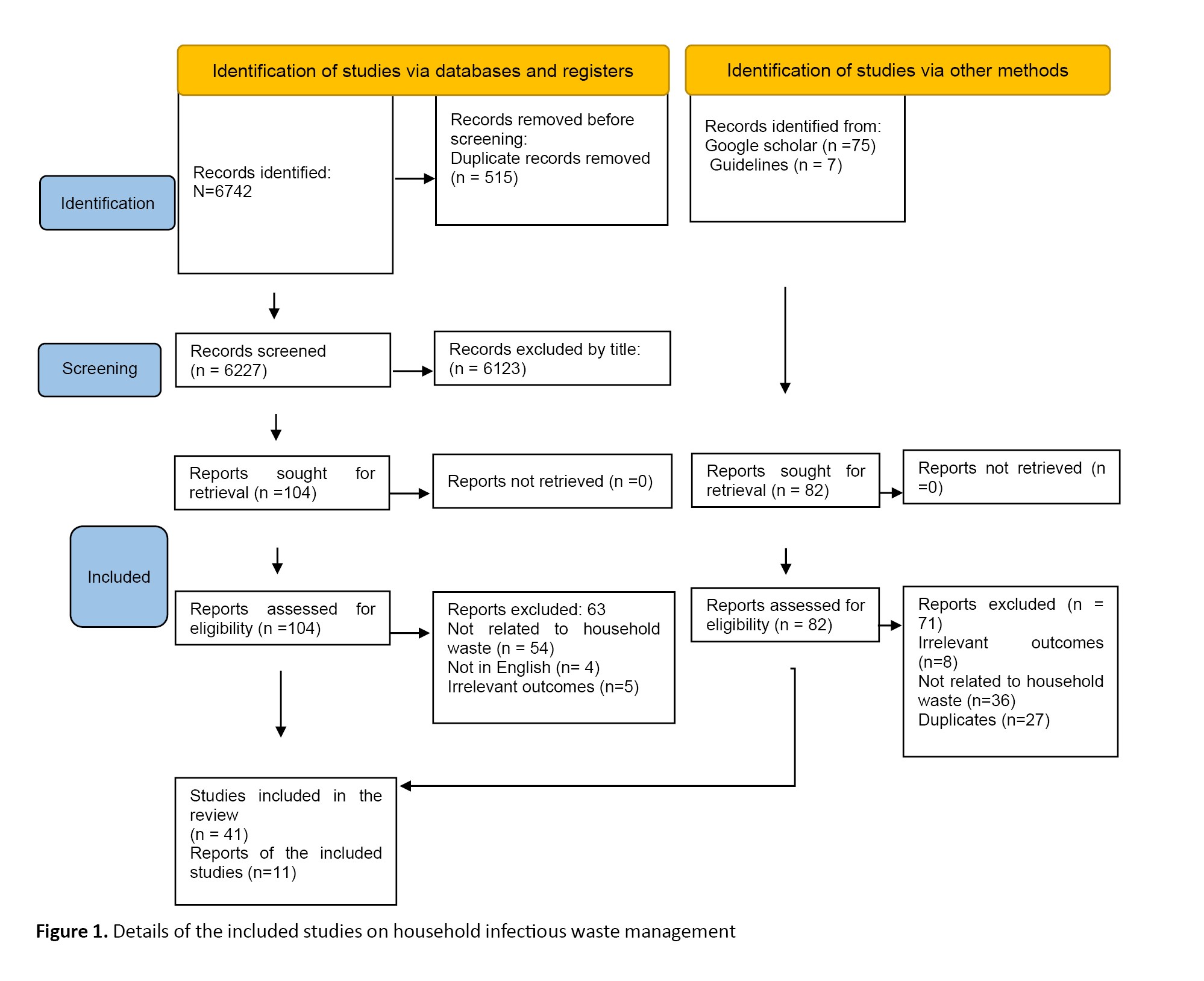
Initial database searches yielded 6,742 records. After removing duplicates (n=515), 6,227 records were screened by title and abstract. A full-text review was conducted for 186 articles, of which 52 met the inclusion criteria. The most common reasons for exclusion were that the articles did not focus on household waste (n=90), were not written in English or Persian (n=8), or reported outcomes that were not of interest (n=13).
Title/abstract and full-text screening were conducted independently by two reviewers (Leila Mohammadinia and Khadijeh Raei). Disagreements were resolved through discussion or consultation with a third reviewer (Fathollah Gholami-Borujeni). Inter-rater agreement, measured using Cohen’s kappa, was 0.85 for title/abstract screening and 0.92 for full-text screening.
Articles were stored in EndNote software, version X8 and screened using a PRISMA flowchart (Figure 1).
Infectious waste encompasses materials that may harbor pathogens capable of causing disease in humans. This type of waste is generated during medical activities, including diagnosis, treatment, and immunization. Examples include blood-soaked materials, contaminated sharps (needles and scalpels), and biological specimens from laboratory research [1, 2]. Approximately 15% of healthcare waste is classified as hazardous. Healthcare waste is considered the second most dangerous waste category after radioactive waste due to its environmental and health effects [3, 4]. Without proper management, infectious waste poses serious risks to healthcare workers, patients, and the community through transmission of viruses, such as hepatitis B and HIV [5].
Improper disposal of household infectious waste can lead to the spread of infections within homes and the broader community. Therefore, households must implement proper management practices, including segregating infectious waste from regular trash, using puncture-resistant sharps containers for needles, and double-bagging other infectious materials [6-9].
The development of an effective model for managing household medical waste is essential due to the increasing volume generated through home healthcare. This is particularly important as more individuals manage chronic conditions or recover from surgeries at home. Proper management safeguards public health by minimizing infection and sharps injuries. It also ensures compliance with local waste disposal regulations [4, 10, 11].
An effective model should incorporate the following: (a) waste segregation at the source using clearly labeled containers for sharps, infectious materials, and general refuse; (b) education and training for household members on safe disposal practices; and (c) partnerships with local waste management services for the safe collection and disposal of waste [8, 12, 13]. To date, no comprehensive model for household healthcare waste management has been adequately developed. Most existing frameworks focus on hospital settings rather than residential contexts. This study aimed to design an efficient management model that improves household infectious waste handling, mitigates environmental hazards, and promotes public health.
Materials and Methods
This study employed a sequential exploratory mixed-methods design and was conducted in Iran between April 2022 and March 2023.
Study design overview
The research was conducted in four integrated phases: (1) systematic literature review, (2) qualitative interviews with experts, (3) a Delphi study for model refinement, and (4) expert validation of the final model.
Phase 1: Systematic literature review
Search strategy and information sources
The search was conducted from April 18, 2022, to June 4, 2022, using International databases (PubMed, Web of Science, Scopus, and ProQuest) and Iranian databases (Scientific Information Database [SID], Magiran, Civilica, Ricest, and IranDoc). Google Scholar and the guidelines of international organizations were also reviewed.
The inclusion criteria were articles in English or Persian that addressed household infectious waste management. Grey literature, including conference proceedings, dissertations, and government reports, was included if it reported original data. Unpublished studies were excluded.
The exclusion criteria were articles that focused exclusively on hospital waste or were written in languages other than English or Persian.
Study selection and data extraction
Initial database searches yielded 6,742 records. After removing duplicates (n=515), 6,227 records were screened by title and abstract. A full-text review was conducted for 186 articles, of which 52 met the inclusion criteria. The most common reasons for exclusion were that the articles did not focus on household waste (n=90), were not written in English or Persian (n=8), or reported outcomes that were not of interest (n=13).
Title/abstract and full-text screening were conducted independently by two reviewers (Leila Mohammadinia and Khadijeh Raei). Disagreements were resolved through discussion or consultation with a third reviewer (Fathollah Gholami-Borujeni). Inter-rater agreement, measured using Cohen’s kappa, was 0.85 for title/abstract screening and 0.92 for full-text screening.
Articles were stored in EndNote software, version X8 and screened using a PRISMA flowchart (Figure 1).
Qualitative evaluation was performed using the Joanna Briggs Institute (JBI) checklist. Using the JBI Critical Appraisal Checklist, studies scoring ≥80% were classified as ‘good,’ 60-79% as ‘moderate,’ and <60% as ‘poor.’ Only studies rated as moderate or good were included in the synthesis (Figure 1).
Phase 2: Qualitative interviews with experts
Participant selection and sampling criteria
Experts in the field of waste management were selected through purposeful sampling. Maximum-variation purposeful sampling was used to recruit participants from different professional sectors and obtain information-rich perspectives on household infectious waste management. The sample size was guided by the concept of information power, with recruitment continuing until sufficient depth and breadth of information had been achieved. The inclusion criteria were: (1) a minimum of 5 years of experience in waste management, environmental health, or public health policy; (2) current employment in a relevant organization, such as a university, municipality, environmental agency, or Ministry of Health and Medical Education (MOHME); and (3) demonstrated expertise through publications, executive roles, or involvement in national waste management guidelines.
The 15 selected experts included 6 faculty members in environmental health engineering, 4 health network managers, 3 municipal waste management directors, and 2 officials from the Environmental Protection Organization. The mean years of experience was 12.4±4.2 years.
Data collection
Experts were contacted via official email and follow-up telephone calls. Interviews were conducted in person (n=11) or via video conference (n=4), based on participant preference. The interview duration ranged from 45 to 90 minutes (mean=62 minutes). All interviews were audio-recorded, transcribed verbatim in Persian, and then translated into English by a certified translator.
The semi-structured interview guide contained 12 open-ended questions organized into 4 thematic domains: (1) current practices and challenges in household infectious waste management, (2) infrastructure and resource needs, (3) legal and regulatory frameworks, and (4) proposed solutions and innovations. The guide was piloted with two waste management experts not included in the final sample. The questions were refined for clarity and relevance based on the pilot feedback.
Data analysis
Data were analyzed using MAXQDA software. Two researchers (Leila Mohammadinia and Khadijeh Raei) independently coded the transcripts. The coding framework was developed inductively using conventional content analysis as described by Hsieh and Shannon (Hsieh and Shannon, 2005). Inter-coder reliability was assessed using Cohen's kappa (κ=0.81 for the full coding framework). Cohen's kappa was used only as a supplementary indicator of coding consistency. Consistent with conventional content analysis, differences in coding were resolved through iterative discussion and consensus among the research team rather than relying solely on statistical agreement disagreements were resolved through consensus discussions with the third author (Fathollah Gholami-Borujeni). A codebook with definitions for each theme was developed and refined iteratively.
Sample adequacy was guided by the concept of information power. Recruitment continued until no new concepts emerged during the analysis. Information power was considered sufficient after 12 interviews and was confirmed through three additional interviews, which yielded no new codes.
To increase the consistency and accuracy of the results, the criteria of acceptability, conformability, dependability, and transferability were used.
Phase 3: Delphi study
Panel composition
The Delphi panel consisted of 22 faculty members, administrators, health assistants, and environmental officials selected through purposive sampling. The experts were selected based on their experience and involvement in waste management, environmental health, public health, and related policy-making activities.
Delphi process and consensus criteria
The Delphi process consisted of two rounds conducted via email using structured questionnaires. The response rates were 91.7% (22/24) in Round 1 and 90.9% (20/22) in Round 2. For the Delphi process, consensus was predefined as a median score of ≥7 on a 9-point Likert scale (1=not important to 9=extremely important) and an interquartile range (IQR) of ≤2. Items with a median score of ≤4 were excluded, whereas items with median scores of 5–6 were revised based on expert comments and reassessed in Round 2. In Round 1, participants evaluated the importance and feasibility of factors identified through the literature review and qualitative interviews. Items that did not meet the predefined consensus criteria were revised or removed. In Round 2, revised items were presented together with anonymized feedback from Round 1, allowing participants to reconsider their ratings. The Delphi data were analyzed using SPSS software, version 24.
Phase 4: Model validation
Validation panel
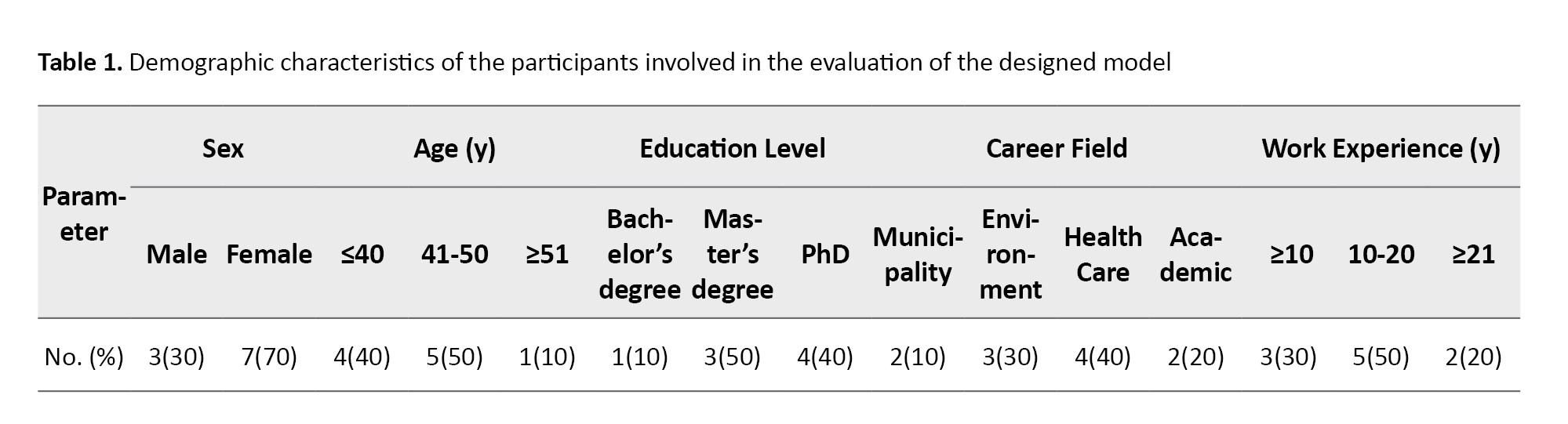
The validation panel consisted of 10 experts, including university faculty members, managers, health vice presidents, and officials from environmental departments and municipalities. Demographic characteristics of the validation panel are presented in Table 1.
Validation instruments and procedures
Following completion of the Delphi process, the finalized model underwent a separate validation process. Participants evaluated the model using a questionnaire consisting of 12 criteria rated on a 4-point Likert scale (1=strongly disagree to 4=strongly agree). A forced-choice format without a neutral option was used to encourage decisive evaluations. Content validity was assessed using the content validity ratio (CVR) method proposed by Lawshe in 1975. Experts evaluated each model component as “essential,” “useful but not essential,” or “not necessary.” The CVR was calculated using the Equation 1:
1. CVR=(ne−N/2)/(N/2)
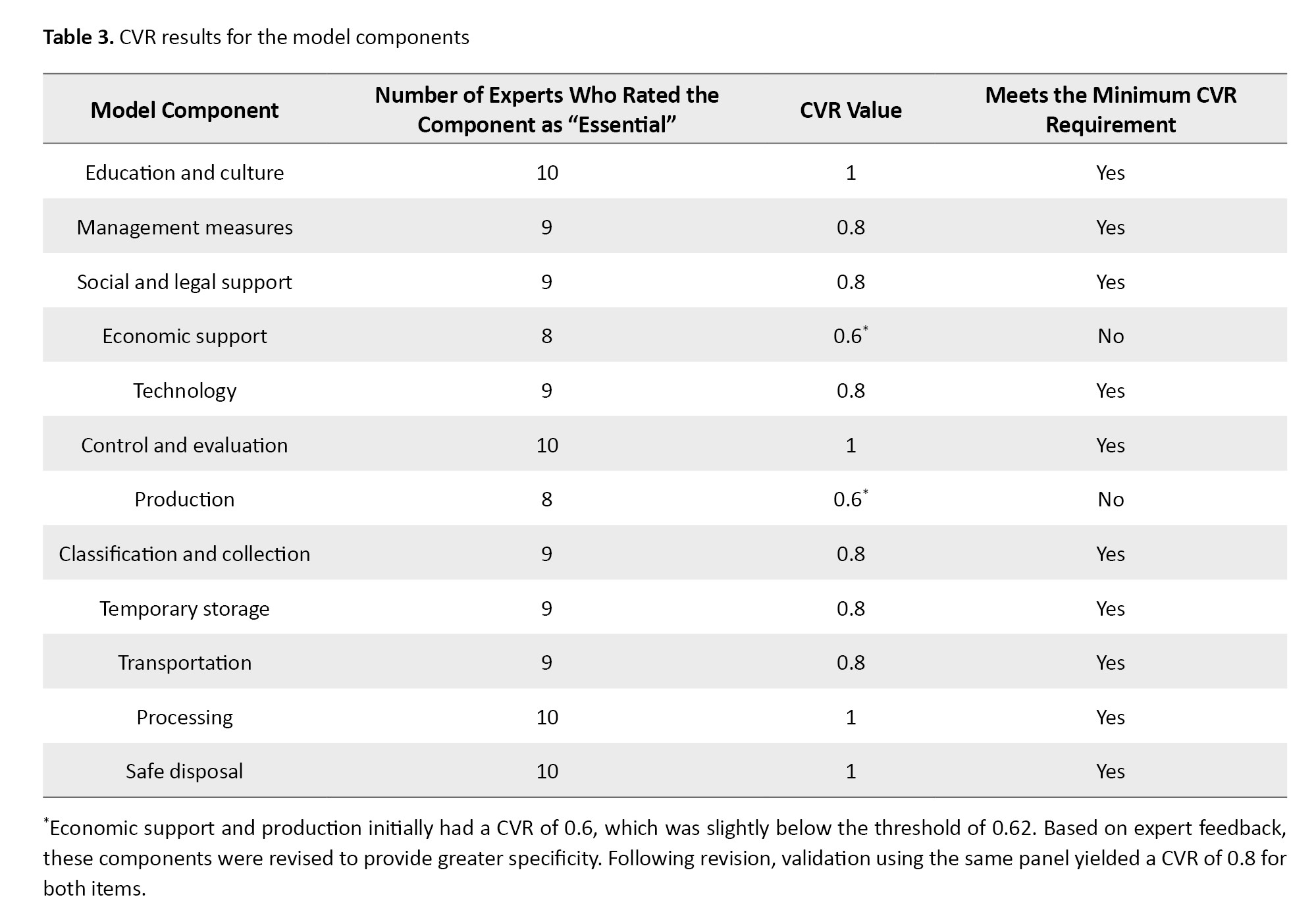
Where, ne represents the number of experts who rated an item as essential and N represents the total number of experts. For a panel of 10 experts, the minimum acceptable CVR value was 0.62.
Components that did not initially achieve the predefined validity threshold were revised based on expert feedback and were subsequently reassessed by the same validation panel using the same evaluation criteria.
Validation results
Following the validation process, all 12 evaluation indicators met the predefined acceptance criteria. Median scores for all indicators ranged from 3.5 to 4 (IQR: 0–1), and the proportion of experts selecting “agree” or “strongly agree” (scores 3 or 4) ranged from 90% to 100%. The complete quantitative validation results are presented in Table 2.
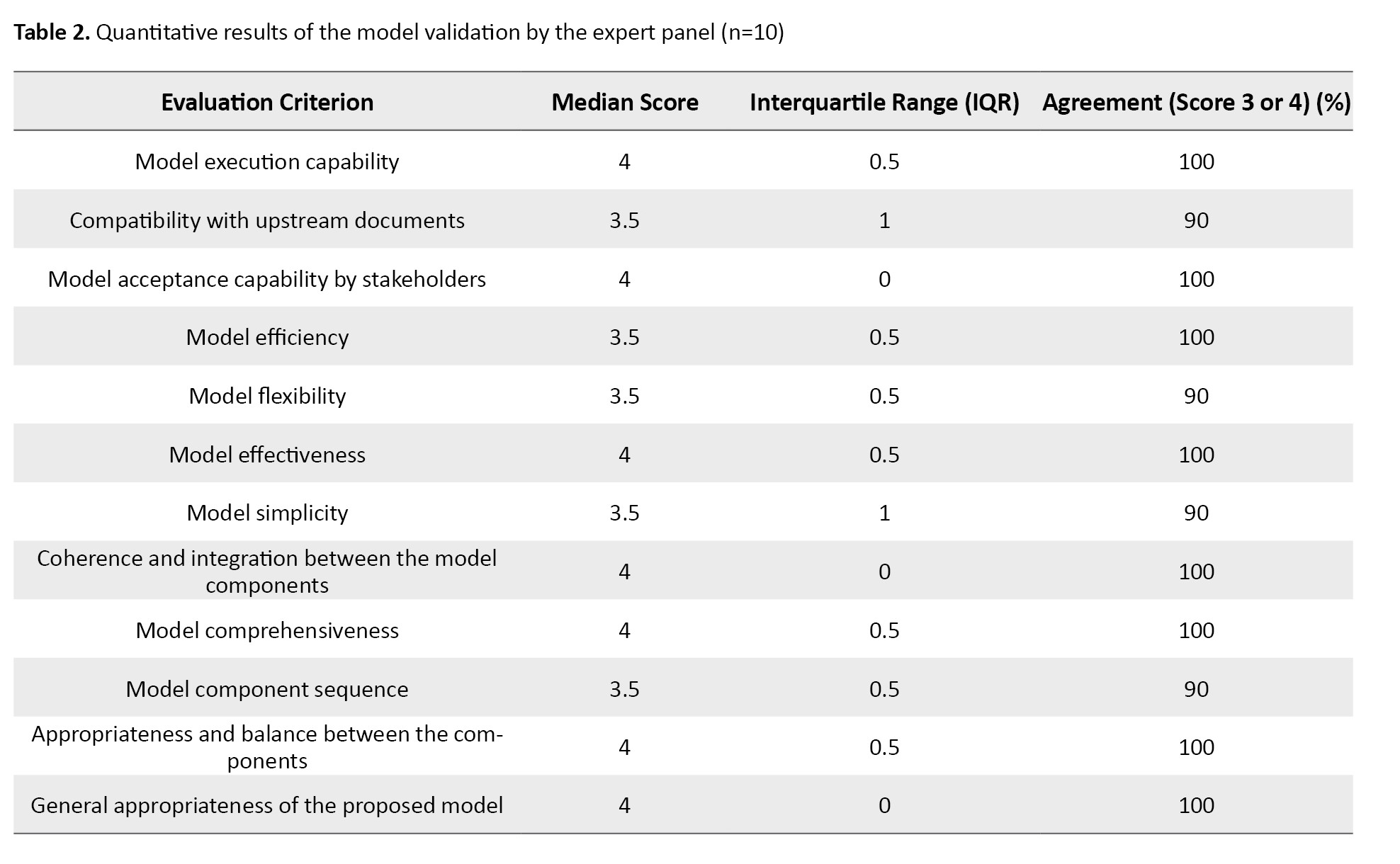
Most experts demonstrated a high level of agreement regarding the examined criteria and confirmed the practicality and applicability of the proposed model. Two components that did not initially achieve the predefined validity threshold were revised according to expert feedback and subsequently reassessed by the same validation panel. After reassessment, both components achieved acceptable CVR values (>0.8) and were retained in the final model.
Therefore, no further modifications were considered necessary. The final conceptual model of household infectious waste management, consisting of 12 main components and 14 subcomponents, was approved by the experts.
Methodological considerations and limitations
Several methodological considerations warrant discussion. First, purposeful sampling may introduce selection bias, as experts with stronger opinions on waste management may have been more likely to participate. To mitigate this, we explicitly defined inclusion criteria and attempted to recruit experts from diverse organizational backgrounds (academia, government, and municipal services). Second, the generalizability of the findings may be limited by the study’s geographic restriction to two Iranian provinces. Cultural, economic, and regulatory contexts differ across regions, potentially limiting the applicability of the findings to other settings. Third, self-selection and social desirability biases may have influenced the interview and Delphi responses. We addressed these potential biases by ensuring the anonymity of individual responses during the Delphi rounds and using neutral, non-leading questioning techniques during the interviews. Fourth, although the validation panel size (n=10) was sufficient for using CVR analysis, it may have limited the diversity of perspectives and the ability to identify potential disagreements.
Results
Systematic review results
A total of 52 studies met the inclusion criteria for the systematic review (Figure 1). Table 3 summarizes the characteristics of the included studies.
The most frequently reported components related to household infectious waste management were a lack of public awareness (reported in 78% of studies), inadequate infrastructure (65%), the absence of clear regulations (60%), and economic constraints (52%).
Qualitative interview findings
Qualitative content analysis of 15 expert interviews yielded 12 main components and 14 sub-components. The identified components were organized into two levels: Enabling factors (education and culture, management measures, social and legal support, economic support, technology, control and evaluation) and waste management cycle elements (generation, classification and collection, temporary storage, transportation, processing, and safe disposal).
Delphi study results
After two Delphi rounds, consensus was achieved for all 12 components based on the predefined Delphi criteria (median ≥7 on a 9-point Likert scale and IQR ≤2). The education and culture component received the highest priority among the identified components (median=9, IQR=1), followed by management measures (median=8.5, IQR=1.5). No components were excluded during the Delphi process. However, minor wording revisions were made to three subcomponents based on the experts’ qualitative feedback.
Final conceptual model
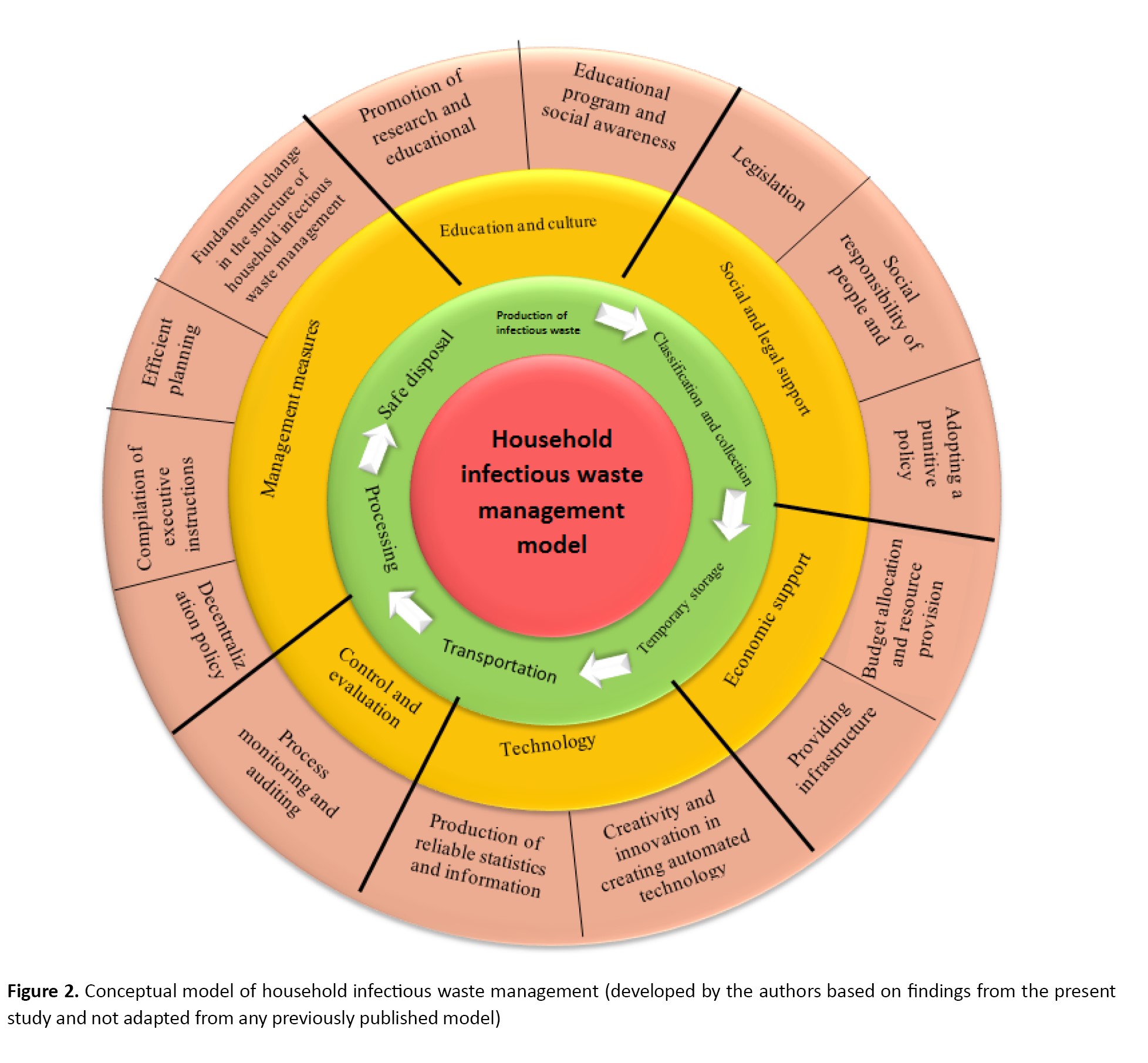
Following the Delphi process, the final conceptual model was developed based on the prioritized components and expert feedback. The model consists of two interconnected levels. Level 1 (enabling factors) includes: (1) education and culture, (2) management measures, (3) social and legal support, (4) economic support, (5) technology, and (6) control and evaluation. Level 2 (waste management cycle) includes: (7) generation, (8) classification and collection, (9) temporary storage, (10) transportation, (11) processing, and (12) safe disposal.
Figure 2 presents the conceptual model, illustrating the relationships between enabling factors (outer and middle layers) and the waste management cycle (inner layer).
Phase 2: Qualitative interviews with experts
Participant selection and sampling criteria
Experts in the field of waste management were selected through purposeful sampling. Maximum-variation purposeful sampling was used to recruit participants from different professional sectors and obtain information-rich perspectives on household infectious waste management. The sample size was guided by the concept of information power, with recruitment continuing until sufficient depth and breadth of information had been achieved. The inclusion criteria were: (1) a minimum of 5 years of experience in waste management, environmental health, or public health policy; (2) current employment in a relevant organization, such as a university, municipality, environmental agency, or Ministry of Health and Medical Education (MOHME); and (3) demonstrated expertise through publications, executive roles, or involvement in national waste management guidelines.
The 15 selected experts included 6 faculty members in environmental health engineering, 4 health network managers, 3 municipal waste management directors, and 2 officials from the Environmental Protection Organization. The mean years of experience was 12.4±4.2 years.
Data collection
Experts were contacted via official email and follow-up telephone calls. Interviews were conducted in person (n=11) or via video conference (n=4), based on participant preference. The interview duration ranged from 45 to 90 minutes (mean=62 minutes). All interviews were audio-recorded, transcribed verbatim in Persian, and then translated into English by a certified translator.
The semi-structured interview guide contained 12 open-ended questions organized into 4 thematic domains: (1) current practices and challenges in household infectious waste management, (2) infrastructure and resource needs, (3) legal and regulatory frameworks, and (4) proposed solutions and innovations. The guide was piloted with two waste management experts not included in the final sample. The questions were refined for clarity and relevance based on the pilot feedback.
Data analysis
Data were analyzed using MAXQDA software. Two researchers (Leila Mohammadinia and Khadijeh Raei) independently coded the transcripts. The coding framework was developed inductively using conventional content analysis as described by Hsieh and Shannon (Hsieh and Shannon, 2005). Inter-coder reliability was assessed using Cohen's kappa (κ=0.81 for the full coding framework). Cohen's kappa was used only as a supplementary indicator of coding consistency. Consistent with conventional content analysis, differences in coding were resolved through iterative discussion and consensus among the research team rather than relying solely on statistical agreement disagreements were resolved through consensus discussions with the third author (Fathollah Gholami-Borujeni). A codebook with definitions for each theme was developed and refined iteratively.
Sample adequacy was guided by the concept of information power. Recruitment continued until no new concepts emerged during the analysis. Information power was considered sufficient after 12 interviews and was confirmed through three additional interviews, which yielded no new codes.
To increase the consistency and accuracy of the results, the criteria of acceptability, conformability, dependability, and transferability were used.
Phase 3: Delphi study
Panel composition
The Delphi panel consisted of 22 faculty members, administrators, health assistants, and environmental officials selected through purposive sampling. The experts were selected based on their experience and involvement in waste management, environmental health, public health, and related policy-making activities.
Delphi process and consensus criteria
The Delphi process consisted of two rounds conducted via email using structured questionnaires. The response rates were 91.7% (22/24) in Round 1 and 90.9% (20/22) in Round 2. For the Delphi process, consensus was predefined as a median score of ≥7 on a 9-point Likert scale (1=not important to 9=extremely important) and an interquartile range (IQR) of ≤2. Items with a median score of ≤4 were excluded, whereas items with median scores of 5–6 were revised based on expert comments and reassessed in Round 2. In Round 1, participants evaluated the importance and feasibility of factors identified through the literature review and qualitative interviews. Items that did not meet the predefined consensus criteria were revised or removed. In Round 2, revised items were presented together with anonymized feedback from Round 1, allowing participants to reconsider their ratings. The Delphi data were analyzed using SPSS software, version 24.
Phase 4: Model validation
Validation panel
The validation panel consisted of 10 experts, including university faculty members, managers, health vice presidents, and officials from environmental departments and municipalities. Demographic characteristics of the validation panel are presented in Table 1.
Validation instruments and procedures
Following completion of the Delphi process, the finalized model underwent a separate validation process. Participants evaluated the model using a questionnaire consisting of 12 criteria rated on a 4-point Likert scale (1=strongly disagree to 4=strongly agree). A forced-choice format without a neutral option was used to encourage decisive evaluations. Content validity was assessed using the content validity ratio (CVR) method proposed by Lawshe in 1975. Experts evaluated each model component as “essential,” “useful but not essential,” or “not necessary.” The CVR was calculated using the Equation 1:
1. CVR=(ne−N/2)/(N/2)
Where, ne represents the number of experts who rated an item as essential and N represents the total number of experts. For a panel of 10 experts, the minimum acceptable CVR value was 0.62.
Components that did not initially achieve the predefined validity threshold were revised based on expert feedback and were subsequently reassessed by the same validation panel using the same evaluation criteria.
Validation results
Following the validation process, all 12 evaluation indicators met the predefined acceptance criteria. Median scores for all indicators ranged from 3.5 to 4 (IQR: 0–1), and the proportion of experts selecting “agree” or “strongly agree” (scores 3 or 4) ranged from 90% to 100%. The complete quantitative validation results are presented in Table 2.
Most experts demonstrated a high level of agreement regarding the examined criteria and confirmed the practicality and applicability of the proposed model. Two components that did not initially achieve the predefined validity threshold were revised according to expert feedback and subsequently reassessed by the same validation panel. After reassessment, both components achieved acceptable CVR values (>0.8) and were retained in the final model.
Therefore, no further modifications were considered necessary. The final conceptual model of household infectious waste management, consisting of 12 main components and 14 subcomponents, was approved by the experts.
Methodological considerations and limitations
Several methodological considerations warrant discussion. First, purposeful sampling may introduce selection bias, as experts with stronger opinions on waste management may have been more likely to participate. To mitigate this, we explicitly defined inclusion criteria and attempted to recruit experts from diverse organizational backgrounds (academia, government, and municipal services). Second, the generalizability of the findings may be limited by the study’s geographic restriction to two Iranian provinces. Cultural, economic, and regulatory contexts differ across regions, potentially limiting the applicability of the findings to other settings. Third, self-selection and social desirability biases may have influenced the interview and Delphi responses. We addressed these potential biases by ensuring the anonymity of individual responses during the Delphi rounds and using neutral, non-leading questioning techniques during the interviews. Fourth, although the validation panel size (n=10) was sufficient for using CVR analysis, it may have limited the diversity of perspectives and the ability to identify potential disagreements.
Results
Systematic review results
A total of 52 studies met the inclusion criteria for the systematic review (Figure 1). Table 3 summarizes the characteristics of the included studies.
The most frequently reported components related to household infectious waste management were a lack of public awareness (reported in 78% of studies), inadequate infrastructure (65%), the absence of clear regulations (60%), and economic constraints (52%).
Qualitative interview findings
Qualitative content analysis of 15 expert interviews yielded 12 main components and 14 sub-components. The identified components were organized into two levels: Enabling factors (education and culture, management measures, social and legal support, economic support, technology, control and evaluation) and waste management cycle elements (generation, classification and collection, temporary storage, transportation, processing, and safe disposal).
Delphi study results
After two Delphi rounds, consensus was achieved for all 12 components based on the predefined Delphi criteria (median ≥7 on a 9-point Likert scale and IQR ≤2). The education and culture component received the highest priority among the identified components (median=9, IQR=1), followed by management measures (median=8.5, IQR=1.5). No components were excluded during the Delphi process. However, minor wording revisions were made to three subcomponents based on the experts’ qualitative feedback.
Final conceptual model
Following the Delphi process, the final conceptual model was developed based on the prioritized components and expert feedback. The model consists of two interconnected levels. Level 1 (enabling factors) includes: (1) education and culture, (2) management measures, (3) social and legal support, (4) economic support, (5) technology, and (6) control and evaluation. Level 2 (waste management cycle) includes: (7) generation, (8) classification and collection, (9) temporary storage, (10) transportation, (11) processing, and (12) safe disposal.
Figure 2 presents the conceptual model, illustrating the relationships between enabling factors (outer and middle layers) and the waste management cycle (inner layer).
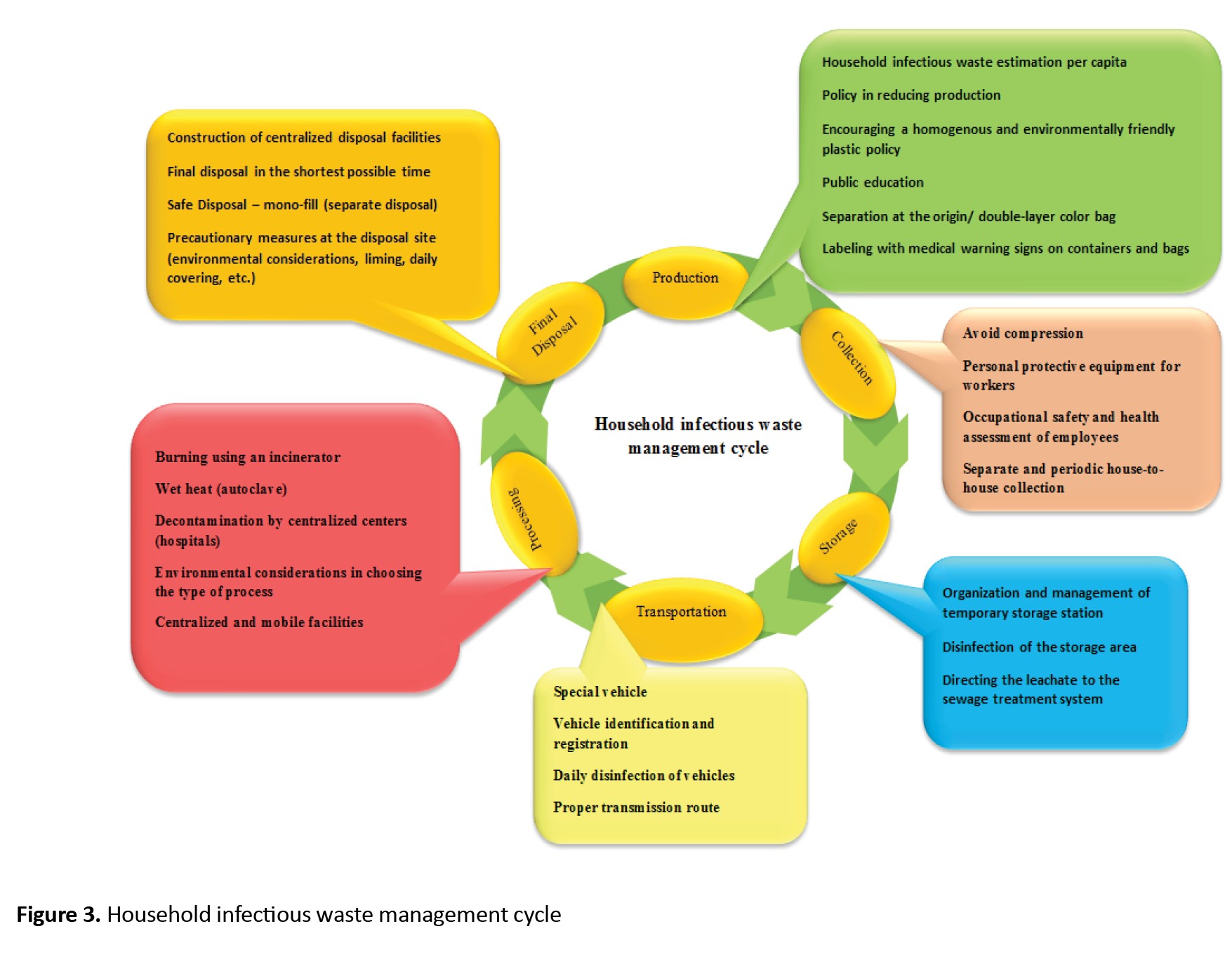
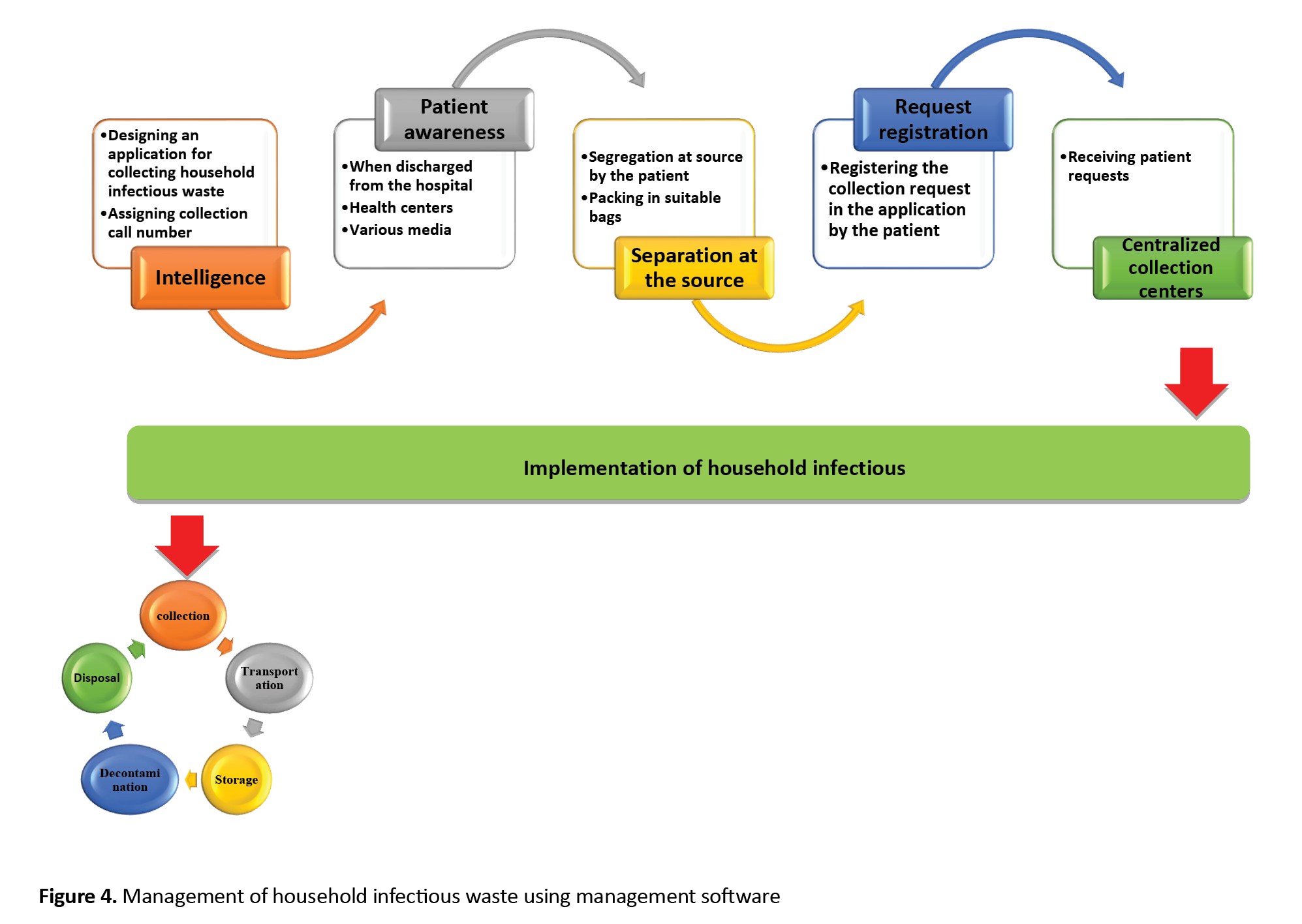
Figure 3 details the waste management cycle, and Figure 4 presents the proposed software-based implementation model.
Figure 3 illustrates the proposed household infectious waste management cycle, which represents the sequential operational processes required for safe and effective waste handling. The cycle includes the main stages of waste generation, classification and collection, temporary storage, transportation, processing, and safe disposal. The framework emphasizes the continuity and interconnection of these stages, highlighting the importance of coordinated management throughout the entire waste management pathway to reduce potential health and environmental risks.
Figure 4 presents the proposed software-based implementation model for household infectious waste management. This model demonstrates how digital solutions can support coordination, monitoring, and information management across different stages of the waste management process. By facilitating data recording, tracking, communication among stakeholders, and real-time monitoring, the proposed digital approach can enhance the efficiency, transparency, and responsiveness of household infectious waste management systems.
Model validation results
The finalized conceptual model was subsequently evaluated through a separate validation process using a 4-point Likert scale and a content validity assessment.
Table 2 presents the quantitative results of the model evaluation. All 12 evaluation criteria met the predefined acceptance criterion (median ≥3). Median scores ranged from 3.5 to 4, and the highest ratings were observed for model execution capability, stakeholder acceptance, coherence, and general appropriateness (median=4). In addition to the Likert-scale evaluation, the content validity of the model components was assessed using the CVR. As presented in Table 3, CVR values ranged from 0.8 to 1, exceeding the minimum acceptable threshold of 0.62 for a 10-member expert panel. The education and culture, safe disposal, and control and evaluation components achieved the highest CVR values (1).
Discussion
The present study developed a comprehensive model for household infectious waste management using a mixed-methods design that integrated qualitative interviews with expert consensus through the Delphi technique. Unlike previous frameworks, which have primarily focused on healthcare facility waste management, the proposed 12-component model specifically addresses the unique challenges associated with household-generated infectious waste [8, 9]. The final model represents the integration of stakeholders’ experiences identified during the qualitative phase with the priorities established through Delphi validation, ensuring that each component reflects both practical needs and expert consensus.
Education and culture
Among the 12 components of the proposed model, education and culture emerged as the highest-priority domain. During the qualitative phase, participants consistently identified inadequate public awareness, poor knowledge of waste segregation, and limited community participation as major barriers to household infectious waste management. These findings were reinforced during the Delphi process, in which this component achieved the highest level of expert agreement (CVR=1), highlighting its fundamental role within the final model.
The convergence of qualitative findings and expert consensus suggests that educational and cultural interventions constitute the foundation for successful implementation of all other management strategies. Without improving public knowledge, attitudes, and behaviors, even well-developed regulations and technical interventions may not achieve their intended outcomes. Similar findings have been reported in developed countries, where effective waste management systems combine regulatory approaches with continuous public education, community engagement, and awareness campaigns [14]. Previous studies have likewise emphasized the importance of education for households, communities, and municipal personnel to improve waste segregation and promote sustainable behavioral change. This findings suggest that cultural change through educational programs may be the most critical enabling factor, as reflected by the highest CVR score (1).
Management measures
Management measures were identified as another core component of the proposed model. Participants in the qualitative phase emphasized the need for stronger governance, clear organizational responsibilities, effective planning, and comprehensive executive guidelines. These priorities were subsequently confirmed through the Delphi process, indicating broad expert agreement regarding their importance. Several countries introduced new waste management guidelines during the COVID-19 pandemic [11, 15]. However, experts in the present study emphasized that household-specific guidelines remain insufficiently developed in Iran. This finding suggests that effective management requires not only policy development but also coordinated implementation, intersectoral collaboration, and integration with educational initiatives to ensure consistent practice.
Social and legal support
Social and legal support was identified as an essential enabling component of the final model. Qualitative findings highlighted the need for stronger stakeholder participation, greater public engagement, and supportive legal frameworks to improve household infectious waste management. These priorities were retained during Delphi validation, demonstrating consensus on their importance.
Previous studies have similarly emphasized the role of comprehensive legislation, regulatory enforcement, and penalties for inappropriate waste management practices [16]. However, the findings of the present study further suggest that legal measures alone are insufficient. Effective implementation requires complementary social support mechanisms, including community participation, public awareness campaigns, and collaboration among relevant stakeholders.
Economic support
Economic support was recognized as a prerequisite for sustainable implementation of household infectious waste management. During the qualitative phase, participants emphasized the need for adequate financial resources to support infrastructure development and service delivery. These priorities were subsequently confirmed through expert consensus.
Consistent with previous studies, investment in waste management infrastructure and emerging technologies has been identified as an important strategy for improving waste management systems [17]. Public and private investment has been proposed as an important solution. Our validation panel highlighted that economic support should target both infrastructure development (collection vehicles, treatment facilities) and operational costs (personnel training, public education).
Technology
Technology emerged as one of the enabling components supporting effective implementation of the proposed model. Participants emphasized the potential contribution of digital technologies to improving monitoring, coordination, and traceability throughout the waste management process. Previous research has suggested that technologies, such as the Internet of Things, automation, and remote-control systems can improve waste management efficiency [18]. Consistent with these developments, the present model incorporates a software-based management system that enables real-time monitoring and tracking of household infectious waste from the point of generation through final disposal (Figure 4). The inclusion of this component distinguishes the proposed model from many existing frameworks that primarily focus on operational procedures.
Control and evaluation
Control and evaluation were identified as fundamental mechanisms for ensuring the effectiveness and sustainability of household infectious waste management. Participants emphasized the importance of continuous monitoring, regular auditing, and compliance assessment across all stages of waste management. The Delphi panel further highlighted the need to monitor occupational health among waste management personnel while implementing standardized compliance protocols. These findings suggest that continuous evaluation not only improves system performance but also supports worker safety and quality assurance.
Waste management cycle elements
The operational components of the proposed model followed the established principles of healthcare waste management, including waste generation, classification, collection, temporary storage, transportation, processing, and safe disposal [3, 4]. Nevertheless, the qualitative findings revealed several challenges that are unique to household settings, including the absence of standardized waste containers, limited public knowledge, lack of trained personnel, and irregular patterns of infectious waste generation. These findings indicate that household infectious waste management requires context-specific operational strategies that complement existing healthcare waste management principles rather than simply transferring institutional practices to community settings.
Comparison with existing models
The proposed conceptual model (Figure 2) was developed by the authors based on the integrated findings of the qualitative and Delphi phases and was not adapted from any previously published model. Compared with existing frameworks [8, 13, 17], the proposed model offers several important contributions. First, it integrates enabling components—including education and culture, management measures, social and legal support, economic support, technology, and control and evaluation—with the operational stages of the household infectious waste management cycle. Second, it incorporates a software-based implementation framework that enables monitoring and management of household infectious waste throughout its life cycle. Third, the model was specifically designed for low- and middle-income countries, where infrastructure and policies for household infectious waste management remain underdeveloped. By integrating stakeholder experiences with expert consensus, the proposed model provides a context-sensitive framework that can support future policy development and practical implementation.
Prioritization of model components
Among the proposed components, education and culture received the highest consensus and validity scores, indicating that experts considered it the most critical enabling factor for household infectious waste management. This prioritization is consistent with the qualitative interviews, in which participants repeatedly emphasized poor public awareness, limited household training, and the absence of safe disposal habits as the main barriers to effective waste management. Therefore, education and culture appear to function as the foundational prerequisite for the successful implementation of other components of the model.
Limitations
This study has several limitations. First, the model was validated only through expert consensus and was not pilot-tested in real-world household settings. Second, the research was geographically limited to two provinces in Iran, which may affect generalizability. Third, the sample sizes for the Delphi panel (n=22 in round 1, n=20 in round 2) and the validation panel (n=10), although consistent with methodological norms, were relatively small. Fourth, participation was voluntary, which may have introduced self-selection bias. Fifth, purposeful sampling may have excluded the perspectives of non-expert stakeholders (e.g. households and waste collection workers). Future research should address these limitations by conducting pilot implementations, testing effectiveness through randomized controlled trials, and validating the model’s applicability in international contexts.
Conclusion
The present study developed a comprehensive model for household infectious waste management using rigorous scientific methods. This model includes 12 main components and 14 sub-components, providing a combination of literature review and expert opinions.
Key measures include education and culture-building to promote public knowledge, the development of management guidelines, the strengthening of social and legal support, the allocation of financial resources, the use of new technologies, and the promotion of monitoring and evaluation. These criteria can help facilitate the effective implementation of the household infectious waste management cycle, including generation, classification, collection, temporary storage, transportation, decontamination, and safe disposal.
For future research, we recommend pilot implementation of the model to identify practical shortcomings, estimate household waste generation rates, estimate patient awareness, and estimate disease transmission pathways from improper waste disposal.
Ethical Considerations
Compliance with ethical guidelines
This study was approved by the ethics committee of Tabriz University of Medical Sciences, Tabriz, Iran (Code: IR.TBZMED.REC.1401.354).
Funding
This study was financially supported by Tabriz University of Medical Sciences, Tabriz, Iran.
Authors contributions
Conceptualization, supervision, funding acquisition and resources: Leila Mohammadinia and Fathollah Gholami-Borujeni; Methodology: Leila Mohammadinia, Khadijeh Raei, and Fathollah Gholami-Borujeni. Data collection: Leila Mohammadinia and Khadijeh Raei; Data analysis: Khadijeh Raei; Investigation and writing: All authors.
Conflict of interest
The authors declared no conflict of interest.
Acknowledgements
The authors would like to express their sincere gratitude to all experts and specialists who participated in the interviews, the Delphi panel, and the model validation process. The authors also acknowledge the valuable support provided by the Department of Health Policy and Management, School of Management and Medical Informatics, Tabriz University of Medical Sciences, as well as the Department of Environmental Health Engineering, School of Health, Mazandaran University of Medical Sciences. Special thanks are extended to the officials of the Environmental Protection Organization and the municipal waste management departments who facilitated access to the expert panels. The authors also thank the research assistants who contributed to the systematic literature search and data extraction. Finally, the authors acknowledge the contributions of the Health Sciences Research Center, which provided administrative support.
Figure 4 presents the proposed software-based implementation model for household infectious waste management. This model demonstrates how digital solutions can support coordination, monitoring, and information management across different stages of the waste management process. By facilitating data recording, tracking, communication among stakeholders, and real-time monitoring, the proposed digital approach can enhance the efficiency, transparency, and responsiveness of household infectious waste management systems.
Model validation results
The finalized conceptual model was subsequently evaluated through a separate validation process using a 4-point Likert scale and a content validity assessment.
Table 2 presents the quantitative results of the model evaluation. All 12 evaluation criteria met the predefined acceptance criterion (median ≥3). Median scores ranged from 3.5 to 4, and the highest ratings were observed for model execution capability, stakeholder acceptance, coherence, and general appropriateness (median=4). In addition to the Likert-scale evaluation, the content validity of the model components was assessed using the CVR. As presented in Table 3, CVR values ranged from 0.8 to 1, exceeding the minimum acceptable threshold of 0.62 for a 10-member expert panel. The education and culture, safe disposal, and control and evaluation components achieved the highest CVR values (1).
Discussion
The present study developed a comprehensive model for household infectious waste management using a mixed-methods design that integrated qualitative interviews with expert consensus through the Delphi technique. Unlike previous frameworks, which have primarily focused on healthcare facility waste management, the proposed 12-component model specifically addresses the unique challenges associated with household-generated infectious waste [8, 9]. The final model represents the integration of stakeholders’ experiences identified during the qualitative phase with the priorities established through Delphi validation, ensuring that each component reflects both practical needs and expert consensus.
Education and culture
Among the 12 components of the proposed model, education and culture emerged as the highest-priority domain. During the qualitative phase, participants consistently identified inadequate public awareness, poor knowledge of waste segregation, and limited community participation as major barriers to household infectious waste management. These findings were reinforced during the Delphi process, in which this component achieved the highest level of expert agreement (CVR=1), highlighting its fundamental role within the final model.
The convergence of qualitative findings and expert consensus suggests that educational and cultural interventions constitute the foundation for successful implementation of all other management strategies. Without improving public knowledge, attitudes, and behaviors, even well-developed regulations and technical interventions may not achieve their intended outcomes. Similar findings have been reported in developed countries, where effective waste management systems combine regulatory approaches with continuous public education, community engagement, and awareness campaigns [14]. Previous studies have likewise emphasized the importance of education for households, communities, and municipal personnel to improve waste segregation and promote sustainable behavioral change. This findings suggest that cultural change through educational programs may be the most critical enabling factor, as reflected by the highest CVR score (1).
Management measures
Management measures were identified as another core component of the proposed model. Participants in the qualitative phase emphasized the need for stronger governance, clear organizational responsibilities, effective planning, and comprehensive executive guidelines. These priorities were subsequently confirmed through the Delphi process, indicating broad expert agreement regarding their importance. Several countries introduced new waste management guidelines during the COVID-19 pandemic [11, 15]. However, experts in the present study emphasized that household-specific guidelines remain insufficiently developed in Iran. This finding suggests that effective management requires not only policy development but also coordinated implementation, intersectoral collaboration, and integration with educational initiatives to ensure consistent practice.
Social and legal support
Social and legal support was identified as an essential enabling component of the final model. Qualitative findings highlighted the need for stronger stakeholder participation, greater public engagement, and supportive legal frameworks to improve household infectious waste management. These priorities were retained during Delphi validation, demonstrating consensus on their importance.
Previous studies have similarly emphasized the role of comprehensive legislation, regulatory enforcement, and penalties for inappropriate waste management practices [16]. However, the findings of the present study further suggest that legal measures alone are insufficient. Effective implementation requires complementary social support mechanisms, including community participation, public awareness campaigns, and collaboration among relevant stakeholders.
Economic support
Economic support was recognized as a prerequisite for sustainable implementation of household infectious waste management. During the qualitative phase, participants emphasized the need for adequate financial resources to support infrastructure development and service delivery. These priorities were subsequently confirmed through expert consensus.
Consistent with previous studies, investment in waste management infrastructure and emerging technologies has been identified as an important strategy for improving waste management systems [17]. Public and private investment has been proposed as an important solution. Our validation panel highlighted that economic support should target both infrastructure development (collection vehicles, treatment facilities) and operational costs (personnel training, public education).
Technology
Technology emerged as one of the enabling components supporting effective implementation of the proposed model. Participants emphasized the potential contribution of digital technologies to improving monitoring, coordination, and traceability throughout the waste management process. Previous research has suggested that technologies, such as the Internet of Things, automation, and remote-control systems can improve waste management efficiency [18]. Consistent with these developments, the present model incorporates a software-based management system that enables real-time monitoring and tracking of household infectious waste from the point of generation through final disposal (Figure 4). The inclusion of this component distinguishes the proposed model from many existing frameworks that primarily focus on operational procedures.
Control and evaluation
Control and evaluation were identified as fundamental mechanisms for ensuring the effectiveness and sustainability of household infectious waste management. Participants emphasized the importance of continuous monitoring, regular auditing, and compliance assessment across all stages of waste management. The Delphi panel further highlighted the need to monitor occupational health among waste management personnel while implementing standardized compliance protocols. These findings suggest that continuous evaluation not only improves system performance but also supports worker safety and quality assurance.
Waste management cycle elements
The operational components of the proposed model followed the established principles of healthcare waste management, including waste generation, classification, collection, temporary storage, transportation, processing, and safe disposal [3, 4]. Nevertheless, the qualitative findings revealed several challenges that are unique to household settings, including the absence of standardized waste containers, limited public knowledge, lack of trained personnel, and irregular patterns of infectious waste generation. These findings indicate that household infectious waste management requires context-specific operational strategies that complement existing healthcare waste management principles rather than simply transferring institutional practices to community settings.
Comparison with existing models
The proposed conceptual model (Figure 2) was developed by the authors based on the integrated findings of the qualitative and Delphi phases and was not adapted from any previously published model. Compared with existing frameworks [8, 13, 17], the proposed model offers several important contributions. First, it integrates enabling components—including education and culture, management measures, social and legal support, economic support, technology, and control and evaluation—with the operational stages of the household infectious waste management cycle. Second, it incorporates a software-based implementation framework that enables monitoring and management of household infectious waste throughout its life cycle. Third, the model was specifically designed for low- and middle-income countries, where infrastructure and policies for household infectious waste management remain underdeveloped. By integrating stakeholder experiences with expert consensus, the proposed model provides a context-sensitive framework that can support future policy development and practical implementation.
Prioritization of model components
Among the proposed components, education and culture received the highest consensus and validity scores, indicating that experts considered it the most critical enabling factor for household infectious waste management. This prioritization is consistent with the qualitative interviews, in which participants repeatedly emphasized poor public awareness, limited household training, and the absence of safe disposal habits as the main barriers to effective waste management. Therefore, education and culture appear to function as the foundational prerequisite for the successful implementation of other components of the model.
Limitations
This study has several limitations. First, the model was validated only through expert consensus and was not pilot-tested in real-world household settings. Second, the research was geographically limited to two provinces in Iran, which may affect generalizability. Third, the sample sizes for the Delphi panel (n=22 in round 1, n=20 in round 2) and the validation panel (n=10), although consistent with methodological norms, were relatively small. Fourth, participation was voluntary, which may have introduced self-selection bias. Fifth, purposeful sampling may have excluded the perspectives of non-expert stakeholders (e.g. households and waste collection workers). Future research should address these limitations by conducting pilot implementations, testing effectiveness through randomized controlled trials, and validating the model’s applicability in international contexts.
Conclusion
The present study developed a comprehensive model for household infectious waste management using rigorous scientific methods. This model includes 12 main components and 14 sub-components, providing a combination of literature review and expert opinions.
Key measures include education and culture-building to promote public knowledge, the development of management guidelines, the strengthening of social and legal support, the allocation of financial resources, the use of new technologies, and the promotion of monitoring and evaluation. These criteria can help facilitate the effective implementation of the household infectious waste management cycle, including generation, classification, collection, temporary storage, transportation, decontamination, and safe disposal.
For future research, we recommend pilot implementation of the model to identify practical shortcomings, estimate household waste generation rates, estimate patient awareness, and estimate disease transmission pathways from improper waste disposal.
Ethical Considerations
Compliance with ethical guidelines
This study was approved by the ethics committee of Tabriz University of Medical Sciences, Tabriz, Iran (Code: IR.TBZMED.REC.1401.354).
Funding
This study was financially supported by Tabriz University of Medical Sciences, Tabriz, Iran.
Authors contributions
Conceptualization, supervision, funding acquisition and resources: Leila Mohammadinia and Fathollah Gholami-Borujeni; Methodology: Leila Mohammadinia, Khadijeh Raei, and Fathollah Gholami-Borujeni. Data collection: Leila Mohammadinia and Khadijeh Raei; Data analysis: Khadijeh Raei; Investigation and writing: All authors.
Conflict of interest
The authors declared no conflict of interest.
Acknowledgements
The authors would like to express their sincere gratitude to all experts and specialists who participated in the interviews, the Delphi panel, and the model validation process. The authors also acknowledge the valuable support provided by the Department of Health Policy and Management, School of Management and Medical Informatics, Tabriz University of Medical Sciences, as well as the Department of Environmental Health Engineering, School of Health, Mazandaran University of Medical Sciences. Special thanks are extended to the officials of the Environmental Protection Organization and the municipal waste management departments who facilitated access to the expert panels. The authors also thank the research assistants who contributed to the systematic literature search and data extraction. Finally, the authors acknowledge the contributions of the Health Sciences Research Center, which provided administrative support.
References
- Hu J, Zhang Y, Liu Y, Hou J, Zhang A. Optimization of household medical waste recycling logistics routes: Considering contamination risks. Plos One. 2024; 19(10):e0311582. [DOI:10.1371/journal.pone.0311582] [PMID] [PMCID]
- Jonidi A, Bahari N. [Quantitative evaluation of medical waste and their sterilization equipment in hospitals of Iran University of Medical Sciences in 1394 (Persian0]. Journal of Health Research in Community. 2019; 5(1):15-26. [Link]
- Koolivand A, Gholami-Borujeni F, Nourmoradi H. Investigation on the characteristics and management of dental waste in Urmia, Iran. Journal of Material Cycles and Waste Management. 2015; 17(3):553-9. [DOI:10.1007/s10163-014-0278-2]
- Mousavi SFE, Gholami-Borujeni F. Application of Hazard Analysis of Critical Control Points (HACCP) method to describe critical points in healthcare waste management of Razi Hospital in Ghaemshahr, Iran during COVID-19 pandemic in 2020. Jundishapur Journal of Health Sciences. 2021; 13(3):e114939. [Link]
- Mengiste DA, Dirbsa AT, Ayele BH, Hailegiyorgis TT. Hepatitis B virus infection and its associated factors among medical waste collectors at public health facilities in eastern Ethiopia: A facility-based cross-sectional study. BMC Infectious Diseases. 2021; 21(1):233. [DOI:10.1186/s12879-021-05918-x] [PMID] [PMCID]
- Mathur KS. Modeling and control of infectious diseases from household waste using an SEIRS model with impulsive vaccination and bacterial disinfection. Modeling Earth Systems and Environment. 2025; 11(1):55. [DOI:10.1007/s40808-024-02250-6]
- Kenny C, Priyadarshini A. Review of current healthcare waste management methods and their effect on global health. Healthcare. 2021; 9(3):284. [DOI:10.3390/healthcare9030284] [PMID] [PMCID]
- Mohammadinia L, Raei K, Gholami-Borujeni F. Global household infectious waste management strategies: A systematic review. Waste Disposal & Sustainable Energy. 2024; 6(3):371-84. [DOI:10.1007/s42768-024-00192-4]
- Raei K, Mohammadinia L, Gholami Borojeni F. Challenges and strategies for household infectious waste management: A qualitative study. Journal of Mazandaran University of Medical Sciences. 2023; 33(226):144-56. [Link]
- Faisal MN, Khan S, Farooqi IH. Prioritising factors for selection of infectious waste management contractors using fuzzy analytic hierarchy process. International Journal of Applied Management Science. 2011; 3(3):275-93. [DOI:10.1504/IJAMS.2011.041318]
- Hantoko D, Li X, Pariatamby A, Yoshikawa K, Horttanainen M, Yan M. Challenges and practices on waste management and disposal during COVID-19 pandemic. Journal of Environmental Management. 2021; 286:112140. [DOI:10.1016/j.jenvman.2021.112140] [PMID] [PMCID]
- Winda TU, Asep Sukohar AS, Dedy Miswar DM, Agus Setiawan A, Tugiyono T. Study of sustainable development goals (SDGS) on zero waste management of household infectious waste in the era of the Covid-19 pandemic. International Journal of Multicultural and Multireligious Understanding. 2022; 9(2):188-99. [DOI:10.18415/ijmmu.v9i2.3379]
- Valizadeh J, Hafezalkotob A, Seyed Alizadeh SM, Mozafari P. Hazardous infectious waste collection and government aid distribution during COVID-19: A robust mathematical leader-follower model approach. Sustainable Cities and Society. 2021; 69:102814. [DOI:10.1016/j.scs.2021.102814] [PMID] [PMCID]
- Akkajit P, Romin H, Assawadithalerd M. Assessment of knowledge, attitude, and practice in respect of medical waste management among healthcare workers in clinics. Journal of Environmental and Public Health. 2020; 2020:8745472. [DOI:10.1155/2020/8745472] [PMID] [PMCID]
- Kristhy ME, Hutabalian TI, Khabibulloh MZ, Andri A. The management of infectious waste in households amid the COVID-19 pandemic in Indonesia. International Journal of Health Sciences. 2022; 6(2):806-17. [DOI:10.53730/ijhs.v6n2.8321]
- Nurhayati S, Racha N. Legal aspects of medical waste management in health care facilities and protection of environmental health.International Journal of Law, Politics and Humanities. 2024; 4(6):2544-52. [DOI:10.38035/jlph.v4i6.786]
- Ferronato N, Ragazzi M, Torrez Elias MS, Gorritty Portillo MA, Guisbert Lizarazu EG, Torretta V. Application of healthcare waste indicators for assessing infectious waste management in Bolivia. Waste Management & Research. 2020; 38(1):4-18. [DOI:10.1177/0734242X19883690] [PMID]
- Shi H, Liu HC, Li P, Xu XG. An integrated decision making approach for assessing healthcare waste treatment technologies from a multiple stakeholder. Waste Management. 2017; 59:508-17. [DOI:10.1016/j.wasman.2016.11.016] [PMID]
Type of Study: Original Article |
Subject:
Environmental Health
Send email to the article author
| Rights and permissions | |
 |
This work is licensed under a Creative Commons Attribution-NonCommercial 4.0 International License. |

This is an open access article distributed under the terms of the Creative Commons Attribution License (CC-By-NC), which permits use, distribution, and reproduction in any medium, provided the original work is properly cited and is not used for commercial purposes.
Contact Information