Volume 14, Issue 3 (Summer 2026)
Iran J Health Sci 2026, 14(3): 257-272 |
Back to browse issues page




Download citation:
BibTeX | RIS | EndNote | Medlars | ProCite | Reference Manager | RefWorks
Send citation to:


BibTeX | RIS | EndNote | Medlars | ProCite | Reference Manager | RefWorks
Send citation to:
Ramezani M, Dehghani M, Moghadam S M, Abdollahpour S. Motivational Counseling Versus Acceptance and Commitment Therapy for Postnatal Post-traumatic Stress Symptoms: A Randomized Controlled Trial. Iran J Health Sci 2026; 14 (3) :257-272
URL: http://jhs.mazums.ac.ir/article-1-1132-en.html
URL: http://jhs.mazums.ac.ir/article-1-1132-en.html


Nursing and Midwifery Care Research Center, Mashhad University of Medical Sciences, Mashhad, Iran. , abdollahpourts2@yahoo.com
Keywords: Secondary tokophobia, Postnatal post-traumatic stress symptoms (P-PTSS), Acceptance and commitment therapy (ACT), Motivational counseling (MC), Childbearing
Full-Text [PDF 2245 kb]
(28 Downloads)
| Abstract (HTML) (271 Views)
Full-Text: (14 Views)
Introduction
Pregnancy and childbirth, while often viewed as joyous, are intensely physiological and psychological experiences for women [1]. Although childbirth is frequently positive, significant complications and severe maternal morbidity can pose real or perceived threats to the life or health of the mother or infant [2]. In Iran, for instance, nearly half of pregnant women experience at least one unexpected birth trauma [3]. Globally, severe maternal morbidity and maternal near-miss events appear to be increasing, with potentially serious short- and long-term consequences for women’s physical and psychological health [4]. These challenges highlight the inherent vulnerability of the perinatal period and its potential to trigger psychological distress and trauma, potentially resulting in complex mental health problems [5]. Traumatic childbirth remains largely unrecognized and is routinely unscreened for in maternity services, leading women to report symptoms of postnatal post-traumatic stress symptoms (P-PTSS) or secondary tokophobia in the future, particularly when deciding whether to become pregnant again [6]. The diagnosis of P-PTSD aligns with the DSM-5 (diagnostic and statistical manual of mental disorders, fifth edition) criteria, requiring the persistence of core symptom clusters, such as avoidance of trauma reminders or becoming pregnant [7]. The global burden of P-PTSD is significant, with prevalence rates reaching 18.5% among women experiencing complicated deliveries, preterm birth, stillbirth, or preeclampsia [8]. Spontaneous recovery is rare, underscoring the condition’s persistent nature [9].
Tokophobia, characterized as an “unreasoning dread of childbirth,” is broadly classified as primary (affecting nulliparous women) and secondary (affecting multiparous women with previous negative or traumatic childbirth experiences) [10]. This condition is characterized by a “pathological dread” and “avoidance of pregnancy,” often manifesting as requests for elective caesarean sections (CS) during subsequent pregnancies, as women strive to maintain control in an exposed situation [9]. A critical aspect of secondary tokophobia is its strong comorbidity and causal link with P-PTSS [9]. The interconnected nature of P-PTSS and secondary tokophobia necessitates a synergistic approach [11]. Avoidance behaviors common in both conditions suggest that interventions targeting only one may be insufficient, leading to incomplete recovery or symptom displacement [11, 12]. Therefore, a holistic, integrated therapy addressing both the trauma response of P-PTSS and the phobic fear of secondary tokophobia is crucial for comprehensive recovery, improved maternal and family outcomes, and breaking the cycle of distress [13, 14]. Beyond the desire for a cesarean delivery, secondary tokophobia can result in avoidance of future pregnancies [15], longer intervals between deliveries [10], negative birth experiences, impaired maternal-infant bonding, and reduced rates of exclusive breastfeeding [16]. It is also a recognized symptom of prenatal depression [10].
Early psychological interventions, such as cognitive behavioral therapy and debriefing, especially those delivered by midwives or clinicians within 72 hours of traumatic childbirth, effectively reduce traumatic stress symptoms [9, 17]. Further high-quality research with longer follow-up is needed to confirm the long-term effectiveness of specific online psychological interventions [18]. Internet-based counseling, facilitated by digital technology, effectively reduces tokophobia and improves maternal self-efficacy, particularly when culturally adapted; this finding underscores the potential for accessible and flexible interventions [19]. However, perinatal care providers still lack sufficient awareness of and management strategies for tokophobia [20].
Motivational counseling (MC) is an evidence-based, client-centered approach that enhances intrinsic motivation for behavior change by exploring and resolving ambivalence [21]. Acceptance and commitment therapy (ACT) is an empirically supported psychotherapy that cultivates psychological flexibility to help individuals adapt to life’s challenges [22]. Considering the published protocol investigating the effectiveness of these two telemedicine-based counseling methods for post-traumatic stress in single-child women with secondary tokophobia [18], this study aims to compare scalable and accessible counseling approaches and assess their potential contribution to integrating mental health support into routine perinatal care in Iran. Therefore, this study aimed to compare the effect of telemedicine‑delivered MC and ACT on postnatal PTSS among single‑child women with secondary tokophobia. The primary outcome was P-PTSS severity, assessed using the impact of event scale (IES). We hypothesized that both ACT and MC would reduce P-PTSS scores compared with usual care; comparisons between the two active interventions were exploratory.
Materials and Methods
This three-arm randomized controlled trial, conducted from January 2024 to March 2025, aimed to compare the effects of two counseling interventions on P-PTSS. The study was structured into two distinct phases.
Setting and recruitment
The study was conducted at four health centers affiliated with Mashhad University of Medical Sciences, which were selected randomly from eight available centers. Recruitment was performed via convenience sampling by inviting women with one living child whose child was at least two years old to participate.
Phase 1: Screening
In the first phase, participants were screened to identify secondary tokophobia. Screening was conducted using the fear of childbirth prior pregnancy (FOCPP) tool, a 10-item questionnaire with a 5-point Likert scale (score range: 10–50; cutoff: ≥20). The FOCPP, originally developed by Stoll in Canada [23] and validated in Iran by Heydari [24], was used exclusively to identify women eligible for the second phase of the study.
Phase 2: Randomized controlled trial
Women identified as having secondary tokophobia during the screening phase were eligible for inclusion in the trial. In this phase, participants were randomly assigned to one of three groups: ACT-based counseling, motivational counselling, or a control group. The primary outcome was P-PTSS severity, measured using the IES at baseline, 4 weeks, and 6–8 weeks post-intervention.
Eligibility criteria
Inclusion criteria
Inclusion criteria were: (1) parity of one (having a single living child aged ≥2 years); (2) presence of secondary tokophobia, operationalized as a baseline score of ≥20 on the FOCPP; (3) Iranian residency and fluency in Persian; (4) smartphone ownership and basic digital literacy to navigate the MumApp application; and (5) absence of severe, diagnosed psychiatric conditions.
To ensure sample homogeneity and avoid confounding, the criterion of “no prior severe psychological problems” was operationally defined as:
● No history of or current diagnosis of severe psychiatric disorders (e.g. major depressive disorder, bipolar disorder, or psychotic spectrum disorders);
1) No current or past use of psychotropic medications; and 2) No ongoing formal psychological or psychiatric treatment.
Eligibility regarding psychiatric history was initially evaluated using a structured self-reported medical history interview at baseline and subsequently cross-verified against the participants’ electronic health records (EHRs) maintained at the primary health care (PHC) centers. Medical contraindications to future pregnancy (e.g. a history of hysterectomy or severe, unmanaged maternal comorbidities) were also verified.
Exclusion criteria
Exclusion criteria were: 1) unwillingness to continue participation; 2) absence from more than two consecutive counseling sessions; 3) initiation of external counseling or psychiatric services during the study period; and 4) self-reported occurrence of a new pregnancy during the follow-up period. Although pregnancy during follow-up was prespecified as an exclusion criterion, no participants became pregnant during the trial, and therefore, no exclusions were made on this basis.
Women diagnosed with tokophobia provided informed consent, ensuring confidentiality and adherence to ethical guidelines. They were instructed to download and install the “ MumApp “ counseling application from Google Play to receive tailored counseling, communicate with the researchers via chat, and submit assignments through the app. In this three-arm randomized controlled trial (RCT), the current study aimed to compare the effectiveness of two interventions—ACT (arm 1) and MC (arm 2)—with a control group (arm 3) in reducing the mean P-PTSD score among single-child women with secondary tokophobia. The intervention was delivered through a multimodal telehealth approach comprising synchronous individual sessions via integrated video and audio calls, supplemented by asynchronous, two-way chat interactions for follow-up support and assignment submission.
This study adhered to the CONSORT (consolidated standards of reporting trials) guidelines for reporting randomized controlled trials [25]. The P-PTSS was measured before the intervention and during the fourth and eighth weeks of follow-up. The working alliance between the online counselor and participants via chat was also explored.
Data privacy and security
Given the sensitive nature of the collected mental health data, multi-layered security measures were implemented. All communication between participants and the counselor via the MumApp application was protected by HTTPS/SSL (TLS) transport-layer encryption and secure, password-protected authentication. All exchanged communication data were transmitted during transmission and stored on a restricted-access research server maintained by the affiliated academic institution. The server was accessible exclusively to the principal investigator and supervising clinical psychologist through dedicated credentials.
To protect participants’ identities, directly identifying information (e.g. names and contact details) was replaced with unique study identification codes upon interaction completion. The code-matching file was stored separately and encrypted with a password accessible only to the principal investigator. Audio, video, and chat communications, as well as any mental health assessment records, were logged and stored in the restricted and encrypted server environment. Participants were instructed (in writing and orally) to ensure a private, sound-secured environment for each session.
All procedures of data transmission, storage, access control, and de-identification were reviewed and approved by the institutional ethics committee as part of the overall study protocol.
Sample size
The required sample size was calculated based on data from a relevant previous trial by Pour-Edalati et al. [26], which assessed changes in childbirth fear scores following an intervention. In that study, the mean change in fear scores was −1.6±1.27 in the intervention group and −0.19±1.17 in the control group (effect size d≈1.16). Assuming a two-sided significance level of α=0.05 and a statistical power of 80% (1−β=0.8), a standard two-sample comparison of means indicated a minimum sample size of n=22 participants per group for a two-arm comparison.
To account for the three-arm study design (ACT, MC, and control) and adjust for multiple pairwise comparisons, the sample size per arm was inflated according to the number of comparison groups (g=3), yielding an adjusted requirement of approximately 31 participants per group. Finally, anticipating an approximate 10% loss to follow-up, the final sample size was set at 34 participants per arm (nfinal=31/(1−0.1)≈34, resulting in a total target sample size of 102 primiparous women with secondary tokophobia (34 participants per group).
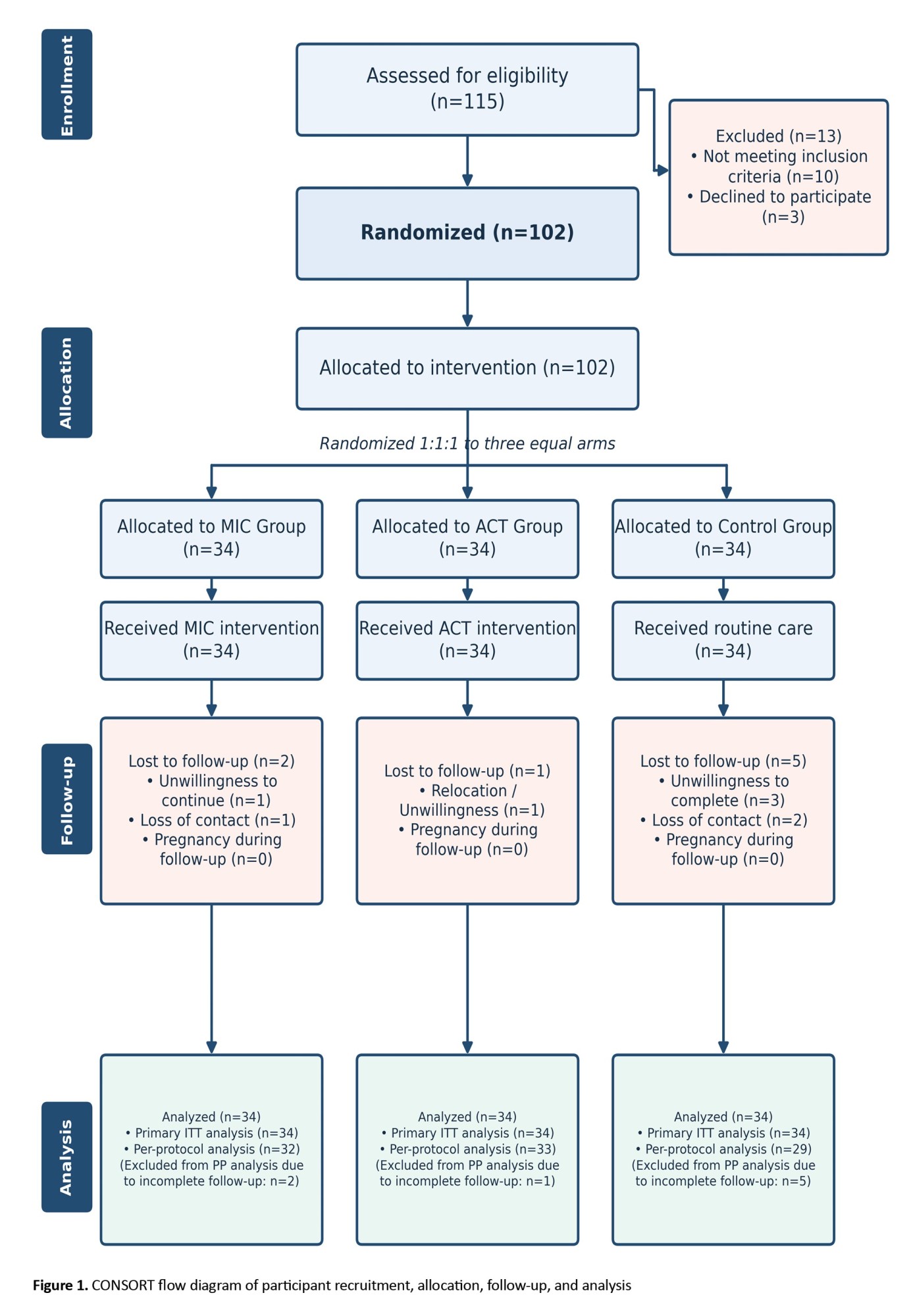
Following ethical approval from Mashhad University of Medical Sciences and registration with the Iranian Registry of Clinical Trials (IRCT), the flow of participants through each stage of the study is illustrated in Figure 1.
Pregnancy and childbirth, while often viewed as joyous, are intensely physiological and psychological experiences for women [1]. Although childbirth is frequently positive, significant complications and severe maternal morbidity can pose real or perceived threats to the life or health of the mother or infant [2]. In Iran, for instance, nearly half of pregnant women experience at least one unexpected birth trauma [3]. Globally, severe maternal morbidity and maternal near-miss events appear to be increasing, with potentially serious short- and long-term consequences for women’s physical and psychological health [4]. These challenges highlight the inherent vulnerability of the perinatal period and its potential to trigger psychological distress and trauma, potentially resulting in complex mental health problems [5]. Traumatic childbirth remains largely unrecognized and is routinely unscreened for in maternity services, leading women to report symptoms of postnatal post-traumatic stress symptoms (P-PTSS) or secondary tokophobia in the future, particularly when deciding whether to become pregnant again [6]. The diagnosis of P-PTSD aligns with the DSM-5 (diagnostic and statistical manual of mental disorders, fifth edition) criteria, requiring the persistence of core symptom clusters, such as avoidance of trauma reminders or becoming pregnant [7]. The global burden of P-PTSD is significant, with prevalence rates reaching 18.5% among women experiencing complicated deliveries, preterm birth, stillbirth, or preeclampsia [8]. Spontaneous recovery is rare, underscoring the condition’s persistent nature [9].
Tokophobia, characterized as an “unreasoning dread of childbirth,” is broadly classified as primary (affecting nulliparous women) and secondary (affecting multiparous women with previous negative or traumatic childbirth experiences) [10]. This condition is characterized by a “pathological dread” and “avoidance of pregnancy,” often manifesting as requests for elective caesarean sections (CS) during subsequent pregnancies, as women strive to maintain control in an exposed situation [9]. A critical aspect of secondary tokophobia is its strong comorbidity and causal link with P-PTSS [9]. The interconnected nature of P-PTSS and secondary tokophobia necessitates a synergistic approach [11]. Avoidance behaviors common in both conditions suggest that interventions targeting only one may be insufficient, leading to incomplete recovery or symptom displacement [11, 12]. Therefore, a holistic, integrated therapy addressing both the trauma response of P-PTSS and the phobic fear of secondary tokophobia is crucial for comprehensive recovery, improved maternal and family outcomes, and breaking the cycle of distress [13, 14]. Beyond the desire for a cesarean delivery, secondary tokophobia can result in avoidance of future pregnancies [15], longer intervals between deliveries [10], negative birth experiences, impaired maternal-infant bonding, and reduced rates of exclusive breastfeeding [16]. It is also a recognized symptom of prenatal depression [10].
Early psychological interventions, such as cognitive behavioral therapy and debriefing, especially those delivered by midwives or clinicians within 72 hours of traumatic childbirth, effectively reduce traumatic stress symptoms [9, 17]. Further high-quality research with longer follow-up is needed to confirm the long-term effectiveness of specific online psychological interventions [18]. Internet-based counseling, facilitated by digital technology, effectively reduces tokophobia and improves maternal self-efficacy, particularly when culturally adapted; this finding underscores the potential for accessible and flexible interventions [19]. However, perinatal care providers still lack sufficient awareness of and management strategies for tokophobia [20].
Motivational counseling (MC) is an evidence-based, client-centered approach that enhances intrinsic motivation for behavior change by exploring and resolving ambivalence [21]. Acceptance and commitment therapy (ACT) is an empirically supported psychotherapy that cultivates psychological flexibility to help individuals adapt to life’s challenges [22]. Considering the published protocol investigating the effectiveness of these two telemedicine-based counseling methods for post-traumatic stress in single-child women with secondary tokophobia [18], this study aims to compare scalable and accessible counseling approaches and assess their potential contribution to integrating mental health support into routine perinatal care in Iran. Therefore, this study aimed to compare the effect of telemedicine‑delivered MC and ACT on postnatal PTSS among single‑child women with secondary tokophobia. The primary outcome was P-PTSS severity, assessed using the impact of event scale (IES). We hypothesized that both ACT and MC would reduce P-PTSS scores compared with usual care; comparisons between the two active interventions were exploratory.
Materials and Methods
This three-arm randomized controlled trial, conducted from January 2024 to March 2025, aimed to compare the effects of two counseling interventions on P-PTSS. The study was structured into two distinct phases.
Setting and recruitment
The study was conducted at four health centers affiliated with Mashhad University of Medical Sciences, which were selected randomly from eight available centers. Recruitment was performed via convenience sampling by inviting women with one living child whose child was at least two years old to participate.
Phase 1: Screening
In the first phase, participants were screened to identify secondary tokophobia. Screening was conducted using the fear of childbirth prior pregnancy (FOCPP) tool, a 10-item questionnaire with a 5-point Likert scale (score range: 10–50; cutoff: ≥20). The FOCPP, originally developed by Stoll in Canada [23] and validated in Iran by Heydari [24], was used exclusively to identify women eligible for the second phase of the study.
Phase 2: Randomized controlled trial
Women identified as having secondary tokophobia during the screening phase were eligible for inclusion in the trial. In this phase, participants were randomly assigned to one of three groups: ACT-based counseling, motivational counselling, or a control group. The primary outcome was P-PTSS severity, measured using the IES at baseline, 4 weeks, and 6–8 weeks post-intervention.
Eligibility criteria
Inclusion criteria
Inclusion criteria were: (1) parity of one (having a single living child aged ≥2 years); (2) presence of secondary tokophobia, operationalized as a baseline score of ≥20 on the FOCPP; (3) Iranian residency and fluency in Persian; (4) smartphone ownership and basic digital literacy to navigate the MumApp application; and (5) absence of severe, diagnosed psychiatric conditions.
To ensure sample homogeneity and avoid confounding, the criterion of “no prior severe psychological problems” was operationally defined as:
● No history of or current diagnosis of severe psychiatric disorders (e.g. major depressive disorder, bipolar disorder, or psychotic spectrum disorders);
1) No current or past use of psychotropic medications; and 2) No ongoing formal psychological or psychiatric treatment.
Eligibility regarding psychiatric history was initially evaluated using a structured self-reported medical history interview at baseline and subsequently cross-verified against the participants’ electronic health records (EHRs) maintained at the primary health care (PHC) centers. Medical contraindications to future pregnancy (e.g. a history of hysterectomy or severe, unmanaged maternal comorbidities) were also verified.
Exclusion criteria
Exclusion criteria were: 1) unwillingness to continue participation; 2) absence from more than two consecutive counseling sessions; 3) initiation of external counseling or psychiatric services during the study period; and 4) self-reported occurrence of a new pregnancy during the follow-up period. Although pregnancy during follow-up was prespecified as an exclusion criterion, no participants became pregnant during the trial, and therefore, no exclusions were made on this basis.
Women diagnosed with tokophobia provided informed consent, ensuring confidentiality and adherence to ethical guidelines. They were instructed to download and install the “ MumApp “ counseling application from Google Play to receive tailored counseling, communicate with the researchers via chat, and submit assignments through the app. In this three-arm randomized controlled trial (RCT), the current study aimed to compare the effectiveness of two interventions—ACT (arm 1) and MC (arm 2)—with a control group (arm 3) in reducing the mean P-PTSD score among single-child women with secondary tokophobia. The intervention was delivered through a multimodal telehealth approach comprising synchronous individual sessions via integrated video and audio calls, supplemented by asynchronous, two-way chat interactions for follow-up support and assignment submission.
This study adhered to the CONSORT (consolidated standards of reporting trials) guidelines for reporting randomized controlled trials [25]. The P-PTSS was measured before the intervention and during the fourth and eighth weeks of follow-up. The working alliance between the online counselor and participants via chat was also explored.
Data privacy and security
Given the sensitive nature of the collected mental health data, multi-layered security measures were implemented. All communication between participants and the counselor via the MumApp application was protected by HTTPS/SSL (TLS) transport-layer encryption and secure, password-protected authentication. All exchanged communication data were transmitted during transmission and stored on a restricted-access research server maintained by the affiliated academic institution. The server was accessible exclusively to the principal investigator and supervising clinical psychologist through dedicated credentials.
To protect participants’ identities, directly identifying information (e.g. names and contact details) was replaced with unique study identification codes upon interaction completion. The code-matching file was stored separately and encrypted with a password accessible only to the principal investigator. Audio, video, and chat communications, as well as any mental health assessment records, were logged and stored in the restricted and encrypted server environment. Participants were instructed (in writing and orally) to ensure a private, sound-secured environment for each session.
All procedures of data transmission, storage, access control, and de-identification were reviewed and approved by the institutional ethics committee as part of the overall study protocol.
Sample size
The required sample size was calculated based on data from a relevant previous trial by Pour-Edalati et al. [26], which assessed changes in childbirth fear scores following an intervention. In that study, the mean change in fear scores was −1.6±1.27 in the intervention group and −0.19±1.17 in the control group (effect size d≈1.16). Assuming a two-sided significance level of α=0.05 and a statistical power of 80% (1−β=0.8), a standard two-sample comparison of means indicated a minimum sample size of n=22 participants per group for a two-arm comparison.
To account for the three-arm study design (ACT, MC, and control) and adjust for multiple pairwise comparisons, the sample size per arm was inflated according to the number of comparison groups (g=3), yielding an adjusted requirement of approximately 31 participants per group. Finally, anticipating an approximate 10% loss to follow-up, the final sample size was set at 34 participants per arm (nfinal=31/(1−0.1)≈34, resulting in a total target sample size of 102 primiparous women with secondary tokophobia (34 participants per group).
Following ethical approval from Mashhad University of Medical Sciences and registration with the Iranian Registry of Clinical Trials (IRCT), the flow of participants through each stage of the study is illustrated in Figure 1.
Initially, 115 women were assessed for eligibility, of whom 102 met the inclusion criteria and were randomized into three groups. A total of 102 women were randomized into the ACT (n=34), MC (n=34), and control (n=34) groups. Over the course of the study, 8 participants (7.8%) were lost to follow-up: 1 in the ACT group (relocation, n=1), 2 in the MC group (unavailability due to work schedule, n=1; loss of contact, n=1), and 5 in the control group (unwillingness to continue filling questionnaires, n=3; loss of contact, n=2). None of the participants discontinued due to adverse events or pregnancy. All 102 participants were included in the primary ITT mixed-effects models, and 94 participants were included in the per-protocol sensitivity analysis.
Randomization and blinding
An independent researcher who was not involved in participant recruitment, intervention delivery, or outcome assessment generated the random allocation sequence using random allocation software with permuted blocks of six and a 1:1:1 allocation ratio. Seventeen blocks were generated to allocate participants to one of three groups: ACT (group A), MC (group B), or the control group (group C).
Allocation concealment was ensured using sequentially numbered, opaque, sealed envelopes (SNOSE) containing the group assignments. After confirming eligibility and obtaining written informed consent, participants were enrolled. The first author then opened the next envelope in the numerical sequence and assigned the participant to the corresponding study group.
Owing to the nature of the counseling interventions, participants and the intervention provider could not be blinded to group allocation. However, the data collector/outcome assessor was blinded to group assignment.
Data collection tools
Three instruments were used in this study. First, a demographic questionnaire was administered to collect information on age, education, occupation, income, pregnancy records, previous delivery type, history of maternal complications, history of high-risk pregnancy, and history of neonatal hospitalization. Second, the FOCPP, a 10-item questionnaire scored on a 5-point Likert scale (range: 10–50), was used as a screening tool to identify women with secondary tokophobia; a cutoff score of ≥20 was applied. Third, the IES was used to assess the severity of post-traumatic stress related to childbirth and served as the primary outcome measure.
The IES, developed by Horowitz et al. in 1979, is used to measure P-PTSS [27]. This scale assesses trauma-related helplessness using a Likert scale (0-4), with total scores ranging from 0 to 88. The Persian IES‑R version of the scale has demonstrated acceptable internal consistency (Cronbach’s α ranging from 0.67 to 0.87) and good test re-test reliability and has been validated in several studies [3, 28]. Based on the categorization proposed in the Iranian validation study by Panahi et al. [28], scores were classified as severe (≥45), moderate (30–44), and mild (<30).
Interventions and counseling protocols
This three-group randomized controlled trial compared two telemedicine-delivered—MC and ACT—with a routine care control group. Both intervention groups received four weekly individual counseling sessions (30–40 minutes per session) delivered asynchronously/synchronously via the dedicated telemedicine application (MumApp), accompanied by text/voice communication between sessions.
Counselor qualifications and training: All counseling sessions were delivered by the first author, a reproductive health specialist with advanced clinical training in perinatal psychological interventions. To ensure high intervention quality and competency, the first author underwent specialized training in ACT and MC prior to trial initiation, supervised by the fourth author (a senior clinical psychologist and expert in perinatal psychotherapy).
Protocol sources and adaptation: Standardized, session-by-session protocols were developed specifically for women experiencing secondary tokophobia.
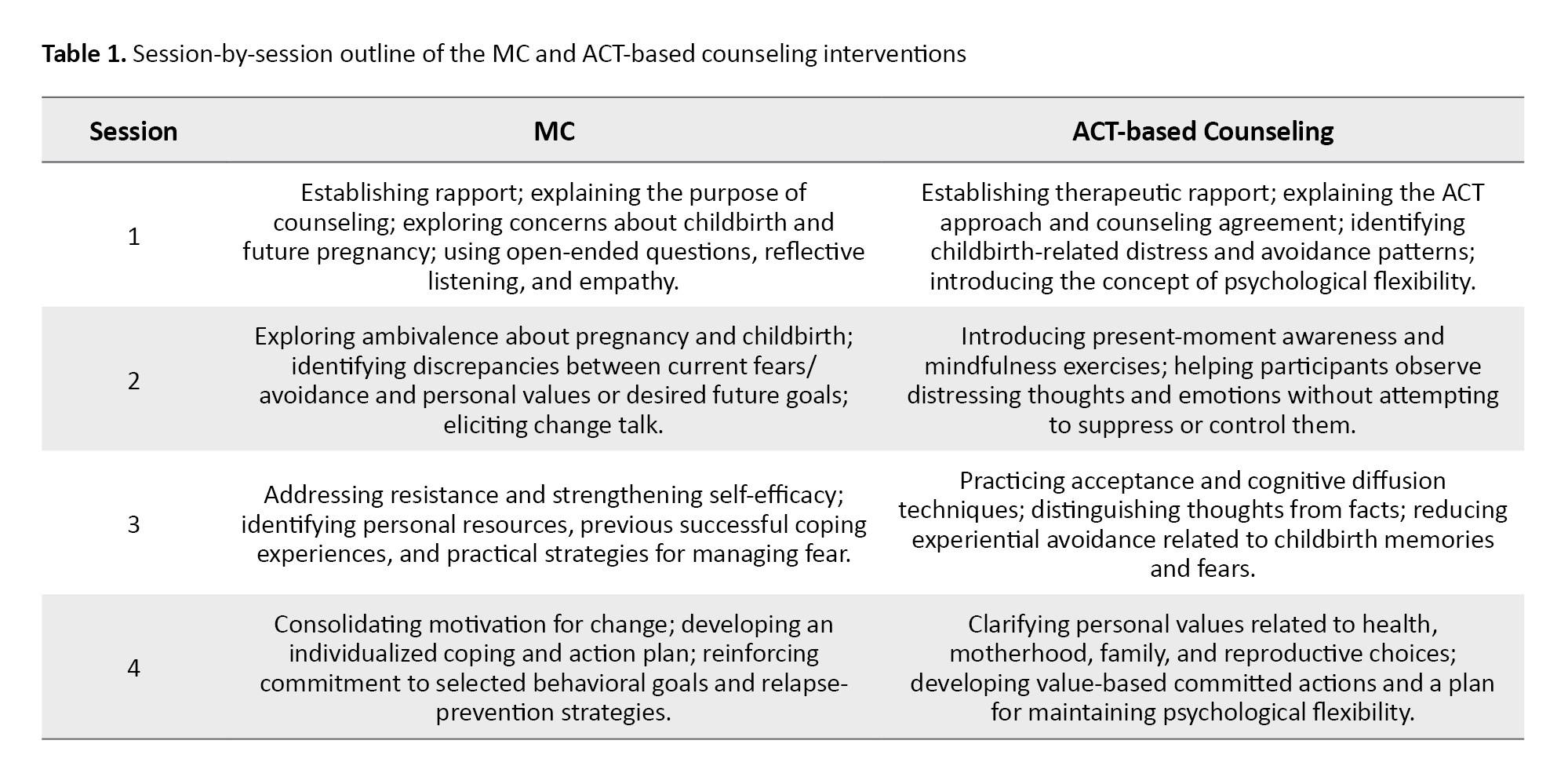
Motivational counseling: MC aims to enhance participants’ internal motivation for behavioral change, employing principles of empathy, highlighting contradictions, addressing resistance, and strengthening self-efficacy. Session content includes establishing empathy and communication, promoting reflective thinking and revealing inconsistencies, preparing for change and addressing denial, and developing life skills to manage challenges [29].
ACT-based counseling: ACT focuses on acceptance, mindfulness, present moment awareness, cognitive restructuring, value identification, and committed action to foster psychological flexibility. The sessions emphasized building trust, establishing goals and therapeutic agreements, practicing mindfulness to reduce efforts to control problems, clarifying acceptance, and promoting the psychological acceptance of mental experiences [30].
Both protocols were adapted to the clinical context of secondary tokophobia through expert review and consensus. A session-by-session outline of both protocols is provided in Table 1.
Treatment fidelity, adherence, and contact time: To ensure high treatment fidelity and consistency across study arms:
Supervision & audit: The first author completed a structured protocol compliance checklist after each session. Weekly supervision sessions were conducted with the fourth author to review session flow and address any protocol deviations.
Equal contact time & engagement: Both active intervention groups received identical planned contact time (4 weekly sessions of 30–40 minutes; mean actual duration: 35.4±3.2minutes) and equal opportunities for messaging/voice communication via MumApp. Engagement was monitored automatically by the application. Participants in both groups completed all 4 scheduled sessions (100% session completion rate), with a comparable mean number of chat interactions per participant between ACT (3.4±1.1) and MC (3.1±0.93).
Control group: Participants in the control group received standard routine prenatal care provided by public health centers. According to the Iranian Ministry of Health national guidelines, this routine care includes monthly prenatal visits involving the monitoring of maternal vital signs, weight, blood pressure, fundal height, and fetal heart rate, alongside routine physical health assessments. It does not include structured psychological counseling, routine mental health screening, or psychiatric referral.
Control group participants did not have access to the MumApp application, nor were they provided with psychoeducational materials, counseling sessions, or structured assignments. To mitigate the risk of contamination, participants across all groups were explicitly instructed not to seek external psychological counseling or initiate new mental health treatments during the 8-week study duration. At both 4- and 8-week follow-up assessments, participants were queried regarding their use of external psychological or psychiatric services. No participant in either the intervention or control groups reported initiating external mental health care during the study period; therefore, no adjustments for concomitant psychological care were necessary. For ethical reasons, participants who experienced severe psychological distress during the study were to be referred to the health center’s staff psychologist; however, no such referrals were required during the trial.
Data analysis
Data were analyzed using SPSS software, version 25.0 (IBM Corp., Armonk, NY, USA). Descriptive statistics, including Mean±SD, frequencies, and percentages, were calculated to summarize baseline demographic, obstetric characteristics, and psychological scores. The normality of continuous variables was evaluated using the Shapiro–Wilk test and visual inspection of Q–Q plots. Baseline comparability among the three study arms was assessed using one-way analysis of variance (ANOVA) for normally distributed continuous variables, the Kruskal–Wallis test for nonparametric data, and the chi-square (χ2) or Fisher’s exact test for categorical variables.
The primary analysis adhered to the intention-to-treat (ITT) principle, including all 102 randomized participants (n=34 in ACT, n=34 in MC, and n=34 in routine care/control). To account for repeated measurements and accommodate missing data under the missing-at-random (MAR) assumption without data deletion or bias from single imputation, linear mixed-effects models (LMMs) were fitted. The models included participants as a random intercept and fixed effects for treatment group (ACT, MC, control), time (baseline, 4-week post-intervention, and 8-week follow-up), baseline symptom severity as a covariate, and the group × time interaction term. Pairwise post-hoc comparisons were adjusted using the Bonferroni correction.
In addition, a per-protocol (complete-case) sensitivity analysis was conducted on participants who completed all assessments (n=94) using repeated-measures ANOVA. Longitudinal changes in categorical symptom severity (mild, moderate, and severe) across groups were evaluated using chi-square tests. Effect sizes were estimated using partial eta squared (ηp2) and Cohen’s d with corresponding 95% confidence intervals (CI). All statistical tests were two-tailed, and P<0.05 was considered statistically significant.
Results
This three-arm randomized controlled trial was conducted in health centers affiliated with Mashhad University of Medical Sciences between January 2024 and March 2025 to evaluate the effects of MC and ACT on P-PTSS among single-child women with secondary tokophobia. A total of 102 eligible women were randomized; however, eight participants were lost to follow-up because they were unwilling to continue participation (MC: n=2, ACT: n=1, and control: n=5). Therefore, data from 94 participants were included in the final analysis.
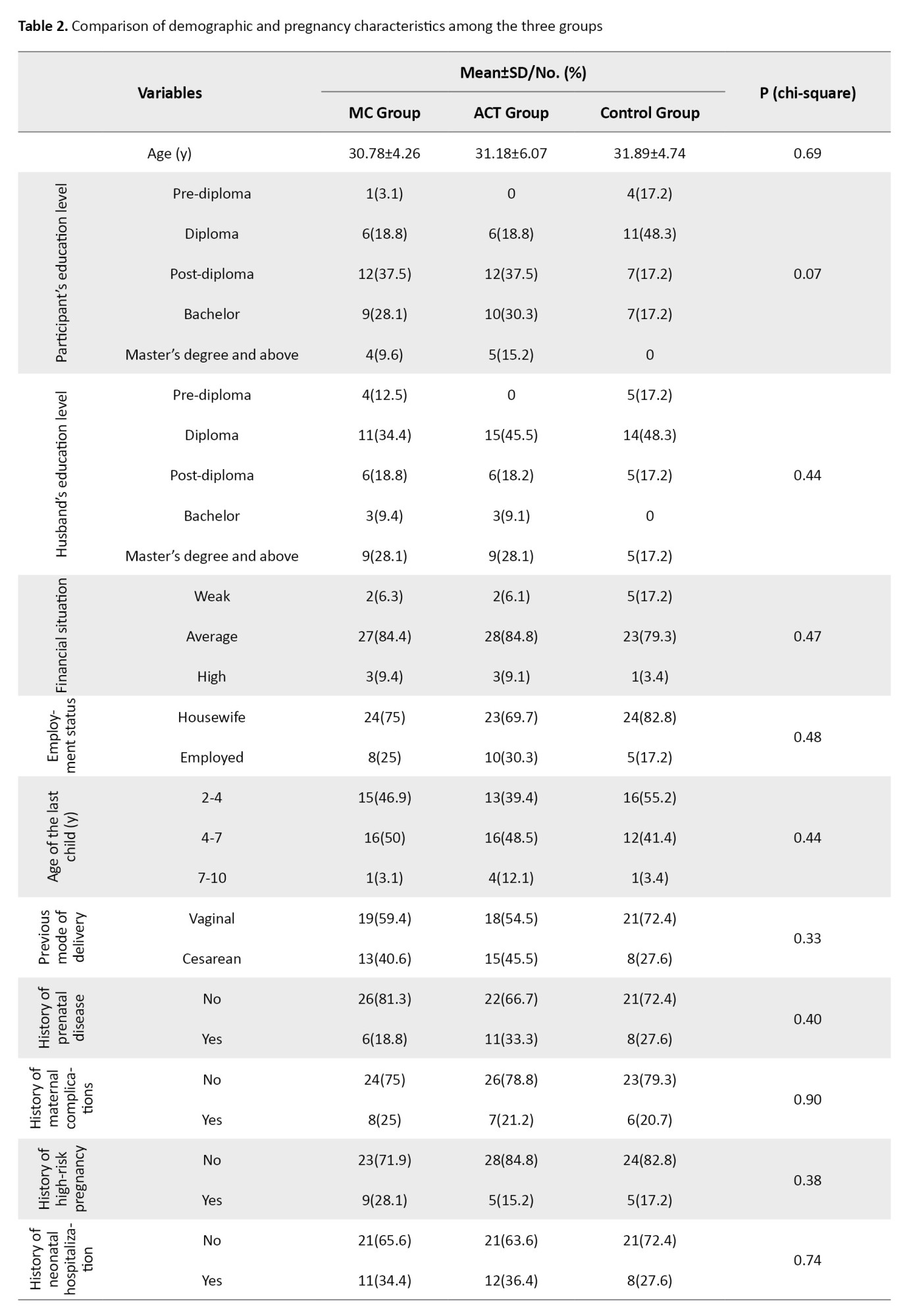
There were no statistically significant differences among the three groups in demographic characteristics or previous obstetric history at baseline (Table 2).
Repeated-measures ANOVA was used to examine changes in P-PTSS scores across the three study groups over the three assessment time points. In addition, pairwise comparisons between the MC, ACT, and control groups were conducted at each time point, as presented in Table 3.
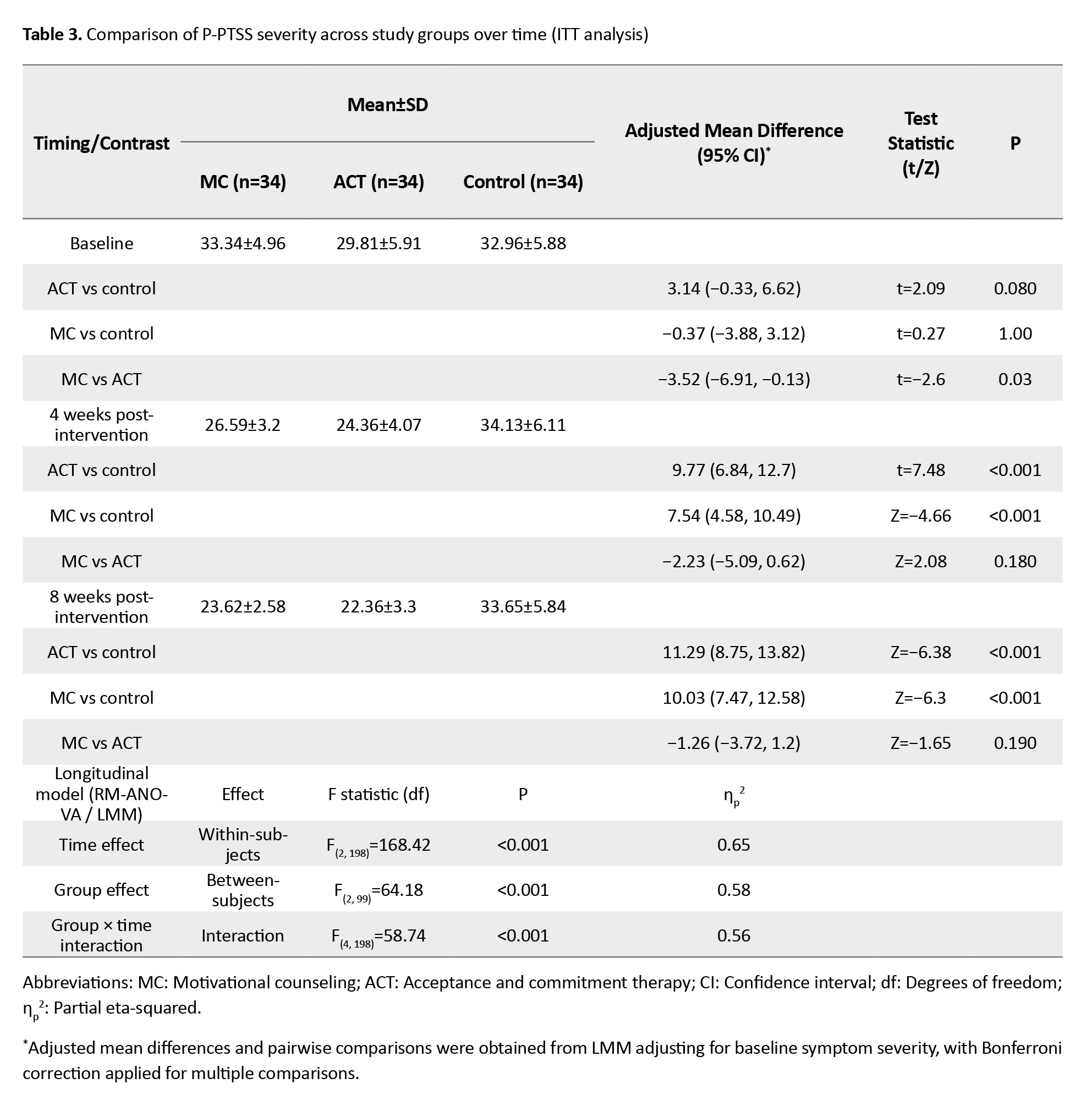
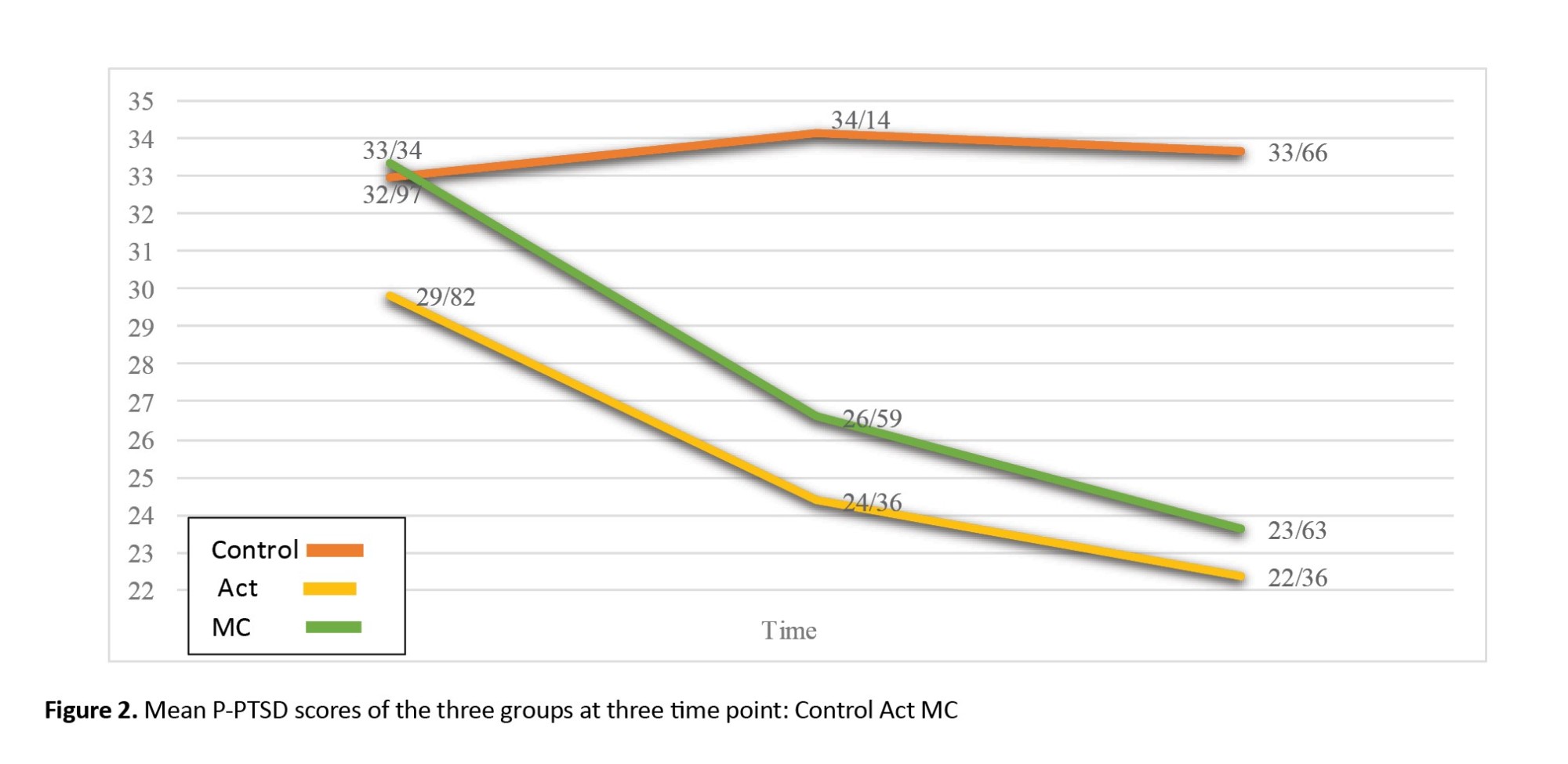
As detailed in Table 3, ANOVA results demonstrated a statistically significant main effect of time (F(2, 182)=168.42, P<0.001, ηp2=0.65), a significant main effect of group (F(2, 91)=64.18, P<0.001, ηp2=0.58), and a prominent group × time interaction (F(4, 182)=58.74, P<0.001, ηp2=0.56), indicating distinct recovery trajectories between the intervention arms and routine care. At baseline, the mean P-PTSS scores were 33.34±4.96 in the MC group, 29.81±5.91 in the ACT group, and 32.96±5.88 in the control group. Unadjusted pairwise baseline comparisons showed no statistically significant differences between the ACT and control groups (P=0.08) or between the MC and control groups (P=1.00); however, a baseline difference was observed between the MC and ACT groups (P=0.03).
To account for this baseline imbalance and to evaluate post-intervention outcomes under the ITT framework, a LMM was applied, incorporating baseline P-PTSS score, study group, time, and the group-by-time interaction as fixed effects, with participants included as random effects.
After adjusting for baseline scores, both the ACT and MC groups demonstrated statistically significant reductions in P-PTSS severity compared to the control group at both 4- and 8-week follow-ups (P<0.001 for all adjusted contrasts). In the adjusted pairwise comparison between the two active interventions, no statistically significant difference in symptom severity was found between the ACT and MC groups at 4 weeks (adjusted mean difference: −2.23, 95% CI, −5.09%, 0.62%, P=0.18) or at 8 weeks (adjusted mean difference: −1.26, 95% CI; −3.72%, 1.2%, P=0.19). Because this trial was not designed as an equivalence or non-inferiority study, these non-significant differences indicate an absence of evidence of a difference rather than proof of therapeutic equivalence.
Four weeks after the intervention, mean P-PTSS scores were substantially lower in both intervention groups than in the control group. Specifically, the mean score was 24.36±4.07 in the ACT group and 26.59±3.2 in the MC group, compared with 34.13±6.11 in the control group. After adjustment for baseline scores using the mixed-effects model, both the ACT and MC groups showed significantly lower symptom severity than the control group (both adjusted P<0.001). No statistically significant adjusted difference was observed between the ACT and MC groups (adjusted mean difference: −2.23, 95% CI; −5.09%, 0.62%, P=0.18).
At the eight-week follow-up, the reduction in P-PTSS severity was maintained in both intervention groups. Mean P-PTSS scores were 22.36±3.3 in the ACT group, 23.62±2.58 in the MC group, and 33.65±5.84 in the control group. Adjusted comparisons showed significantly lower P-PTSS scores in the ACT group (adjusted mean difference: 11.29, 95% CI; 8.75%, 13.82%, P<0.001) and in the MC group (adjusted mean difference: 10.03, 95% CI; 7.47%, 12.58%, P<0.001) relative to the control group. The adjusted difference between the ACT and MC groups was not statistically significant (adjusted mean difference: −1.26, 95% CI; −3.72 %, 1.2%, P=0.19) (Table 3). Because this trial was not designed as an equivalence or non-inferiority study, this non-significant difference should not be interpreted as evidence of equal effectiveness of the two interventions. The patterns of change in mean P-PTSS scores over time are illustrated in Figure 2.
Randomization and blinding
An independent researcher who was not involved in participant recruitment, intervention delivery, or outcome assessment generated the random allocation sequence using random allocation software with permuted blocks of six and a 1:1:1 allocation ratio. Seventeen blocks were generated to allocate participants to one of three groups: ACT (group A), MC (group B), or the control group (group C).
Allocation concealment was ensured using sequentially numbered, opaque, sealed envelopes (SNOSE) containing the group assignments. After confirming eligibility and obtaining written informed consent, participants were enrolled. The first author then opened the next envelope in the numerical sequence and assigned the participant to the corresponding study group.
Owing to the nature of the counseling interventions, participants and the intervention provider could not be blinded to group allocation. However, the data collector/outcome assessor was blinded to group assignment.
Data collection tools
Three instruments were used in this study. First, a demographic questionnaire was administered to collect information on age, education, occupation, income, pregnancy records, previous delivery type, history of maternal complications, history of high-risk pregnancy, and history of neonatal hospitalization. Second, the FOCPP, a 10-item questionnaire scored on a 5-point Likert scale (range: 10–50), was used as a screening tool to identify women with secondary tokophobia; a cutoff score of ≥20 was applied. Third, the IES was used to assess the severity of post-traumatic stress related to childbirth and served as the primary outcome measure.
The IES, developed by Horowitz et al. in 1979, is used to measure P-PTSS [27]. This scale assesses trauma-related helplessness using a Likert scale (0-4), with total scores ranging from 0 to 88. The Persian IES‑R version of the scale has demonstrated acceptable internal consistency (Cronbach’s α ranging from 0.67 to 0.87) and good test re-test reliability and has been validated in several studies [3, 28]. Based on the categorization proposed in the Iranian validation study by Panahi et al. [28], scores were classified as severe (≥45), moderate (30–44), and mild (<30).
Interventions and counseling protocols
This three-group randomized controlled trial compared two telemedicine-delivered—MC and ACT—with a routine care control group. Both intervention groups received four weekly individual counseling sessions (30–40 minutes per session) delivered asynchronously/synchronously via the dedicated telemedicine application (MumApp), accompanied by text/voice communication between sessions.
Counselor qualifications and training: All counseling sessions were delivered by the first author, a reproductive health specialist with advanced clinical training in perinatal psychological interventions. To ensure high intervention quality and competency, the first author underwent specialized training in ACT and MC prior to trial initiation, supervised by the fourth author (a senior clinical psychologist and expert in perinatal psychotherapy).
Protocol sources and adaptation: Standardized, session-by-session protocols were developed specifically for women experiencing secondary tokophobia.
Motivational counseling: MC aims to enhance participants’ internal motivation for behavioral change, employing principles of empathy, highlighting contradictions, addressing resistance, and strengthening self-efficacy. Session content includes establishing empathy and communication, promoting reflective thinking and revealing inconsistencies, preparing for change and addressing denial, and developing life skills to manage challenges [29].
ACT-based counseling: ACT focuses on acceptance, mindfulness, present moment awareness, cognitive restructuring, value identification, and committed action to foster psychological flexibility. The sessions emphasized building trust, establishing goals and therapeutic agreements, practicing mindfulness to reduce efforts to control problems, clarifying acceptance, and promoting the psychological acceptance of mental experiences [30].
Both protocols were adapted to the clinical context of secondary tokophobia through expert review and consensus. A session-by-session outline of both protocols is provided in Table 1.
Treatment fidelity, adherence, and contact time: To ensure high treatment fidelity and consistency across study arms:
Supervision & audit: The first author completed a structured protocol compliance checklist after each session. Weekly supervision sessions were conducted with the fourth author to review session flow and address any protocol deviations.
Equal contact time & engagement: Both active intervention groups received identical planned contact time (4 weekly sessions of 30–40 minutes; mean actual duration: 35.4±3.2minutes) and equal opportunities for messaging/voice communication via MumApp. Engagement was monitored automatically by the application. Participants in both groups completed all 4 scheduled sessions (100% session completion rate), with a comparable mean number of chat interactions per participant between ACT (3.4±1.1) and MC (3.1±0.93).
Control group: Participants in the control group received standard routine prenatal care provided by public health centers. According to the Iranian Ministry of Health national guidelines, this routine care includes monthly prenatal visits involving the monitoring of maternal vital signs, weight, blood pressure, fundal height, and fetal heart rate, alongside routine physical health assessments. It does not include structured psychological counseling, routine mental health screening, or psychiatric referral.
Control group participants did not have access to the MumApp application, nor were they provided with psychoeducational materials, counseling sessions, or structured assignments. To mitigate the risk of contamination, participants across all groups were explicitly instructed not to seek external psychological counseling or initiate new mental health treatments during the 8-week study duration. At both 4- and 8-week follow-up assessments, participants were queried regarding their use of external psychological or psychiatric services. No participant in either the intervention or control groups reported initiating external mental health care during the study period; therefore, no adjustments for concomitant psychological care were necessary. For ethical reasons, participants who experienced severe psychological distress during the study were to be referred to the health center’s staff psychologist; however, no such referrals were required during the trial.
Data analysis
Data were analyzed using SPSS software, version 25.0 (IBM Corp., Armonk, NY, USA). Descriptive statistics, including Mean±SD, frequencies, and percentages, were calculated to summarize baseline demographic, obstetric characteristics, and psychological scores. The normality of continuous variables was evaluated using the Shapiro–Wilk test and visual inspection of Q–Q plots. Baseline comparability among the three study arms was assessed using one-way analysis of variance (ANOVA) for normally distributed continuous variables, the Kruskal–Wallis test for nonparametric data, and the chi-square (χ2) or Fisher’s exact test for categorical variables.
The primary analysis adhered to the intention-to-treat (ITT) principle, including all 102 randomized participants (n=34 in ACT, n=34 in MC, and n=34 in routine care/control). To account for repeated measurements and accommodate missing data under the missing-at-random (MAR) assumption without data deletion or bias from single imputation, linear mixed-effects models (LMMs) were fitted. The models included participants as a random intercept and fixed effects for treatment group (ACT, MC, control), time (baseline, 4-week post-intervention, and 8-week follow-up), baseline symptom severity as a covariate, and the group × time interaction term. Pairwise post-hoc comparisons were adjusted using the Bonferroni correction.
In addition, a per-protocol (complete-case) sensitivity analysis was conducted on participants who completed all assessments (n=94) using repeated-measures ANOVA. Longitudinal changes in categorical symptom severity (mild, moderate, and severe) across groups were evaluated using chi-square tests. Effect sizes were estimated using partial eta squared (ηp2) and Cohen’s d with corresponding 95% confidence intervals (CI). All statistical tests were two-tailed, and P<0.05 was considered statistically significant.
Results
This three-arm randomized controlled trial was conducted in health centers affiliated with Mashhad University of Medical Sciences between January 2024 and March 2025 to evaluate the effects of MC and ACT on P-PTSS among single-child women with secondary tokophobia. A total of 102 eligible women were randomized; however, eight participants were lost to follow-up because they were unwilling to continue participation (MC: n=2, ACT: n=1, and control: n=5). Therefore, data from 94 participants were included in the final analysis.
There were no statistically significant differences among the three groups in demographic characteristics or previous obstetric history at baseline (Table 2).
Repeated-measures ANOVA was used to examine changes in P-PTSS scores across the three study groups over the three assessment time points. In addition, pairwise comparisons between the MC, ACT, and control groups were conducted at each time point, as presented in Table 3.
As detailed in Table 3, ANOVA results demonstrated a statistically significant main effect of time (F(2, 182)=168.42, P<0.001, ηp2=0.65), a significant main effect of group (F(2, 91)=64.18, P<0.001, ηp2=0.58), and a prominent group × time interaction (F(4, 182)=58.74, P<0.001, ηp2=0.56), indicating distinct recovery trajectories between the intervention arms and routine care. At baseline, the mean P-PTSS scores were 33.34±4.96 in the MC group, 29.81±5.91 in the ACT group, and 32.96±5.88 in the control group. Unadjusted pairwise baseline comparisons showed no statistically significant differences between the ACT and control groups (P=0.08) or between the MC and control groups (P=1.00); however, a baseline difference was observed between the MC and ACT groups (P=0.03).
To account for this baseline imbalance and to evaluate post-intervention outcomes under the ITT framework, a LMM was applied, incorporating baseline P-PTSS score, study group, time, and the group-by-time interaction as fixed effects, with participants included as random effects.
After adjusting for baseline scores, both the ACT and MC groups demonstrated statistically significant reductions in P-PTSS severity compared to the control group at both 4- and 8-week follow-ups (P<0.001 for all adjusted contrasts). In the adjusted pairwise comparison between the two active interventions, no statistically significant difference in symptom severity was found between the ACT and MC groups at 4 weeks (adjusted mean difference: −2.23, 95% CI, −5.09%, 0.62%, P=0.18) or at 8 weeks (adjusted mean difference: −1.26, 95% CI; −3.72%, 1.2%, P=0.19). Because this trial was not designed as an equivalence or non-inferiority study, these non-significant differences indicate an absence of evidence of a difference rather than proof of therapeutic equivalence.
Four weeks after the intervention, mean P-PTSS scores were substantially lower in both intervention groups than in the control group. Specifically, the mean score was 24.36±4.07 in the ACT group and 26.59±3.2 in the MC group, compared with 34.13±6.11 in the control group. After adjustment for baseline scores using the mixed-effects model, both the ACT and MC groups showed significantly lower symptom severity than the control group (both adjusted P<0.001). No statistically significant adjusted difference was observed between the ACT and MC groups (adjusted mean difference: −2.23, 95% CI; −5.09%, 0.62%, P=0.18).
At the eight-week follow-up, the reduction in P-PTSS severity was maintained in both intervention groups. Mean P-PTSS scores were 22.36±3.3 in the ACT group, 23.62±2.58 in the MC group, and 33.65±5.84 in the control group. Adjusted comparisons showed significantly lower P-PTSS scores in the ACT group (adjusted mean difference: 11.29, 95% CI; 8.75%, 13.82%, P<0.001) and in the MC group (adjusted mean difference: 10.03, 95% CI; 7.47%, 12.58%, P<0.001) relative to the control group. The adjusted difference between the ACT and MC groups was not statistically significant (adjusted mean difference: −1.26, 95% CI; −3.72 %, 1.2%, P=0.19) (Table 3). Because this trial was not designed as an equivalence or non-inferiority study, this non-significant difference should not be interpreted as evidence of equal effectiveness of the two interventions. The patterns of change in mean P-PTSS scores over time are illustrated in Figure 2.
Table 4 presents the severity of P-PTSS (severe, moderate, mild) across the three groups at three time points: pre-intervention, four- and eight-weeks post-intervention.
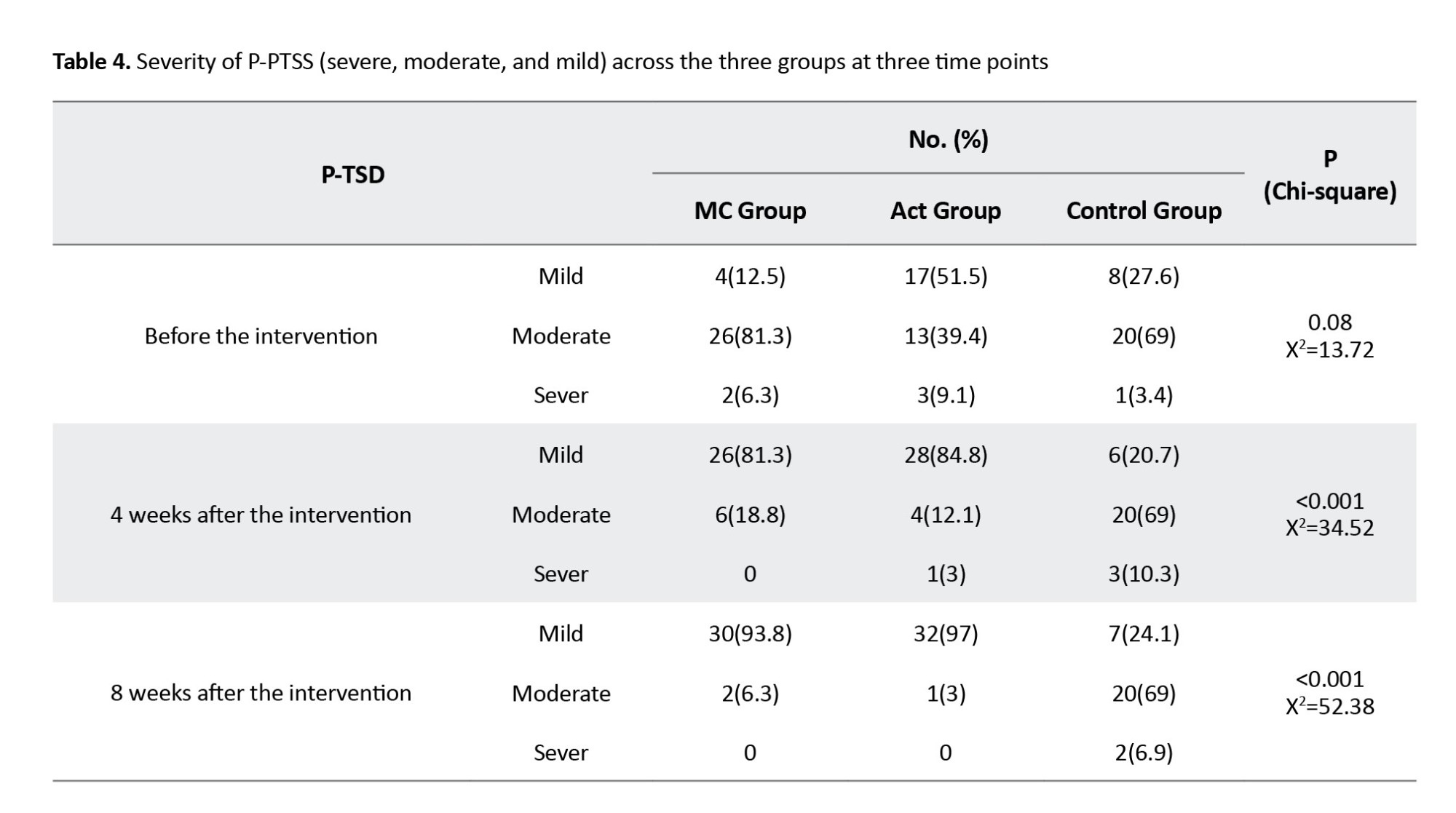
Chi-square tests compared P-PTSS levels. At baseline, differences in the distribution of P-PTSS severity were not statistically significant (P=0.08). At the first follow-up, the intervention groups showed a significant decrease in P-PTSS intensity compared to the control group (P<0.001). This significant reduction persisted at the second follow-up. Overall, both counseling types significantly reduced P-PTSS severity to mild levels.
Table 4 presents the distribution of P-PTSS severity categories (mild, moderate, and severe) across the three groups at baseline and at 4 and 8 weeks after the intervention. At baseline, the distribution of P-PTSS severity did not differ significantly among the groups (χ2=13.72, P=0.08).
At 4 weeks after the intervention, the distribution of P-PTSS severity differed significantly among the groups (χ2=34.52, P<0.001). Mild symptoms were observed in 26 participants (81.3%) in the MC group and 28 participants (84.8%) in the ACT group, compared with 6 participants (20.7%) in the control group. Moderate-to-severe symptoms were reported by 6 participants (18.8%) in the MC group, 5 participants (15.1%) in the ACT group, and 23 participants (79.3%) in the control group.
This pattern persisted at the 8-week follow-up, with a statistically significant difference in P-PTSS severity among the groups (χ2=52.38, P<0.001). Mild P-PTSS were reported by 30 participants (93.8%) in the MC group and 32 participants (97.0%) in the ACT group, compared with 7 participants (24.1%) in the control group. Conversely, moderate-to-severe symptoms were observed in 2 participants (6.3%) in the MC group, 1 participant (3.0%) in the ACT group, and 22 participants (75.9%) in the control group. No participant in either intervention group was classified as having severe P-PTSS at the 8-week follow-up, whereas 2 participants (6.9%) in the control group remained in the severe-symptom category. In categorical analyses, the proportion of women with mild P-PTSS substantially increased in both the ACT (from 51.5% at baseline to 97% at 8 weeks) and MC groups (from 12.5% at baseline to 93.8% at 8 weeks), whereas 75.9% of participants in the routine care group continued to experience moderate-to-severe symptoms at the 8-week endpoint (χ2=52.38, P<0.001).
Discussion
This study found that both MC- and ACT-based counseling were associated with lower P-PTSS scores among single-child women with secondary tokophobia at 4 and 8 weeks after the intervention, compared with routine care. The distribution of P-PTSS severity also shifted toward the mild category in both intervention groups at follow-up. However, no statistically significant difference was observed between the MC and ACT groups in P-PTSS scores at either follow-up assessment.
Motivational counseling in perinatal and childbearing contexts
The findings regarding MC are broadly consistent with previous research supporting motivational approaches in perinatal and interconception care. MC has been applied to several health-related behaviors and outcomes, including interconception health behaviors [31], breastfeeding promotion [32], care of women with substance-use problems [33], childbearing-related decision-making and management [34], and postnatal depression [35]. Motivational approaches may be particularly useful during the perinatal and postpartum periods, when women may experience uncertainty, competing priorities, and ambivalence regarding health behaviors or future reproductive decisions [36]. In the context of secondary tokophobia and childbirth-related P-PTSS, MC may help address avoidance and ambivalence toward future pregnancy, childbirth, or engagement with psychological care by using empathic communication, reflective listening, exploration of discrepancy, and support for self-efficacy [29]. These processes may facilitate women’s identification of personally meaningful and feasible coping strategies, rather than directing them toward a predetermined reproductive decision [37, 38]. Its adaptability to mobile platforms enhances user experience, convenience, and comfort in disclosing sensitive mental health concerns due to increased perceived privacy [39]. MC’s focus on intrinsic motivation and client autonomy makes it well-suited for addressing the psychological complexities of P-PTSS and secondary tokophobia [40].
ACT-based counseling for perinatal anxiety, depression, and childbirth-related distress
The beneficial findings for ACT-based counseling are consistent with the relevance of ACT to maternal mental health, particularly anxiety, trauma-related symptoms, and phobic responses [22]. ACT is a transdiagnostic approach that aims to enhance psychological flexibility through acceptance, present-moment awareness, cognitive defusion, values clarification, and committed action. These processes may be relevant for women with secondary tokophobia and P-PTSS, who may experience intrusive childbirth-related memories, persistent fear, emotional distress, and avoidance of trauma reminders or future pregnancy-related situations [41].
By targeting experiential avoidance, ACT may help women develop a different relationship with distressing thoughts, memories, and emotions rather than attempting to suppress or control them [41]. ACT empowers women to pursue values, like having children or healthy family relationships, even amidst fear, by clarifying these values and promoting committed action [42].
This mechanism may be particularly relevant for women with secondary tokophobia who avoid pregnancy because of childbirth-related fear and for women with P-PTSS who avoid reminders of a previous traumatic birth experience [43, 44]. Previous studies have reported beneficial effects of third-wave counseling approaches on postpartum mental health and anxiety [44]. ACT-based interventions have also been associated with reductions in fear of childbirth among first-time mothers [45], postpartum depression [46], and anxiety during pregnancy [41]. Although the ACT group had numerically lower mean P-PTSS scores than the MC group at both follow-up assessments, the difference between the two active interventions was not statistically significant. Thus, the present findings suggest that both approaches may be beneficial, potentially through distinct therapeutic pathways.
Telemedicine delivery and implications for research and practice
Both counseling interventions in this study were delivered through a telemedicine application using individual audio/video counseling, supplemented by two-way chat communication and assignment submission. This mode of delivery may improve access to psychological support for women who face barriers to in-person services, including childcare responsibilities, time constraints, distance from services, or concerns about discussing sensitive mental health issues. The perceived privacy and convenience of mobile-based counseling may also facilitate engagement and disclosure of mental health concerns [18].
Evidence on telemedicine-delivered counseling for perinatal mental health is growing. Consistent with the present findings, Doaltabadi et al. reported comparable effects of in-person and virtual counseling on fear of childbirth [47]. A systematic review by Nair et al. also indicated that telemedicine interventions may improve postpartum depressive symptoms and highlighted the need to expand digital perinatal mental health services beyond antenatal depression [48]. Nevertheless, comparative evidence on targeted counseling interventions for women who simultaneously experience secondary tokophobia and childbirth-related P-PTSS remains limited [49, 50]. The present study adds preliminary evidence that individualized, app-based MC and ACT counseling may be feasible approaches for this population.
In clinical practice, integrating structured screening for childbirth-related fear and trauma symptoms into routine maternal and reproductive health services may help identify women who could benefit from timely psychological assessment and referral.
Strengths and limitations
This study’s strengths include the simultaneous use of two counseling methods in a controlled trial with a relatively large sample size, and the innovative use of telemedicine and the MumApp mobile application. Furthermore, it addresses a research gap by focusing on single-child women with secondary tokophobia, an understudied area that warrants further investigation in midwifery counseling. Given current childbearing incentive policies in Iran, studying barriers to re-pregnancy in single-child women is a national research priority, making this study particularly strong. Other strengths included the random allocation of participants and the use of allocation concealment, which was intended to minimize the risk of selection bias. Several methodological limitations of this trial should be acknowledged when interpreting the findings:
Short follow-up and long-term maintenance: First, outcome assessments were conducted immediately post-intervention (week 4) and at a short-term follow-up (week 8). Consequently, the present findings do not provide evidence regarding the long-term maintenance of symptom reduction, particularly across future pregnancy, labor, or postpartum periods. Future longitudinal studies with extended follow-up durations (e.g. 6 to 12 months post-intervention) are warranted.
Measurement approach: Second, psychological outcomes (tokophobia and post-traumatic stress symptoms) were evaluated exclusively through validated self-report scales (FOCPP and IES) rather than structured clinical diagnostic interviews. Although self-report instruments are widely accepted for symptom screening in perinatal mental health research, they reflect symptom severity rather than formal clinical psychiatric diagnoses.
Generalizability and setting: Third, participants were recruited via convenience sampling from four primary health centers affiliated with a single university health network in an urban Iranian setting (Mashhad). This geographic and institutional confinement limits the generalizability of the findings to rural, multi-ethnic, or differing cultural and healthcare contexts.
Digital selection bias: Fourth, the requirement for smartphone ownership and mobile application navigation (MumApp) introduces potential digital selection bias. Women with limited digital literacy, unstable internet access, or lower socioeconomic status may have been underrepresented.
Lack of blinding: Fifth, due to the inherent interactive nature of psychological counseling interventions, blinding of participants and the interventionist was not possible, which may have introduced expectancy or performance bias. However, outcome assessors who administered the questionnaires were masked to group allocation.
Attrition and sample size: Sixth, although sample size calculations indicated an initial target of 102 participants, post-randomization attrition resulted in a final analyzed cohort of 94 women. Although LMM was employed to account for repeated measures and missing data under MAR assumptions, the reduced sample size may have diminished statistical power to detect smaller between-group differences.
Treatment fidelity assessment: Seventh, while treatment fidelity was supported through structured session-by-session checklists and weekly peer supervision, formal independent third-party adherence ratings using standardized instruments (e.g. the Motivational Counselling Treatment Integrity Code or ACT Fidelity Measure) were not conducted.
Absence of behavioral endpoints: Finally, this study evaluated psychological symptom severity without capturing objective behavioral outcomes, such as confirmed subsequent pregnancy occurrence, reproductive decision-making timelines, contraceptive switching behaviors, or subsequent healthcare utilization for perinatal mental health. Incorporating objective behavioral and reproductive endpoints represents an important direction for subsequent trials.
Conclusion
In this single-center randomized trial, telemedicine-delivered MC and ACT were associated with short-term reductions in self-reported childbirth-related post-traumatic stress symptoms and fear-of-childbirth scores, alongside favorable shifts in symptom-severity distributions over an 8-week post-intervention period compared with routine care.
Because this trial assessed self-reported psychological symptom severity over a short timeframe, these findings should not be interpreted as evidence of changes in actual subsequent pregnancy occurrence, reproductive decision-making, or long-term maternal mental health trajectories. Any potential integration of structured telecounseling into primary perinatal healthcare services remains preliminary and hypothesis-generating. Future adequately powered, multicenter randomized trials with extended longitudinal follow-up, rigorous ITT analyses, and objective behavioral and reproductive endpoints are required to evaluate treatment durability, comparative effectiveness, and broader clinical applicability before institutional or policy implementation can be recommended.
Ethical Considerations
Compliance with ethical guidelines
This study was approved by the Research Ethics Committee of Mashhad University of Medical Sciences, Mashhad, Iran (Code: IR.MUMS.NURSE.REC.1403.001) and was registered by the Iranian Registry of Clinical Trials (IRCT) (Code: IRCT20240207060923N1). The trial adhered to the Declaration of Helsinki guidelines and is reported in accordance with the Consolidated Standards of Reporting Trials (CONSORT) 2010 statement.
All participants were informed about the objectives and procedures of the study, and written informed consent was obtained from all women prior to participation.
Funding
This study was derived from a master’s thesis of Maryam Ramezani, approved by the Department of Midwifery Counseling, Faculty of Nursing & Midwifery, Mashhad University of Medical Sciences, Mashhad, Iran and financially supported by the Vice‑chancellery for Research of Mashhad University of Medical Sciences, Mashhad, Iran (Grant No.: 4021627).
Authors contributions
Investigation and data collection: Maryam Ramezani, Somaye Minaei Moghadam, and Sedigheh Abdollahpour; Formal analysis and interpretation: Mohsen Dehghani; Writing the original draft: Sedigheh Abdollahpour;Conceptualization, methodology, review, editing, and final approval: All authors.
Conflict of interest
The authors declared no conflict of interest.
Acknowledgements
The authors would like to express their sincere gratitude to all women who generously participated in this study. Special thanks are extended to all colleagues and staff who contributed to the implementation of the counseling sessions and data collection process.
Chi-square tests compared P-PTSS levels. At baseline, differences in the distribution of P-PTSS severity were not statistically significant (P=0.08). At the first follow-up, the intervention groups showed a significant decrease in P-PTSS intensity compared to the control group (P<0.001). This significant reduction persisted at the second follow-up. Overall, both counseling types significantly reduced P-PTSS severity to mild levels.
Table 4 presents the distribution of P-PTSS severity categories (mild, moderate, and severe) across the three groups at baseline and at 4 and 8 weeks after the intervention. At baseline, the distribution of P-PTSS severity did not differ significantly among the groups (χ2=13.72, P=0.08).
At 4 weeks after the intervention, the distribution of P-PTSS severity differed significantly among the groups (χ2=34.52, P<0.001). Mild symptoms were observed in 26 participants (81.3%) in the MC group and 28 participants (84.8%) in the ACT group, compared with 6 participants (20.7%) in the control group. Moderate-to-severe symptoms were reported by 6 participants (18.8%) in the MC group, 5 participants (15.1%) in the ACT group, and 23 participants (79.3%) in the control group.
This pattern persisted at the 8-week follow-up, with a statistically significant difference in P-PTSS severity among the groups (χ2=52.38, P<0.001). Mild P-PTSS were reported by 30 participants (93.8%) in the MC group and 32 participants (97.0%) in the ACT group, compared with 7 participants (24.1%) in the control group. Conversely, moderate-to-severe symptoms were observed in 2 participants (6.3%) in the MC group, 1 participant (3.0%) in the ACT group, and 22 participants (75.9%) in the control group. No participant in either intervention group was classified as having severe P-PTSS at the 8-week follow-up, whereas 2 participants (6.9%) in the control group remained in the severe-symptom category. In categorical analyses, the proportion of women with mild P-PTSS substantially increased in both the ACT (from 51.5% at baseline to 97% at 8 weeks) and MC groups (from 12.5% at baseline to 93.8% at 8 weeks), whereas 75.9% of participants in the routine care group continued to experience moderate-to-severe symptoms at the 8-week endpoint (χ2=52.38, P<0.001).
Discussion
This study found that both MC- and ACT-based counseling were associated with lower P-PTSS scores among single-child women with secondary tokophobia at 4 and 8 weeks after the intervention, compared with routine care. The distribution of P-PTSS severity also shifted toward the mild category in both intervention groups at follow-up. However, no statistically significant difference was observed between the MC and ACT groups in P-PTSS scores at either follow-up assessment.
Motivational counseling in perinatal and childbearing contexts
The findings regarding MC are broadly consistent with previous research supporting motivational approaches in perinatal and interconception care. MC has been applied to several health-related behaviors and outcomes, including interconception health behaviors [31], breastfeeding promotion [32], care of women with substance-use problems [33], childbearing-related decision-making and management [34], and postnatal depression [35]. Motivational approaches may be particularly useful during the perinatal and postpartum periods, when women may experience uncertainty, competing priorities, and ambivalence regarding health behaviors or future reproductive decisions [36]. In the context of secondary tokophobia and childbirth-related P-PTSS, MC may help address avoidance and ambivalence toward future pregnancy, childbirth, or engagement with psychological care by using empathic communication, reflective listening, exploration of discrepancy, and support for self-efficacy [29]. These processes may facilitate women’s identification of personally meaningful and feasible coping strategies, rather than directing them toward a predetermined reproductive decision [37, 38]. Its adaptability to mobile platforms enhances user experience, convenience, and comfort in disclosing sensitive mental health concerns due to increased perceived privacy [39]. MC’s focus on intrinsic motivation and client autonomy makes it well-suited for addressing the psychological complexities of P-PTSS and secondary tokophobia [40].
ACT-based counseling for perinatal anxiety, depression, and childbirth-related distress
The beneficial findings for ACT-based counseling are consistent with the relevance of ACT to maternal mental health, particularly anxiety, trauma-related symptoms, and phobic responses [22]. ACT is a transdiagnostic approach that aims to enhance psychological flexibility through acceptance, present-moment awareness, cognitive defusion, values clarification, and committed action. These processes may be relevant for women with secondary tokophobia and P-PTSS, who may experience intrusive childbirth-related memories, persistent fear, emotional distress, and avoidance of trauma reminders or future pregnancy-related situations [41].
By targeting experiential avoidance, ACT may help women develop a different relationship with distressing thoughts, memories, and emotions rather than attempting to suppress or control them [41]. ACT empowers women to pursue values, like having children or healthy family relationships, even amidst fear, by clarifying these values and promoting committed action [42].
This mechanism may be particularly relevant for women with secondary tokophobia who avoid pregnancy because of childbirth-related fear and for women with P-PTSS who avoid reminders of a previous traumatic birth experience [43, 44]. Previous studies have reported beneficial effects of third-wave counseling approaches on postpartum mental health and anxiety [44]. ACT-based interventions have also been associated with reductions in fear of childbirth among first-time mothers [45], postpartum depression [46], and anxiety during pregnancy [41]. Although the ACT group had numerically lower mean P-PTSS scores than the MC group at both follow-up assessments, the difference between the two active interventions was not statistically significant. Thus, the present findings suggest that both approaches may be beneficial, potentially through distinct therapeutic pathways.
Telemedicine delivery and implications for research and practice
Both counseling interventions in this study were delivered through a telemedicine application using individual audio/video counseling, supplemented by two-way chat communication and assignment submission. This mode of delivery may improve access to psychological support for women who face barriers to in-person services, including childcare responsibilities, time constraints, distance from services, or concerns about discussing sensitive mental health issues. The perceived privacy and convenience of mobile-based counseling may also facilitate engagement and disclosure of mental health concerns [18].
Evidence on telemedicine-delivered counseling for perinatal mental health is growing. Consistent with the present findings, Doaltabadi et al. reported comparable effects of in-person and virtual counseling on fear of childbirth [47]. A systematic review by Nair et al. also indicated that telemedicine interventions may improve postpartum depressive symptoms and highlighted the need to expand digital perinatal mental health services beyond antenatal depression [48]. Nevertheless, comparative evidence on targeted counseling interventions for women who simultaneously experience secondary tokophobia and childbirth-related P-PTSS remains limited [49, 50]. The present study adds preliminary evidence that individualized, app-based MC and ACT counseling may be feasible approaches for this population.
In clinical practice, integrating structured screening for childbirth-related fear and trauma symptoms into routine maternal and reproductive health services may help identify women who could benefit from timely psychological assessment and referral.
Strengths and limitations
This study’s strengths include the simultaneous use of two counseling methods in a controlled trial with a relatively large sample size, and the innovative use of telemedicine and the MumApp mobile application. Furthermore, it addresses a research gap by focusing on single-child women with secondary tokophobia, an understudied area that warrants further investigation in midwifery counseling. Given current childbearing incentive policies in Iran, studying barriers to re-pregnancy in single-child women is a national research priority, making this study particularly strong. Other strengths included the random allocation of participants and the use of allocation concealment, which was intended to minimize the risk of selection bias. Several methodological limitations of this trial should be acknowledged when interpreting the findings:
Short follow-up and long-term maintenance: First, outcome assessments were conducted immediately post-intervention (week 4) and at a short-term follow-up (week 8). Consequently, the present findings do not provide evidence regarding the long-term maintenance of symptom reduction, particularly across future pregnancy, labor, or postpartum periods. Future longitudinal studies with extended follow-up durations (e.g. 6 to 12 months post-intervention) are warranted.
Measurement approach: Second, psychological outcomes (tokophobia and post-traumatic stress symptoms) were evaluated exclusively through validated self-report scales (FOCPP and IES) rather than structured clinical diagnostic interviews. Although self-report instruments are widely accepted for symptom screening in perinatal mental health research, they reflect symptom severity rather than formal clinical psychiatric diagnoses.
Generalizability and setting: Third, participants were recruited via convenience sampling from four primary health centers affiliated with a single university health network in an urban Iranian setting (Mashhad). This geographic and institutional confinement limits the generalizability of the findings to rural, multi-ethnic, or differing cultural and healthcare contexts.
Digital selection bias: Fourth, the requirement for smartphone ownership and mobile application navigation (MumApp) introduces potential digital selection bias. Women with limited digital literacy, unstable internet access, or lower socioeconomic status may have been underrepresented.
Lack of blinding: Fifth, due to the inherent interactive nature of psychological counseling interventions, blinding of participants and the interventionist was not possible, which may have introduced expectancy or performance bias. However, outcome assessors who administered the questionnaires were masked to group allocation.
Attrition and sample size: Sixth, although sample size calculations indicated an initial target of 102 participants, post-randomization attrition resulted in a final analyzed cohort of 94 women. Although LMM was employed to account for repeated measures and missing data under MAR assumptions, the reduced sample size may have diminished statistical power to detect smaller between-group differences.
Treatment fidelity assessment: Seventh, while treatment fidelity was supported through structured session-by-session checklists and weekly peer supervision, formal independent third-party adherence ratings using standardized instruments (e.g. the Motivational Counselling Treatment Integrity Code or ACT Fidelity Measure) were not conducted.
Absence of behavioral endpoints: Finally, this study evaluated psychological symptom severity without capturing objective behavioral outcomes, such as confirmed subsequent pregnancy occurrence, reproductive decision-making timelines, contraceptive switching behaviors, or subsequent healthcare utilization for perinatal mental health. Incorporating objective behavioral and reproductive endpoints represents an important direction for subsequent trials.
Conclusion
In this single-center randomized trial, telemedicine-delivered MC and ACT were associated with short-term reductions in self-reported childbirth-related post-traumatic stress symptoms and fear-of-childbirth scores, alongside favorable shifts in symptom-severity distributions over an 8-week post-intervention period compared with routine care.
Because this trial assessed self-reported psychological symptom severity over a short timeframe, these findings should not be interpreted as evidence of changes in actual subsequent pregnancy occurrence, reproductive decision-making, or long-term maternal mental health trajectories. Any potential integration of structured telecounseling into primary perinatal healthcare services remains preliminary and hypothesis-generating. Future adequately powered, multicenter randomized trials with extended longitudinal follow-up, rigorous ITT analyses, and objective behavioral and reproductive endpoints are required to evaluate treatment durability, comparative effectiveness, and broader clinical applicability before institutional or policy implementation can be recommended.
Ethical Considerations
Compliance with ethical guidelines
This study was approved by the Research Ethics Committee of Mashhad University of Medical Sciences, Mashhad, Iran (Code: IR.MUMS.NURSE.REC.1403.001) and was registered by the Iranian Registry of Clinical Trials (IRCT) (Code: IRCT20240207060923N1). The trial adhered to the Declaration of Helsinki guidelines and is reported in accordance with the Consolidated Standards of Reporting Trials (CONSORT) 2010 statement.
All participants were informed about the objectives and procedures of the study, and written informed consent was obtained from all women prior to participation.
Funding
This study was derived from a master’s thesis of Maryam Ramezani, approved by the Department of Midwifery Counseling, Faculty of Nursing & Midwifery, Mashhad University of Medical Sciences, Mashhad, Iran and financially supported by the Vice‑chancellery for Research of Mashhad University of Medical Sciences, Mashhad, Iran (Grant No.: 4021627).
Authors contributions
Investigation and data collection: Maryam Ramezani, Somaye Minaei Moghadam, and Sedigheh Abdollahpour; Formal analysis and interpretation: Mohsen Dehghani; Writing the original draft: Sedigheh Abdollahpour;Conceptualization, methodology, review, editing, and final approval: All authors.
Conflict of interest
The authors declared no conflict of interest.
Acknowledgements
The authors would like to express their sincere gratitude to all women who generously participated in this study. Special thanks are extended to all colleagues and staff who contributed to the implementation of the counseling sessions and data collection process.
References
- Watson K, White C, Hall H, Hewitt A. Women’s experiences of birth trauma: A scoping review. Women and Birth : Journal of The Australian College of Midwives. 2021; 34(5):417-24. [DOI:10.1016/j.wombi.2020.09.016] [PMID]
- Abdollahpour S, Mousavi SA, Esmaily H, Khosrav A. Perceived psychological traumatic childbirth in Iranian mothers: Diagnostic value of coping strategies. Osong Public Health and Research Perspectives. 2019; 10(2):72-7. [DOI:10.24171/j.phrp.2019.10.2.05] [PMID]
- Abdollahpour S, Mousavi SA, Motaghi Z, Keramat A, Khosravi A. Prevalence and risk factors for developing traumatic childbirth in Iran. Journal of Public Health. 2017; 25(3):275-80. [DOI:10.1007/s10389-016-0783-y]
- Geller SE, Koch AR, Garland CE, MacDonald EJ, Storey F, Lawton B. A global view of severe maternal morbidity: Moving beyond maternal mortality. Reproductive Health. 2018; 15(Suppl 1):98. [DOI:10.1186/s12978-018-0527-2] [PMID]
- Abdollahpour S, Heydari A, Ebrahimipour H, Faridhoseini F, Khadivzadeh T. Death-stricken survivor mother: The lived experience of near miss mothers. Reproductive Health. 2022; 19(1):5. [DOI:10.1186/s12978-021-01321-6] [PMID]
- Horsch A, Garthus-Niegel S, Ayers S, Chandra P, Hartmann K, Vaisbuch E, et al. Childbirth-related posttraumatic stress disorder: Definition, risk factors, pathophysiology, diagnosis, prevention, and treatment. American Journal of Obstetrics and Gynecology. 2024; 230(3s):S1116-27. [DOI:10.1016/j.ajog.2023.09.089] [PMID]
- Arora IH, Woscoboinik GG, Mokhtar S, Quagliarini B, Bartal A, Jagodnik KM, et al. A diagnostic questionnaire for childbirth related posttraumatic stress disorder: A validation study. American Journal of Obstetrics and Gynecology. 2024; 231(1):134.e1-.e13. [DOI:10.1016/j.ajog.2023.11.1229] [PMID]
- Yildiz PD, Ayers S, Phillips L. The prevalence of posttraumatic stress disorder in pregnancy and after birth: A systematic review and meta-analysis. Journal of Affective Disorders. 2017; 208:634-45. [DOI:10.1016/j.jad.2016.10.009] [PMID]
- Taylor Miller PG, Sinclair M, Gillen P, McCullough JEM, Miller PW, Farrell DP, et al. Early psychological interventions for prevention and treatment of post-traumatic stress disorder (PTSD) and post-traumatic stress symptoms in post-partum women: A systematic review and meta-analysis. Plos One. 2021; 16(11):e0258170. [DOI:10.1371/journal.pone.0258170] [PMID]
- Nilsson C, Hessman E, Sjöblom H, Dencker A, Jangsten E, Mollberg M, et al. Definitions, measurements and prevalence of fear of childbirth: A systematic review. BMC Pregnancy and Childbirth. 2018; 18(1):28. [DOI:10.1186/s12884-018-1659-7] [PMID]
- Jomeen J, Martin C, Jones C, Marshall C, Ayers S, Burt K, et al. Tokophobia and fear of birth: A workshop consensus statement on current issues and recommendations for future research. Journal of Reproductive and Infant Psychology. 2021; 39(1):2-15. [DOI:10.1080/02646838.2020.1843908] [PMID]
- Vaajala M, Liukkonen R, Kuitunen I, Ponkilainen V, Mattila VM, Kekki M. Factors associated with fear of childbirth in a subsequent pregnancy: A nationwide case-control analysis in Finland. BMC Women’s Health. 2023; 23(1):34. [DOI:10.1186/s12905-023-02185-7] [PMID]
- Sydsjö G, Angerbjörn L, Palmquist S, Bladh M, Sydsjö A, Josefsson A. Secondary fear of childbirth prolongs the time to subsequent delivery. Acta Obstetricia et Gynecologica Scandinavica. 2013; 92(2):210-4. [DOI:10.1111/aogs.12034] [PMID]
- Ringqvist AK, Bergqvist L, Brezicka T, Lundgren I. Time-out in prolonged labour: development of a care model to prevent secondary fear of childbirth. BMJ Open Quality. 2022; 11(4):e001853. [DOI:10.1136/bmjoq-2022-001853] [PMID]
- Nardozza O, Passaquindici I, Persico ME, D’Andrea A, Suttora C, Fasolo M, et al. The Validation of the Perinatal Post-Traumatic Questionnaire in the Italian Population: Risk and Protective Factors. Journal of Clinical Medicine. 2025; 14(3):704. [DOI:10.3390/jcm14030704] [PMID]
- Perrella SL, Abelha SG, Vlaskovsky P, McEachran JL, Prosser SA, Geddes DT. Australian Women’s Experiences of Establishing Breastfeeding after Caesarean Birth. International Journal of Environmental Research and Public Health. 2024; 21(3):296. [DOI:10.3390/ijerph21030296] [PMID]
- Simpson M, Catling C. Understanding psychological traumatic birth experiences: A literature review. Women and Birth: Journal of the Australian College of Midwives. 2016; 29(3):203-7. [DOI:10.1016/j.wombi.2015.10.009] [PMID]
- Ramezani M, Dehghani M, Minaei Moghadam S, Abdollahpour S. Comparing the effectiveness of two telemedicine counseling interventions on secondary tokophobia in single-child women: The study protocol of a pragmatic three-arm randomized controlled trial. Journal of Psychosomatic Obstetrics & Gynecology. 2025; 46(1):2500928. [DOI:10.1080/0167482X.2025.2500928] [PMID]
- Abdelaziz EM, Alshammari AM, Elsharkawy NB, Oraby FA, Ramadan OME. Digital intervention for tokophobia: A randomized controlled trial of internet-based cognitive behavioral therapy on fear of childbirth and self-efficacy among Egyptian pregnant women. BMC Pregnancy Childbirth. 2025; 25(1):233. [DOI:10.1186/s12884-025-07341-5] [PMID]
- Barton KD, Wilson R, Sniffen S, Kelly P, Leavitt K, Evans V, et al. Tokophobia-Extreme Fear of Pregnancy and Birth and Implications for Care: A Case Report. The Journal of Perinatal Education. 2024; 33(1):13-7. [DOI:10.1891/JPE-2022-0021] [PMID]
- Gregory EF, Maddox AI, Levine LD, Fiks AG, Lorch SA, Resnicow K. Motivational interviewing to promote interconception health: A scoping review of evidence from clinical trials. Patient Education and Counseling. 2022; 105(11):3204-12. [DOI:10.1016/j.pec.2022.07.009] [PMID]
- Dindo L, Van Liew JR, Arch JJ. Acceptance and Commitment Therapy: A Transdiagnostic Behavioral Intervention for Mental Health and Medical Conditions. Neurotherapeutics. 2017; 14(3):546-53. [DOI:10.1007/s13311-017-0521-3] [PMID]
- Stoll K, Hauck Y, Downe S, Edmonds J, Gross MM, Malott A, et al. Cross-cultural development and psychometric evaluation of a measure to assess fear of childbirth prior to pregnancy. Sexual & Reproductive Healthcare: Official Journal of the Swedish Association of Midwives. 2016; 8:49-54. [DOI:10.1016/j.srhc.2016.02.004] [PMID]
- Heydari S, Esfandiari Nezhad P, Barzegar M, Azadyekta M. [Psychometric properties of fear of preterm delivery questionnaire and its relationship with marriage duration among couples (Persian)]. Quarterly Journal of Health Psychology. 2019; 8(31):23-36. [Link]
- Hopewell S, Chan AW, Collins GS, Hróbjartsson A, Moher D, Schulz KF, et al. CONSORT 2025 Statement: Updated guideline for reporting randomised trials. BMJ (Clinical research ed). 2025; 388:e081123. [DOI:10.1136/bmj-2024-081123] [PMID]
- Pour-Edalati M, Moghadam NK, Shahesmaeili A, Salehi-Nejad P. Exploring the effect of mindfulness-based stress reduction on childbirth fear among single-child mothers in the city of Kerman, Iran (2017): A clinical trial study. Medical-Surgical Nursing Journal. 2018; 7(4):e90247. [Link]
- Horowitz M, Wilner N, Alvarez W. Impact of Event Scale: A measure of subjective stress. Psychosomatic Medicine. 1979; 41(3):209-18. [DOI:10.1097/00006842-197905000-00004] [PMID]
- Panaghi L, Hakim SM, Atari MJ. [Persian version validation in impact of event Scale-Revised (Persian)]. Tehran University Medical Journal. 2006; 64(3):52-60. [Link]
- de Almeida Neto AC. Understanding motivational interviewing: An evolutionary perspective. Evolutionary Psychological Science. 2017; 3(4):379-89. [DOI:10.1007/s40806-017-0096-6]
- Beygi Z, Tighband Jangali R, Derakhshan N, Alidadi M, Javanbakhsh F, Mahboobizadeh M. An overview of reviews on the effects of acceptance and commitment therapy (ACT) on depression and anxiety. Iranian Journal of Psychiatry. 2023; 18(2):248-57. [DOI:10.18502/ijps.v18i2.12373] [PMID]
- Almansour M, AlQurmalah SI, Abdul Razack HI. Motivational interviewing-an evidence-based, collaborative, goal-oriented communication approach in lifestyle medicine: A comprehensive review of the literature. Journal of Taibah University Medical Sciences. 2023; 18(5):1170-8. [DOI:10.1016/j.jtumed.2023.03.011] [PMID]
- Franco-Antonio C, Calderón-García JF, Santano-Mogena E, Rico-Martín S, Cordovilla-Guardia S. Effectiveness of a brief motivational intervention to increase the breastfeeding duration in the first 6 months postpartum: Randomized controlled trial. Journal of Advanced Nursing. 2020; 76(3):888-902. [DOI:10.1111/jan.14274] [PMID]
- Dehghani FS, Ghasemi H, Safari S, Ebrahimi AA, Etemadi O. The effectiveness of group motivational interviewing sessions on enhancing of addicted women’s self-esteem and self efficacy. Scientific Quarterly Research on Addiction. 2013; 7(26):145-58. [Link]
- Rezaee P, Moradi M, Khadivzadeh T, Kimiaei SA, Jamali J. The effect of group counseling based on motivational interview on the motivation of childbearing in the female students of Mashhad University of Medical Sciences. Journal of Midwifery and Reproductive Health. 2022; 10(2):3278-89. [Link]
- Holt C, Milgrom J, Gemmill AW. Improving help-seeking for postnatal depression and anxiety: A cluster randomised controlled trial of motivational interviewing. Archives of Women’s Mental Health. 2017; 20(6):791-801. [DOI:10.1007/s00737-017-0767-0] [PMID]
- Vakilian K, Molavi S, Zamani AR, Goodarzi M. Effect of motivational interviewing on using intrauterine device in women at high risk for pregnancy. Open Access Macedonian Journal of Medical Sciences. 2018; 6(7):1306-9. [DOI:10.3889/oamjms.2018.166] [PMID]
- Rahimi A, Taheri M, Dafei M, ZareMobini F. The effect of motivational interviewing on attitude and intention for childbearing in healthcare provider women. BMC Psychology. 2025; 13(1):303. [DOI:10.1186/s40359-025-02551-0] [PMID]
- Khazaee-Pool M Naghibi A, Pashaei T, Chaleshgar Kordasiabi M. [Use of protection motivation theory to assess preventive behaviors of COVID-19 (Persian)]. Journal of Mazandaran University of Medical Sciences. 2021; 31(195):19-29. [Link]
- Witcraft SM, Johnson E, Eitel AE, Moreland AD, King C, Terplan M, et al. Listening to black pregnant and postpartum people: Using technology to enhance equity in screening and treatment of perinatal mental health and substance use disorders. Journal of Racial and Ethnic Health Disparities. 2025; 12(3):1574-86. [DOI:10.1007/s40615-024-01989-z] [PMID]
- Kheirandish Z, Ahmadi A, Mirzaee M, Shad Z, Mirzaee F. Effects of motivational enhancement therapy on mother-infant attachment, breastfeeding self-efficacy, and cesarean delivery preference following a traumatic birth: A randomized controlled trial in southeast Iran. The Journal of Maternal-Fetal & Neonatal Medicine. 2026; 39(1):2602293. [DOI:10.1080/14767058.2025.2602293]
- Waters CS, Annear B, Flockhart G, Jones I, Simmonds JR, Smith S, et al. Acceptance and Commitment Therapy for perinatal mood and anxiety disorders: A feasibility and proof of concept study. British Journal of Clinical Psychology. 2020; 59(4):461-79. [DOI:10.1111/bjc.12261] [PMID]
- Howard S, Houghton CMG, White R, Fallon V, Slade P. The feasibility and acceptability of a single-session Acceptance and Commitment Therapy (ACT) intervention to support women self-reporting fear of childbirth in a first pregnancy. Psychology & Health. 2023; 38(11):1460-81. [DOI:10.1080/08870446.2021.2024190] [PMID]
- Grove L, Roche AI, Doyle R, Stowe ZN, Thomas EB. ACT-informed treatment of co-morbid psychiatric disorders in the postpartum period: A case report. Clinical Case Studies. 2023; 22(1):38-59. [DOI:10.1177/15346501221091273]
- Grunberg VA, Geller PA, Durham K, Bonacquisti A, Barkin JL. Motherhood and me (mom-me): The development of an acceptance-based group for women with postpartum mood and anxiety symptoms. Journal of Clinical Medicine. 2022; 11(9):2345. [DOI:10.3390/jcm11092345] [PMID]
- Ashton AA, Wilson J, Slade P. Feasibility and acceptability of a brief online acceptance and commitment therapy intervention to reduce fear of childbirth: A novel application of a third-wave cognitive behavioral therapy focused on psychological flexibility and acceptance. Acta Obstetricia et Gynecologica Scandinavica. 2025; 104(10):1939-48. [DOI:10.1111/aogs.70023]
- Shojaeifar S, Torkestani NA, Jamiliyan H. [Effect of acceptance and commitment therapy on postpartum depression in unwanted pregnancies (Persian)]. Journal of Mazandaran University of Medical Sciences. 2019; 29(175):47-56. [Link]
- Doaltabadi Z, Amiri-Farahani L, Hasanpoor-Azghady SB, Haghani S. The effect of face-to-face and virtual prenatal care training of spouses on the pregnancy experience and fear of childbirth of primiparous women: A controlled quasi-experimental study. Journal of Telemedicine and Telecare. 2023; 29(10):775-84. [DOI:10.1177/1357633X211024101] [PMID]
- Nair U, Armfield NR, Chatfield MD, Edirippulige S. The effectiveness of telemedicine interventions to address maternal depression: A systematic review and meta-analysis. Journal of Telemedicine and Telecare. 2018; 24(10):639-50. [DOI:10.1177/1357633X18794332] [PMID]
- Webb R, Bond R, Romero-Gonzalez B, Mycroft R, Ayers S. Interventions to treat fear of childbirth in pregnancy: A systematic review and meta-analysis. Psychological Medicine. 2021; 51(12):1964-77. [DOI:10.1017/S0033291721002324]
- Nunes LR, Coutinho FC, Santos VA. Fear of childbirth: A review of interventions based on cognitive-behavioral therapy. Psicologia. 2022; 24(1):1-22. [DOI:10.5935/1980-6906/ePTPCP14089.en]
Type of Study: Original Article |
Subject:
Midwifery
Send email to the article author
| Rights and permissions | |
 |
This work is licensed under a Creative Commons Attribution-NonCommercial 4.0 International License. |

This is an open access article distributed under the terms of the Creative Commons Attribution License (CC-By-NC), which permits use, distribution, and reproduction in any medium, provided the original work is properly cited and is not used for commercial purposes.
Contact Information