Volume 13, Issue 4 (Autumn 2025)
Iran J Health Sci 2025, 13(4): 239-260 |
Back to browse issues page



Ethics code: IR.NASRME.REC.1402.109
Clinical trials code: Not applicable.


Download citation:
BibTeX | RIS | EndNote | Medlars | ProCite | Reference Manager | RefWorks
Send citation to:


BibTeX | RIS | EndNote | Medlars | ProCite | Reference Manager | RefWorks
Send citation to:
Khazaee-Pool M, Zarghani M, Moradi S, Pashaei T, Malekzadeh R, Mirabian G et al . Internationalization Strategies of Universities: A Systematic Review. Iran J Health Sci 2025; 13 (4) :239-260
URL: http://jhs.mazums.ac.ir/article-1-1133-en.html
URL: http://jhs.mazums.ac.ir/article-1-1133-en.html
Maryam Khazaee-Pool 

 , Maryam Zarghani * , Sana Moradi , Tahereh Pashaei , Roya Malekzadeh , Ghaed Mirabian , Koen Ponnet
, Maryam Zarghani * , Sana Moradi , Tahereh Pashaei , Roya Malekzadeh , Ghaed Mirabian , Koen Ponnet
Document Center and Central Library, Medical Information Management, Hamadan University of Medical Sciences, Hamadan, Iran. , mary.zarghani@gmail.com , m.zarghani@eoffice.umsha.ac.ir
Keywords: Internationalization of higher education, Internationalization of universities, Internationalization strategies, Higher education internationalization, Universities
Full-Text [PDF 1450 kb]
(693 Downloads)
| Abstract (HTML) (1836 Views)

Full-Text: (462 Views)
Introduction
Internationalization has affected all aspects of societies irrespective of borders and cultures, transforming the communication system and the nature of universities [1]. Higher education has often emerged in the form of growth of international programs, campus expansion, joint partnerships, and increased global mobility of academics [2]. As a concept and strategic agenda, internationalization is a relatively new, broad, and diverse phenomenon in higher education that has evolved from a marginal activity to a central aspect of higher education reform agenda [3]. Jackson stated that the new millennium has increasingly interconnected people as a result of globalization, and in response to this phenomenon, higher education institutions must reassess their mission in order to better train their graduates to be global citizens and professionals in today’s changing world [1]. Internationalization respects borders, cultures, and shared interests [4], imparting several benefits for higher education institutions, such as increased revenue, enhanced reputation, and improved global rankings [5]. Higher education contributes to long-term economic growth and development by increasing productivity, inventing new products, boosting trade, enhancing competitiveness, and promoting human capital development [6]. By fostering cross-cultural awareness and experience, internationalization can facilitate collaborative academic efforts to address socio-economic problems at both national and international levels, attracting international talent—faculty members, researchers, and students—to work in higher education institutions and industry. This access to advanced knowledge and technologies is critical to the growth and impact of higher education institutions both locally and globally [7].
Compared to the past, internationalization is currently a different issue in terms of management and leadership activities [8]. It is at the forefront of the mission of university deans who aim to internationalize their institutions in order to connect with the world [7, 9]. Internationalization is a strategic goal of universities [8], which has been interpreted in different ways, with its implementation being a complex and multifaceted process. In many countries, internationalization has been defined as a means to achieve further goals, such as improving the quality and promotion of higher education and its services [10]. Internationalization at national, sectoral, and institutional levels has been described as the process of integrating an international, intercultural, or global dimension into the goals and functions of education and training [11].
On the other hand, internationalization has been designated as specific strategies and innovations employed by countries and educational institutions to align with global trends [12], emphasizing the social responsibility of higher education at community and global levels to promote the common good. In line with this rationale, diversity in local and global communities has been recognized, and internationalization activities are specifically designed and implemented to help address social problems in communities [13].
The shift in toward partnerships at an international level has extensively affected the management of universities and the implementation of various strategies to achieve a global university. Non-academic services, management, and administrative units (such as international partnership offices) have a great influence on the strategic direction of higher education institutions toward internationalization [14]. The value of higher education internationalization extends far beyond the presence of foreign students on university campuses or economic revenues [15]. Policymakers in countries leading in internationalization have concluded that if their country’s higher education system becomes international, their culture, society, and nation as a whole will also be recognized by the international community. This means that not only the quality of the higher education system but also their culture and social behavior are accepted as positive elements in the international arena. This association leads to positive outcomes such as economic and business opportunities in the higher education market [15, 16], the formation of global citizens, the enhancement of educational programs, increased diversity, and cultural literacy in universities, as well as the enrichment of cultural and social learning experiences among students, faculty, and staff [15]. Additionally, it fosters international educational diplomacy, which contributes to cross-border security policies and the promotion of peace between nations [16], along with university branding to compete in the global higher education market [15]. Therefore, the development of these programs is on the agenda of higher education institutions, which play a fundamental role in the development of internationalization as the guiding program of the institution. When formulating the strategies of an educational institution, it should be noted that the policy of the organization is clearly defined and that the program implementers have a clear understanding of the policy and the strategies. The policies of each organization are formulated at the beginning of its establishment according to the type of activity and performance, which are updated throughout its lifetime to clarify the future course of the organization and its overall direction. the set of principles and rules that guide an organization’s decisions and manifest as practical solutions is referred to as the general policy or policies of the organization. Strategy is essentially a game plan designed to achieve selected organizational goals, leading to competitive advantages in the labor market. It involves a combination of clear and precise goals and actions that position the organization favorably to achieve the defined objectives [17]. To realize the desired outcomes in implementing or developing the internationalization programs in higher education institutions, specific strategies are needed based on organization’s policies and applicable activities, which facilitate the path toward internationalization when clearly specified for their audiences and managers. As a result, the purpose of the present study was to examine and present internationalization strategies of higher education institutions based on published studies, so that a roadmap could be presented for institutions developing or taking action in this direction.
Materials and Methods
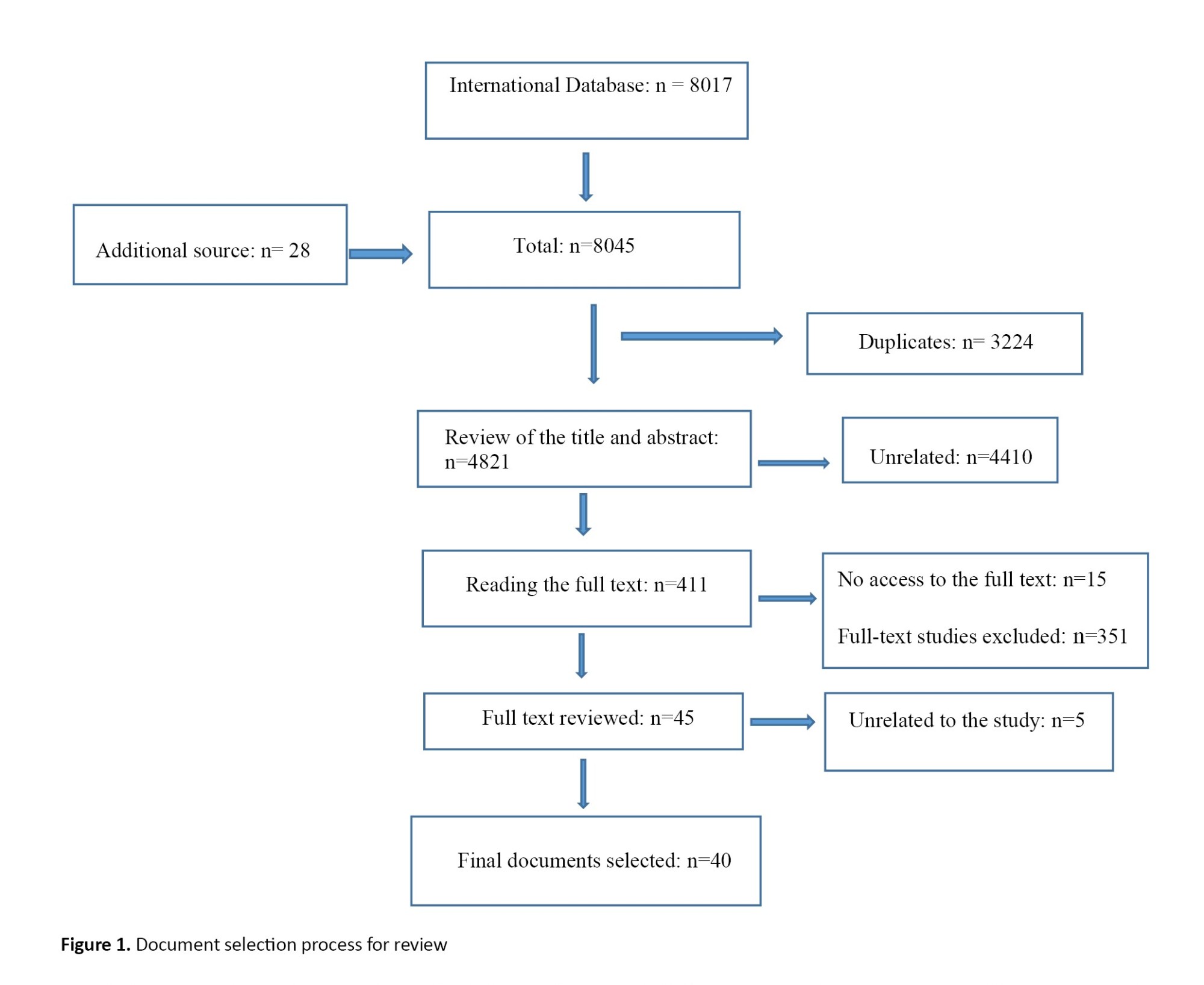
A systematic review was conducted based on a pre-designed protocol in order to identify and clarify published literature using a thematic analysis approach and extract concepts related to the internationalization strategies of higher education institutions. Thematic analysis is a type of qualitative study that extracts patterns in data that are important or of interest to the researcher for answering the research question, based on understanding and interpretation of the data in light of the research objective [18]. The protocol of this study was registered in PROSPERO (PROSPERO registration number=CRD42024520818). The PRISMA workflow diagram was employed to drive the process of identifying and selecting relevant articles (Figure 1) [19]. PICO study: P: universities; I: Internationalization; C: not compared; O: strategies; S: All studies; T: 2014-2024.
Search strategy
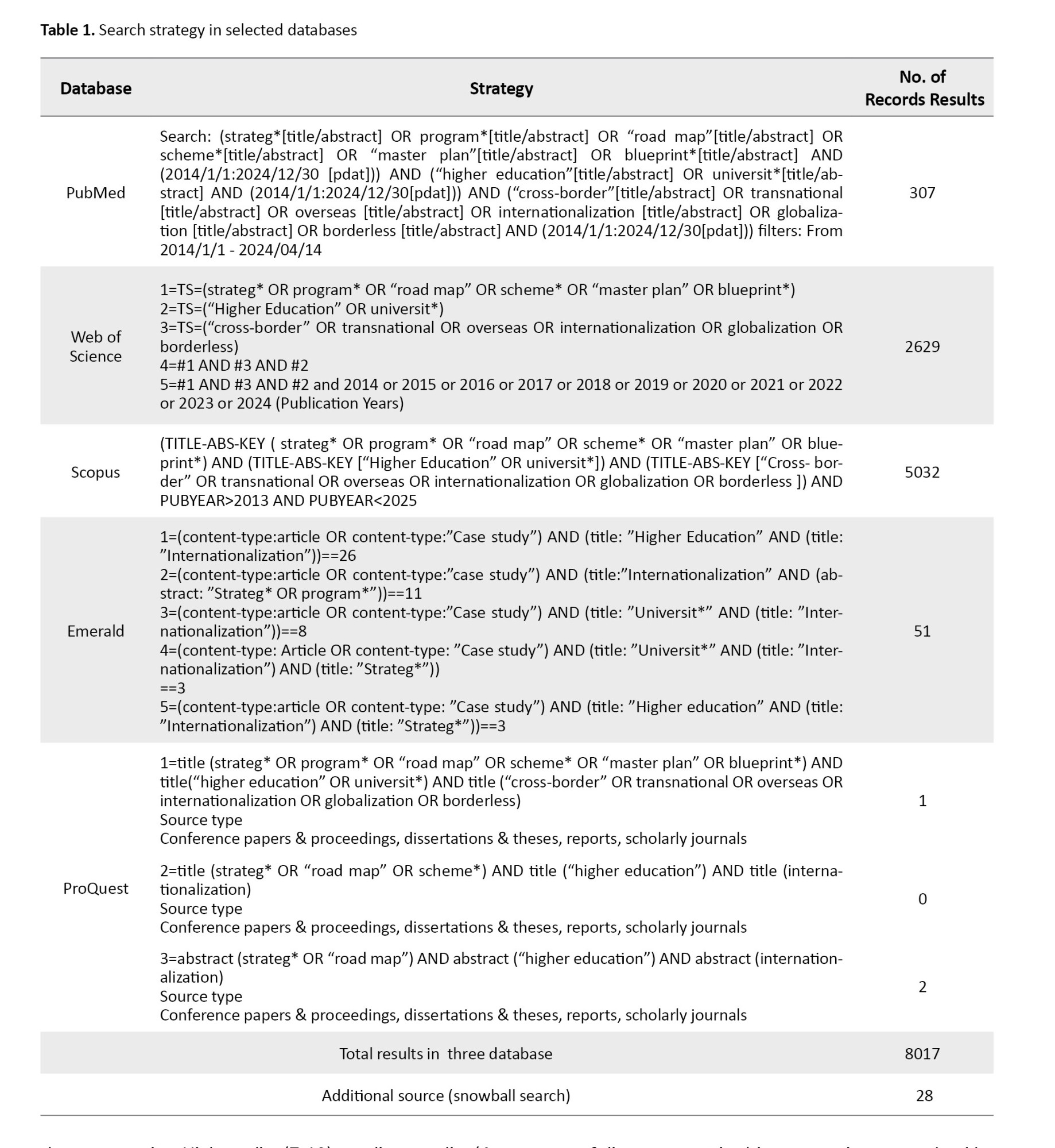
The search for documents was done in international electronic databases (Scopus, ProQuest, Web of Science, PubMed, and Emerald), and a snowball search method was adopted to access gray texts related to the research topic. Keywords for the search were selected based on the study topic, as well as terms extracted from medical thesaurus (MeSH). The search strategy was as follows: ((strateg* OR program* OR “road map” OR scheme* OR “master plan” OR blueprint*) AND (“Higher Education” OR universit*) AND (“Cross-border” OR transnational OR overseas OR internationalization OR globalization OR borderless). It is worth noting that in this search phase, the results were limited to the period from 2014 to 2024, but no language restrictions were applied. Boolean operators (OR & AND) were used to combine keywords. The search performed in each of the databases is shown in Table 1.
Selection and evaluation process
The results extracted from the search phase were collected and managed in Endnote resource management software version 9 (Clarivate, United States of America). After removing duplicates and examining the records, they were reviewed based on the inclusion and exclusion criteria.
Inclusion criteria
Inclusion criteria were studies focusing on the internationalization strategy of universities and higher education centers, specifically those based on a defined population, sample, and research method (quantitative, qualitative, mixed, review, etc.), published in the period from 2014 to 2024.
Exclusion criteria
Exclusion criteria were studies that do not focus on the internationalization strategy of universities and higher education centers, whose results are not related to the research objectives, documents that are part of a book, letters to the editor, abstracts, comments, studies that do not specify a particular methodology related to the population, sample, and research method, those that are outside the defined time period, and studies for which the full text is not available.
Study selection, data extraction, and analysis process
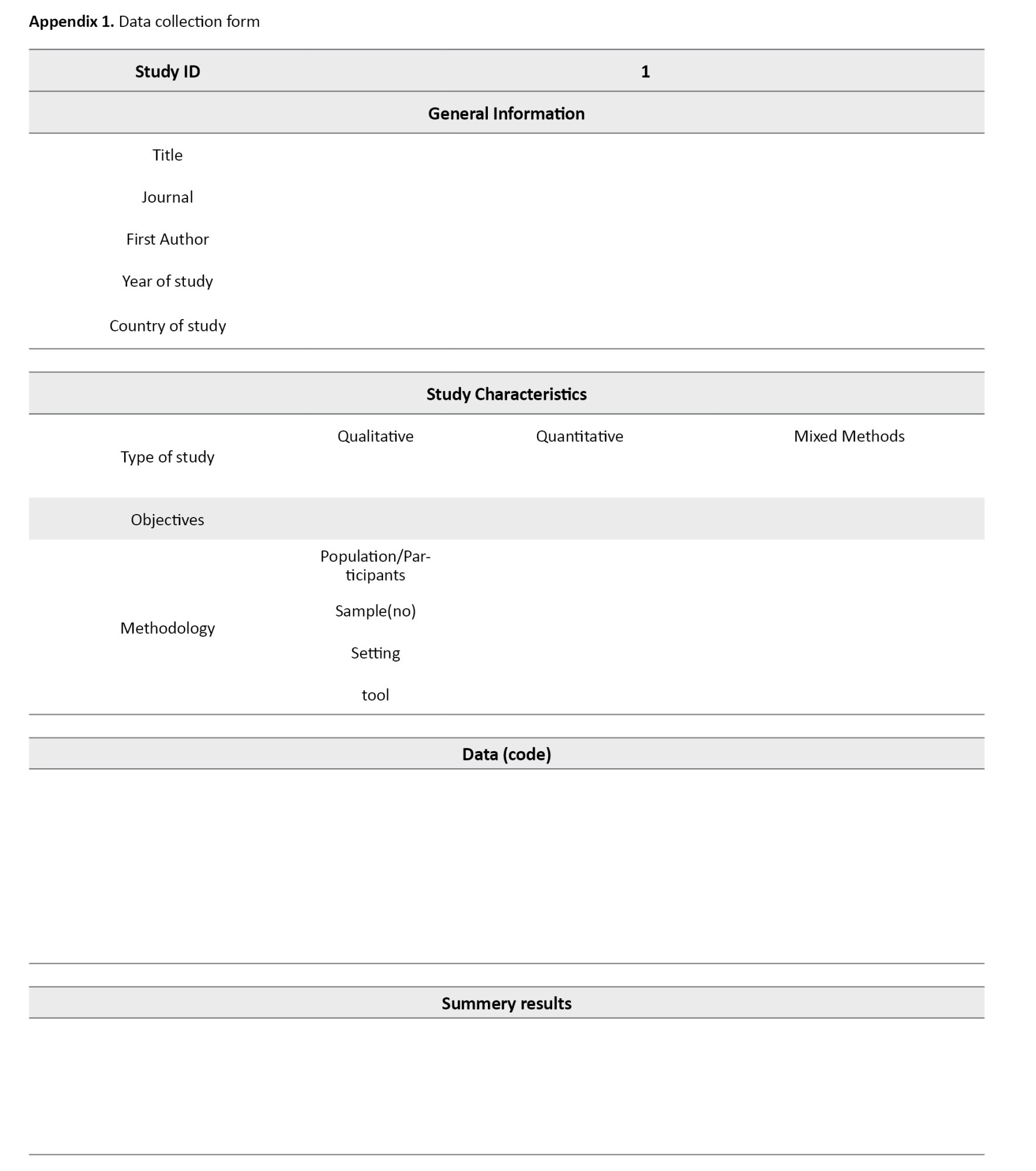
The records retrieved from our search were reviewed to find relevant and eligible studies based on the inclusion and exclusion criteria. The researchers (Maryam Zarghani and Roya Malekzadeh) independently reviewed the retrieved sources. If both researchers agreed that the document under review was not eligible, it was removed from the review cycle, and if there was insufficient information to make a decision, the document was reviewed by the senior researcher (Maryam Khazaee-Pool) and a final decision was made to approve or reject it. Afterward, the researchers (Maryam Khazaee-Pool, Maryam Zarghani, and Roya Malekzadeh) examined the approved documents using thematic analysis and extracted the necessary information according to the data collection form (Appendix 1). Researchers also screened the full texts of documents separately and then shared their findings. Any disagreements at this stage were also reviewed based on the opinion of the senior researcher (Maryam Khazaee-Pool), and a decision was made upon consensus. The contents of the selected documents that dealt with higher education internationalization strategies were categorized into several topics, the thematic axes of which have been fully described in the results and discussion sections. Data analysis was done manually and in a deductive way from part to whole. Accordingly, first, the codes were categorized, and then a higher class of activities was formed and subsequently grouped into a larger unit titled “strategy”.
Quality assessment of studies
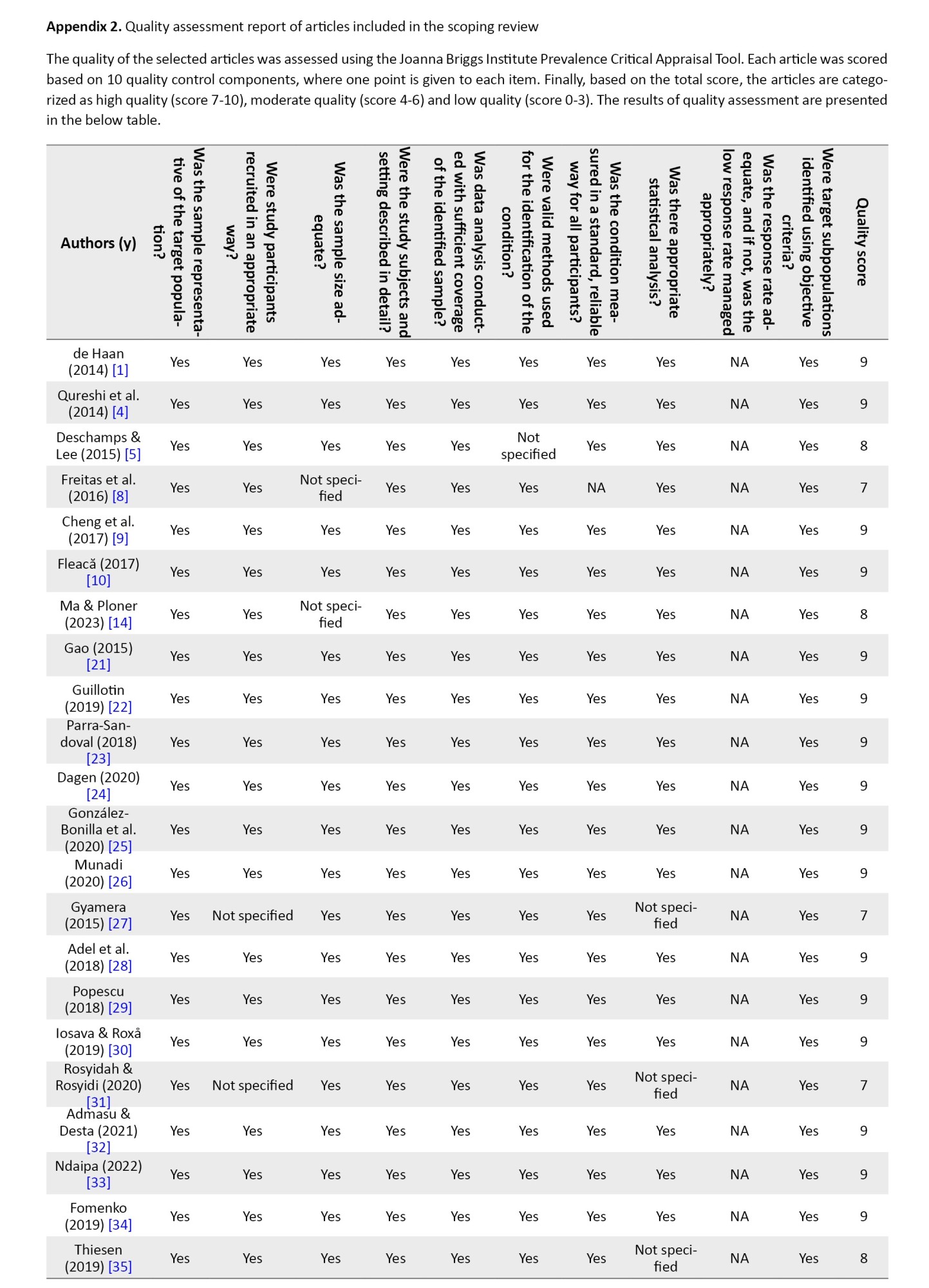
First, the quality of the selected studies was assessed according to the type of study using the Joanna Briggs Institute’s Critical Appraisal Tool for conducting the systematic review research [20] was used to assess the uniformity of the studies based on the assigned scores. Each document was scored using 10 control items proposed in this tool. Finally, total scores were divided into three categories: High quality (7-10), medium quality (4-6), and low quality (0-3) (Appendix 2). The Joanna Briggs Institute checklist was used for the risk of bias (quality) assessment, including the selection method, the comparison conditions, and the results of each study by two independent evaluators. In addition, to increase the quality of data analysis and appropriate integration of data, the selected documents were assessed by all members of the research team, and a collective agreement was considered for extracting the components. In case of disagreement in this process, it was resolved by the fourth member of the team, which led to the extraction of higher education internationalization strategies. Also, during the review and extraction of data, the research team did not exercise any organizational or personal conflicts of interest, and all the texts assessed were reviewed free of any bias.
Results
A total of 8045 documents were retrieved based on the searches performed, of which 8017 records and 28 documents were obtained from the databases and were based on the snowball search, respectively. After identifying and eliminating 3224 duplicates, a total of 4821 documents remained for initial review. By screening the title, abstract, and type of document, 4410 items were excluded due to non-compliance with the inclusion criteria. Subsequently, 411 documents were entered into the next step for full-text review, of which 15 and 351 documents were excluded due to unavailability of the full text and lack of precise thematic relevance, respectively. Accordingly, 45 articles were entered into the next step for qualitative evaluation according to the JBI checklists. After qualitative assessment of articles, 5 articles were excluded due to unclear study methods and ambiguity in reporting the findings, whereas 40 articles were approved, and their data extracted (Table 2).
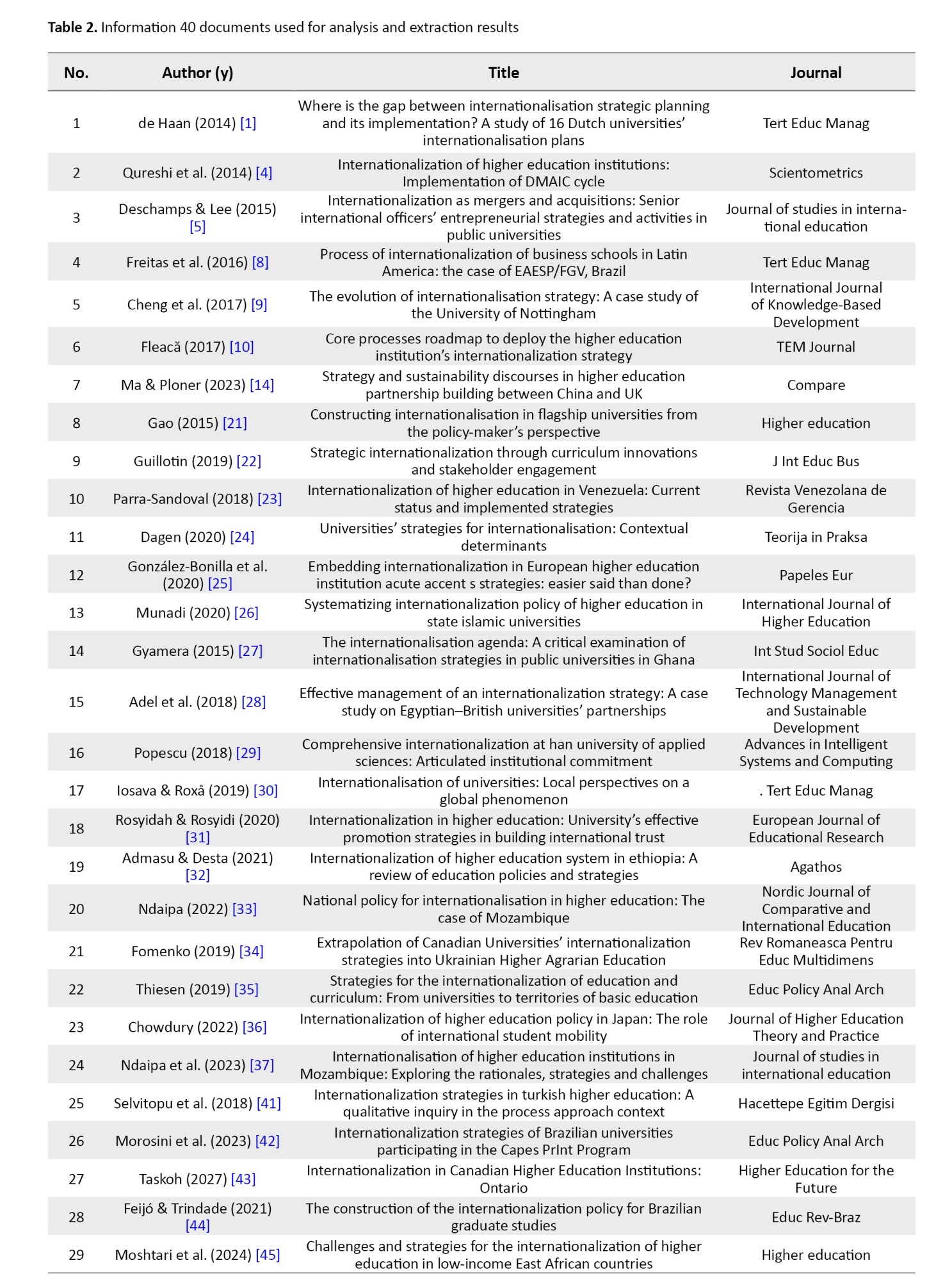
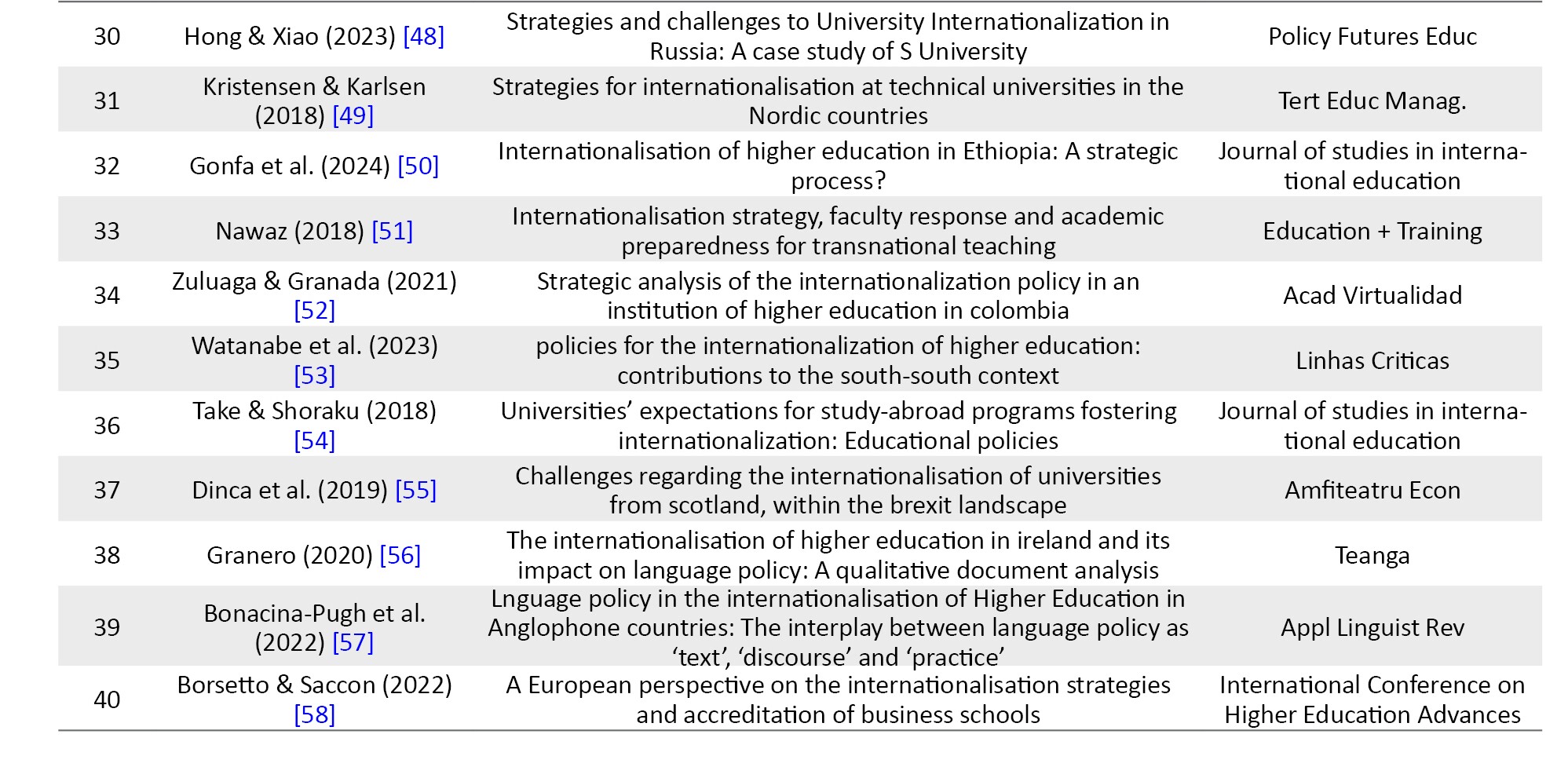
The process of selecting documents for review at this stage is shown in Figure 1 (PRISM Flowchart). In addition, the geographical distribution of these documents by continent showed that 16 documents were published by European countries, 10 by American countries, 8 by Asian countries, and 6 by African countries.
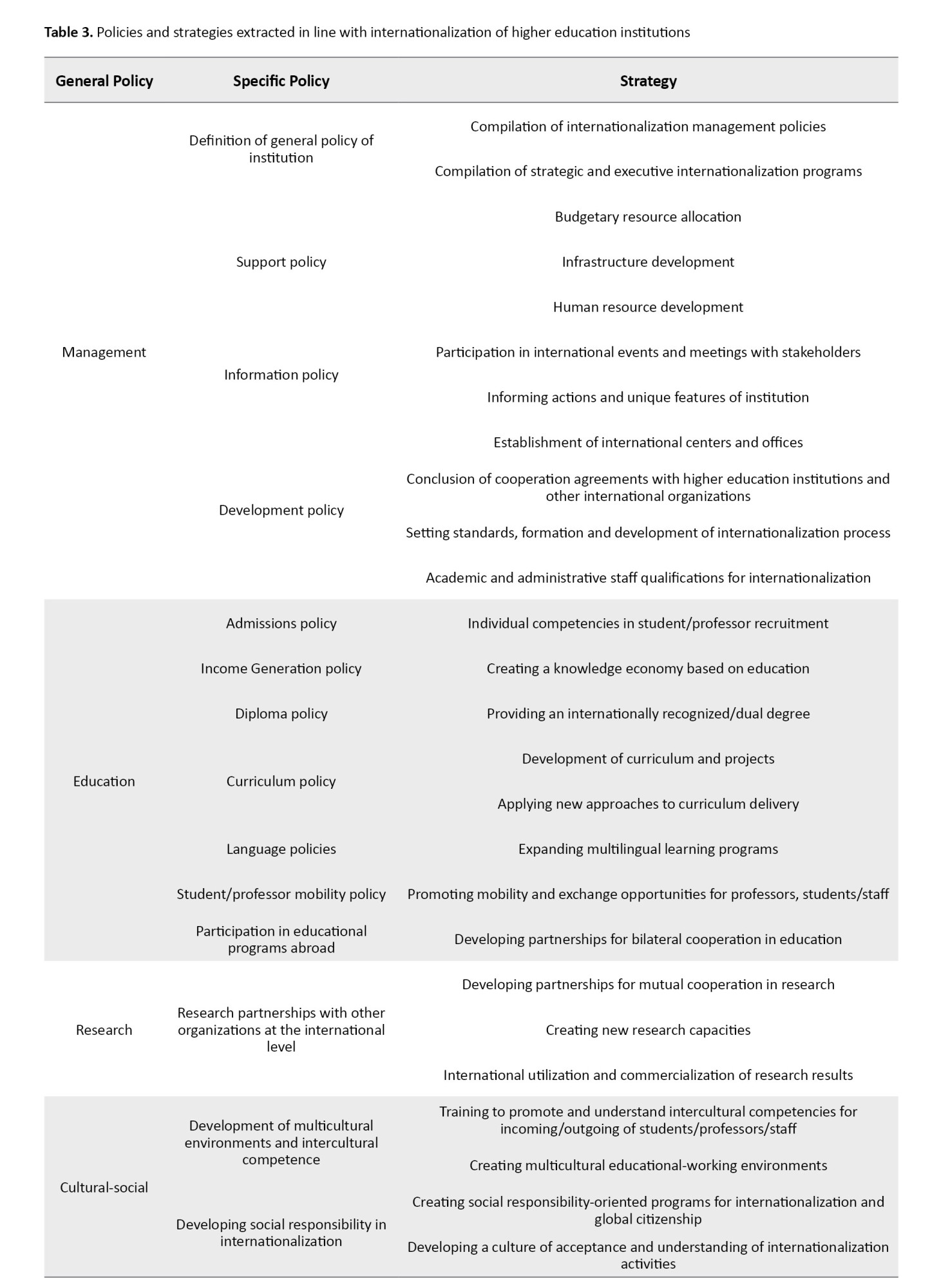
The findings were reported based on the hierarchy of policy, strategy, and implementation activities for the internationalization of higher education institutions. According to the analysis, 5 general policy categories, 15 specific policies, and 26 strategies were extracted as shown in Table 3. Finally, the challenges that these institutions face in terms of internationalization were presented as additional results from the reviewed literature.
Management policies and strategies in internationalization
Definition of general policy of the institution
The formulation of general policies and strategic plans in higher education institutions is of high importance for the implementation or development of internationalization. The development of an organization’s policy about internationalization is known as the frontline of the internationalization debate. To sustain and develop the internationalization path, its general course and roadmap must first be drawn, executive and operational strategies must be subsequently defined, and in the next stage, activities should be carried out in response to the defined strategy for the internationalization of higher education institutions. The general policy of the organization is based on two goals: “Development of internationalization management policies for the institution” and “development of strategic and executive internationalization plans for the institution. The former is shaped by activities, like developing the institution’s policy based on a national-international approach, creating a mission according to the institution’s goals, considering top-down policy approaches in the organization’s internationalization and formulating internationalization policies inside and outside the country of the target institution, which is often known as the organization’s policy [4, 8, 21-26]. The latter is shaped in the form of programs developing a strategic plan for the institution’s internationalization. This includes aligning the internationalization strategy with the organization’s vision and mission, making decisions and considering their implementation methods at the management level, presenting a plan based on logical and analytical assessments of the institution’s position, embedding strategic activities at all management and service levels of the institution, formulating promotion strategies to gain international trust, developing internationalization strategies domestically, determining internationalization strategies and activities with partner institutions both at home and abroad, and leveraging the experiences of leading institutions in the internationalization of higher education to develop strategic plans [1, 9, 22-24, 26-33].
Strategies related to support policies
Budgetary resource allocation
Budgetary support for educational/research programs and promotion of the institution for internationalization, financial and human investment for internationalization activities, supporting university programs for the admission of students/professors/staff from abroad, support for international scientific events both at home and abroad, academic research scholarships, funds and housing were extracted from the reviewed literature as effective measures [21, 27, 28, 34-37]. To achieve better efficiency in these activities, resource allocation stipulations can be determined using dynamic resource allocation models or through economic risks and innovation indicators in each region [38]. Alternatively, resource allocation can be based on the phase of internationalization, as proposed in Johanson and Vahlne’s study of the Stage Models of Internationalization [39]. The next form of resource allocation can be considered based on risk management and specific country conditions, such as political conditions, legal restrictions, or currency fluctuations [40]. When choosing these methods, factors, such as return on investment, capital sustainability, and economic and social benefits should be considered.
Infrastructure development
Activities extracted for this section are related to support infrastructure based on communication and information technologies in internationalization projects/programs and agendas; an international service system; university support programs (academic and linguistic support); free housing and migration; diversity in workplace training to prevent violation of civil rights (international staff and students); support structures for the inclusion of an international dimension in teaching; the establishment of local units consisting of companies and associations for international students; the development of graduate employment associations in universities and educational institutions; and the inclusion of different languages in academic and administrative management [4, 28, 30, 31, 33-36, 41, 42]. With respect to infrastructure, attention should be paid to basic issues, such as access to high-speed Internet, protection of information and data, and the adaptation of infrastructure to the laws and culture of service users. To perform this activity, a combination of these approaches should be considered, tailored to the organization and country. This includes restructuring internal and external capabilities, as well as designing infrastructure with the potential for rapid development and high flexibility [43].
Human resource development
International recruitment, incoming and outgoing staff mobility, retention of graduates for internationalization development, recruitment of highly skilled international staff, staff development with international partners, and training of human resources abroad are effective activities supporting internationalization [5, 9, 24, 28, 29, 34, 43-45]. New approaches to attracting, training, and retaining talent in an international environment can provide the conditions for differentiating these activities based on training employees who have high cultural intelligence and are able to work in diverse environments with the concept of global citizenship [46], providing remote working conditions and new work models or global succession programs for key roles taking into account cultural diversity [47]. Information policies can be implemented based on two strategies:
Participation in international events and meetings with stakeholders
Effective measures for the implementation of this strategy are based on issues such as meetings with domestic and international stakeholders, participation and organization of congresses/conferences/symposiums and other events, taking steps to become a center of international studies, presence in national and international rankings to gain international credibility [10, 31, 34, 41, 48]. To perform these activities, focusing on the goals of internationalizing the organization, attending relevant events, and creating networks with other universities based on attendance at these events, active and purposeful participation through scientific lectures, holding workshops or participating in specialized panels are approaches to perform this activity, which is based on the priorities of supporting the organization’s long-term internationalization plans, establishing strong relationships with other institutions at the international level, and international branding [48].
Informing actions and unique features of institution
To attain this goal, publishing activities of events through the institution, informing the institution of its superior activities and features compared to other educational institutions, publishing and introducing the university through various print and online media/domestic and foreign institutions as well as by individuals participating in international programs and activities, creating a database of internationalization actions are effective items that have been identified from the reviewed texts [10, 29, 31, 35, 42]. These activities should be carried out based on elements such as presenting an attractive international identity that is recognized in the logo, slogans, and how universities communicate with other organizations globally, transparency and providing accurate and up-to-date information about the organization’s program, achievements, and opportunities for audiences, and creating a positive and credible image of the organization based on international approvals and achievements in the university’s program that are considered to be distinctive [31].
Extracted strategies for development policies
Establishment of international centers and offices
Establishing international campuses at home and abroad, launching international offices within the institution, creating an Alumni Relations Office, and forming an International Education Committee, among other initiatives, have been effective measures for this strategy. These can be pursued through activities such as student, faculty, and staff exchanges, creating networks of graduates abroad, communicating with international students, fostering working relationships, and attracting international and other workforces. Educational-research campuses are also responsible for providing training courses for international students, developing and promoting curricula, research programs at the international level, as well as educational and research partnerships [5, 8, 9, 27, 29, 32, 41, 43, 49, 50]. In conducting these activities, university administrators can focus on various models of office creation, such as representative offices, research offices or support offices depending on the stage of the internationalization process underway at that university [9]. In addition, attention should be paid to multifunctional offices that can function both physically and non-physically as regional centers in attracting research opportunities, business, or cultural programs [49].
Conclusion of cooperation agreements with others higher education institutions
Developing projects, such as cooperation agreements for participation in international management, contributing to international management network exchanges, establishing communication and implementing internationalization strategies between partners, forming a team for international collaboration, signing cooperation agreements with foreign legal entities and/or individuals have been mentioned as effective measures in the texts [8, 14, 28, 31, 35, 37, 48].
Setting standards, formulation and development of internationalization process
Setting predetermined standards or evaluating internationalization efforts, changing regulations and evaluation criteria in the line with internationalization policies, benchmarking and modeling the universities, taking advantage of foreign experts and consultants to assess and advise on educational/research/management activities, developing curriculum reviews in accordance with world-class universities and determining accreditation standards with respect to transnational organizations, as well as creating quality assurance mechanisms, are appropriate activities in this regard. To have an international educational and research program at a world-class level, institutions must formulate specifically established standards and criteria for periodic evaluation to monitor their progress and alignment with the goal of internationalization [10, 21, 31, 32, 35, 43, 44, 51].
Academic and administrative staff qualifications for internationalization
Regarding the strategy for staff qualifications in the internationalization program, training specific competencies in information technology, bilingualism, cultural and social interaction among multicultural societies, as well as the linguistic competence of staff in the areas of education, technical-administrative, research, and management have been mentioned as effective measures in the literature [25, 52, 53].
Policies and strategies for internationalization of education
Strategy for admissions policy
Individual competencies in student/professor recruitment
The strategy of “individual competencies in recruitment” is considered executable. It includes criteria, such as foreign language proficiency, intercultural knowledge, and strong communication skills, interest in foreign countries, being active and interested in the field of specialization, and the ability to solve problems to contribute to society, which have been identified as effective measures [37, 54].
Strategy of income generation policy
Creating a knowledge economy based on education
The second educational strategy is related to income generation policy based on creating an education-centered knowledge economy. Achieving this goal requires a number of activities, notably encouraging wealth generation through educational interventions (providing international curricula), connecting with international networks and creating local networks to establish business relationships, participating in international networks and carrying out extracurricular entrepreneurial activities, attracting international undergraduate students by paying fee, marketing and promoting the institution internationally to attract undergraduate students, generating income through tuition, and providing educational services at an additional fee to foreign nationals under contracts with legal entities have been mentioned in the reviewed texts [5, 10, 26, 28, 40, 43, 48].
Strategy of diploma policy
Providing an internationally recognized/dual degree
Activities related to internationally recognized degree programs (dual degrees and double majors), concluding cooperation agreements for the provision of international qualifications, equivalence of qualifications, provision of internationally recognized qualifications, establishment of fully bilingual qualifications have been defined as effective measures for accreditation to encourage student mobility as part of the strategy for providing internationally recognized or dual qualifications at higher education institutions. To gain international prestige and status for attracting more students, institutions should seek to offer qualifications that are internationally recognized, enabling graduates to meet employment conditions in the global labor market. This, in turn, leads to the institution’s international publicity and attracts a larger audience. In addition, to attain this goal, teaching standards should be aligned with applicable and accepted training levels at top institutions, resulting in a competitive advantage and changes in curricula [5, 10, 25, 35, 54].
Strategies of curriculum policy
Development of the curriculum and projects
According to the literature review, strategies for the development of curriculum and projects are implemented through various activities, including international curriculum delivery, internationalization at home, the implementation of new curricula, the development of international curricula both “at home” and “abroad, local and international internships, summer schools with a multicultural and international context, the use of intercultural skills in curriculum delivery, and the expansion of postgraduate programs, among others [9, 22, 26-29, 34, 35, 55].
Applying new approaches to curriculum delivery
Distance learning activities, designing innovative learning approaches, distance and mixed learning modules, using virtual and digital forms of higher education, and virtual mobility are the issues emphasized in the literature to implement this strategy in line with the internationalization of curricula and training courses. This strategy adheres to the conditions for employing communication and information technologies in the provision of formal and short-term training courses, which can greatly decrease expenses, reduce concerns about being physically present in environments away from home for students and professors, and also pave the way for the establishment of a world-class or so-called global university in the virtual realm derived from technology. This approach makes the path to globalization and the development of global citizens more realistic through the use of this technology [4, 10, 44].
Strategy for language policies
Expanding multilingual learning programs
Expanding multilingual learning programs has been considered as one of the most significant strategies for the internationalization of education in the literature. If an institution seeks to provide international education, this strategy must be among its most important programs and must create conditions for presenting multilingual curricula and fostering a multilingual environment with diverse cultures. Activities, like providing educational programs in foreign languages, especially English, presenting multilingual training for global citizenship and maintaining a local perspective, learning in educational environments in a second language, providing language courses at different educational levels (bachelor/master), supporting English in adult education/language education for refugees, promoting the recruitment of bilingual and/or international professors to provide courses in academic writing in foreign languages have been extracted from the reviewed texts as appropriate implementation strategies to secure this goal [24, 25, 29, 31, 42, 52, 56-58]. In pursuing these activities, comprehensive language training appropriate to the university’s target markets should go beyond English in attracting internationalization opportunities. In addition, providing language learning environments in real settings, such as conversation clubs, can be effective [56]. As a result, identifying language needs for internationalization goals is vital for universities, which should focus on the regions and sectors they wish to invest in and prioritize language training in those areas.
Strategy of mobility policy
Promoting mobility and exchange opportunities
In line with internationalization, the operational strategy that has been considered by educational organizations is related to promoting mobility and exchange opportunities for students, professors, and staff, which can have a positive effect on the institution’s communication and reputation among other higher education institutions. In fact, these people act as ambassadors for the visibility of the institution, publicizing the institution’s position and recognition worldwide without the organization spending money on this information sector. This involves taking advantage of individuals as introducers and advertisers of the university to attract students/professors for exchanging and sharing these important resources. On the other hand, these people spread the culture of the institution of origin to other geographical locations, providing conditions for exchanging different cultures. In the reviewed texts, activities attracting international students and professors, increasing the number of students and professors who study and teach abroad, registering international students and graduates, implementing domestic and overseas student and staff exchange programs, developing undergraduate students of different nationalities, participating in international learning and peer exchange events, and joining bilateral and multilateral exchange programs for students and academic staff have been identified as effective measures that higher education institutions should consider in response to this internationalization strategy [10, 22, 29, 34, 35, 37, 44, 48, 53, 55].
Participation in educational programs abroad
Developing partnerships for bilateral cooperation in education
The goal of the last identified strategy for educational actions in internationalization is to develop partnerships for bilateral cooperation in accordance with the activities aimed at developing educational diplomacy based on partnerships with other regional and international educational organizations. This includes fostering international cooperation for postgraduate courses, establishing an international center for innovation in postgraduate education, launching educational consortia, participating in teaching, research, and scientific exchange, providing joint educational programs with foreign partners, concluding memorandums of understanding for cooperation, and integrating higher education at the regional and global levels. Additionally, creating joint curricula with regional and international universities, inviting foreign teachers, researchers, and experts to participate in the educational process, forming bilateral partnerships and collaborations with foreign universities, and strengthening international partnerships through the provision of educational courses and curriculum development have been identified as appropriate measures to implement this strategy in accordance with the reviewed literature [22, 23, 29, 36, 37, 48, 56].
Research internationalization policies and strategies
Extracted strategies for research partnerships with other organizations at the international level
Developing partnerships for mutual cooperation in research
Activities aimed at creating professional networks for the participation of researchers, concluding joint research contracts with partners and other institutions, implementing joint and collaborative research projects at an international level, holding international research and joint conferences, collaborating in the field of international research, expanding opportunities and international networks, developing research quality through international projects or joint publications, and conducting applied research have been identified as effective actions for this strategy. Research internationalization has been considered one of the first steps toward internationalization by institutions because it can be carried out by individuals themselves with fewer obstacles and less administrative bureaucracy. Therefore, this feature has been further considered by researchers individually. This strategy is also easier for institutions to implement and can provide a foundation for developing and identifying new colleagues and partners in other areas, such as education, service issues, support, and management. Indeed, it can be stated that the introduction or the discussion of internationalization can begin and expand from the field of research [1, 14, 23, 27-29, 41, 50].
Creating new research capacities
There have been efforts to create new capacities in the field of research with regard to the issue of global opportunities and cooperation considering the new opportunities and the interest of organizations in international cooperation activities. For example, the management of the COVID-19 crisis in recent years, as well as global economic issues, has highlighted this need. By providing a background enabling the exploitation of these capacities or by creating new innovations in the research path, educational and research institutions can develop the international research course and achieve common interests and values at an international level, which unconsciously causes responsibility and participation of different societies in solving their challenges based on science and evidence-based decision-making in global research. Creating new research capacities relies on measures such as attracting foreign/international researcher candidates, establishing an open research system, identifying foreign financial resources and attracting monetary support, building knowledge networks, developing an international research fund for collaboration with partners or similar organizations in other countries, creating an “International Research Liaison Office” in universities or national coordinating organizations, publishing journals with international circulation, stimulating the publication of articles in international journals, and encouraging joint intellectual production with international participation. These are initiatives that institutions must appropriately develop and utilize[23, 32, 42-44, 48, 55].
International utilization and commercialization of research results
In line with the internationalization of research and in accordance with the literature review, international exchange and study activities, income generation from international research and research achievements, sharing research results internationally, exchanging experience and knowledge, holding research product workshops, creating spin-offs, and establishing joint knowledge-based companies have been recognized as essential for implementing the strategy of international utilization and commercialization of research results. As mentioned in the previous strategy, the shared value created from research can also lead to commercialization and income generation at an international level [5, 10, 43, 55].
Cultural-social internationalization policies and strategies
Multicultural environments can be developed based on two strategies
Training to promote intercultural competencies
Cultural programs, as well as the creation of multicultural environments and interaction with different cultures, have been identified as influential factors in advancing or hindering progress, according to the analyses of the results from the reviewed texts. Therefore, this opportunity can be utilized appropriately by considering the operational strategies under appropriate implementation measures. Tasks, such as providing intercultural education before departure or arrival, practicing and learning communication skills, reflexivity and self-reflection, increasing awareness and respect for other cultures and life values, teaching foreign languages for the development of other cultures, and instructing on social skills and cultural awareness have been recognized as effective in advancing the strategy of training and promoting the understanding of intercultural competencies for the development of internationalization in higher education institutions [31, 32, 34, 51, 58].
Creating multicultural educational-working environments
In line with the development of multicultural environments for an international educational institution, the goal of creating multicultural educational-working environments has been recognized as another effective strategy to be implemented by developing a multicultural environment based on the diversity of the student and staff population, creating a multicultural campus, teaching in intercultural environments, providing intercultural skills in the curriculum, integrating international and intercultural activities into the educational, research and service functions of the institution, and supporting and valuing international/intercultural perspectives in institutions in accordance with different analyses. by creating multicultural educational and working environments where students and staff are selected from different societies and cultures at an international level, conditions are established for the development of educational and research programs. This approach trains a workforce of graduates qualified for employment in both domestic and foreign institutions, equipped with skills from different cultures and languages, thus preparing them as global labor market workers. Such efforts enhance the institution’s credibility, leading to recognition and increased cooperation in other educational fields [30, 32, 49, 51, 52].
Developing social responsibility in internationalization
Creating social responsibility-oriented programs for internationalization and global citizenship
Activities that promote understanding about shared interests for multinational communities and organizations, awareness of mutual respect and fairness for international partnerships, participation and acceptance of social responsibility in promoting cultural programs for internationalization at both local and global levels, education and awareness of responsible participation in a global community, and the strengthening of academic and online culture based on international partnerships have been proposed as appropriate measures for implementing the strategy of creating programs with a social responsibility orientation for internationalization. This approach can involve social responsibility at both organizational and individual levels. At an organizational level, several measures, along with the provision of training opportunities and the presentation of labor market capabilities at the international level, can be discussed. At an individual level, the acquisition of skills and interaction of individuals with other cultures, in line with the integration of understanding, education, and cultural development, can be considered. This allows individuals to preserve and respect their nationality while also viewing themselves as responsible members of a larger society and moving toward it [29, 34, 41, 52].
Developing a culture of acceptance and understanding of internationalization activities
Institutions should implement effective measures to develop a culture and social environment that accepts internationalization activities and recognizes the importance of internationalization. Measures, such as promoting events, exhibitions, and information activities to increase the visibility of internationalization in the local and national community, disseminating different languages and cultures within the academic community through various formal and informal channels, encouraging international professors, researchers, and students to participate in cultural promotion programs and activities, building partnerships with society and government officials to strengthen internationalization activities, and developing a culture of internationalization based on enhancing educational programs, general competencies, and intercultural dimensions will lead to the cultivation of a culture of internationalization among individuals and environments in the host country. It also provides the conditions for learning about collective life, interacting with different cultures and beliefs, and raising the threshold of coexistence and interaction for those who have migrated to another country for study or work. As a result, this feedback will return to their own country and spread within their own society [37, 42, 45, 52].
Challenges of the internationalization of higher education institutions
Additional findings from the analysis of the literature illustrate the role and effectiveness of strategies. The obstacles and challenges faced by higher education institutions in implementing the internationalization agenda have been reported in two general categories, which complement the results of this study.
Educational-cultural challenges
Regarding the internationalization path of education in higher education institutions, our review of studies revealed the main research challenges, such as teaching in partner institutions abroad or in intercultural environments, a lack of knowledge of foreign languages among academic staff and students, limited interest and participation from students, faculty, and staff, inflexible curricula, non-compliance with educational standards at higher education institutions, issues with the non-recognition of institutions and the equivalence of qualifications, study programs, and course credits, as well as a lack of knowledge and skills related to effective teaching methods to engage students in a wide range of cultural environments. Universities and higher education institutions should prioritize the strategies and activities identified in the literature for internationalization [26, 29, 41, 45, 48].
Governance challenges
The second category is related to the governance or management challenges that a country faces in the process of internationalization based on institutional rules, including issues, such as geopolitical relations, infrastructure, educational marketing bureaucracy, curriculum reforms, standards and quality assurance, financial costs, human resources for internationalization, insufficient financial resources, the absence of international recognition of the institution for promotion or accountability, lack of strategic vision or guidance, and the limited capacity of faculties and universities. The most important component is the formulation of the organizations’ policy and strategy in a precise and operational manner so that they can overcome the aforementioned educational and cultural challenges. By formulating the organization’s policy and specifying the criteria for internationalization, we can adopt a clear perspective on local conditions. Likewise, by identifying financial resources and investment capacities, a more reliable perspective and competitive incentives can be introduced into the internationalization debate [25, 26, 41, 51].
Conclusion
Strategies to determine the organization’s main mission and the mode of effective partnerships should aim at broader communication, human resource development, the development of physical and virtual educational environments, and the creation of diverse cultures in educational environments, which form the basis for the formulation of an international policy. The establishment of international offices for the development or provision of academic services, such as educational campuses, the pursuit and implementation of actions, connecting with foreign graduates, creating cooperation networks, and introducing graduates to international labor markets are highly effective in the debate on internationalization and have been emphasized as an essential component.
Other factors, such as international curricula, research partnerships, and creating multicultural environments provide stable conditions and continuity for the internationalization process in higher education institutions. Moreover, gaining international credibility and recognition for the institution at an international level—based on its presence in ranking systems, participation in international congresses, and publication of the institution’s activities—provides more effective conditions for the institution’s internationalization process.
The focus of all these activities is to support the institution’s internationalization strategies regarding students, faculty, research, curriculum, partnerships, governance, and culture so that they can offer world-class educational and research programs and present specialists to the international labor market. These analyses have revealed that the majority of these challenges are related to cultural and governance factors that should be considered in the management plans for the internationalization of higher education institutions.
On the other hand, it can be argued that although internationalization efforts require a well-defined plan, there have been some activities at the individual level that serve as a guiding light. Studies have also found that most actions were undertaken spontaneously and individually, followed by the introduction of organizations. However, special focus should be placed on the management and educational programs of institutions. Management activities provide the necessary infrastructure and support for other departments, while educational programs establish the conditions for developing internationalization activities. Although executive work has been prominently observed in the education and research sectors, it is expected to expand to other areas.
In the current situation, cultural and social activities can directly affect internationalization attempts, which require collective participation in different parts of organizations in order to develop these activities. Therefore, these actions should be pursued both individually and at an organizational level. In addition to planning and implementing these activities, it should be noted that there have always been obstacles or challenges in organizations for internationalization that have delayed progress or prevented the desired quality in this respect.
According to these analyses, we suggest that universities should adopt a comprehensive and detailed approach to the measures taken to launch or develop their internationalization activities in order to achieve the desired outcomes. In the current situation, in which information technology has almost eliminated access obstacles and distances, the best opportunity to develop internationalization measures and promote educational justice is that all key individuals in higher education institutions across different parts of the world should be able to participate in this matter and fulfill their responsibilities.
Limitations
A major limitation of this study was the lack of access to the full text of some documents during the research, which the research team attempted to resolve to some extent by examining different paths. A few documents may have been missed because the search was conducted in international databases, such as Web of Science, Scopus, PubMed, ProQuest, and Emerald.
Ethical Considerations
Compliance with ethical guidelines
This study was approved by the Ethics Committee of National Agency for Strategic Research in Medical Education (NASR), Tehran, Iran (Code:IR.NASRME.REC.1402.109). All methods in the study were in accordance with relevant regulations & guidelines (General Ethical Guidance for Medical Research with Human Participants in the Islamic Republic of Iran).
Funding
This research did not receive any grant from funding agencies in the public, commercial, or non-profit sectors.
Authors contributions
Drafting of the manuscript: Maryam Khazaee-Pool; Writing the original draft: Maryam Zarghani; Data collection: Maryam Khazaee-Pool and Maryam Zarghani; Data analysis: Maryam Khazaee-Pool, Maryam Zarghani, Tahereh Pashaei, Roya Malekzadeh, Sana Morad, and Ghaed Mirabian; Final revising: Maryam Khazaee-Pool and Koen Ponnet;Conceptualization and study design: All authors.
Conflict of interest
The authors declared no conflict of interest.
Acknowledgements
The authors would like to express their gratitude for the support of Mazandaran University of Medical Sciences, as well as the specialists.
References
Internationalization has affected all aspects of societies irrespective of borders and cultures, transforming the communication system and the nature of universities [1]. Higher education has often emerged in the form of growth of international programs, campus expansion, joint partnerships, and increased global mobility of academics [2]. As a concept and strategic agenda, internationalization is a relatively new, broad, and diverse phenomenon in higher education that has evolved from a marginal activity to a central aspect of higher education reform agenda [3]. Jackson stated that the new millennium has increasingly interconnected people as a result of globalization, and in response to this phenomenon, higher education institutions must reassess their mission in order to better train their graduates to be global citizens and professionals in today’s changing world [1]. Internationalization respects borders, cultures, and shared interests [4], imparting several benefits for higher education institutions, such as increased revenue, enhanced reputation, and improved global rankings [5]. Higher education contributes to long-term economic growth and development by increasing productivity, inventing new products, boosting trade, enhancing competitiveness, and promoting human capital development [6]. By fostering cross-cultural awareness and experience, internationalization can facilitate collaborative academic efforts to address socio-economic problems at both national and international levels, attracting international talent—faculty members, researchers, and students—to work in higher education institutions and industry. This access to advanced knowledge and technologies is critical to the growth and impact of higher education institutions both locally and globally [7].
Compared to the past, internationalization is currently a different issue in terms of management and leadership activities [8]. It is at the forefront of the mission of university deans who aim to internationalize their institutions in order to connect with the world [7, 9]. Internationalization is a strategic goal of universities [8], which has been interpreted in different ways, with its implementation being a complex and multifaceted process. In many countries, internationalization has been defined as a means to achieve further goals, such as improving the quality and promotion of higher education and its services [10]. Internationalization at national, sectoral, and institutional levels has been described as the process of integrating an international, intercultural, or global dimension into the goals and functions of education and training [11].
On the other hand, internationalization has been designated as specific strategies and innovations employed by countries and educational institutions to align with global trends [12], emphasizing the social responsibility of higher education at community and global levels to promote the common good. In line with this rationale, diversity in local and global communities has been recognized, and internationalization activities are specifically designed and implemented to help address social problems in communities [13].
The shift in toward partnerships at an international level has extensively affected the management of universities and the implementation of various strategies to achieve a global university. Non-academic services, management, and administrative units (such as international partnership offices) have a great influence on the strategic direction of higher education institutions toward internationalization [14]. The value of higher education internationalization extends far beyond the presence of foreign students on university campuses or economic revenues [15]. Policymakers in countries leading in internationalization have concluded that if their country’s higher education system becomes international, their culture, society, and nation as a whole will also be recognized by the international community. This means that not only the quality of the higher education system but also their culture and social behavior are accepted as positive elements in the international arena. This association leads to positive outcomes such as economic and business opportunities in the higher education market [15, 16], the formation of global citizens, the enhancement of educational programs, increased diversity, and cultural literacy in universities, as well as the enrichment of cultural and social learning experiences among students, faculty, and staff [15]. Additionally, it fosters international educational diplomacy, which contributes to cross-border security policies and the promotion of peace between nations [16], along with university branding to compete in the global higher education market [15]. Therefore, the development of these programs is on the agenda of higher education institutions, which play a fundamental role in the development of internationalization as the guiding program of the institution. When formulating the strategies of an educational institution, it should be noted that the policy of the organization is clearly defined and that the program implementers have a clear understanding of the policy and the strategies. The policies of each organization are formulated at the beginning of its establishment according to the type of activity and performance, which are updated throughout its lifetime to clarify the future course of the organization and its overall direction. the set of principles and rules that guide an organization’s decisions and manifest as practical solutions is referred to as the general policy or policies of the organization. Strategy is essentially a game plan designed to achieve selected organizational goals, leading to competitive advantages in the labor market. It involves a combination of clear and precise goals and actions that position the organization favorably to achieve the defined objectives [17]. To realize the desired outcomes in implementing or developing the internationalization programs in higher education institutions, specific strategies are needed based on organization’s policies and applicable activities, which facilitate the path toward internationalization when clearly specified for their audiences and managers. As a result, the purpose of the present study was to examine and present internationalization strategies of higher education institutions based on published studies, so that a roadmap could be presented for institutions developing or taking action in this direction.
Materials and Methods
A systematic review was conducted based on a pre-designed protocol in order to identify and clarify published literature using a thematic analysis approach and extract concepts related to the internationalization strategies of higher education institutions. Thematic analysis is a type of qualitative study that extracts patterns in data that are important or of interest to the researcher for answering the research question, based on understanding and interpretation of the data in light of the research objective [18]. The protocol of this study was registered in PROSPERO (PROSPERO registration number=CRD42024520818). The PRISMA workflow diagram was employed to drive the process of identifying and selecting relevant articles (Figure 1) [19]. PICO study: P: universities; I: Internationalization; C: not compared; O: strategies; S: All studies; T: 2014-2024.
Search strategy
The search for documents was done in international electronic databases (Scopus, ProQuest, Web of Science, PubMed, and Emerald), and a snowball search method was adopted to access gray texts related to the research topic. Keywords for the search were selected based on the study topic, as well as terms extracted from medical thesaurus (MeSH). The search strategy was as follows: ((strateg* OR program* OR “road map” OR scheme* OR “master plan” OR blueprint*) AND (“Higher Education” OR universit*) AND (“Cross-border” OR transnational OR overseas OR internationalization OR globalization OR borderless). It is worth noting that in this search phase, the results were limited to the period from 2014 to 2024, but no language restrictions were applied. Boolean operators (OR & AND) were used to combine keywords. The search performed in each of the databases is shown in Table 1.
Selection and evaluation process
The results extracted from the search phase were collected and managed in Endnote resource management software version 9 (Clarivate, United States of America). After removing duplicates and examining the records, they were reviewed based on the inclusion and exclusion criteria.
Inclusion criteria
Inclusion criteria were studies focusing on the internationalization strategy of universities and higher education centers, specifically those based on a defined population, sample, and research method (quantitative, qualitative, mixed, review, etc.), published in the period from 2014 to 2024.
Exclusion criteria
Exclusion criteria were studies that do not focus on the internationalization strategy of universities and higher education centers, whose results are not related to the research objectives, documents that are part of a book, letters to the editor, abstracts, comments, studies that do not specify a particular methodology related to the population, sample, and research method, those that are outside the defined time period, and studies for which the full text is not available.
Study selection, data extraction, and analysis process
The records retrieved from our search were reviewed to find relevant and eligible studies based on the inclusion and exclusion criteria. The researchers (Maryam Zarghani and Roya Malekzadeh) independently reviewed the retrieved sources. If both researchers agreed that the document under review was not eligible, it was removed from the review cycle, and if there was insufficient information to make a decision, the document was reviewed by the senior researcher (Maryam Khazaee-Pool) and a final decision was made to approve or reject it. Afterward, the researchers (Maryam Khazaee-Pool, Maryam Zarghani, and Roya Malekzadeh) examined the approved documents using thematic analysis and extracted the necessary information according to the data collection form (Appendix 1). Researchers also screened the full texts of documents separately and then shared their findings. Any disagreements at this stage were also reviewed based on the opinion of the senior researcher (Maryam Khazaee-Pool), and a decision was made upon consensus. The contents of the selected documents that dealt with higher education internationalization strategies were categorized into several topics, the thematic axes of which have been fully described in the results and discussion sections. Data analysis was done manually and in a deductive way from part to whole. Accordingly, first, the codes were categorized, and then a higher class of activities was formed and subsequently grouped into a larger unit titled “strategy”.
Quality assessment of studies
First, the quality of the selected studies was assessed according to the type of study using the Joanna Briggs Institute’s Critical Appraisal Tool for conducting the systematic review research [20] was used to assess the uniformity of the studies based on the assigned scores. Each document was scored using 10 control items proposed in this tool. Finally, total scores were divided into three categories: High quality (7-10), medium quality (4-6), and low quality (0-3) (Appendix 2). The Joanna Briggs Institute checklist was used for the risk of bias (quality) assessment, including the selection method, the comparison conditions, and the results of each study by two independent evaluators. In addition, to increase the quality of data analysis and appropriate integration of data, the selected documents were assessed by all members of the research team, and a collective agreement was considered for extracting the components. In case of disagreement in this process, it was resolved by the fourth member of the team, which led to the extraction of higher education internationalization strategies. Also, during the review and extraction of data, the research team did not exercise any organizational or personal conflicts of interest, and all the texts assessed were reviewed free of any bias.
Results
A total of 8045 documents were retrieved based on the searches performed, of which 8017 records and 28 documents were obtained from the databases and were based on the snowball search, respectively. After identifying and eliminating 3224 duplicates, a total of 4821 documents remained for initial review. By screening the title, abstract, and type of document, 4410 items were excluded due to non-compliance with the inclusion criteria. Subsequently, 411 documents were entered into the next step for full-text review, of which 15 and 351 documents were excluded due to unavailability of the full text and lack of precise thematic relevance, respectively. Accordingly, 45 articles were entered into the next step for qualitative evaluation according to the JBI checklists. After qualitative assessment of articles, 5 articles were excluded due to unclear study methods and ambiguity in reporting the findings, whereas 40 articles were approved, and their data extracted (Table 2).
The process of selecting documents for review at this stage is shown in Figure 1 (PRISM Flowchart). In addition, the geographical distribution of these documents by continent showed that 16 documents were published by European countries, 10 by American countries, 8 by Asian countries, and 6 by African countries.
The findings were reported based on the hierarchy of policy, strategy, and implementation activities for the internationalization of higher education institutions. According to the analysis, 5 general policy categories, 15 specific policies, and 26 strategies were extracted as shown in Table 3. Finally, the challenges that these institutions face in terms of internationalization were presented as additional results from the reviewed literature.
Management policies and strategies in internationalization
Definition of general policy of the institution
The formulation of general policies and strategic plans in higher education institutions is of high importance for the implementation or development of internationalization. The development of an organization’s policy about internationalization is known as the frontline of the internationalization debate. To sustain and develop the internationalization path, its general course and roadmap must first be drawn, executive and operational strategies must be subsequently defined, and in the next stage, activities should be carried out in response to the defined strategy for the internationalization of higher education institutions. The general policy of the organization is based on two goals: “Development of internationalization management policies for the institution” and “development of strategic and executive internationalization plans for the institution. The former is shaped by activities, like developing the institution’s policy based on a national-international approach, creating a mission according to the institution’s goals, considering top-down policy approaches in the organization’s internationalization and formulating internationalization policies inside and outside the country of the target institution, which is often known as the organization’s policy [4, 8, 21-26]. The latter is shaped in the form of programs developing a strategic plan for the institution’s internationalization. This includes aligning the internationalization strategy with the organization’s vision and mission, making decisions and considering their implementation methods at the management level, presenting a plan based on logical and analytical assessments of the institution’s position, embedding strategic activities at all management and service levels of the institution, formulating promotion strategies to gain international trust, developing internationalization strategies domestically, determining internationalization strategies and activities with partner institutions both at home and abroad, and leveraging the experiences of leading institutions in the internationalization of higher education to develop strategic plans [1, 9, 22-24, 26-33].
Strategies related to support policies
Budgetary resource allocation
Budgetary support for educational/research programs and promotion of the institution for internationalization, financial and human investment for internationalization activities, supporting university programs for the admission of students/professors/staff from abroad, support for international scientific events both at home and abroad, academic research scholarships, funds and housing were extracted from the reviewed literature as effective measures [21, 27, 28, 34-37]. To achieve better efficiency in these activities, resource allocation stipulations can be determined using dynamic resource allocation models or through economic risks and innovation indicators in each region [38]. Alternatively, resource allocation can be based on the phase of internationalization, as proposed in Johanson and Vahlne’s study of the Stage Models of Internationalization [39]. The next form of resource allocation can be considered based on risk management and specific country conditions, such as political conditions, legal restrictions, or currency fluctuations [40]. When choosing these methods, factors, such as return on investment, capital sustainability, and economic and social benefits should be considered.
Infrastructure development
Activities extracted for this section are related to support infrastructure based on communication and information technologies in internationalization projects/programs and agendas; an international service system; university support programs (academic and linguistic support); free housing and migration; diversity in workplace training to prevent violation of civil rights (international staff and students); support structures for the inclusion of an international dimension in teaching; the establishment of local units consisting of companies and associations for international students; the development of graduate employment associations in universities and educational institutions; and the inclusion of different languages in academic and administrative management [4, 28, 30, 31, 33-36, 41, 42]. With respect to infrastructure, attention should be paid to basic issues, such as access to high-speed Internet, protection of information and data, and the adaptation of infrastructure to the laws and culture of service users. To perform this activity, a combination of these approaches should be considered, tailored to the organization and country. This includes restructuring internal and external capabilities, as well as designing infrastructure with the potential for rapid development and high flexibility [43].
Human resource development
International recruitment, incoming and outgoing staff mobility, retention of graduates for internationalization development, recruitment of highly skilled international staff, staff development with international partners, and training of human resources abroad are effective activities supporting internationalization [5, 9, 24, 28, 29, 34, 43-45]. New approaches to attracting, training, and retaining talent in an international environment can provide the conditions for differentiating these activities based on training employees who have high cultural intelligence and are able to work in diverse environments with the concept of global citizenship [46], providing remote working conditions and new work models or global succession programs for key roles taking into account cultural diversity [47]. Information policies can be implemented based on two strategies:
Participation in international events and meetings with stakeholders
Effective measures for the implementation of this strategy are based on issues such as meetings with domestic and international stakeholders, participation and organization of congresses/conferences/symposiums and other events, taking steps to become a center of international studies, presence in national and international rankings to gain international credibility [10, 31, 34, 41, 48]. To perform these activities, focusing on the goals of internationalizing the organization, attending relevant events, and creating networks with other universities based on attendance at these events, active and purposeful participation through scientific lectures, holding workshops or participating in specialized panels are approaches to perform this activity, which is based on the priorities of supporting the organization’s long-term internationalization plans, establishing strong relationships with other institutions at the international level, and international branding [48].
Informing actions and unique features of institution
To attain this goal, publishing activities of events through the institution, informing the institution of its superior activities and features compared to other educational institutions, publishing and introducing the university through various print and online media/domestic and foreign institutions as well as by individuals participating in international programs and activities, creating a database of internationalization actions are effective items that have been identified from the reviewed texts [10, 29, 31, 35, 42]. These activities should be carried out based on elements such as presenting an attractive international identity that is recognized in the logo, slogans, and how universities communicate with other organizations globally, transparency and providing accurate and up-to-date information about the organization’s program, achievements, and opportunities for audiences, and creating a positive and credible image of the organization based on international approvals and achievements in the university’s program that are considered to be distinctive [31].
Extracted strategies for development policies
Establishment of international centers and offices
Establishing international campuses at home and abroad, launching international offices within the institution, creating an Alumni Relations Office, and forming an International Education Committee, among other initiatives, have been effective measures for this strategy. These can be pursued through activities such as student, faculty, and staff exchanges, creating networks of graduates abroad, communicating with international students, fostering working relationships, and attracting international and other workforces. Educational-research campuses are also responsible for providing training courses for international students, developing and promoting curricula, research programs at the international level, as well as educational and research partnerships [5, 8, 9, 27, 29, 32, 41, 43, 49, 50]. In conducting these activities, university administrators can focus on various models of office creation, such as representative offices, research offices or support offices depending on the stage of the internationalization process underway at that university [9]. In addition, attention should be paid to multifunctional offices that can function both physically and non-physically as regional centers in attracting research opportunities, business, or cultural programs [49].
Conclusion of cooperation agreements with others higher education institutions
Developing projects, such as cooperation agreements for participation in international management, contributing to international management network exchanges, establishing communication and implementing internationalization strategies between partners, forming a team for international collaboration, signing cooperation agreements with foreign legal entities and/or individuals have been mentioned as effective measures in the texts [8, 14, 28, 31, 35, 37, 48].
Setting standards, formulation and development of internationalization process
Setting predetermined standards or evaluating internationalization efforts, changing regulations and evaluation criteria in the line with internationalization policies, benchmarking and modeling the universities, taking advantage of foreign experts and consultants to assess and advise on educational/research/management activities, developing curriculum reviews in accordance with world-class universities and determining accreditation standards with respect to transnational organizations, as well as creating quality assurance mechanisms, are appropriate activities in this regard. To have an international educational and research program at a world-class level, institutions must formulate specifically established standards and criteria for periodic evaluation to monitor their progress and alignment with the goal of internationalization [10, 21, 31, 32, 35, 43, 44, 51].
Academic and administrative staff qualifications for internationalization
Regarding the strategy for staff qualifications in the internationalization program, training specific competencies in information technology, bilingualism, cultural and social interaction among multicultural societies, as well as the linguistic competence of staff in the areas of education, technical-administrative, research, and management have been mentioned as effective measures in the literature [25, 52, 53].
Policies and strategies for internationalization of education
Strategy for admissions policy
Individual competencies in student/professor recruitment
The strategy of “individual competencies in recruitment” is considered executable. It includes criteria, such as foreign language proficiency, intercultural knowledge, and strong communication skills, interest in foreign countries, being active and interested in the field of specialization, and the ability to solve problems to contribute to society, which have been identified as effective measures [37, 54].
Strategy of income generation policy
Creating a knowledge economy based on education
The second educational strategy is related to income generation policy based on creating an education-centered knowledge economy. Achieving this goal requires a number of activities, notably encouraging wealth generation through educational interventions (providing international curricula), connecting with international networks and creating local networks to establish business relationships, participating in international networks and carrying out extracurricular entrepreneurial activities, attracting international undergraduate students by paying fee, marketing and promoting the institution internationally to attract undergraduate students, generating income through tuition, and providing educational services at an additional fee to foreign nationals under contracts with legal entities have been mentioned in the reviewed texts [5, 10, 26, 28, 40, 43, 48].
Strategy of diploma policy
Providing an internationally recognized/dual degree
Activities related to internationally recognized degree programs (dual degrees and double majors), concluding cooperation agreements for the provision of international qualifications, equivalence of qualifications, provision of internationally recognized qualifications, establishment of fully bilingual qualifications have been defined as effective measures for accreditation to encourage student mobility as part of the strategy for providing internationally recognized or dual qualifications at higher education institutions. To gain international prestige and status for attracting more students, institutions should seek to offer qualifications that are internationally recognized, enabling graduates to meet employment conditions in the global labor market. This, in turn, leads to the institution’s international publicity and attracts a larger audience. In addition, to attain this goal, teaching standards should be aligned with applicable and accepted training levels at top institutions, resulting in a competitive advantage and changes in curricula [5, 10, 25, 35, 54].
Strategies of curriculum policy
Development of the curriculum and projects
According to the literature review, strategies for the development of curriculum and projects are implemented through various activities, including international curriculum delivery, internationalization at home, the implementation of new curricula, the development of international curricula both “at home” and “abroad, local and international internships, summer schools with a multicultural and international context, the use of intercultural skills in curriculum delivery, and the expansion of postgraduate programs, among others [9, 22, 26-29, 34, 35, 55].
Applying new approaches to curriculum delivery
Distance learning activities, designing innovative learning approaches, distance and mixed learning modules, using virtual and digital forms of higher education, and virtual mobility are the issues emphasized in the literature to implement this strategy in line with the internationalization of curricula and training courses. This strategy adheres to the conditions for employing communication and information technologies in the provision of formal and short-term training courses, which can greatly decrease expenses, reduce concerns about being physically present in environments away from home for students and professors, and also pave the way for the establishment of a world-class or so-called global university in the virtual realm derived from technology. This approach makes the path to globalization and the development of global citizens more realistic through the use of this technology [4, 10, 44].
Strategy for language policies
Expanding multilingual learning programs
Expanding multilingual learning programs has been considered as one of the most significant strategies for the internationalization of education in the literature. If an institution seeks to provide international education, this strategy must be among its most important programs and must create conditions for presenting multilingual curricula and fostering a multilingual environment with diverse cultures. Activities, like providing educational programs in foreign languages, especially English, presenting multilingual training for global citizenship and maintaining a local perspective, learning in educational environments in a second language, providing language courses at different educational levels (bachelor/master), supporting English in adult education/language education for refugees, promoting the recruitment of bilingual and/or international professors to provide courses in academic writing in foreign languages have been extracted from the reviewed texts as appropriate implementation strategies to secure this goal [24, 25, 29, 31, 42, 52, 56-58]. In pursuing these activities, comprehensive language training appropriate to the university’s target markets should go beyond English in attracting internationalization opportunities. In addition, providing language learning environments in real settings, such as conversation clubs, can be effective [56]. As a result, identifying language needs for internationalization goals is vital for universities, which should focus on the regions and sectors they wish to invest in and prioritize language training in those areas.
Strategy of mobility policy
Promoting mobility and exchange opportunities
In line with internationalization, the operational strategy that has been considered by educational organizations is related to promoting mobility and exchange opportunities for students, professors, and staff, which can have a positive effect on the institution’s communication and reputation among other higher education institutions. In fact, these people act as ambassadors for the visibility of the institution, publicizing the institution’s position and recognition worldwide without the organization spending money on this information sector. This involves taking advantage of individuals as introducers and advertisers of the university to attract students/professors for exchanging and sharing these important resources. On the other hand, these people spread the culture of the institution of origin to other geographical locations, providing conditions for exchanging different cultures. In the reviewed texts, activities attracting international students and professors, increasing the number of students and professors who study and teach abroad, registering international students and graduates, implementing domestic and overseas student and staff exchange programs, developing undergraduate students of different nationalities, participating in international learning and peer exchange events, and joining bilateral and multilateral exchange programs for students and academic staff have been identified as effective measures that higher education institutions should consider in response to this internationalization strategy [10, 22, 29, 34, 35, 37, 44, 48, 53, 55].
Participation in educational programs abroad
Developing partnerships for bilateral cooperation in education
The goal of the last identified strategy for educational actions in internationalization is to develop partnerships for bilateral cooperation in accordance with the activities aimed at developing educational diplomacy based on partnerships with other regional and international educational organizations. This includes fostering international cooperation for postgraduate courses, establishing an international center for innovation in postgraduate education, launching educational consortia, participating in teaching, research, and scientific exchange, providing joint educational programs with foreign partners, concluding memorandums of understanding for cooperation, and integrating higher education at the regional and global levels. Additionally, creating joint curricula with regional and international universities, inviting foreign teachers, researchers, and experts to participate in the educational process, forming bilateral partnerships and collaborations with foreign universities, and strengthening international partnerships through the provision of educational courses and curriculum development have been identified as appropriate measures to implement this strategy in accordance with the reviewed literature [22, 23, 29, 36, 37, 48, 56].
Research internationalization policies and strategies
Extracted strategies for research partnerships with other organizations at the international level
Developing partnerships for mutual cooperation in research
Activities aimed at creating professional networks for the participation of researchers, concluding joint research contracts with partners and other institutions, implementing joint and collaborative research projects at an international level, holding international research and joint conferences, collaborating in the field of international research, expanding opportunities and international networks, developing research quality through international projects or joint publications, and conducting applied research have been identified as effective actions for this strategy. Research internationalization has been considered one of the first steps toward internationalization by institutions because it can be carried out by individuals themselves with fewer obstacles and less administrative bureaucracy. Therefore, this feature has been further considered by researchers individually. This strategy is also easier for institutions to implement and can provide a foundation for developing and identifying new colleagues and partners in other areas, such as education, service issues, support, and management. Indeed, it can be stated that the introduction or the discussion of internationalization can begin and expand from the field of research [1, 14, 23, 27-29, 41, 50].
Creating new research capacities
There have been efforts to create new capacities in the field of research with regard to the issue of global opportunities and cooperation considering the new opportunities and the interest of organizations in international cooperation activities. For example, the management of the COVID-19 crisis in recent years, as well as global economic issues, has highlighted this need. By providing a background enabling the exploitation of these capacities or by creating new innovations in the research path, educational and research institutions can develop the international research course and achieve common interests and values at an international level, which unconsciously causes responsibility and participation of different societies in solving their challenges based on science and evidence-based decision-making in global research. Creating new research capacities relies on measures such as attracting foreign/international researcher candidates, establishing an open research system, identifying foreign financial resources and attracting monetary support, building knowledge networks, developing an international research fund for collaboration with partners or similar organizations in other countries, creating an “International Research Liaison Office” in universities or national coordinating organizations, publishing journals with international circulation, stimulating the publication of articles in international journals, and encouraging joint intellectual production with international participation. These are initiatives that institutions must appropriately develop and utilize[23, 32, 42-44, 48, 55].
International utilization and commercialization of research results
In line with the internationalization of research and in accordance with the literature review, international exchange and study activities, income generation from international research and research achievements, sharing research results internationally, exchanging experience and knowledge, holding research product workshops, creating spin-offs, and establishing joint knowledge-based companies have been recognized as essential for implementing the strategy of international utilization and commercialization of research results. As mentioned in the previous strategy, the shared value created from research can also lead to commercialization and income generation at an international level [5, 10, 43, 55].
Cultural-social internationalization policies and strategies
Multicultural environments can be developed based on two strategies
Training to promote intercultural competencies
Cultural programs, as well as the creation of multicultural environments and interaction with different cultures, have been identified as influential factors in advancing or hindering progress, according to the analyses of the results from the reviewed texts. Therefore, this opportunity can be utilized appropriately by considering the operational strategies under appropriate implementation measures. Tasks, such as providing intercultural education before departure or arrival, practicing and learning communication skills, reflexivity and self-reflection, increasing awareness and respect for other cultures and life values, teaching foreign languages for the development of other cultures, and instructing on social skills and cultural awareness have been recognized as effective in advancing the strategy of training and promoting the understanding of intercultural competencies for the development of internationalization in higher education institutions [31, 32, 34, 51, 58].
Creating multicultural educational-working environments
In line with the development of multicultural environments for an international educational institution, the goal of creating multicultural educational-working environments has been recognized as another effective strategy to be implemented by developing a multicultural environment based on the diversity of the student and staff population, creating a multicultural campus, teaching in intercultural environments, providing intercultural skills in the curriculum, integrating international and intercultural activities into the educational, research and service functions of the institution, and supporting and valuing international/intercultural perspectives in institutions in accordance with different analyses. by creating multicultural educational and working environments where students and staff are selected from different societies and cultures at an international level, conditions are established for the development of educational and research programs. This approach trains a workforce of graduates qualified for employment in both domestic and foreign institutions, equipped with skills from different cultures and languages, thus preparing them as global labor market workers. Such efforts enhance the institution’s credibility, leading to recognition and increased cooperation in other educational fields [30, 32, 49, 51, 52].
Developing social responsibility in internationalization
Creating social responsibility-oriented programs for internationalization and global citizenship
Activities that promote understanding about shared interests for multinational communities and organizations, awareness of mutual respect and fairness for international partnerships, participation and acceptance of social responsibility in promoting cultural programs for internationalization at both local and global levels, education and awareness of responsible participation in a global community, and the strengthening of academic and online culture based on international partnerships have been proposed as appropriate measures for implementing the strategy of creating programs with a social responsibility orientation for internationalization. This approach can involve social responsibility at both organizational and individual levels. At an organizational level, several measures, along with the provision of training opportunities and the presentation of labor market capabilities at the international level, can be discussed. At an individual level, the acquisition of skills and interaction of individuals with other cultures, in line with the integration of understanding, education, and cultural development, can be considered. This allows individuals to preserve and respect their nationality while also viewing themselves as responsible members of a larger society and moving toward it [29, 34, 41, 52].
Developing a culture of acceptance and understanding of internationalization activities
Institutions should implement effective measures to develop a culture and social environment that accepts internationalization activities and recognizes the importance of internationalization. Measures, such as promoting events, exhibitions, and information activities to increase the visibility of internationalization in the local and national community, disseminating different languages and cultures within the academic community through various formal and informal channels, encouraging international professors, researchers, and students to participate in cultural promotion programs and activities, building partnerships with society and government officials to strengthen internationalization activities, and developing a culture of internationalization based on enhancing educational programs, general competencies, and intercultural dimensions will lead to the cultivation of a culture of internationalization among individuals and environments in the host country. It also provides the conditions for learning about collective life, interacting with different cultures and beliefs, and raising the threshold of coexistence and interaction for those who have migrated to another country for study or work. As a result, this feedback will return to their own country and spread within their own society [37, 42, 45, 52].
Challenges of the internationalization of higher education institutions
Additional findings from the analysis of the literature illustrate the role and effectiveness of strategies. The obstacles and challenges faced by higher education institutions in implementing the internationalization agenda have been reported in two general categories, which complement the results of this study.
Educational-cultural challenges
Regarding the internationalization path of education in higher education institutions, our review of studies revealed the main research challenges, such as teaching in partner institutions abroad or in intercultural environments, a lack of knowledge of foreign languages among academic staff and students, limited interest and participation from students, faculty, and staff, inflexible curricula, non-compliance with educational standards at higher education institutions, issues with the non-recognition of institutions and the equivalence of qualifications, study programs, and course credits, as well as a lack of knowledge and skills related to effective teaching methods to engage students in a wide range of cultural environments. Universities and higher education institutions should prioritize the strategies and activities identified in the literature for internationalization [26, 29, 41, 45, 48].
Governance challenges
The second category is related to the governance or management challenges that a country faces in the process of internationalization based on institutional rules, including issues, such as geopolitical relations, infrastructure, educational marketing bureaucracy, curriculum reforms, standards and quality assurance, financial costs, human resources for internationalization, insufficient financial resources, the absence of international recognition of the institution for promotion or accountability, lack of strategic vision or guidance, and the limited capacity of faculties and universities. The most important component is the formulation of the organizations’ policy and strategy in a precise and operational manner so that they can overcome the aforementioned educational and cultural challenges. By formulating the organization’s policy and specifying the criteria for internationalization, we can adopt a clear perspective on local conditions. Likewise, by identifying financial resources and investment capacities, a more reliable perspective and competitive incentives can be introduced into the internationalization debate [25, 26, 41, 51].
Conclusion
Strategies to determine the organization’s main mission and the mode of effective partnerships should aim at broader communication, human resource development, the development of physical and virtual educational environments, and the creation of diverse cultures in educational environments, which form the basis for the formulation of an international policy. The establishment of international offices for the development or provision of academic services, such as educational campuses, the pursuit and implementation of actions, connecting with foreign graduates, creating cooperation networks, and introducing graduates to international labor markets are highly effective in the debate on internationalization and have been emphasized as an essential component.
Other factors, such as international curricula, research partnerships, and creating multicultural environments provide stable conditions and continuity for the internationalization process in higher education institutions. Moreover, gaining international credibility and recognition for the institution at an international level—based on its presence in ranking systems, participation in international congresses, and publication of the institution’s activities—provides more effective conditions for the institution’s internationalization process.
The focus of all these activities is to support the institution’s internationalization strategies regarding students, faculty, research, curriculum, partnerships, governance, and culture so that they can offer world-class educational and research programs and present specialists to the international labor market. These analyses have revealed that the majority of these challenges are related to cultural and governance factors that should be considered in the management plans for the internationalization of higher education institutions.
On the other hand, it can be argued that although internationalization efforts require a well-defined plan, there have been some activities at the individual level that serve as a guiding light. Studies have also found that most actions were undertaken spontaneously and individually, followed by the introduction of organizations. However, special focus should be placed on the management and educational programs of institutions. Management activities provide the necessary infrastructure and support for other departments, while educational programs establish the conditions for developing internationalization activities. Although executive work has been prominently observed in the education and research sectors, it is expected to expand to other areas.
In the current situation, cultural and social activities can directly affect internationalization attempts, which require collective participation in different parts of organizations in order to develop these activities. Therefore, these actions should be pursued both individually and at an organizational level. In addition to planning and implementing these activities, it should be noted that there have always been obstacles or challenges in organizations for internationalization that have delayed progress or prevented the desired quality in this respect.
According to these analyses, we suggest that universities should adopt a comprehensive and detailed approach to the measures taken to launch or develop their internationalization activities in order to achieve the desired outcomes. In the current situation, in which information technology has almost eliminated access obstacles and distances, the best opportunity to develop internationalization measures and promote educational justice is that all key individuals in higher education institutions across different parts of the world should be able to participate in this matter and fulfill their responsibilities.
Limitations
A major limitation of this study was the lack of access to the full text of some documents during the research, which the research team attempted to resolve to some extent by examining different paths. A few documents may have been missed because the search was conducted in international databases, such as Web of Science, Scopus, PubMed, ProQuest, and Emerald.
Ethical Considerations
Compliance with ethical guidelines
This study was approved by the Ethics Committee of National Agency for Strategic Research in Medical Education (NASR), Tehran, Iran (Code:IR.NASRME.REC.1402.109). All methods in the study were in accordance with relevant regulations & guidelines (General Ethical Guidance for Medical Research with Human Participants in the Islamic Republic of Iran).
Funding
This research did not receive any grant from funding agencies in the public, commercial, or non-profit sectors.
Authors contributions
Drafting of the manuscript: Maryam Khazaee-Pool; Writing the original draft: Maryam Zarghani; Data collection: Maryam Khazaee-Pool and Maryam Zarghani; Data analysis: Maryam Khazaee-Pool, Maryam Zarghani, Tahereh Pashaei, Roya Malekzadeh, Sana Morad, and Ghaed Mirabian; Final revising: Maryam Khazaee-Pool and Koen Ponnet;Conceptualization and study design: All authors.
Conflict of interest
The authors declared no conflict of interest.
Acknowledgements
The authors would like to express their gratitude for the support of Mazandaran University of Medical Sciences, as well as the specialists.
References
- de Haan HH. Where is the gap between internationalisation strategic planning and its implementation? A study of 16 Dutch universities’ internationalisation plans. Tertiary Education and Management. 2014; 20(2):135-50. [DOI:10.1080/13583883.2014.896407]
- Hsieh C. Internationalization of higher education in the crucible: Linking national identity and policy in the age of globalization. International Journal of Educational Development. 2020; 78:102245. [DOI:10.1016/j.ijedudev.2020.102245] [PMID]
- Shahjahan RA, Edwards KT. Whiteness as futurity and globalization of higher education. Higher Education. 2022; 83(4):747-64. [Link]
- Qureshi MI, Janjua SY, Zaman K, Lodhi MS, Bin Tariq Y. Internationalization of higher education institutions: Implementation of DMAIC cycle. Scientometrics. 2014; 98(3):2295-310. [DOI:10.1007/s11192-013-1163-9]
- Deschamps E, Lee JJ. Internationalization as Mergers and Acquisitions: Senior international officers’ entrepreneurial strategies and activities in public universities. Journal of Studies in International Education. 2015; 19(2):122-39. [DOI:10.1177/1028315314538284]
- Chowdhury MB. Internationalisation of education and its effect on economic growth and development. The World Economy. 2022; 45(1):200-19. [DOI:10.1111/twec.13174]
- Tamrat W, Teferra D. Internationalization of Ethiopian higher education institutions: Manifestations of a nascent system. Journal of Studies in International Education. 2018; 22(5):434-53. [DOI:10.1177/1028315318786425]
- Freitas ME, Bertero CO, Fleury MT, Mariotto FL, Silva AL. Process of internationalization of business schools in Latin America: The case of EAESP/FGV, Brazil. Tertiary Education and Management. 2016; 22(4):267-86. [DOI:10.1080/13583883.2016.1222630]
- Cheng M, Kitagawa F, Osborne M. The evolution of internationalisation strategy: A case study of the University of Nottingham. International Journal of Knowledge-Based Development. 2017; 8(3):292-308. [DOI:10.1504/IJKBD.2017.086406]
- Fleacă E. Core processes roadmap to deploy the higher education institution's internationalization strategy. TEM Journal. 2017; 6(1):85-92. [DOI:10.18421/TEM61-12]
- Knight J. Updated definition of internationalization. International Higher Education. 2003; 33:2. [Link]
- Altbach PJIHE. Perspectives on internationalizing higher education. International Higher Education. 2002; 27:6-8. [DOI:10.1080/0379772022000003297]
- Moshtari M, Delbakhsh S, Ghorbani M. Challenges and policies for promoting internationalization-The case of Iranian public universities. Higher Education Quarterly. 2023; 77(4):585-601. [DOI:10.1111/hequ.12422]
- Ma J, Ploner J. Strategy and sustainability discourses in higher education partnership building between China and UK. Compare. 2023; 53(8):1447-66. [DOI:10.1080/03057925.2022.2054775]
- Taskoh AK. [Analysis of the theoretical foundations and goals of internationalization of higher education (Persian)]. Iranian Higher Education Magazine. 2016;7(3):27-60. [Link]
- De Wit H. Is the international university the future for higher education? International Higher Education. 2015; 80:7. [DOI:10.6017/ihe.2015.80.6133]
- Moradian F. [Strategic management and the need to implement it in organizations (Persian)]. Tehran: The First Iranian Petrochemical Conference; 1998. [Link]
- Scheidgen K, Gümüsay AA, Günzel-Jensen F, Krlev G, Wolf M. Crises and entrepreneurial opportunities: Digital social innovation in response to physical distancing. Journal of Business Venturing Insights. 2021; 15:e00222. [DOI:10.1016/j.jbvi.2020.e00222]
- Moher D, Shamseer L, Clarke M, Ghersi D, Liberati A, Petticrew M, et al. Preferred reporting items for systematic review and meta-analysis protocols (PRISMA-P) 2015 statement. Systematic Reviews. 2015; 4(1):1. [DOI:10.1186/2046-4053-4-1] [PMID]
- Isaiah PM, Sólveig Palmeirim M, Steinmann PJIDoP. Epidemiology of pediatric schistosomiasis in hard-to-reach areas and populations: A scoping review. Infectious Diseases of Poverty. 2023; 12(1):37. [DOI:10.1186/s40249-023-01088-x] [PMID]
- Gao Y. Constructing internationalisation in flagship universities from the policy-maker’s perspective. Higher education. Higher Education. 2015; 70(3):359-73. [DOI:10.1007/s10734-014-9834-x]
- Guillotin B. Strategic internationalization through curriculum innovations and stakeholder engagement. Journal of International Education in Business. 2018; 11(1):2-26. [DOI:10.1108/JIEB-04-2017-0015]
- Parra-Sandoval MC. Internationalization of higher education in Venezuela: Current status and implemented strategies. Revista Venezolana de Gerencia. 2018; 23(1 Special Edition):36-52. [Link]
- Dagen T. Universities’ strategies for internationalisation: Contextual determinants. Teorija in Praksa. 2020;57:1287-307. [Link]
- González-Bonilla A, Carrasco MB, Collado GC, Grande EU. Embedding internationalization in European higher education institution acute accent s strategies: Easier said than done? Papeles de Europa. 2020; 33(2):57-67. [DOI:10.5209/pade.70172]
- Munadi M. Systematizing internationalization policy of higher education in state islamic universities. International Journal of Higher Education. 2020; 9(6):96-106. [DOI:10.5430/ijhe.v9n6p96]
- Gyamera GO. The internationalisation agenda: A critical examination of internationalisation strategies in public universities in Ghana. International Studies in Sociology of Education. 2015; 25(2):112-31. [DOI:10.1080/09620214.2015.1034290]
- Adel HM, Zeinhom GA, Mahrous AA. Effective management of an internationalization strategy: A case study on Egyptian-British universities’ partnerships. International Journal of Technology Management and Sustainable Development. 2018; 17(2):183-202. [DOI:10.1386/tmsd.17.2.183_1]
- Popescu F. Comprehensive internationalization at han university of applied sciences: Articulated institutional commitment. Paper presented at: Advances in Human Factors, Business Management and Leadership. 14 June 2017; Los Angeles, USA. [DOI:10.1007/978-3-319-60372-8_44]
- Iosava L, Roxå T. Internationalisation of universities: Local perspectives on a global phenomenon. Tertiary Education and Management. 2019; 25(3):225-38. [DOI:10.1007/s11233-019-09024-1]
- Rosyidah N, Rosyidi U. Internationalization in higher education: University’s effective promotion strategies in building international trust. European Journal of Educational Research. 2020; 9(1):351-61. [DOI:10.12973/eu-jer.9.1.351]
- Admasu E, Desta A. Internationalization of higher education system in Ethiopia: A review of education policies and strategies. Agathos. 2021; 12(1):139-56. [Link]
- Ndaipa CJ, Edström K, Geschwind L. National policy for internationalisation in higher education: The case of mozambique. Nordic Journal of Comparative and International Education. 2022; 6(1). [DOI:10.7577/njcie.4763]
- Fomenko T, Bilotserkovets M, Kobzhev A. Extrapolation of Canadian universities’ internationalization strategies into ukrainian higher agrarian education. Revista Romaneasca pentru Educatie Multidimensionala. 2019; 11(2):110-25. [DOI:10.18662/rrem/120]
- Thiesen JD. Strategies for the internationalization of education and curriculum: From universities to territories of basic education. Education Policy Analysis Archives. 2019; 27:20. [DOI:10.14507/epaa.27.3622]
- Chowdury SRH, Göktaş V, Al Mahmud A. Internationalization of higher education policy in Japan: The role of international student mobility. Journal of Higher Education Theory and Practice. 2022; 22(4):52-63. [DOI:10.33423/jhetp.v22i4.5129]
- Ndaipa CJ, Edström K, Geschwind L. Internationalisation of higher education institutions in Mozambique: Exploring the rationales, strategies and challenges. Journal of Studies in International Education. 2023; 27(3):501-19. [DOI:10.1177/10283153221093126]
- Markowitz H. Portfolio selection. The Journal of Finance. 1952; 7(1):77-91. [DOI:10.1111/j.1540-6261.1952.tb01525.x]
- Figueira-de-Lemos F, Johanson J, Vahlne J-E. Risk management in the internationalization process of the firm: A note on the Uppsala model. Journal of World Business. 2011; 46(2):143-53. [DOI:10.1016/j.jwb.2010.05.008]
- Abbaspour A, Keramati Tolai M, Rahimian H, Jahangard E. [Developing a model for financing the iranian higher education system based on data-based theory (Persian)]. Quarterly Journal of Cultural Strategy. 2020; 2113(49):189-221. [Link]
- Selvitopu A, Aydin A. Internationalization strategies in turkish higher education: A qualitative inquiry in the process approach context. Hacettepe Egitim Dergisi. 2018; 33(4):803-23. [DOI:10.16986/HUJE.2018038522]
- Morosini MC, Woicolesco VG, Marcelino JM, Hatsek DJ. Internationalization strategies of brazilian universities participating in the CAPES print program. Education Policy Analysis Archives. 2023; 31(82):n82. [Link]
- Taskoh AK. Internationalization in Canadian Higher Education Institutions: Ontario. Higher Education for the Future. 2020; 7(2):97-117. [DOI:10.1177/2347631120930538]
- Feijó RN, Trindade H. The construction of the internationalization policy for Brazilian graduate studies. Educar Em Revista. 2021; 37:22. [DOI:10.1590/0104-4060.76211]
- Moshtari M, Safarpour A. Challenges and strategies for the internationalization of higher education in low-income East African countries. Higher Education. 2023; 1-21. [DOI:10.1007/s10734-023-00994-1] [PMID]
- Earley P. Redefining interactions across cultures and organizations: Moving forward with cultural intelligence. Research in Organizational Behavior. 2002; 24:271-99. [DOI:10.1016/S0191-3085(02)24008-3]
- Krithika J, Venkatraman P, Sindhujaa EJEijomr. Virtual HR era in human resource management. EPRa International Journal of Multidisciplinary Research. 2019; 5(10):49-57. [Link]
- Hong M, Xiao YR. Strategies and challenges to university internationalization in Russia: A case study of S university. Policy Futures in Education. 2023; 21(1):88-106. [DOI:10.1177/14782103221089470]
- Kristensen KH, Karlsen JE. Strategies for internationalisation at technical universities in the Nordic countries. Tertiary Education and Management. 2018; 24(1):19-33. [DOI:10.1080/13583883.2017.1323949]
- Gonfa DK, Gibbons P, Sugrue C, Kuma B. Internationalisation of higher education in Ethiopia: A strategic process? Journal of studies in international education. 2024; 28(4):22. [DOI:10.1177/10283153241235696]
- Nawaz T. Internationalisation strategy, faculty response and academic preparedness for transnational teaching. Education+Training. 2018; 60(9):1084-96. [DOI:10.1108/ET-09-2017-0141]
- Zuluaga SMY, Granada WFM. Strategic analysis of the internationalization policy in an institution of higher education in Colombia. Academia Y Virtualidad. 2021; 14(2):109-24. [DOI:10.18359/ravi.5456]
- Watanabe M, Cipriani A, Heinzle MRS. policies for the internationalization of higher education: Contributions to the south-south context. Linhas Criticas. 2023; 29:19. [DOI:10.26512/lc29202347602]
- Take H, Shoraku A. Universities’ expectations for study-abroad programs fostering internationalization: Educational policies. Journal of Studies in International Education. 2018; 22(1):37-52. [DOI:10.1177/1028315317724557]
- Dinca VM, Ingram R, Herriot C, Pelau C. Challenges regarding the internationalisation of universities from scotland, within the brexit landscape. Amfiteatru Economic. 2019; 21(50):194-208. [DOI:10.24818/EA/2019/50/194]
- Granero CMO. The internationalisation of higher education in ireland and its impact on language policy: A qualitative document analysis. Teanga. 2020; 27:147-73. [DOI:10.35903/teanga.v27i.216]
- Bonacina-Pugh F, Barakos E, Chen Q. Language policy in the internationalisation of higher education in anglophone countries: The interplay between language policy as ‘text’, ‘discourse’ and ‘practice’. Applied Linguistics Review. 2022; 13(6):1103-25. [DOI:10.1515/applirev-2019-0148]
- Borsetto E, Saccon C. A European perspective on the internationalisation strategies and accreditation of business schools. Paper presented at: 8th International Conference on Higher Education Advances; 31 May 2022; Valencia, Spain. [DOI:10.4995/HEAd22.2022.14687]
Type of Study: Review Article |
Subject:
Health Education
Send email to the article author
| Rights and permissions | |
 |
This work is licensed under a Creative Commons Attribution-NonCommercial 4.0 International License. |

This is an open access article distributed under the terms of the Creative Commons Attribution License (CC-By-NC), which permits use, distribution, and reproduction in any medium, provided the original work is properly cited and is not used for commercial purposes.
Contact Information