Volume 14, Issue 2 (Spring 2026)
Iran J Health Sci 2026, 14(2): 115-122 |
Back to browse issues page



Ethics code: 03/KEPK-IAKMI/VI/2025
Clinical trials code: 03/KEPK-IAKMI/VI/2025


Download citation:
BibTeX | RIS | EndNote | Medlars | ProCite | Reference Manager | RefWorks
Send citation to:


BibTeX | RIS | EndNote | Medlars | ProCite | Reference Manager | RefWorks
Send citation to:
Syahwal M, Aluddin A, Patayani Y. Effectiveness of Combined Lecture and Simulation Training for Health Cadres in Non-pharmacological Joint Pain Management in Indonesia. Iran J Health Sci 2026; 14 (2) :115-122
URL: http://jhs.mazums.ac.ir/article-1-1144-en.html
URL: http://jhs.mazums.ac.ir/article-1-1144-en.html


Department of Nursing, Karya Kesehatan College of Health Science, Kendari City, Indonesia. , muhammadsyahwal@karyakesehatan.ac.id
Full-Text [PDF 693 kb]
(262 Downloads)
| Abstract (HTML) (1054 Views)
Full-Text: (69 Views)
Introduction
Joint pain is a significant health problem globally, with high prevalence and wide-ranging impact on quality of life (QoL). More than 50% of the elderly population worldwide experience chronic musculoskeletal problems. In Indonesia, approximately 713,000 cases have been reported, with prevalence increasing markedly with age approximately 30% among individuals aged 40–60 years and exceeding 65% in those above 60 years underscoring the substantial burden of this condition among older populations [1–4].
Untreated joint pain can cause broader impacts, not only worsening QoL but also disrupting daily activities [5]. In advanced stages, recurrent joint stiffness is commonly reported, and most patients experience pain severe enough to limit their independence [6–8]. Suboptimal joint pain management can worsen elderly functional conditions and impact mobility in meeting life needs, thus requiring a comprehensive approach integrating non-pharmacological interventions [9–11]. Natural therapy needs to be considered to support sustainable joint pain management [12], given the potential long-term medication side effects and the need for a safe, easily implementable pain management approach that can be independently applied by the community [12–14].
In the context of primary healthcare in Indonesia, health cadres occupy a strategic position as the spearhead of community-based health services in Indonesia, particularly in the long-term care concept for preventing degenerative and chronic disease complications [15, 16]. Despite having the potential to become agents of change in community empowerment for independent non-pharmacological joint pain management, the competence of cadres in this field remains limited [17, 18]. This competence gap is a significant issue given the increasing need for joint pain management services alongside the rising prevalence of degenerative diseases and demographic transition in the elderly population [19, 20].
Improving health cadres' competence requires an effective learning method aligned with adult learning principles. A combination method that integrates lectures for theoretical knowledge transfer with simulation for practical skill reinforcement can potentially yield optimal results in enhancing competence [21, 22]. This combined approach is expected to improve cognitive, psychomotor, and affective aspects of health cadres in applying non-pharmacological joint pain management techniques in the community. Lectures provide a comprehensive theoretical foundation, while individual simulations enable cadres to practice skills directly with constructive feedback [23, 24].
Research on health cadre training in non-pharmacological joint pain management in Indonesia remains limited, particularly studies integrating simulation-based methods. This study addresses that gap by combining lecture-based instruction with herbal compress simulation using a mixture of white ginger (Zingiber officinale) and shallot (Allium cepa). However, strengthening the capacity of health cadres through competency enhancement is believed to be a cost-efficient approach to expanding primary healthcare service availability, especially in managing chronic conditions like joint pain, thus requiring research that evaluates the effectiveness of structured and evidence-based health promotion interventions. This study aimed to evaluate the effect of a combined lecture simulation intervention on health cadres’ knowledge and skills in non‑pharmacological joint pain management; we hypothesized that both knowledge and skills scores would increase significantly after the intervention.
Materials and Methods
Research design
This study employed a single-group pre-post quasi-experimental design without a control group, which limits its internal validity because other external factors cannot be fully controlled. This study was conducted in July 2025 at the Ranomeeto Community Health Center, a primary health care facility located in Konawe Regency, Southeast Sulawesi Province, Indonesia. The Ranomeeto Community Health Center serves as the primary health care center for residents of the surrounding subdistricts, where health workers play a central role in implementing preventive and promotive health interventions at the grass roots level. The intervention provided included: 1) Health education about elderly joint pain; 2) Joint pain management simulation using a non-pharmacological therapy approach. The first author served as a presenter for 90 minutes, including a question and answer session, while other authors and geriatric nurses acted as mentors during the simulation.
Data sources
The study enrolled 35 health cadres from the catchment area of Puskesmas Ranomeeto using total sampling, whereby all available cadres were included, precluding the need for formal sample size calculation with the following criteria: Health cadres who have been active for at least 2 years, and are willing to participate fully in the lectures, simulations and intervention sessions.
Intervention description
The training intervention comprised two sequential components delivered within a single day. The first component consisted of a 90-minute structured lecture addressing key topics, including the pathophysiology of joint pain, indications and contraindications of herbal compress therapy, preparation and application techniques, and safety considerations relevant to community-based practice. The second component involved a hands-on simulation session in which participants observed a trainer-led demonstration of herbal compress preparation using a mixture of white ginger (Z. officinale) and shallot (A. cepa), followed by a return demonstration performed by each participant under direct supervision. Individual feedback was provided by the trainer throughout the session. Participants were organized into small groups to facilitate close supervision and optimize trainer–participant interaction. Illustrated procedural brochures were distributed to all participants for independent reference following the training.
Instruments and measurement
Knowledge questionnaire
Knowledge was assessed using an internally developed questionnaire comprising 20 items covering key domains of non-pharmacological joint pain management, including the pathophysiology of joint pain, indications and contraindications of herbal compress therapy, preparation techniques, and safety considerations. Each item was scored dichotomously (correct=1, incorrect=0), with total scores converted to a 0–100 scale. The instrument was developed based on relevant literature and reviewed by the research team and a Puskesmas coordinator for content validity. Internal consistency was evaluated prior to data collection, yielding a Cronbach's α of 0.81, indicating acceptable reliability. While formal psychometric validation beyond content review and internal consistency testing was not conducted, the instrument was considered adequate for measuring knowledge outcomes within the scope of this study.
Skills checklist
Practical skills were assessed using an observational checklist developed based on the standard operating procedure (SOP) for herbal compress application, registered under copyright number EC002024226289. The checklist comprised five procedural items, each scored dichotomously (performed correctly=1, not performed=0), yielding a total score range of 0–100 following proportional conversion. The five assessed items included: (1) cleaning the painful area prior to compress application, (2) positioning the client in a comfortable or supported seated position, (3) applying the compress to the affected area for 20 minutes, (4) wrapping the compress area with a cloth or washcloth soaked in warm water (37–40 °C), and (5) adhering to the recommended compress frequency a minimum of three days at one to two applications per day for non-traumatic joint pain (6) joint pain change evaluation using the numerical rating scale (NRS).
Assessment was conducted by trained observers who were briefed on scoring criteria prior to data collection. As a single primary observer was responsible for all assessments, formal inter-rater reliability testing was not performed; this represents a methodological limitation that should be considered when interpreting the findings. Skills scores were categorized as poor (<60), sufficient (60–79), or good (≥80), based on pragmatic institutional grading standards applied at Puskesmas Ranomeeto, though it is acknowledged that these thresholds were not derived from formal psychometric criteria.
Data collection
Research data was obtained based on the results of pre-post test questionnaires on education and simulation. Knowledge measurement was done through a questionnaire containing questions about joint pain, anatomy and physiology of the musculoskeletal system in the elderly, risk factors and impacts of joint pain, principles of non-pharmacological joint pain management, non-pharmacological techniques (white ginger and red onion compress), contraindications and things to be aware of, as well as the role of health cadres in education and elderly accompaniment, which was reviewed by the research team and the elderly health coordinator at Ranomeeto Community Health Center.
This simulation of joint pain management is based on standard operating procedures for white ginger and red onion compress therapy, which includes six observation points, such as preparation of therapeutic materials, compress application techniques, and evaluation of changes in joint pain using the numerical rating scale (NRS). The final knowledge and skills of the healthcare workers were assessed based on the results of an online questionnaire and observation sheets that included a rating scale.
Data were collected using an online questionnaire for knowledge assessment and structured observation sheets for skills evaluation. The pre-test was administered immediately before the training intervention, and the post-test was conducted immediately upon its completion. No follow-up measurement was performed beyond the immediate post-training assessment; therefore, the findings reflect short-term learning gains only and do not allow inferences regarding knowledge retention or sustained skill performance over time. This represents a limitation that should be considered when interpreting the results.
Data analysis
Data were analyzed using descriptive statistics and the Shapiro-Wilk normality test. As both knowledge and skills scores violated the normality assumption (P<0.05), the Wilcoxon signed-rank test was applied to compare pre- and post-test scores. Effect size was estimated using rank biserial correlation (r), which is the appropriate measure for non-parametric Wilcoxon tests. Statistical significance was set at α=0.05, and all analyses were performed using JAMOVI version 2.3.28.
Research Ethics
This study received ethical approval from the Health Research Ethics Commission of the Indonesian Public Health Expert Association of Southeast Sulawesi Province (approval number: 103/KEP-IAKMI/VI/2025). Prior to data collection, all participants were provided with a written explanation of the study objectives, procedures, and their right to withdraw at any time without consequence. Written informed consent was obtained from each participant prior to enrollment. Participation was entirely voluntary, and all data were treated with strict confidentiality, with identifiers removed during analysis to ensure anonymity.
Results
Based on respondent characteristics, the majority of participants were in the 36–45 age group (51.4%), followed by the 26–35 age group (25.7%), with a combined 77.1% of respondents falling within these two age categories, reflecting a predominantly middle-aged cadre workforce (Table 1).
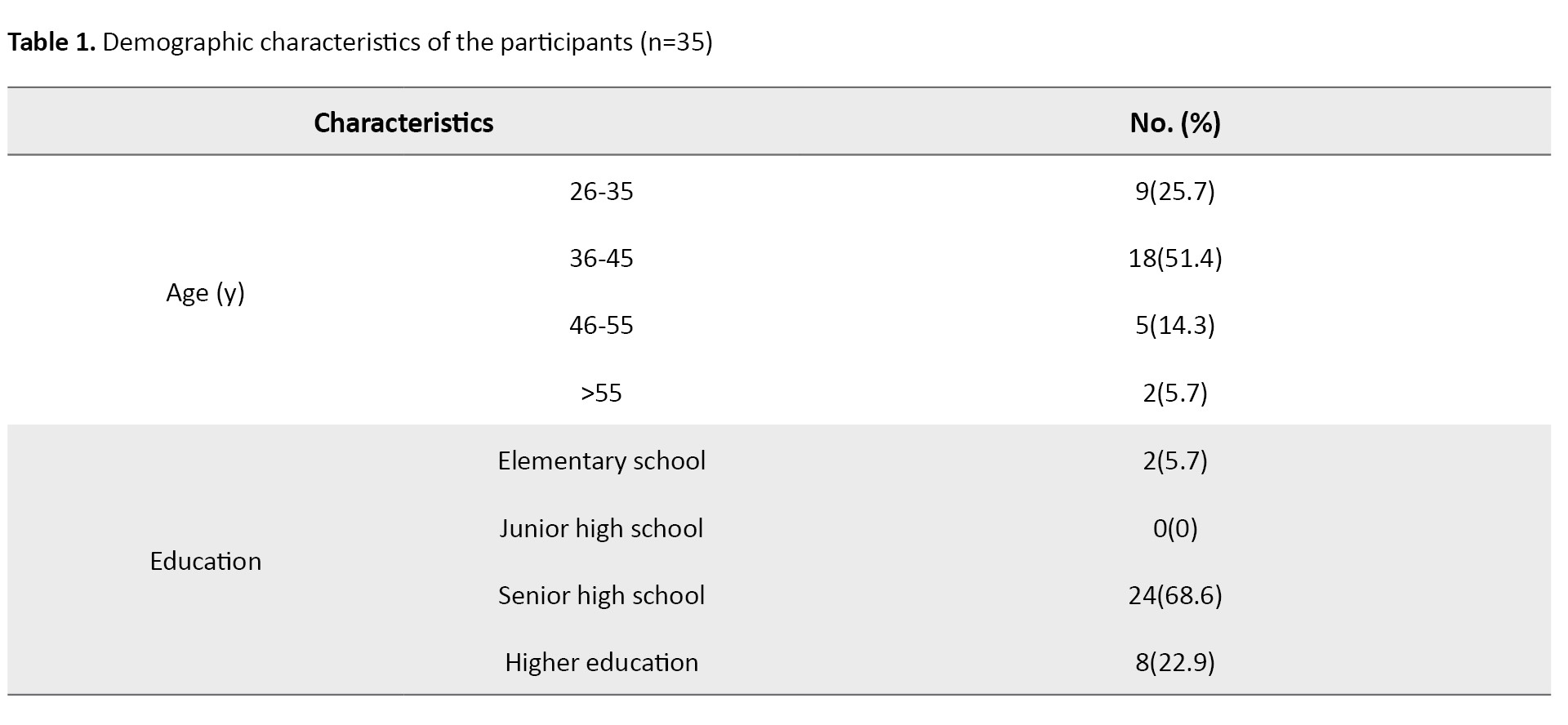
For educational characteristics, the majority of respondents have high school education (68.6%) and college education (22.9%), indicating that 91.5% of respondents have good literacy levels and ability to understand information.
The Shapiro-Wilk normality test results showed that all variables were not normally distributed with P<0.05, therefore the pre-post comparison analysis used the Wilcoxon signed-rank test. Nevertheless, Table 2 shows an increase in the average from pre to post in the knowledge variable (from 60.9 to 81.5) and skills variable (from 57.4 to 80.9), with a relatively stable standard deviation indicating consistent data variability.
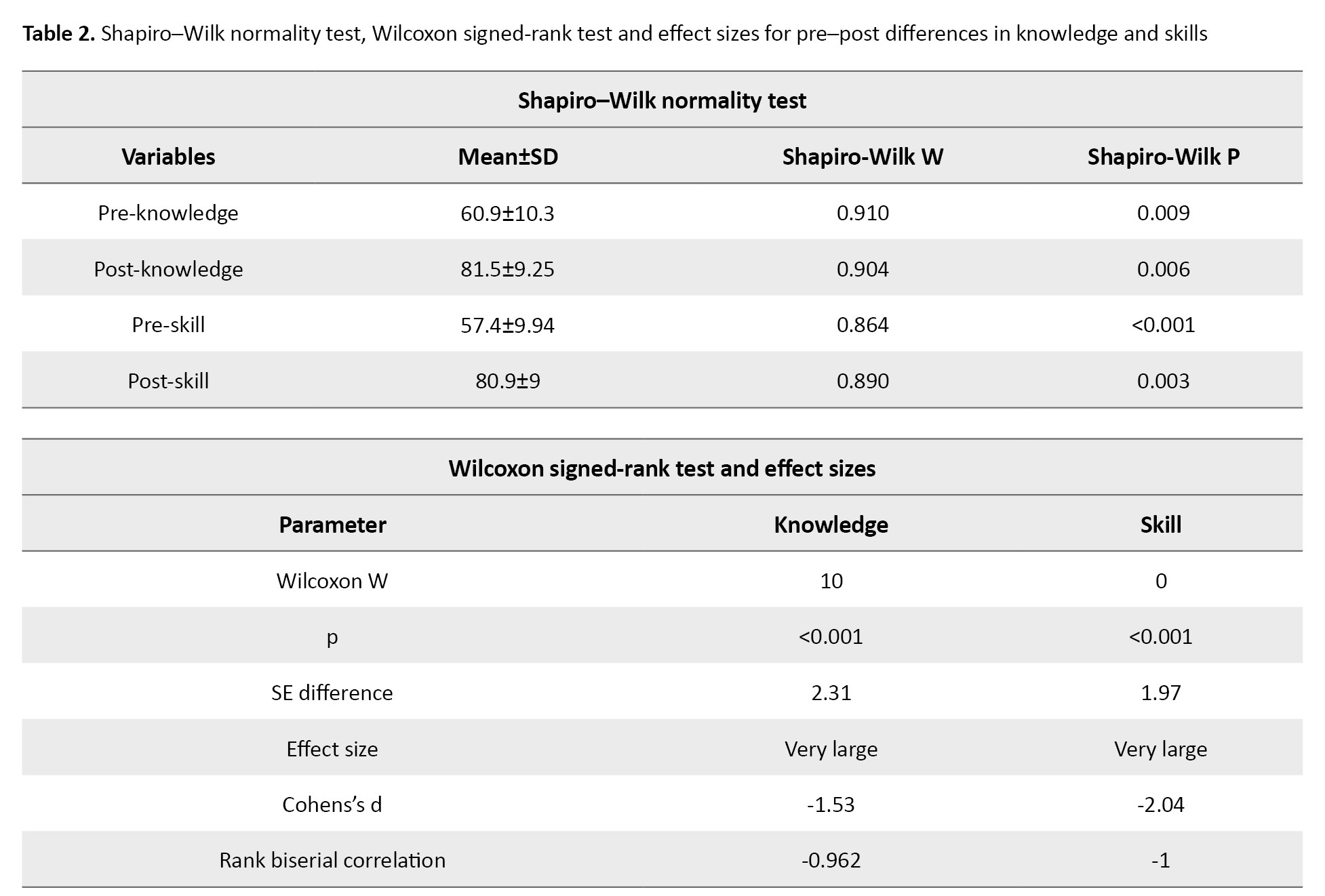
Based on the Wilcoxon signed-rank test results, a statistically significant difference was observed between pre-test and post-test knowledge scores (W=10; P<0.001; r=0.962), with mean scores increasing from 60.9 to 81.5 points. The rank biserial correlation of 0.962 indicates a very large effect size, suggesting that the combined lecture and simulation training substantially improved cadre knowledge.
More impressive results were found in the skills variable with a very significant difference (W=0; P<0.001; r=-1) and an average increase from 57.4 to 80.9 points. The perfect biserial correlation rank value (-1) and W=0 indicate that all cadres without exception experienced skill improvement in performing white ginger and red onion compression techniques for joint pain management.
Discussion
This study examined the effectiveness of a combined lecture and simulation training program on knowledge and skills in non-pharmacological joint pain management among health cadres at Puskesmas Ranomeeto. The findings demonstrate statistically significant and practically meaningful improvements in both domains, and are discussed below in relation to participant characteristics, theoretical frameworks, learning mechanisms, and implications for community health practice.
The predominance of participants in the productive age group with mid-to-higher education levels provides a favorable context for training effectiveness. Within the PRECEDE-PROCEED framework proposed by Green and Kreuter, age and education function as predisposing factors that shape health knowledge, attitudes, and behaviors [25, 26]. Higher educational attainment facilitates comprehension of complex health concepts and supports informed decision-making in health-related contexts [27, 28]. From the perspective of the Health Belief Model, productive-age adults tend to demonstrate greater awareness of disease vulnerability and a clearer understanding of the benefits of preventive action, while higher education further enhances their capacity to process and respond to health information effectively [29, 30]. The respondent profile also aligns with Malcolm Knowles' Andragogy Theory, which characterizes adult learners as self-directed individuals who integrate prior life experience into new learning, prefer practical problem-solving approaches, and are intrinsically motivated to improve their QoL [31, 32]. These characteristics suggest that the participatory and simulation-based methods employed in this study were well-suited to the learning profile of the participants, rendering didactic-only approaches comparatively less effective for this population.
A statistically significant improvement in knowledge scores was observed following the intervention (pre: 60.9; post: 81.5; Δ=20.6; W=10, P<0.001, r=0.962), reflecting a large effect size. This outcome is consistent with the Health Belief Model, which posits that increased knowledge serves as a key predisposing factor for health behavior change [29, 30, 33]. Improved health literacy at the cadre level is an expected and desired outcome of community-based health promotion, as it directly supports cadres' capacity to deliver effective health education and services to the communities they serve [33]. The training content, which addressed the physiological basis of joint pain and the therapeutic properties of white ginger (Z. officinale) and shallot (A. cepa), provided cadres with a conceptual foundation necessary for safe and informed practice.
Skills scores demonstrated an equally significant and practically meaningful improvement (pre: 57.4; post: 80.9; Δ=23.5; W=0, P<0.001, r=1), with a marginally greater mean gain compared to knowledge. This improvement encompassed cadres' ability to prepare materials correctly, including selecting quality ingredients and applying appropriate preparation techniques; to execute compression procedures at optimal temperature and duration on the correct anatomical area; and to provide patient education regarding contraindications and indicators for medical referral. These outcomes are consistent with Bandura's social cognitive theory, which holds that self-efficacy is strengthened through mastery experiences [34]. Supervised hands-on practice with corrective feedback builds cadres' confidence in performing joint pain management procedures competently and safely. Within the PRECEDE-PROCEED model, skills are recognized as enabling factors that serve as an essential bridge between knowledge and the sustained implementation of health programs at the community level [35]. The effectiveness of health interventions must ultimately be measured by an individual's ability to apply knowledge in practice, not merely by increases in theoretical understanding [36, 37].
The greater improvement observed in skills relative to knowledge underscores the added value of integrating simulation with didactic instruction. This pattern is consistent with experiential learning principles and the Elaboration Likelihood Model, which hold that learning involving direct practice produces superior knowledge retention and transfer [25, 26]. Training methods that combine trainer-led demonstration, guided return demonstration, and individualized corrective feedback facilitate deep learning and procedural consolidation. This aligns with adult learning theory, which emphasizes that adults learn most effectively when instruction is hands-on, problem-solving oriented, and has immediate practical application [27, 28]. Cadres as adult learners are particularly motivated when they can directly perceive the relevance of acquired skills to real health problems encountered in their working communities. Empirical evidence consistently supports this approach: studies have demonstrated significant differences in outcomes between participants taught through demonstration-based methods compared to those receiving conventional lectures alone [29], with demonstration groups achieving higher scores than lecture-only counterparts. The integration of teaching methods has been identified as the most effective approach for improving memory, information retrieval, cognition, and skill development [21].
These findings carry meaningful implications for community health worker empowerment in Indonesia. Health cadres competent in non-pharmacological joint pain management can serve as a first line of care at the community level, potentially contributing to reduced reliance on pharmacological analgesics and increased utilization of evidence-based traditional therapies [31]. It is important to acknowledge, however, that actual patient outcomes and analgesic use patterns were not measured in this study; therefore, such implications remain prospective and require empirical confirmation in future research. The multiplier effect of cadre training further amplifies its public health value, as a single trained cadre has the potential to disseminate knowledge and skills to numerous community members [37]. Collectively, these findings align with the Ottawa Charter's principles of health promotion, particularly the development of personal skills and the strengthening of community action [35, 36], and provide evidence that this intervention produced practically meaningful change at the interpersonal level forming a foundation for broader community-level impact through the dissemination of safe and effective herbal-based joint pain management practices.
Limitations
Small, single-site sample with unclear exact n (34 vs 35).
One-group pre–post design without a control group, no long-term follow-up, and no direct measurement of patient outcomes.
Conclusion
This study demonstrates that combined lecture and simulation training significantly improved knowledge and skills in non-pharmacological joint pain management among health cadres, with large effect sizes in both domains. The greater improvement in skills (Δ=23.5) relative to knowledge (Δ=20.6) highlights the added value of simulation-based methods in developing psychomotor competence. These findings support combined training as a promising strategy for strengthening cadre capacity in community-based joint pain management. However, the absence of a control group, immediate post-training assessment only, small single-site sample, and lack of patient-level outcome measurement limit causal inference and generalizability. Future studies incorporating control groups, larger samples, and longer follow-up periods are warranted to confirm these findings and assess sustained impact on community health outcomes.
Ethical Considerations
Compliance with ethical guidelines
This study was approved by the Health Research Ethics Commission of the Indonesian Public Health Expert Association of Southeast Sulawesi Province (Code: : 103/KEP-IAKMI/VI/2025). Written informed consent was obtained from all participants prior to enrollment. Participation was voluntary, and participants were informed of their right to withdraw at any time without consequence.
Funding
This research was supported by a research project funded by the Ministry of Education, Culture, Research, and Higher Education, Jakarta, Indonesia (Project No.: (106/SPK/D/D.4/PPK.01.APTV/III/2024).
Authors contributions
Conceptualization and study design: All authors; Data collection and writing: Muhammad Syahwal; Statistical analysis and data interpretation: Aluddin Aluddin; Supervision, review and editing: Muhammad Syahwal and Yeni Patayani; Final approval: All authors.
Conflict of interest
The authors declared no conflict of interest.
Acknowledgements
The authors extend their gratitude to the Directorate of Research and Community Service of the Republic of Indonesia for providing research funding, the UPTD Ranomeeto Health Center for institutional support, and the health cadres who participated in and contributed to this research.
Joint pain is a significant health problem globally, with high prevalence and wide-ranging impact on quality of life (QoL). More than 50% of the elderly population worldwide experience chronic musculoskeletal problems. In Indonesia, approximately 713,000 cases have been reported, with prevalence increasing markedly with age approximately 30% among individuals aged 40–60 years and exceeding 65% in those above 60 years underscoring the substantial burden of this condition among older populations [1–4].
Untreated joint pain can cause broader impacts, not only worsening QoL but also disrupting daily activities [5]. In advanced stages, recurrent joint stiffness is commonly reported, and most patients experience pain severe enough to limit their independence [6–8]. Suboptimal joint pain management can worsen elderly functional conditions and impact mobility in meeting life needs, thus requiring a comprehensive approach integrating non-pharmacological interventions [9–11]. Natural therapy needs to be considered to support sustainable joint pain management [12], given the potential long-term medication side effects and the need for a safe, easily implementable pain management approach that can be independently applied by the community [12–14].
In the context of primary healthcare in Indonesia, health cadres occupy a strategic position as the spearhead of community-based health services in Indonesia, particularly in the long-term care concept for preventing degenerative and chronic disease complications [15, 16]. Despite having the potential to become agents of change in community empowerment for independent non-pharmacological joint pain management, the competence of cadres in this field remains limited [17, 18]. This competence gap is a significant issue given the increasing need for joint pain management services alongside the rising prevalence of degenerative diseases and demographic transition in the elderly population [19, 20].
Improving health cadres' competence requires an effective learning method aligned with adult learning principles. A combination method that integrates lectures for theoretical knowledge transfer with simulation for practical skill reinforcement can potentially yield optimal results in enhancing competence [21, 22]. This combined approach is expected to improve cognitive, psychomotor, and affective aspects of health cadres in applying non-pharmacological joint pain management techniques in the community. Lectures provide a comprehensive theoretical foundation, while individual simulations enable cadres to practice skills directly with constructive feedback [23, 24].
Research on health cadre training in non-pharmacological joint pain management in Indonesia remains limited, particularly studies integrating simulation-based methods. This study addresses that gap by combining lecture-based instruction with herbal compress simulation using a mixture of white ginger (Zingiber officinale) and shallot (Allium cepa). However, strengthening the capacity of health cadres through competency enhancement is believed to be a cost-efficient approach to expanding primary healthcare service availability, especially in managing chronic conditions like joint pain, thus requiring research that evaluates the effectiveness of structured and evidence-based health promotion interventions. This study aimed to evaluate the effect of a combined lecture simulation intervention on health cadres’ knowledge and skills in non‑pharmacological joint pain management; we hypothesized that both knowledge and skills scores would increase significantly after the intervention.
Materials and Methods
Research design
This study employed a single-group pre-post quasi-experimental design without a control group, which limits its internal validity because other external factors cannot be fully controlled. This study was conducted in July 2025 at the Ranomeeto Community Health Center, a primary health care facility located in Konawe Regency, Southeast Sulawesi Province, Indonesia. The Ranomeeto Community Health Center serves as the primary health care center for residents of the surrounding subdistricts, where health workers play a central role in implementing preventive and promotive health interventions at the grass roots level. The intervention provided included: 1) Health education about elderly joint pain; 2) Joint pain management simulation using a non-pharmacological therapy approach. The first author served as a presenter for 90 minutes, including a question and answer session, while other authors and geriatric nurses acted as mentors during the simulation.
Data sources
The study enrolled 35 health cadres from the catchment area of Puskesmas Ranomeeto using total sampling, whereby all available cadres were included, precluding the need for formal sample size calculation with the following criteria: Health cadres who have been active for at least 2 years, and are willing to participate fully in the lectures, simulations and intervention sessions.
Intervention description
The training intervention comprised two sequential components delivered within a single day. The first component consisted of a 90-minute structured lecture addressing key topics, including the pathophysiology of joint pain, indications and contraindications of herbal compress therapy, preparation and application techniques, and safety considerations relevant to community-based practice. The second component involved a hands-on simulation session in which participants observed a trainer-led demonstration of herbal compress preparation using a mixture of white ginger (Z. officinale) and shallot (A. cepa), followed by a return demonstration performed by each participant under direct supervision. Individual feedback was provided by the trainer throughout the session. Participants were organized into small groups to facilitate close supervision and optimize trainer–participant interaction. Illustrated procedural brochures were distributed to all participants for independent reference following the training.
Instruments and measurement
Knowledge questionnaire
Knowledge was assessed using an internally developed questionnaire comprising 20 items covering key domains of non-pharmacological joint pain management, including the pathophysiology of joint pain, indications and contraindications of herbal compress therapy, preparation techniques, and safety considerations. Each item was scored dichotomously (correct=1, incorrect=0), with total scores converted to a 0–100 scale. The instrument was developed based on relevant literature and reviewed by the research team and a Puskesmas coordinator for content validity. Internal consistency was evaluated prior to data collection, yielding a Cronbach's α of 0.81, indicating acceptable reliability. While formal psychometric validation beyond content review and internal consistency testing was not conducted, the instrument was considered adequate for measuring knowledge outcomes within the scope of this study.
Skills checklist
Practical skills were assessed using an observational checklist developed based on the standard operating procedure (SOP) for herbal compress application, registered under copyright number EC002024226289. The checklist comprised five procedural items, each scored dichotomously (performed correctly=1, not performed=0), yielding a total score range of 0–100 following proportional conversion. The five assessed items included: (1) cleaning the painful area prior to compress application, (2) positioning the client in a comfortable or supported seated position, (3) applying the compress to the affected area for 20 minutes, (4) wrapping the compress area with a cloth or washcloth soaked in warm water (37–40 °C), and (5) adhering to the recommended compress frequency a minimum of three days at one to two applications per day for non-traumatic joint pain (6) joint pain change evaluation using the numerical rating scale (NRS).
Assessment was conducted by trained observers who were briefed on scoring criteria prior to data collection. As a single primary observer was responsible for all assessments, formal inter-rater reliability testing was not performed; this represents a methodological limitation that should be considered when interpreting the findings. Skills scores were categorized as poor (<60), sufficient (60–79), or good (≥80), based on pragmatic institutional grading standards applied at Puskesmas Ranomeeto, though it is acknowledged that these thresholds were not derived from formal psychometric criteria.
Data collection
Research data was obtained based on the results of pre-post test questionnaires on education and simulation. Knowledge measurement was done through a questionnaire containing questions about joint pain, anatomy and physiology of the musculoskeletal system in the elderly, risk factors and impacts of joint pain, principles of non-pharmacological joint pain management, non-pharmacological techniques (white ginger and red onion compress), contraindications and things to be aware of, as well as the role of health cadres in education and elderly accompaniment, which was reviewed by the research team and the elderly health coordinator at Ranomeeto Community Health Center.
This simulation of joint pain management is based on standard operating procedures for white ginger and red onion compress therapy, which includes six observation points, such as preparation of therapeutic materials, compress application techniques, and evaluation of changes in joint pain using the numerical rating scale (NRS). The final knowledge and skills of the healthcare workers were assessed based on the results of an online questionnaire and observation sheets that included a rating scale.
Data were collected using an online questionnaire for knowledge assessment and structured observation sheets for skills evaluation. The pre-test was administered immediately before the training intervention, and the post-test was conducted immediately upon its completion. No follow-up measurement was performed beyond the immediate post-training assessment; therefore, the findings reflect short-term learning gains only and do not allow inferences regarding knowledge retention or sustained skill performance over time. This represents a limitation that should be considered when interpreting the results.
Data analysis
Data were analyzed using descriptive statistics and the Shapiro-Wilk normality test. As both knowledge and skills scores violated the normality assumption (P<0.05), the Wilcoxon signed-rank test was applied to compare pre- and post-test scores. Effect size was estimated using rank biserial correlation (r), which is the appropriate measure for non-parametric Wilcoxon tests. Statistical significance was set at α=0.05, and all analyses were performed using JAMOVI version 2.3.28.
Research Ethics
This study received ethical approval from the Health Research Ethics Commission of the Indonesian Public Health Expert Association of Southeast Sulawesi Province (approval number: 103/KEP-IAKMI/VI/2025). Prior to data collection, all participants were provided with a written explanation of the study objectives, procedures, and their right to withdraw at any time without consequence. Written informed consent was obtained from each participant prior to enrollment. Participation was entirely voluntary, and all data were treated with strict confidentiality, with identifiers removed during analysis to ensure anonymity.
Results
Based on respondent characteristics, the majority of participants were in the 36–45 age group (51.4%), followed by the 26–35 age group (25.7%), with a combined 77.1% of respondents falling within these two age categories, reflecting a predominantly middle-aged cadre workforce (Table 1).
For educational characteristics, the majority of respondents have high school education (68.6%) and college education (22.9%), indicating that 91.5% of respondents have good literacy levels and ability to understand information.
The Shapiro-Wilk normality test results showed that all variables were not normally distributed with P<0.05, therefore the pre-post comparison analysis used the Wilcoxon signed-rank test. Nevertheless, Table 2 shows an increase in the average from pre to post in the knowledge variable (from 60.9 to 81.5) and skills variable (from 57.4 to 80.9), with a relatively stable standard deviation indicating consistent data variability.
Based on the Wilcoxon signed-rank test results, a statistically significant difference was observed between pre-test and post-test knowledge scores (W=10; P<0.001; r=0.962), with mean scores increasing from 60.9 to 81.5 points. The rank biserial correlation of 0.962 indicates a very large effect size, suggesting that the combined lecture and simulation training substantially improved cadre knowledge.
More impressive results were found in the skills variable with a very significant difference (W=0; P<0.001; r=-1) and an average increase from 57.4 to 80.9 points. The perfect biserial correlation rank value (-1) and W=0 indicate that all cadres without exception experienced skill improvement in performing white ginger and red onion compression techniques for joint pain management.
Discussion
This study examined the effectiveness of a combined lecture and simulation training program on knowledge and skills in non-pharmacological joint pain management among health cadres at Puskesmas Ranomeeto. The findings demonstrate statistically significant and practically meaningful improvements in both domains, and are discussed below in relation to participant characteristics, theoretical frameworks, learning mechanisms, and implications for community health practice.
The predominance of participants in the productive age group with mid-to-higher education levels provides a favorable context for training effectiveness. Within the PRECEDE-PROCEED framework proposed by Green and Kreuter, age and education function as predisposing factors that shape health knowledge, attitudes, and behaviors [25, 26]. Higher educational attainment facilitates comprehension of complex health concepts and supports informed decision-making in health-related contexts [27, 28]. From the perspective of the Health Belief Model, productive-age adults tend to demonstrate greater awareness of disease vulnerability and a clearer understanding of the benefits of preventive action, while higher education further enhances their capacity to process and respond to health information effectively [29, 30]. The respondent profile also aligns with Malcolm Knowles' Andragogy Theory, which characterizes adult learners as self-directed individuals who integrate prior life experience into new learning, prefer practical problem-solving approaches, and are intrinsically motivated to improve their QoL [31, 32]. These characteristics suggest that the participatory and simulation-based methods employed in this study were well-suited to the learning profile of the participants, rendering didactic-only approaches comparatively less effective for this population.
A statistically significant improvement in knowledge scores was observed following the intervention (pre: 60.9; post: 81.5; Δ=20.6; W=10, P<0.001, r=0.962), reflecting a large effect size. This outcome is consistent with the Health Belief Model, which posits that increased knowledge serves as a key predisposing factor for health behavior change [29, 30, 33]. Improved health literacy at the cadre level is an expected and desired outcome of community-based health promotion, as it directly supports cadres' capacity to deliver effective health education and services to the communities they serve [33]. The training content, which addressed the physiological basis of joint pain and the therapeutic properties of white ginger (Z. officinale) and shallot (A. cepa), provided cadres with a conceptual foundation necessary for safe and informed practice.
Skills scores demonstrated an equally significant and practically meaningful improvement (pre: 57.4; post: 80.9; Δ=23.5; W=0, P<0.001, r=1), with a marginally greater mean gain compared to knowledge. This improvement encompassed cadres' ability to prepare materials correctly, including selecting quality ingredients and applying appropriate preparation techniques; to execute compression procedures at optimal temperature and duration on the correct anatomical area; and to provide patient education regarding contraindications and indicators for medical referral. These outcomes are consistent with Bandura's social cognitive theory, which holds that self-efficacy is strengthened through mastery experiences [34]. Supervised hands-on practice with corrective feedback builds cadres' confidence in performing joint pain management procedures competently and safely. Within the PRECEDE-PROCEED model, skills are recognized as enabling factors that serve as an essential bridge between knowledge and the sustained implementation of health programs at the community level [35]. The effectiveness of health interventions must ultimately be measured by an individual's ability to apply knowledge in practice, not merely by increases in theoretical understanding [36, 37].
The greater improvement observed in skills relative to knowledge underscores the added value of integrating simulation with didactic instruction. This pattern is consistent with experiential learning principles and the Elaboration Likelihood Model, which hold that learning involving direct practice produces superior knowledge retention and transfer [25, 26]. Training methods that combine trainer-led demonstration, guided return demonstration, and individualized corrective feedback facilitate deep learning and procedural consolidation. This aligns with adult learning theory, which emphasizes that adults learn most effectively when instruction is hands-on, problem-solving oriented, and has immediate practical application [27, 28]. Cadres as adult learners are particularly motivated when they can directly perceive the relevance of acquired skills to real health problems encountered in their working communities. Empirical evidence consistently supports this approach: studies have demonstrated significant differences in outcomes between participants taught through demonstration-based methods compared to those receiving conventional lectures alone [29], with demonstration groups achieving higher scores than lecture-only counterparts. The integration of teaching methods has been identified as the most effective approach for improving memory, information retrieval, cognition, and skill development [21].
These findings carry meaningful implications for community health worker empowerment in Indonesia. Health cadres competent in non-pharmacological joint pain management can serve as a first line of care at the community level, potentially contributing to reduced reliance on pharmacological analgesics and increased utilization of evidence-based traditional therapies [31]. It is important to acknowledge, however, that actual patient outcomes and analgesic use patterns were not measured in this study; therefore, such implications remain prospective and require empirical confirmation in future research. The multiplier effect of cadre training further amplifies its public health value, as a single trained cadre has the potential to disseminate knowledge and skills to numerous community members [37]. Collectively, these findings align with the Ottawa Charter's principles of health promotion, particularly the development of personal skills and the strengthening of community action [35, 36], and provide evidence that this intervention produced practically meaningful change at the interpersonal level forming a foundation for broader community-level impact through the dissemination of safe and effective herbal-based joint pain management practices.
Limitations
Small, single-site sample with unclear exact n (34 vs 35).
One-group pre–post design without a control group, no long-term follow-up, and no direct measurement of patient outcomes.
Conclusion
This study demonstrates that combined lecture and simulation training significantly improved knowledge and skills in non-pharmacological joint pain management among health cadres, with large effect sizes in both domains. The greater improvement in skills (Δ=23.5) relative to knowledge (Δ=20.6) highlights the added value of simulation-based methods in developing psychomotor competence. These findings support combined training as a promising strategy for strengthening cadre capacity in community-based joint pain management. However, the absence of a control group, immediate post-training assessment only, small single-site sample, and lack of patient-level outcome measurement limit causal inference and generalizability. Future studies incorporating control groups, larger samples, and longer follow-up periods are warranted to confirm these findings and assess sustained impact on community health outcomes.
Ethical Considerations
Compliance with ethical guidelines
This study was approved by the Health Research Ethics Commission of the Indonesian Public Health Expert Association of Southeast Sulawesi Province (Code: : 103/KEP-IAKMI/VI/2025). Written informed consent was obtained from all participants prior to enrollment. Participation was voluntary, and participants were informed of their right to withdraw at any time without consequence.
Funding
This research was supported by a research project funded by the Ministry of Education, Culture, Research, and Higher Education, Jakarta, Indonesia (Project No.: (106/SPK/D/D.4/PPK.01.APTV/III/2024).
Authors contributions
Conceptualization and study design: All authors; Data collection and writing: Muhammad Syahwal; Statistical analysis and data interpretation: Aluddin Aluddin; Supervision, review and editing: Muhammad Syahwal and Yeni Patayani; Final approval: All authors.
Conflict of interest
The authors declared no conflict of interest.
Acknowledgements
The authors extend their gratitude to the Directorate of Research and Community Service of the Republic of Indonesia for providing research funding, the UPTD Ranomeeto Health Center for institutional support, and the health cadres who participated in and contributed to this research.
References
- Radojčić MR, Perera RS, Hart DJ, Spector TD, Arden NK. Prevalence, incidence, and re-occurrence risk of musculoskeletal pain in older adults in the United Kingdom: A population-based study. Frontiers in Pain Research (Lausanne, Switzerland). 2023; 4:1197810.[DOI:10.3389/fpain.2023.1197810] [PMID]
- Kementerian Kesehatan RI. [National Riskesdas Report (Indonesian) 2018. Jakarta: National Institute of Health Research and Development, Ministry of Health of the Republic of Indonesia; 2019.
- World Health Organization. Rheumatoid arthritis. Geneva: WHO; 2023. [Link]
- Ghassani FS, Idris FH. Karakteristik Pasien Osteoartritis Genu di Poli Rehabilitasi Medik RS Setia Mitra Tahun 2020. Muhammadiyah Journal of Geriatric. 2023; 3(2):54-61. [DOI:10.24853/mujg.3.2.54-61]
- Martinec R, Pinjatela R, Balen D. Quality of life in patients with rheumatoid arthritis: A preliminary study. Acta Clinica Croatica. 2019; 58(1):157-66. [DOI:10.20471/acc.2019.58.01.20] [PMID]
- Bevilacqua G, Laskou F, Patel HP, Westbury LD, Fuggle NR, Cooper C, et al. What impact does osteoarthritis have on ability to self-care and receipt of care in older adults? Findings from the Hertfordshire Cohort Study. Osteoarthritis and Cartilage Open. 2022; 4(4):100310. [DOI:10.1016/j.ocarto.2022.100310] [PMID]
- Wojcieszek A, Kurowska A, Majda A, Liszka H, Gądek A. The impact of chronic pain, stiffness and difficulties in performing daily activities on the quality of life of older patients with knee osteoarthritis. international Journal of Environmental Research and Public Health. 2022; 19(24):16815. [DOI:10.3390/ijerph192416815] [PMID]
- Havelin J, King T. Mechanisms Underlying Bone and Joint Pain. Current Osteoporosis Reports. 2018; 16(6):763-71. [DOI:10.1007/s11914-018-0493-1] [PMID]
- Nguyen A, Lee P, Rodriguez EK, Chahal K, Freedman BR, Nazarian A. Addressing the growing burden of musculoskeletal diseases in the ageing US population: Challenges and innovations. The lancet. Healthy Longevity. 2025; 6(5):100707. [DOI:10.1016/j.lanhl.2025.100707] [PMID]
- Rosdiana IR, Setianing R, Astuti N, Kusuma Hartono D, Ajoe Kesoema T, Sari Dewi N, et al. The “exploring the impact of pain on functional capacity and quality of life in elderly with musculoskeletal disorders.” Indonesian Journal of Physical Medicine and Rehabilitation. 2025; 14(1):48-58. [DOI:10.36803/indojpmr.v14i1.457]
- Jadidi S. A Review of Non-Surgical Pain Management in Osteoarthritis. Cureus. 2020; 12(10):e10829. [DOI:10.7759/cureus.10829] [PMID]
- Jahromi B, Pirvulescu I, Candido KD, Knezevic NN. Herbal medicine for pain management: Efficacy and drug interactions. Pharmaceutics. 2021; 13(2):251. [DOI:10.3390/pharmaceutics13020251] [PMID]
- Bindu S, Mazumder S, Bandyopadhyay U. Non-steroidal anti-inflammatory drugs (NSAIDs) and organ damage: A current perspective. Biochemical Pharmacology. 2020; 180:114147. [DOI:10.1016/j.bcp.2020.114147] [PMID]
- Sohail R, Mathew M, Patel KK, Reddy SA, Haider Z, Naria M, et al. Effects of non-steroidal anti-inflammatory drugs (NSAIDs) and gastroprotective NSAIDs on the gastrointestinal tract: A narrative review. Cureus. 2023; 15(4):e37080. [DOI:10.7759/cureus.37080]
- Huvaid SU, Hidayat H, Yulianita. Revitalization of posyandu for the elderly in Nagari Tapakis, Padang Pariaman Regency. IInternational Journal of Medical Science and Clinical Invention. 2022; 9(03):6023-8. [DOI:10.18535/ijmsci/v9i03.09]
- Susanti T, Wulandari L, Pratiwi R, Safitri E. Empowering Health Cadres to Improve Primary Healthcare Access and Quality: A Case Study In Jekek Village, Nganjuk, Indonesia. Journal of Community Engagement in Health. 2025; 8(2):280–9. [DOI:10.30994/jceh.v8i2.739]
- Friska D, Kekalih A, Runtu F, Rahmawati A, Ibrahim NAA, Anugrapaksi E, et al. Health cadres empowerment program through smartphone application-based educational videos to promote child growth and development. Frontiers in Public Health. 2022; 10:887288. [DOI:10.3389/fpubh.2022.887288] [PMID]
- Setyoadi S, Wuri Kartika A, Hayati Y, Setiowati C. Community empowerment program to increase individual empowerment of cadres in stunting prevention. Jurnal Aisyah: Jurnal Ilmu Kesehatan. 2023; 8(2):1-8. [DOI:10.30604/jika.v8i3.2069]
- Kidanemariam BY, Elsholz T, Simel LL, Tesfamariam EH, Andemeskel YM. Utilization of non-pharmacological methods and the perceived barriers for adult postoperative pain management by the nurses at selected National Hospitals in Asmara, Eritrea. BMC Nursing. 2020; 19(100):1-10. [DOI:10.1186/s12912-020-00492-0]
- Wang Y, Aaron R, Attal N, Colloca L. An update on non-pharmacological interventions for pain relief. Cell Reports. Medicine. 2025; 6(2):101940. [DOI:10.1016/j.xcrm.2025.101940] [PMID]
- Devi B, Khandelwal B, Das M. Comparison of the effectiveness of video-assisted teaching program and traditional demonstration on nursing students learning skills of performing obstetrical palpation. Iranian Journal of Nursing and Midwifery Research. 2019; 24(2):118-23. [DOI:10.4103/ijnmr.IJNMR_35_18] [PMID]
- Kaddoura R, Faraji H, Otaki F, Radhakrishnan R, Stanley A, Paulus A, et al. High-fidelity simulation versus case-based tutorial sessions for teaching pharmacology: Convergent mixed methods research investigating undergraduate medical students performance and perception. medRxiv. 2024; 19(8):1-24. [DOI:10.1371/journal.pone.0302609]
- Bayona JA, Durán WF. A meta-analysis of the influence of case method and lecture teaching on cognitive and affective learning outcomes. The International Journal of Management Education. 2024; 22(1):1-15. [DOI:10.1016/j.ijme.2024.100935]
- Liu F, Wang X, Izadpanah S. The comparison of the efficiency of the lecture method and flipped classroom instruction method on EFL students’ academic passion and responsibility. Sage Open. 2023; 13(2):1-15. [DOI:10.1177/21582440231174355]
- Chaiprakarn S, Kaewnaknaew C. Knowledge, attitude, and practice (behaviour) among health promotion school students. Advance Knowledge for Executives. 2024; 3(2):1-9. [Link]
- Widowati R, Raushanfikri A. Knowledge, attitude, and behavior toward COVID-19 prevention on Indonesian during pandemic. Open Access Macedonian Journal of Medical Sciences. 2021; 9(E):398-401. [DOI:10.3889/oamjms.2021.5990]
- You MA, Ahn JA. Health information orientation and health literacy as determinants of health promotion behaviors in adolescents: A cross-sectional study. Frontiers in Public Health. 2025; 12:1522838. [DOI:10.3389/fpubh.2024.1522838] [PMID]
- Raghupathi V, Raghupathi W. The influence of education on health: An empirical assessment of OECD countries for the period 1995-2015. Archives of Public Health. 2020; 78:20. [DOI:10.1186/s13690-020-00402-5] [PMID]
- Adiyoso W, Wilopo W, Mondry, Nurbaiti B, Suprapto FA. The use of Health Belief Model (HBM) to explain factors underlying people to take the COVID-19 vaccine in Indonesia. Vaccine X. 2023; 14:100297. [DOI:10.1016/j.jvacx.2023.100297] [PMID]
- Taflinger S, Sattler S. A situational test of the health belief model: How perceived susceptibility mediates the effects of the environment on behavioral intentions. Social Science & Medicine. 2024; 346:116715. [DOI:10.1016/j.socscimed.2024.116715] [PMID]
- Knapke JM, Hildreth L, Molano JR, Schuckman SM, Blackard JT, Johnstone M, et al. Andragogy in practice: Applying a theoretical framework to team science training in biomedical research. British Journal of Biomedical Science. 2024; 81:12651. [DOI:10.3389/bjbs.2024.12651] [PMID]
- Cronin-Golomb LM, Bauer PJ. Self-motivated and directed learning across the lifespan. Acta Psychologica. 2023; 232:103816.[DOI:10.1016/j.actpsy.2022.103816] [PMID]
- Arini M, Prakoso DA, Suratini, Primastuti HI. Improving Cadres Knowledge and Skills in Non-Communicable Disease control and care in Kulonprogo, Yogyakarta. Jurnal Promkes: The Indonesian Journal of Health Promotion and Health Education. 2025; 13(2):147-55. [DOI:10.20473/jpk.V13.I2.2025.147-155]
- Shrestha P, Afsana K, Weerasinghe MC, Perry HB, Joshi H, Rana N, et al. Strengthening primary health care through community health workers in South Asia. The Lancet Regional Health. Southeast Asia. 2024; 28:100463. [DOI:10.1016/j.lansea.2024.100463] [PMID]
- Schloemer T, De Bock F, Schröder-Bäck P. Implementation of evidence-based health promotion and disease prevention interventions: Theoretical and practical implications of the concept of transferability for decision-making and the transfer process. Implementierung Evidenzbasierter Interventionen der Gesundheitsförderung und Prävention: Theoretische und Praktische Implikationen des Konzepts der Übertragbarkeit für Entscheidungsfindung und Transferprozess. Bundesgesundheitsblatt, Gesundheitsforschung, Gesundheitsschutz. 2021; 64(5):534-43. [DOI:10.1007/s00103-021-03324-x] [PMID]
- Fernandez ME, Ruiter RAC, Markham CM, Kok G. Intervention mapping: theory- and evidence-based health promotion program planning: Perspective and examples. Frontiers in Public Health. 2019; 7:209. [DOI:10.3389/fpubh.2019.00209] [PMID]
- Schleiff MJ, Aitken I, Alam MA, Damtew ZA, Perry HB. Community health workers at the dawn of a new era: 6. Recruitment, training, and continuing education. Health Research Policy and Systems. 2021; 19(Suppl 3):113. [DOI:10.1186/s12961-021-00757-3] [PMID]
Type of Study: Original Article |
Subject:
Health Education
Send email to the article author
| Rights and permissions | |
 |
This work is licensed under a Creative Commons Attribution-NonCommercial 4.0 International License. |

This is an open access article distributed under the terms of the Creative Commons Attribution License (CC-By-NC), which permits use, distribution, and reproduction in any medium, provided the original work is properly cited and is not used for commercial purposes.
Contact Information