Volume 14, Issue 3 (Summer 2026)
Iran J Health Sci 2026, 14(3): 301-310 |
Back to browse issues page



Ethics code: IR.MAZUMS.REC.1403.117


Download citation:
BibTeX | RIS | EndNote | Medlars | ProCite | Reference Manager | RefWorks
Send citation to:


BibTeX | RIS | EndNote | Medlars | ProCite | Reference Manager | RefWorks
Send citation to:
Bagheri M, Asadi-Aliabadi M, Moosazadeh M, Nabati M, Sobhanian P. Association Between the Neutrophil-to-lymphocyte Ratio and Cardiovascular Disease in the Tabari Cohort: Findings From the Enrollment Phase. Iran J Health Sci 2026; 14 (3) :301-310
URL: http://jhs.mazums.ac.ir/article-1-1176-en.html
URL: http://jhs.mazums.ac.ir/article-1-1176-en.html


Health Sciences Research Center, Mazandaran University of Medical Sciences, Sari, Iran. , mehran_asadi_a@yahoo.com
Full-Text [PDF 789 kb]
(26 Downloads)
| Abstract (HTML) (249 Views)
Full-Text: (12 Views)
Introduction
Despite significant recent advances in the prevention and treatment of cardiovascular diseases (CVD), they remain the leading cause of morbidity and mortality worldwide. The prevalence of these diseases is higher in older individuals (>60 years) and is associated with greater mortality and disability [1]. In addition, CVDs cause an economic burden of more than 300 billion dollars per year [2]. As a result, considering the increasing trend of the average age of the population around the world, there is an urgent need to provide strategies for more accurate diagnosis of high-risk groups of patients and personalized prevention [1]. Currently, there are numerous risk factors and prediction models designed to evaluate the risk of CVDs, which are targeted by new and advanced treatment methods. Considering the important role of inflammation and oxidative stress in the pathogenesis of CVDs, systemic inflammatory markers have been considered to be strongly related to CVDs [3].
White blood cell count (WBC), due to its simplicity, availability, and low cost, has been the focus of several studies for the last two decades, and a high level of total WBC count is not only an independent risk factor for CVDs, but also a factor in predicting the patient outcomes [4]. Neutrophils secrete inflammatory mediators that can damage the vascular wall. On the other hand, lymphocytes play an anti-atherosclerotic role by modulating the inflammatory response [2]. The neutrophil-to-lymphocyte ratio (NLR), which is obtained by dividing the number of neutrophils by the number of lymphocytes, has been more accurate than the WBC count or the neutrophil count as an inflammatory marker concerning CVDs. Also, NLR is less affected by different physiological conditions, such as dehydration or physical activity [4]. In several studies, high NLR has been associated with the outcome of hospitalization and 30-day and 5-year mortality in patients with acute coronary syndrome [3]. An increase in the number of neutrophils and a decrease in the number of lymphocytes (high NLR) has a direct relationship with the mortality rate in the context of heart failure and other CVDs [5].
The efficiency of this marker needs to be adjusted according to demographic variables and health-related factors [2]. Different values of NLR have been reported using different methods in different populations; therefore, a global value is not available [6]. The effects of gender on NLR have been different across different races. No significant difference was reported between men and women in the study population in the United States of America; however, this difference was significant in the Asian study population, where the average NLR across all age groups was reported to be higher in women than in men. NLR, particularly in women, has also been influenced by age; the level of this marker was reported to be higher in women aged less than 50 years than in those older than 50 years [7].
Given the limited evidence regarding the association between NLR and CVDs in Iranian population-based cohorts, and considering the potential influence of demographic and cardiometabolic characteristics on NLR values, the present study aimed to evaluate the association between NLR and prevalent CVDs among participants in the Tabari cohort study. This analysis sought to determine whether NLR provides additional value as an inflammatory marker for CVDs in a large community-based Iranian population.
Materials and Method
Study design and data population
This case-control study was conducted during the enrollment phase of the Tabari cohort study, a component of the prospective epidemiological research studies in Iran (PERSIAN) cohort study. The enrollment phase was performed between 2014 and 2016 and included 10,255 participants aged 35–70 years residing in urban and mountainous regions of Mazandaran Province, northern Iran. The rationale for using enrollment-phase data was the availability of standardized demographic, clinical, anthropometric, and laboratory information collected from all participants during cohort recruitment. The methodology of the PERSIAN cohort study has been described in detail elsewhere [8].
The case group consisted of all participants with CVDs identified during the enrollment phase of the Tabari cohort study (n=884). Participants were considered to have CVD if they reported one or two of the following: a history of stable angina, unstable angina, or myocardial infarction; dysrhythmia; heart failure; or a history of percutaneous coronary intervention (PCI) or coronary artery bypass graft (CABG). Information regarding CVD self-reported history was collected by two trained nurses using standardized cohort questionnaires [9]. The control group consisted of participants without a history of CVD according to the above definition. Controls were randomly selected from the Tabari cohort population at a ratio of 2:1 (controls: Cases), resulting in 1,768 controls.
The numbers of cases and controls in the 35–39-year age group were 20 and 40, respectively, with 50% male participants. In the 40–49-year age group, the numbers were 132 and 264, respectively, with 33% male participants. In the 50–59-year age group, the numbers were 348 and 696, respectively, with 38% male participants The control group was matched to the case group in terms of gender and age.
The exclusion criteria included a history of stroke, seizures, multiple sclerosis (MS), kidney failure, asthma, lupus, systemic diseases, malignancy, or autoimmune diseases, as well as viral or bacterial infections (HIV [human immunodeficiency virus], hepatitis B, or hepatitis C). Participants with known inflammatory and autoimmune conditions were excluded to minimize potential confounding effects on inflammatory biomarkers. Participants with acute infections at the time of blood sampling and those receiving corticosteroids, immunosuppressive agents, or other medications known to affect leukocyte counts, were additionally excluded.
Variables and data collection
Data collection in the Tabari cohort study included the administration of standardized questionnaires and collection of blood, urine, hair, and nail samples. The questionnaire used in the cohort was a standard questionnaire with its details and characteristics described in cohort methodology studies, and its reliability and validity were confirmed by the PERSIAN cohort central team [10, 11]. In addition to general information, the questionnaire recorded socioeconomic status, lifestyle, history of chronic diseases, medication use, family history of diseases, physical activity, and personal habits, including smoking and alcohol use.
Blood pressure and anthropometric indices, including height and weight were also measured for all participants according to the PERSIAN protocol by trained personnel. Venous blood samples were collected after a minimum of 12 hours of overnight fasting during the enrollment visit. Fasting blood specimens were centrifuged shortly after collection, and no prolonged delay between sample collection and processing was reported, ensuring standardized pre-analytical conditions and minimizing sample degradation. Hematological indices, including the differential count of WBC count, were measured using a hematoanalyzer (Celltac Alpha MEK-6510 K; Tokyo, Japan). Blood pressure was measured twice for all participants in the Tabari cohort study at a 10-minute interval using a Riester dial sphygmomanometer [11].
Statistical analysis
Statistical analyses were performed using IBM SPSS software, version 24.0 (IBM Corp., Armonk, NY, USA). Continuous variables were expressed as Mean±SD, whereas categorical variables were presented as frequencies and percentages. Comparisons between the case and control groups were performed using the independent-samples t-test for continuous variables and the chi-square test for categorical variables. Univariate logistic regression analysis was initially performed to estimate crude odds ratios (ORs) and 95% confidence intervals (CIs) for factors associated with cardiovascular disease. Subsequently, multiple logistic regression models were constructed to evaluate the association between NLR and cardiovascular disease after adjustment for potential confounding variables. NLR was further evaluated using three predefined cutoff values: 1.77, derived from normal values reported in the Iranian Tabari cohort study; 2.15, derived from the Jackson heart study; and 4.57, based on high-risk thresholds in patients with acute conditions [8, 12, 13].
Model I was adjusted for socioeconomic and demographic variables. Model II was additionally adjusted for body mass index (BMI), diabetes mellitus, hypertension, and dyslipidemia. Model III included all variables entered into Models I and II.
ORs and corresponding 95% CIs were reported for all regression analyses. Statistical significance was defined as a two-sided P<0.05.
Results
Participant characteristics
A total of 2,652 participants were included in the analysis, comprising 884 participants with CVDs and 1,768 age- and sex-matched controls. The mean age of participants was 57±8 years. Overall, 40.8% (n=1,083) of participants were male, 90.5% (n=2,402) were married, and 62.0% (n=1,642) resided in urban areas. The majority of participants had a low educational level, with 50.7% reporting an elementary school education or less.
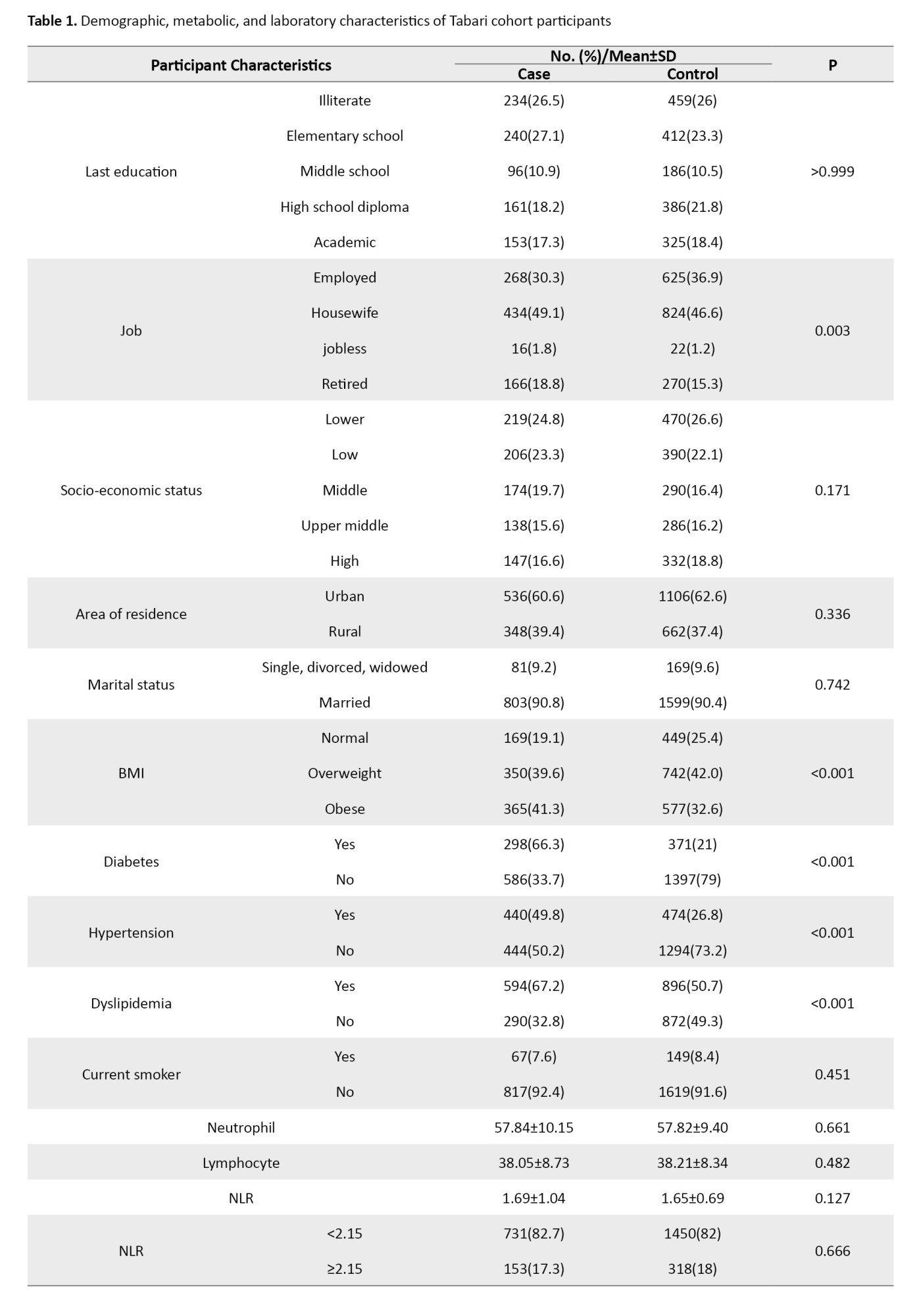
Employment status differed significantly between the case and control groups (P=0.003). Participants with CVDs were less frequently employed outside the home than controls (30.3% vs 36.9%). BMI also differed significantly between the groups (P<0.001). Obesity was more prevalent among participants with CVDs than among controls (41.3% vs 32.6%). Likewise, diabetes mellitus, hypertension, and dyslipidemia were significantly more common among participants with CVDs than among controls (all P<0.001).
No statistically significant difference was observed between the groups regarding current smoking status (P=0.451). The mean neutrophil count was 57.84±10.15 in the case group and 57.82±9.4 in the control group (P=0.661). Similarly, the mean lymphocyte count did not differ significantly between the groups (38.05±8.73 vs 38.21±8.34, P=0.482). The mean NLR was slightly higher among participants with CVDs than among controls (1.69±1.04 vs 1.65±0.69); however, this difference was not statistically significant (P=0.127).
NLR was further evaluated using three predefined cut-off values (1.77, 2.15, and 4.57). No statistically significant association was observed between NLR category and CVD status at any of the evaluated thresholds (P=0.863, P=0.666, And P=0.375, respectively). Detailed demographic, metabolic, and laboratory characteristics are presented in Table 1.
Univariate analysis of factors associated with cardiovascular disease
The results of the univariate logistic regression analyses are presented in Table 2.
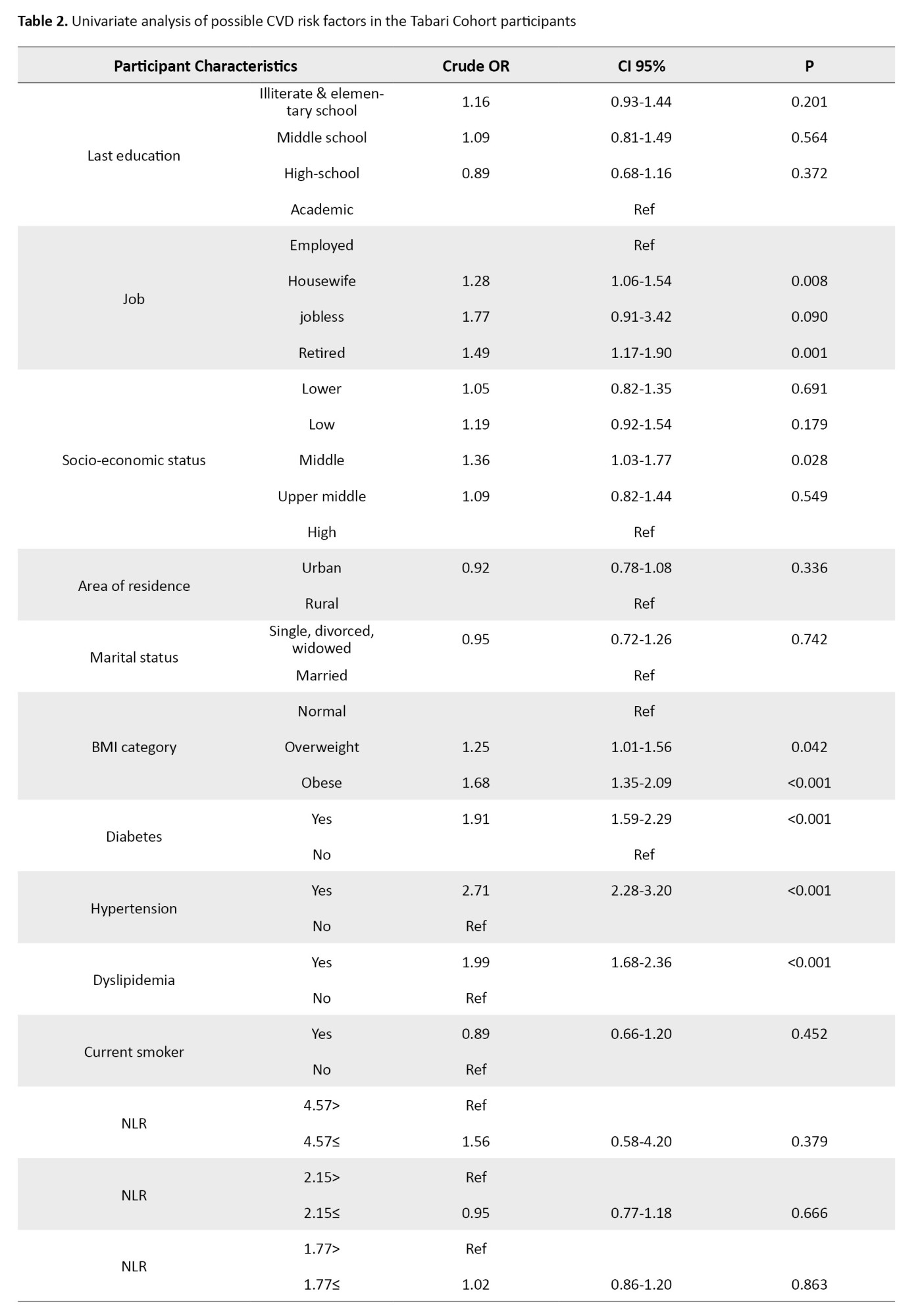
No statistically significant association was observed between educational attainment and the odds of CVD compared with participants with an academic education. Similarly, area of residence, marital status, and current smoking status were not significantly associated with CVD prevalence.
Employment status demonstrated a significant association with CVD. Compared with employed participants, housewives had 28% higher odds of CVD (OR=1.28, 95% CI, 1.06%, 1.54%, P=0.008), while retired individuals had 49% higher odds of CVD (OR=1.49, 95% CI, 1.17%, 1.9%, P=0.001). Socioeconomic status was associated with CVD only among participants with middle socioeconomic status, who had significantly higher odds of CVD than those with high socioeconomic status (OR=1.36, 95% CI, 1.03%, 1.77%, P=0.028).
BMI showed a graded association with CVD. Compared with participants with normal BMI, overweight individuals had 25% higher odds of CVD (OR=1.25, 95% CI, 1.01%, 1.56%, P=0.042), whereas obese participants had 68% higher odds (OR=1.68, 95% CI, 1.35%, 2.09%, P<0.001). A history of diabetes mellitus was associated with nearly twice the odds of CVD (OR=1.91, 95% CI, 1.59%, 2.29%, P<0.001). Similarly, hypertension (OR=2.71, 95% CI, 2.28%, 3.2%, P<0.001) and dyslipidemia (OR=1.99, 95% CI, 1.68%, 2.36%, P<0.001) were strongly associated with CVD prevalence.
In contrast, NLR was not significantly associated with CVD at any of the investigated cut-off values:
NLR ≥4.57: OR=1.56, 95% CI, 0.58%, 4.2%, P=0.379,
NLR ≥2.15: OR=0.95, 95% CI, 0.77%, 1.18%, P=0.666,
NLR ≥1.77: OR=1.02, 95% CI, 0.86% 1.2%, P=0.863.
These findings suggest that categorization of NLR using previously reported thresholds did not meaningfully discriminate between participants with and without CVD in this population.
Multiple logistic regression analysis
Multiple logistic regression models were developed to evaluate the association between NLR and CVD after adjustment for potential confounding variables. The results are presented in Table 3.
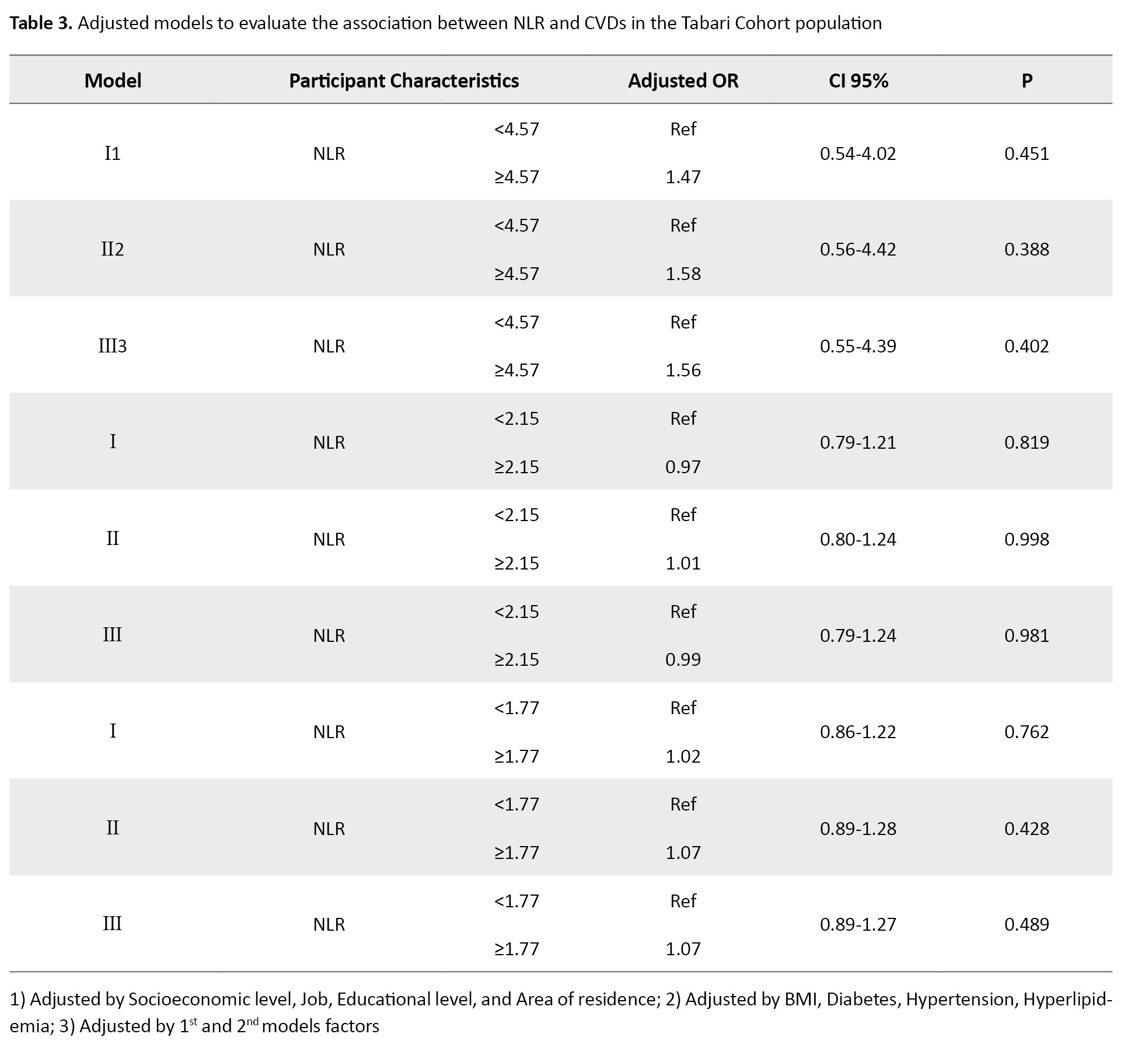
Across all three adjusted models, NLR remained non-significantly associated with CVD regardless of the selected cut-off value. For the cut-off value of 4.57, the adjusted ORs ranged from 1.47 to 1.58, with all CIs crossing unity and all p-values exceeding 0.05, indicating a lack of statistical significance. Similarly, for the cut-off value of 2.15, adjusted ORs ranged from 0.97 to 1.01 across models, with no statistically significant association observed. For the cut-off value of 1.77, adjusted ORs ranged from 1.02 to 1.07, and none of the models demonstrated statistical significance.
These findings indicate that adjustment for demographic, socioeconomic, and cardiometabolic factors did not materially alter the observed association between NLR and CVD. The consistency of the results across progressively adjusted models suggests that NLR was not independently associated with prevalent CVD in this study population.
Discussion
In this case-control analysis conducted during the enrollment phase of the Tabari cohort study, the NLR was not significantly associated with prevalent CVD after adjustment for demographic, socioeconomic, and cardiometabolic risk factors. In contrast, obesity, diabetes mellitus, hypertension, and dyslipidemia demonstrated strong and independent associations with CVD prevalence. These findings suggest that NLR alone may have limited utility as a screening marker for prevalent CVD in this population.
The role of inflammation in the development and progression of CVD has been extensively documented, and several inflammatory biomarkers have been proposed as predictors of cardiovascular outcomes [1–4]. Among these biomarkers, NLR has attracted considerable attention because it is inexpensive, readily available, and easily calculated from routine complete blood count measurements. Previous studies have reported significant associations between elevated NLR and adverse cardiovascular outcomes, including coronary artery disease, acute coronary syndrome, heart failure, and cardiovascular mortality [2–5, 13-17].
However, the findings of the present study did not demonstrate a significant association between NLR and prevalent CVD at any of the evaluated cut-off values. Furthermore, adjustment for multiple potential confounders did not materially alter the observed results. These findings are consistent with the study by Bagyura et al. [5], which reported that NLR was not significantly associated with coronary artery disease among individuals with lower levels of visceral adiposity after adjustment for major cardiovascular risk factors.
In contrast, Kim et al. [12], using data from the Jackson Heart Study, reported that elevated NLR was associated with CVD and mortality. Similarly, a systematic review and meta-analysis conducted by Angkananard et al. [2], which included 38 studies and more than 76,000 participants, demonstrated a significant association between elevated NLR and cardiovascular events. Several additional investigations have also reported associations between increased NLR and cardiovascular mortality, coronary artery disease severity, and adverse cardiovascular outcomes [13-17].
Several factors may explain the discrepancy between the findings of the present study and those reported previously. First, many studies demonstrating significant associations between NLR and cardiovascular outcomes were conducted among hospitalized patients, individuals with acute coronary syndromes, or populations at high cardiovascular risk. In contrast, the present study was based on a community-dwelling cohort population and evaluated prevalent CVD rather than incident cardiovascular events or mortality.
Second, differences in study design may have contributed to the observed variation in results. Many previous investigations evaluated the prognostic value of NLR for future cardiovascular outcomes, whereas the present analysis examined the association between NLR and existing CVD at a single time point. Consequently, NLR may be more useful as a prognostic marker than as a marker of a prevalent disease.
Third, differences in population characteristics, ethnicity, baseline inflammatory status, and CVD definitions may influence the observed association between NLR and cardiovascular outcomes. Previous studies have reported substantial variation in NLR distributions across different populations and demographic groups [6, 7].
Another possible explanation is the relatively low NLR values observed in the present population. The mean NLR values were similar between participants with and without CVD, suggesting limited discriminatory ability of this marker in this cohort. This observation may partly explain the absence of significant findings across all evaluated cut-off points.
The present study identified several established cardiovascular risk factors that remained significantly associated with CVD prevalence. Obesity was associated with substantially increased odds of CVD, consistent with previous evidence demonstrating the contribution of excess adiposity to systemic inflammation, insulin resistance, endothelial dysfunction, and atherosclerosis [18, 19].
Similarly, diabetes mellitus, hypertension, and dyslipidemia demonstrated strong associations with CVD, findings that are consistent with the current evidence regarding their central roles in cardiovascular pathophysiology and risk stratification [20–22]. These results support the continued importance of identifying and managing traditional cardiovascular risk factors within community-based prevention programs.
Employment and socioeconomic status also demonstrated significant associations with CVD in unadjusted analyses. However, because of the observational and cross-sectional nature of the study, these findings should be interpreted cautiously. The present study was not designed to establish causal relationships, and residual confounding may remain despite statistical adjustment.
Clinical and public health implications
The findings of this study have potential implications for cardiovascular risk assessment in Iranian healthcare settings. Based on the present results, NLR alone does not appear to provide substantial discriminatory value for identifying prevalent CVD in the general population. Therefore, the routine use of NLR as a stand-alone screening tool for CVD in primary healthcare settings cannot be recommended on the basis of the current evidence.
Instead, traditional cardiovascular risk factors, including obesity, hypertension, diabetes mellitus, and dyslipidemia, remain more informative indicators of CVD risk and should continue to be prioritized in screening, prevention, and management strategies.
Strengths and limitations
This study has several strengths. It was conducted within a large, population-based cohort using standardized data collection procedures and included a relatively large number of participants with CVD. Furthermore, adjustment for multiple demographic, socioeconomic, and cardiometabolic variables allowed a more comprehensive assessment of the independent association between NLR and CVD.
Several limitations should also be considered. First, the case-control analysis was based on enrollment-phase data; therefore, temporal relationships between exposure and outcome could not be established, and causal inference is not possible.
Second, CVD status was determined using cohort records and participant-reported medical histories.
Third, despite the exclusion of several inflammatory and systemic diseases, residual confounding cannot be excluded. Factors, such as acute infections, inflammatory conditions not captured by the exclusion criteria, medication use, dietary factors, and other unmeasured variables may have influenced NLR values.
Fourth, NLR was measured only once during cohort enrollment. Consequently, the analysis may not fully reflect long-term inflammatory status or temporal fluctuations in inflammatory biomarkers.
Future prospective studies incorporating repeated inflammatory marker measurements and longitudinal cardiovascular follow-up may provide additional insight into the role of NLR in cardiovascular risk prediction among Iranian populations.
Conclusion
In this case-control analysis conducted during the enrollment phase of the Tabari cohort study, no significant independent association was observed between the NLR and prevalent CVD after adjustment for demographic, socioeconomic, and cardiometabolic factors. In contrast, obesity, diabetes mellitus, hypertension, and dyslipidemia remained strongly associated with CVD.
These findings suggest that NLR alone may have limited value as a screening marker for CVD in the general Iranian population. Traditional cardiovascular risk factors continue to provide more informative indicators of CVD burden and should remain the primary focus of prevention and risk assessment strategies.
From a public health perspective, routine cardiovascular screening programs in Iranian primary healthcare settings should continue to prioritize established cardiometabolic risk factors. Future prospective studies incorporating repeated measurements of inflammatory biomarkers and long-term follow-up are warranted to further clarify the role of NLR in cardiovascular risk prediction.
Ethical Considerations
Compliance with ethical guidelines
The study was conducted in accordance with the principles of the Declaration of Helsinki. Ethical approval was obtained from the Research Ethics Committee of Mazandaran University of Medical Sciences, Sari, IraN (Code: IR.MAZUMS.REC.1403.117). Written informed consent was obtained from all participants before their enrollment in the Tabari cohort.
Funding
The paper was extracted from the MD thesis of the Maedeh Bagheri, approved by Department of Cardiology, Faculty of Medicine, Mazandaran University of Medical Sciences, Sari, Iran.
Authors contributions
Conceptualization: Pooria Sobhani; Methodology: Maryam Nabati; Data Collection: Mahmood Moosazadeh; Data interpretation and writing the original draft: Maedeh Bagheri; Statistical analysis, review and editing: Mehran Asadi-Aliabadi; Final approval: All authors.
Conflict of interest
The authors declared no conflict of interest.
Acknowledgements
The authors would like to thank all participants of the Tabari cohort study and the staff involved in data collection and management.
References
Despite significant recent advances in the prevention and treatment of cardiovascular diseases (CVD), they remain the leading cause of morbidity and mortality worldwide. The prevalence of these diseases is higher in older individuals (>60 years) and is associated with greater mortality and disability [1]. In addition, CVDs cause an economic burden of more than 300 billion dollars per year [2]. As a result, considering the increasing trend of the average age of the population around the world, there is an urgent need to provide strategies for more accurate diagnosis of high-risk groups of patients and personalized prevention [1]. Currently, there are numerous risk factors and prediction models designed to evaluate the risk of CVDs, which are targeted by new and advanced treatment methods. Considering the important role of inflammation and oxidative stress in the pathogenesis of CVDs, systemic inflammatory markers have been considered to be strongly related to CVDs [3].
White blood cell count (WBC), due to its simplicity, availability, and low cost, has been the focus of several studies for the last two decades, and a high level of total WBC count is not only an independent risk factor for CVDs, but also a factor in predicting the patient outcomes [4]. Neutrophils secrete inflammatory mediators that can damage the vascular wall. On the other hand, lymphocytes play an anti-atherosclerotic role by modulating the inflammatory response [2]. The neutrophil-to-lymphocyte ratio (NLR), which is obtained by dividing the number of neutrophils by the number of lymphocytes, has been more accurate than the WBC count or the neutrophil count as an inflammatory marker concerning CVDs. Also, NLR is less affected by different physiological conditions, such as dehydration or physical activity [4]. In several studies, high NLR has been associated with the outcome of hospitalization and 30-day and 5-year mortality in patients with acute coronary syndrome [3]. An increase in the number of neutrophils and a decrease in the number of lymphocytes (high NLR) has a direct relationship with the mortality rate in the context of heart failure and other CVDs [5].
The efficiency of this marker needs to be adjusted according to demographic variables and health-related factors [2]. Different values of NLR have been reported using different methods in different populations; therefore, a global value is not available [6]. The effects of gender on NLR have been different across different races. No significant difference was reported between men and women in the study population in the United States of America; however, this difference was significant in the Asian study population, where the average NLR across all age groups was reported to be higher in women than in men. NLR, particularly in women, has also been influenced by age; the level of this marker was reported to be higher in women aged less than 50 years than in those older than 50 years [7].
Given the limited evidence regarding the association between NLR and CVDs in Iranian population-based cohorts, and considering the potential influence of demographic and cardiometabolic characteristics on NLR values, the present study aimed to evaluate the association between NLR and prevalent CVDs among participants in the Tabari cohort study. This analysis sought to determine whether NLR provides additional value as an inflammatory marker for CVDs in a large community-based Iranian population.
Materials and Method
Study design and data population
This case-control study was conducted during the enrollment phase of the Tabari cohort study, a component of the prospective epidemiological research studies in Iran (PERSIAN) cohort study. The enrollment phase was performed between 2014 and 2016 and included 10,255 participants aged 35–70 years residing in urban and mountainous regions of Mazandaran Province, northern Iran. The rationale for using enrollment-phase data was the availability of standardized demographic, clinical, anthropometric, and laboratory information collected from all participants during cohort recruitment. The methodology of the PERSIAN cohort study has been described in detail elsewhere [8].
The case group consisted of all participants with CVDs identified during the enrollment phase of the Tabari cohort study (n=884). Participants were considered to have CVD if they reported one or two of the following: a history of stable angina, unstable angina, or myocardial infarction; dysrhythmia; heart failure; or a history of percutaneous coronary intervention (PCI) or coronary artery bypass graft (CABG). Information regarding CVD self-reported history was collected by two trained nurses using standardized cohort questionnaires [9]. The control group consisted of participants without a history of CVD according to the above definition. Controls were randomly selected from the Tabari cohort population at a ratio of 2:1 (controls: Cases), resulting in 1,768 controls.
The numbers of cases and controls in the 35–39-year age group were 20 and 40, respectively, with 50% male participants. In the 40–49-year age group, the numbers were 132 and 264, respectively, with 33% male participants. In the 50–59-year age group, the numbers were 348 and 696, respectively, with 38% male participants The control group was matched to the case group in terms of gender and age.
The exclusion criteria included a history of stroke, seizures, multiple sclerosis (MS), kidney failure, asthma, lupus, systemic diseases, malignancy, or autoimmune diseases, as well as viral or bacterial infections (HIV [human immunodeficiency virus], hepatitis B, or hepatitis C). Participants with known inflammatory and autoimmune conditions were excluded to minimize potential confounding effects on inflammatory biomarkers. Participants with acute infections at the time of blood sampling and those receiving corticosteroids, immunosuppressive agents, or other medications known to affect leukocyte counts, were additionally excluded.
Variables and data collection
Data collection in the Tabari cohort study included the administration of standardized questionnaires and collection of blood, urine, hair, and nail samples. The questionnaire used in the cohort was a standard questionnaire with its details and characteristics described in cohort methodology studies, and its reliability and validity were confirmed by the PERSIAN cohort central team [10, 11]. In addition to general information, the questionnaire recorded socioeconomic status, lifestyle, history of chronic diseases, medication use, family history of diseases, physical activity, and personal habits, including smoking and alcohol use.
Blood pressure and anthropometric indices, including height and weight were also measured for all participants according to the PERSIAN protocol by trained personnel. Venous blood samples were collected after a minimum of 12 hours of overnight fasting during the enrollment visit. Fasting blood specimens were centrifuged shortly after collection, and no prolonged delay between sample collection and processing was reported, ensuring standardized pre-analytical conditions and minimizing sample degradation. Hematological indices, including the differential count of WBC count, were measured using a hematoanalyzer (Celltac Alpha MEK-6510 K; Tokyo, Japan). Blood pressure was measured twice for all participants in the Tabari cohort study at a 10-minute interval using a Riester dial sphygmomanometer [11].
Statistical analysis
Statistical analyses were performed using IBM SPSS software, version 24.0 (IBM Corp., Armonk, NY, USA). Continuous variables were expressed as Mean±SD, whereas categorical variables were presented as frequencies and percentages. Comparisons between the case and control groups were performed using the independent-samples t-test for continuous variables and the chi-square test for categorical variables. Univariate logistic regression analysis was initially performed to estimate crude odds ratios (ORs) and 95% confidence intervals (CIs) for factors associated with cardiovascular disease. Subsequently, multiple logistic regression models were constructed to evaluate the association between NLR and cardiovascular disease after adjustment for potential confounding variables. NLR was further evaluated using three predefined cutoff values: 1.77, derived from normal values reported in the Iranian Tabari cohort study; 2.15, derived from the Jackson heart study; and 4.57, based on high-risk thresholds in patients with acute conditions [8, 12, 13].
Model I was adjusted for socioeconomic and demographic variables. Model II was additionally adjusted for body mass index (BMI), diabetes mellitus, hypertension, and dyslipidemia. Model III included all variables entered into Models I and II.
ORs and corresponding 95% CIs were reported for all regression analyses. Statistical significance was defined as a two-sided P<0.05.
Results
Participant characteristics
A total of 2,652 participants were included in the analysis, comprising 884 participants with CVDs and 1,768 age- and sex-matched controls. The mean age of participants was 57±8 years. Overall, 40.8% (n=1,083) of participants were male, 90.5% (n=2,402) were married, and 62.0% (n=1,642) resided in urban areas. The majority of participants had a low educational level, with 50.7% reporting an elementary school education or less.
Employment status differed significantly between the case and control groups (P=0.003). Participants with CVDs were less frequently employed outside the home than controls (30.3% vs 36.9%). BMI also differed significantly between the groups (P<0.001). Obesity was more prevalent among participants with CVDs than among controls (41.3% vs 32.6%). Likewise, diabetes mellitus, hypertension, and dyslipidemia were significantly more common among participants with CVDs than among controls (all P<0.001).
No statistically significant difference was observed between the groups regarding current smoking status (P=0.451). The mean neutrophil count was 57.84±10.15 in the case group and 57.82±9.4 in the control group (P=0.661). Similarly, the mean lymphocyte count did not differ significantly between the groups (38.05±8.73 vs 38.21±8.34, P=0.482). The mean NLR was slightly higher among participants with CVDs than among controls (1.69±1.04 vs 1.65±0.69); however, this difference was not statistically significant (P=0.127).
NLR was further evaluated using three predefined cut-off values (1.77, 2.15, and 4.57). No statistically significant association was observed between NLR category and CVD status at any of the evaluated thresholds (P=0.863, P=0.666, And P=0.375, respectively). Detailed demographic, metabolic, and laboratory characteristics are presented in Table 1.
Univariate analysis of factors associated with cardiovascular disease
The results of the univariate logistic regression analyses are presented in Table 2.
No statistically significant association was observed between educational attainment and the odds of CVD compared with participants with an academic education. Similarly, area of residence, marital status, and current smoking status were not significantly associated with CVD prevalence.
Employment status demonstrated a significant association with CVD. Compared with employed participants, housewives had 28% higher odds of CVD (OR=1.28, 95% CI, 1.06%, 1.54%, P=0.008), while retired individuals had 49% higher odds of CVD (OR=1.49, 95% CI, 1.17%, 1.9%, P=0.001). Socioeconomic status was associated with CVD only among participants with middle socioeconomic status, who had significantly higher odds of CVD than those with high socioeconomic status (OR=1.36, 95% CI, 1.03%, 1.77%, P=0.028).
BMI showed a graded association with CVD. Compared with participants with normal BMI, overweight individuals had 25% higher odds of CVD (OR=1.25, 95% CI, 1.01%, 1.56%, P=0.042), whereas obese participants had 68% higher odds (OR=1.68, 95% CI, 1.35%, 2.09%, P<0.001). A history of diabetes mellitus was associated with nearly twice the odds of CVD (OR=1.91, 95% CI, 1.59%, 2.29%, P<0.001). Similarly, hypertension (OR=2.71, 95% CI, 2.28%, 3.2%, P<0.001) and dyslipidemia (OR=1.99, 95% CI, 1.68%, 2.36%, P<0.001) were strongly associated with CVD prevalence.
In contrast, NLR was not significantly associated with CVD at any of the investigated cut-off values:
NLR ≥4.57: OR=1.56, 95% CI, 0.58%, 4.2%, P=0.379,
NLR ≥2.15: OR=0.95, 95% CI, 0.77%, 1.18%, P=0.666,
NLR ≥1.77: OR=1.02, 95% CI, 0.86% 1.2%, P=0.863.
These findings suggest that categorization of NLR using previously reported thresholds did not meaningfully discriminate between participants with and without CVD in this population.
Multiple logistic regression analysis
Multiple logistic regression models were developed to evaluate the association between NLR and CVD after adjustment for potential confounding variables. The results are presented in Table 3.
Across all three adjusted models, NLR remained non-significantly associated with CVD regardless of the selected cut-off value. For the cut-off value of 4.57, the adjusted ORs ranged from 1.47 to 1.58, with all CIs crossing unity and all p-values exceeding 0.05, indicating a lack of statistical significance. Similarly, for the cut-off value of 2.15, adjusted ORs ranged from 0.97 to 1.01 across models, with no statistically significant association observed. For the cut-off value of 1.77, adjusted ORs ranged from 1.02 to 1.07, and none of the models demonstrated statistical significance.
These findings indicate that adjustment for demographic, socioeconomic, and cardiometabolic factors did not materially alter the observed association between NLR and CVD. The consistency of the results across progressively adjusted models suggests that NLR was not independently associated with prevalent CVD in this study population.
Discussion
In this case-control analysis conducted during the enrollment phase of the Tabari cohort study, the NLR was not significantly associated with prevalent CVD after adjustment for demographic, socioeconomic, and cardiometabolic risk factors. In contrast, obesity, diabetes mellitus, hypertension, and dyslipidemia demonstrated strong and independent associations with CVD prevalence. These findings suggest that NLR alone may have limited utility as a screening marker for prevalent CVD in this population.
The role of inflammation in the development and progression of CVD has been extensively documented, and several inflammatory biomarkers have been proposed as predictors of cardiovascular outcomes [1–4]. Among these biomarkers, NLR has attracted considerable attention because it is inexpensive, readily available, and easily calculated from routine complete blood count measurements. Previous studies have reported significant associations between elevated NLR and adverse cardiovascular outcomes, including coronary artery disease, acute coronary syndrome, heart failure, and cardiovascular mortality [2–5, 13-17].
However, the findings of the present study did not demonstrate a significant association between NLR and prevalent CVD at any of the evaluated cut-off values. Furthermore, adjustment for multiple potential confounders did not materially alter the observed results. These findings are consistent with the study by Bagyura et al. [5], which reported that NLR was not significantly associated with coronary artery disease among individuals with lower levels of visceral adiposity after adjustment for major cardiovascular risk factors.
In contrast, Kim et al. [12], using data from the Jackson Heart Study, reported that elevated NLR was associated with CVD and mortality. Similarly, a systematic review and meta-analysis conducted by Angkananard et al. [2], which included 38 studies and more than 76,000 participants, demonstrated a significant association between elevated NLR and cardiovascular events. Several additional investigations have also reported associations between increased NLR and cardiovascular mortality, coronary artery disease severity, and adverse cardiovascular outcomes [13-17].
Several factors may explain the discrepancy between the findings of the present study and those reported previously. First, many studies demonstrating significant associations between NLR and cardiovascular outcomes were conducted among hospitalized patients, individuals with acute coronary syndromes, or populations at high cardiovascular risk. In contrast, the present study was based on a community-dwelling cohort population and evaluated prevalent CVD rather than incident cardiovascular events or mortality.
Second, differences in study design may have contributed to the observed variation in results. Many previous investigations evaluated the prognostic value of NLR for future cardiovascular outcomes, whereas the present analysis examined the association between NLR and existing CVD at a single time point. Consequently, NLR may be more useful as a prognostic marker than as a marker of a prevalent disease.
Third, differences in population characteristics, ethnicity, baseline inflammatory status, and CVD definitions may influence the observed association between NLR and cardiovascular outcomes. Previous studies have reported substantial variation in NLR distributions across different populations and demographic groups [6, 7].
Another possible explanation is the relatively low NLR values observed in the present population. The mean NLR values were similar between participants with and without CVD, suggesting limited discriminatory ability of this marker in this cohort. This observation may partly explain the absence of significant findings across all evaluated cut-off points.
The present study identified several established cardiovascular risk factors that remained significantly associated with CVD prevalence. Obesity was associated with substantially increased odds of CVD, consistent with previous evidence demonstrating the contribution of excess adiposity to systemic inflammation, insulin resistance, endothelial dysfunction, and atherosclerosis [18, 19].
Similarly, diabetes mellitus, hypertension, and dyslipidemia demonstrated strong associations with CVD, findings that are consistent with the current evidence regarding their central roles in cardiovascular pathophysiology and risk stratification [20–22]. These results support the continued importance of identifying and managing traditional cardiovascular risk factors within community-based prevention programs.
Employment and socioeconomic status also demonstrated significant associations with CVD in unadjusted analyses. However, because of the observational and cross-sectional nature of the study, these findings should be interpreted cautiously. The present study was not designed to establish causal relationships, and residual confounding may remain despite statistical adjustment.
Clinical and public health implications
The findings of this study have potential implications for cardiovascular risk assessment in Iranian healthcare settings. Based on the present results, NLR alone does not appear to provide substantial discriminatory value for identifying prevalent CVD in the general population. Therefore, the routine use of NLR as a stand-alone screening tool for CVD in primary healthcare settings cannot be recommended on the basis of the current evidence.
Instead, traditional cardiovascular risk factors, including obesity, hypertension, diabetes mellitus, and dyslipidemia, remain more informative indicators of CVD risk and should continue to be prioritized in screening, prevention, and management strategies.
Strengths and limitations
This study has several strengths. It was conducted within a large, population-based cohort using standardized data collection procedures and included a relatively large number of participants with CVD. Furthermore, adjustment for multiple demographic, socioeconomic, and cardiometabolic variables allowed a more comprehensive assessment of the independent association between NLR and CVD.
Several limitations should also be considered. First, the case-control analysis was based on enrollment-phase data; therefore, temporal relationships between exposure and outcome could not be established, and causal inference is not possible.
Second, CVD status was determined using cohort records and participant-reported medical histories.
Third, despite the exclusion of several inflammatory and systemic diseases, residual confounding cannot be excluded. Factors, such as acute infections, inflammatory conditions not captured by the exclusion criteria, medication use, dietary factors, and other unmeasured variables may have influenced NLR values.
Fourth, NLR was measured only once during cohort enrollment. Consequently, the analysis may not fully reflect long-term inflammatory status or temporal fluctuations in inflammatory biomarkers.
Future prospective studies incorporating repeated inflammatory marker measurements and longitudinal cardiovascular follow-up may provide additional insight into the role of NLR in cardiovascular risk prediction among Iranian populations.
Conclusion
In this case-control analysis conducted during the enrollment phase of the Tabari cohort study, no significant independent association was observed between the NLR and prevalent CVD after adjustment for demographic, socioeconomic, and cardiometabolic factors. In contrast, obesity, diabetes mellitus, hypertension, and dyslipidemia remained strongly associated with CVD.
These findings suggest that NLR alone may have limited value as a screening marker for CVD in the general Iranian population. Traditional cardiovascular risk factors continue to provide more informative indicators of CVD burden and should remain the primary focus of prevention and risk assessment strategies.
From a public health perspective, routine cardiovascular screening programs in Iranian primary healthcare settings should continue to prioritize established cardiometabolic risk factors. Future prospective studies incorporating repeated measurements of inflammatory biomarkers and long-term follow-up are warranted to further clarify the role of NLR in cardiovascular risk prediction.
Ethical Considerations
Compliance with ethical guidelines
The study was conducted in accordance with the principles of the Declaration of Helsinki. Ethical approval was obtained from the Research Ethics Committee of Mazandaran University of Medical Sciences, Sari, IraN (Code: IR.MAZUMS.REC.1403.117). Written informed consent was obtained from all participants before their enrollment in the Tabari cohort.
Funding
The paper was extracted from the MD thesis of the Maedeh Bagheri, approved by Department of Cardiology, Faculty of Medicine, Mazandaran University of Medical Sciences, Sari, Iran.
Authors contributions
Conceptualization: Pooria Sobhani; Methodology: Maryam Nabati; Data Collection: Mahmood Moosazadeh; Data interpretation and writing the original draft: Maedeh Bagheri; Statistical analysis, review and editing: Mehran Asadi-Aliabadi; Final approval: All authors.
Conflict of interest
The authors declared no conflict of interest.
Acknowledgements
The authors would like to thank all participants of the Tabari cohort study and the staff involved in data collection and management.
References
- Trtica Majnarić L, Guljaš S, Bosnić Z, Šerić V, Wittlinger T. Neutrophil-to-lymphocyte ratio as a cardiovascular risk marker may be less efficient in women than in men. Biomolecules. 2021; 11(4):528.[DOI:10.3390/biom11040528] [PMID] [PMCID]
- Angkananard T, Anothaisintawee T, McEvoy M, Attia J, Thakkinstian A. Neutrophil lymphocyte ratio and cardiovascular disease risk: A systematic review and meta-analysis. Biomed Research International. 2018; 2018:2703518. [DOI:10.1155/2018/2703518] [PMID] [PMCID]
- Afari ME, Bhat T. Neutrophil to lymphocyte ratio (NLR) and cardiovascular diseases: An update. Expert Review of Cardiovascular Therapy. 2016; 14(5):573-7. [DOI:10.1586/14779072.2016.1154788] [PMID]
- Bhat T, Teli S, Rijal J, Bhat H, Raza M, Khoueiry G, et al. Neutrophil to lymphocyte ratio and cardiovascular diseases: A review. Expert Review of Cardiovascular Therapy. 2013; 11(1):55-9. [DOI:10.1586/erc.12.159] [PMID]
- Bagyura Z, Kiss L, Lux Á, Csobay-Novák C, Jermendy Á L, Polgár L, et al. Neutrophil-to-lymphocyte ratio is an independent risk factor for coronary artery disease in central obesity. International Journal of Molecular Sciences. 2023; 24(8):7397. [DOI:10.3390/ijms24087397] [PMID] [PMCID]
- Forget P, Khalifa C, Defour JP, Latinne D, Van Pel MC, De Kock M. What is the normal value of the neutrophil-to-lymphocyte ratio? BMC Research Notes. 2017; 10(1):12. [DOI:10.1186/s13104-016-2335-5] [PMID] [PMCID]
- Wu L, Zou S, Wang C, Tan X, Yu M. Neutrophil-to-lymphocyte and platelet-to-lymphocyte ratio in Chinese Han population from Chaoshan region in South China. BMC Cardiovascular Disorders. 2019; 19(1):125. [DOI:10.1186/s12872-022-02563-3] [PMID] [PMCID]
- Kheradmand M, Moosazadeh M, Saeedi M, Poustchi H, Eghtesad S, Esmaeili R, et al. Tabari cohort profile and preliminary results in urban areas and mountainous regions of Mazandaran, Iran. Archives of Iranian Medicine. 2019; 22(6):279-85. [Link]
- Ghaemian A, Nabati M, Saeedi M, Kheradmand M, Moosazadeh M. Prevalence of self-reported coronary heart disease and its associated risk factors in Tabari cohort population. BMC Cardiovascular Disorders. 2020; 20(1):238. [DOI:10.1186/s12872-020-01526-w] [PMID] [PMCID]
- Eghtesad S, Mohammadi Z, Shayanrad A, Faramarzi E, Joukar F, Hamzeh B, et al. [The PERSIAN cohort: Providing the evidence needed for healthcare reform (Persian)]. Archives of Iranian Medicine. 2017; 20(11):691-5. [Link]
- Poustchi H, Eghtesad S, Kamangar F, Etemadi A, Keshtkar AA, Hekmatdoost A, et al. Prospective epidemiological research studies in Iran (the PERSIAN cohort study): Rationale, objectives, and design. American Journal of Epidemiology. 2018; 187(4):647-55. [DOI:10.1093/aje/kwx314] [PMID] [PMCID]
- Kim S, Eliot M, Koestler DC, Wu WC, Kelsey KT. Association of neutrophil-to-lymphocyte ratio with mortality and cardiovascular disease in the jackson heart study and modification by the duffy antigen variant. JAMA Cardiology. 2018; 3(6):455-62. [DOI:10.1001/jamacardio.2018.1042] [PMID] [PMCID]
- Song S, Chen L, Yu R, Zhu J. Neutrophil-to-lymphocyte ratio as a predictor of all-cause and cardiovascular mortality in coronary heart disease and hypertensive patients: A retrospective cohort study. Frontiers in Endocrinology. 2024; 15:1442165. [DOI:10.3389/fendo.2024.1442165] [PMID] [PMCID]
- Hong S, He H, Fang P, Liu S, Chen C. Association of neutrophil-to-lymphocyte ratio and risk of cardiovascular and all-cause mortality in hypertension patients. Heliyon. 2024; 10(6):e27517. [DOI:10.1016/j.heliyon.2024.e27517] [PMID] [PMCID]
- Song M, Graubard BI, Rabkin CS, Engels EA. Neutrophil-to-lymphocyte ratio and mortality in the United States general population. Scientific Reports. 2021; 11(1):464. [DOI:10.1038/s41598-020-79431-7] [PMID] [PMCID]
- Tamaki S, Nagai Y, Shutta R, Masuda D, Yamashita S, Seo M, et al. Combination of neutrophil-to-lymphocyte and platelet-to-lymphocyte ratios as a novel predictor of cardiac death in patients with acute decompensated heart failure with preserved left ventricular ejection fraction: A multicenter study. Journal of the American Heart Association. 2023; 12(1):e026326. [DOI:10.1161/JAHA.122.026326] [PMID] [PMCID]
- Zhu B, Liu Y, Liu W, Cao C, Chen Y, Yi Y, et al. Association of neutrophil-to-lymphocyte ratio with all-cause and cardiovascular mortality in CVD patients with diabetes or pre-diabetes. Scientific Reports. 2024; 14(1):24324. [DOI:10.1038/s41598-024-74642-8] [PMID] [PMCID]
- Jung UJ, Choi M-S. Obesity and its metabolic complications: the role of adipokines and the relationship between obesity, inflammation, insulin resistance, dyslipidemia and nonalcoholic fatty liver disease. International journal of molecular sciences. 2014;15(4):6184-223. [DOI:10.3390/ijms15046184] [PMID] [PMCID]
- Qayim o’g’li ND. Obesity as a risk factor for cardiovascular diseases. Journal of Science in Medicine and Life. 2024; 2(5):268-9. [Link]
- Bozkurt B, Aguilar D, Deswal A, Dunbar SB, Francis GS, Horwich T, et al. Contributory risk and management of comorbidities of hypertension, obesity, diabetes mellitus, hyperlipidemia, and metabolic syndrome in chronic heart failure: A scientific statement from the American Heart Association. Circulation. 2016; 134(23):e535-78. [DOI:10.1161/CIR.0000000000000450]
- Davis JW, Chung R, Juarez DT. Prevalence of comorbid conditions with aging among patients with diabetes and cardiovascular disease. Hawaii Medical Journal. 2011; 70(10):209-13. [PMID]
- Petrie JR, Guzik TJ, Touyz RM. Diabetes, hypertension, and cardiovascular disease: Clinical insights and vascular mechanisms. Canadian Journal of Cardiology. 2018; 34(5):575-84. [DOI:10.1016/j.cjca.2017.12.005] [PMID] [PMCID]
Type of Study: Original Article |
Subject:
Epidemiology
Send email to the article author
| Rights and permissions | |
 |
This work is licensed under a Creative Commons Attribution-NonCommercial 4.0 International License. |

This is an open access article distributed under the terms of the Creative Commons Attribution License (CC-By-NC), which permits use, distribution, and reproduction in any medium, provided the original work is properly cited and is not used for commercial purposes.
Contact Information