Volume 13, Issue 4 (Autumn 2025)
Iran J Health Sci 2025, 13(4): 275-284 |
Back to browse issues page



Ethics code: IR.QOM.REC.1404.003
Clinical trials code: IR.QOM.REC.1404.003


Download citation:
BibTeX | RIS | EndNote | Medlars | ProCite | Reference Manager | RefWorks
Send citation to:


BibTeX | RIS | EndNote | Medlars | ProCite | Reference Manager | RefWorks
Send citation to:
Fathi E, Farajzadeh Chamani F. Work-family Conflicts Among Female Police Officers: A Qualitative Study. Iran J Health Sci 2025; 13 (4) :275-284
URL: http://jhs.mazums.ac.ir/article-1-1045-en.html
URL: http://jhs.mazums.ac.ir/article-1-1045-en.html


Department of Counseling and Psychology, Faculty of Humanities, Hazrat-e Masoumeh University, Qom, Iran. , fathielham@ymail.com
Full-Text [PDF 763 kb]
(446 Downloads)
| Abstract (HTML) (1481 Views)
Full-Text: (471 Views)
Introduction
Work–family conflict is a form of role conflict that occurs when demands from professional and family domains are incompatible, making it difficult for individuals to fulfill expectations in both spheres [1, 2]. Role theory explains this phenomenon by emphasizing that individuals simultaneously occupy multiple social roles—such as professional, parental, and spousal—and that each role carries its own set of expectations and obligations. When the demands of these roles are incompatible, such as when occupational responsibilities interfere with family duties, individuals experience strain. Over time, this strain may manifest as emotional exhaustion, reduced performance in one or more domains, and heightened interpersonal conflict, making work–family conflict an almost inevitable outcome [3]. In policing, where officers are responsible for public safety, law enforcement, and crime prevention, the intersection of professional and family responsibilities creates heightened tension and stress. Research indicates that police officers frequently experience work–family conflict due to long-term or distant assignments that separate them from their families, increasing psychological strain and reducing motivation and job satisfaction. Imbalances between professional and familial roles can predict burnout, as unresolved work-related issues often carry over into the home, limiting officers’ ability to meet family obligations. This inability to fulfill family role expectations can, in turn, generate family conflict, adding another layer of stress for officers [4–7].
For women in policing, these challenges are compounded by gendered organizational cultures and societal expectations. Police institutions remain largely male-dominated, often characterized by hierarchical structures, rigid masculinity, and systemic gender bias. Female officers frequently encounter barriers, such as unequal career advancement, inadequate organizational support, and various forms of discrimination or harassment. Beyond the workplace, traditional gender norms continue to assign women primary responsibility for domestic and caregiving roles, creating a dual burden that heightens the risk of work–family conflict. The result is a cycle of strain in which professional and family responsibilities directly compete, undermining both personal well-being and professional performance [8-12].
In Iran, women now serve in diverse law enforcement roles, ranging from precinct duties to specialized units [13]. Their presence is increasingly recognized as vital for addressing issues related to social security, vulnerable populations, younger offenders and gender-sensitive policing [14-16]. Nevertheless, female officers continue to face numerous challenges rooted in cultural expectations, restrictive norms, and organizational barriers. Prior Iranian studies have identified factors, such as social prejudice, religious issues, biased job assignments, and limited opportunities for promotion as sources of stress and dissatisfaction [17-20]. Despite these valuable insights, much of the existing research remains descriptive or focused on specific occupational contexts, leaving gaps in understanding the broader phenomenon of work–family conflict among female officers.
Studies in other countries consistently demonstrate that work–family conflict among female police officers is closely tied to broader issues of occupational stress, gender inequality, and discrimination. For example, research in Pakistan has shown a significant association between work–family conflict and mental health problems among married female officers [21]. At the same time, findings from India indicate that job stress both heightens this conflict and undermines job satisfaction, underscoring the need for targeted psychological and organizational interventions [22, 23]. Similarly, Canadian studies highlight persistent gendered disparities in policing: female officers frequently report experiencing daily sexism and relying on adaptive coping strategies that can lead to their experience of not feeling well at home, whereas many male officers tend to dismiss or deny the existence of gender bias [24]. Qualitative research in Nigeria further illustrates the systemic nature of these challenges, documenting gender discrimination, sexual harassment, and entrenched organizational barriers that collectively reinforce work–family conflict and highlight the urgency of policy reform and gender-sensitive practices [25].
These findings confirm that work–family conflict is not only a personal issue but also a structural and cultural problem within policing worldwide. However, the Iranian context adds unique layers of complexity due to cultural norms, gender roles, and organizational structures that shape women’s experiences in distinctive ways.
Despite valuable Iranian studies identifying stressors, such as social prejudice, restrictive cultural expectations, religious considerations, and limited promotional opportunities, these works remain largely descriptive and rarely address the intersection of professional and family domains. The present study, therefore, makes a novel contribution by qualitatively exploring work–family conflict among Iranian policewomen with a focus on how organizational, cultural, and familial factors interact in shaping their lived experiences. By situating these findings within both national and international scholarship, this study extends the global understanding of work–family conflict while highlighting the culturally specific challenges faced by women in Iran’s police force.
Materials and Methods
Research methodology
This study adopted a qualitative content analysis approach to explore the experiences of female police officers regarding work–family conflict. Semi-structured interviews were conducted to capture participants’ narratives in their own words, allowing for flexibility and probing while maintaining consistency across interviews. Conventional content analysis was chosen so that categories and themes could emerge inductively from the data rather than being imposed by pre-existing theories or frameworks [26]. The analytic process itself was inductive, ensuring that participants’ lived experiences guided theme development.
Study population and sampling
The study population comprised female officers employed in the law enforcement agency of Gilan Province, Iran. Participants were recruited through purposive and snowball sampling to ensure relevance and richness of data. Initial participants were identified through professional networks and organizational contacts, and subsequent participants were recommended by interviewees who met the inclusion criteria. Inclusion criteria required that participants: (1) be female, (2) currently employed in law enforcement, (3) have at least two years of work experience to ensure sufficient exposure to work–family dynamics, and (4) have personally experienced or observed work–family conflict. This ensured the sample’s alignment with the study objectives and reduced the risk of including participants with limited relevant experiences. A total of 15 female police officers, from diverse divisions (e.g. administrative, cybercrime, economic security) and with varying ranks (from officer to colonel), were interviewed. Each interview lasted on average 45–60 minutes, and follow-up calls were conducted with three participants for the clarification of key points. All interviews were audio-recorded and transcribed verbatim.
Data collection
An interview guide consisting of broad, open-ended questions was used to elicit in-depth accounts of participants’ experiences. Example questions included: “Can you describe a time when your work interfered with your family life?” and “What strategies have you used to balance work and family responsibilities?” The interviewer probed for further detail and clarification as needed. This flexible structure ensured consistency while allowing participants to elaborate freely. Data collection continued until theoretical saturation was reached, defined as the point at which no new codes or themes emerged during coding and analysis. Saturation was assessed through iterative team discussions and independent reviews of coded transcripts.
Data analysis
Data were analyzed using conventional qualitative content analysis [26]. The process began with repeated readings of transcripts to achieve immersion. Two researchers independently conducted open coding, identifying keywords, phrases, and segments of text. Codes were inductively generated rather than derived from a pre-established framework. A preliminary codebook was developed collaboratively and iteratively refined through constant comparison across transcripts. Related codes were grouped into categories, and categories were consolidated into broader themes through consensus discussions. The coding process was done manually. Discrepancies between coders were discussed until agreement was reached, and when consensus could not be achieved, a third senior researcher adjudicated. Themes were validated by revisiting transcripts and through member checking with selected participants to ensure alignment with their perspectives.
Ethical considerations
The study adhered to ethical research standards. Before interviews, participants were informed of the study’s aims, procedures, and their right to withdraw at any stage without repercussions. Written and verbal informed consent was obtained. To protect confidentiality, participants’ names and identifying details were replaced with numerical codes during transcription and analysis. The use of these codes was solely for organizational purposes and did not compromise anonymity.
Trustworthiness of findings
To enhance rigor, Silverman’s criteria were applied [27]:
Prolonged engagement: Data collection and iterative analysis continued until saturation was reached, with no emergence of new themes. Dual coding: Two researchers independently coded all transcripts and compared the results to enhance reliability and reduce individual bias. Persistent observation: Detailed field notes were maintained to complement interview transcripts and capture contextual nuances. Member checking: Summaries of key findings were shared with several participants, who confirmed that the interpretations reflected their experiences. Transparency of process: Disagreements in coding were resolved through consensus or third-party adjudication, and the full coding process was documented for auditability.
Results
Demographic characteristics of participants
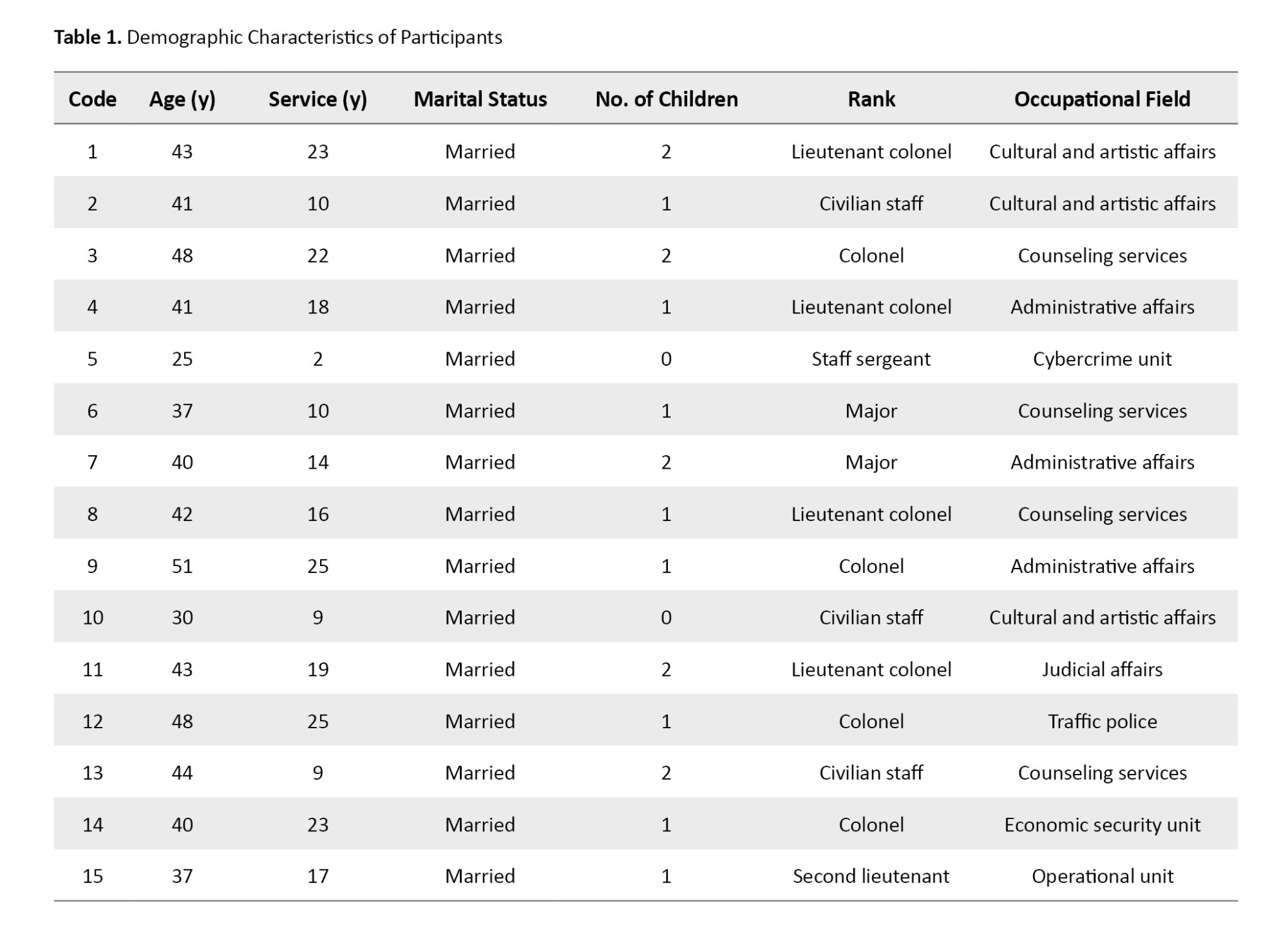
As shown in Table 1, the participants ranged in age from 25 to 51 years (mean age=40 years), with 33% aged 25–35, 47% aged 36–45, and 20% aged 46–51. Their years of service ranged from 2 to 25 years (mean=15.6 years), with 27% having 2–10 years of experience, 40% having 11–20 years, and 33% having over 20 years. All participants were married, and most (80%) had one or two children. The sample included both commissioned and non-commissioned officers: 20% were civilian staff, 27% were non-commissioned officers (staff sergeant to sergeant first class), and 53% were commissioned officers (lieutenant to colonel). Participants represented diverse occupational fields, including administrative affairs (20%), counseling services (20%), cultural and artistic affairs (13%), judicial responsibilities (7%), traffic policing (7%), cybercrime (7%), economic security (7%), and operational units (19%). This diversity provided a broad cross-section of perspectives within the police force.
Themes
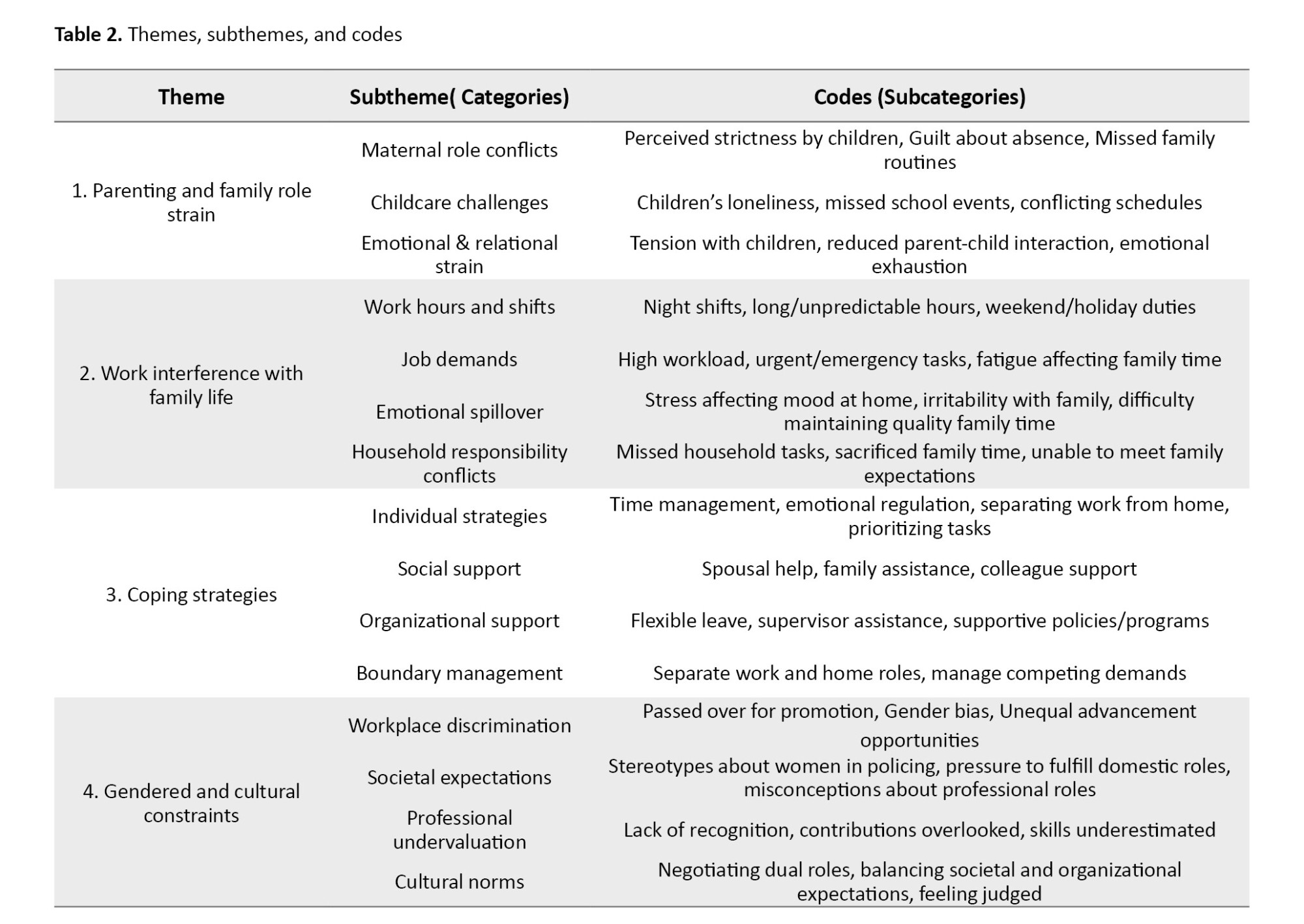
Analysis of the qualitative data revealed four main themes, 15 subthemes, and 45 initial codes capturing the central dimensions of work–family conflict among female police officers. These themes represent the key challenges, coping strategies, and contextual factors shaping participants’ experiences. Table 2 provides a detailed overview of the themes, subthemes, and associated codes.
Theme 1: Parenting and family role strain
Participants described tension between professional responsibilities and maternal roles, which frequently led to guilt, relational strain, and emotional exhaustion. This theme encompassed maternal role conflicts, childcare challenges, and emotional and relational strain. In maternal role conflicts, participants reported children perceiving them as overly strict, guilt about being absent, and missed family routines. For example, one participant shared: “When my child reached adolescence, he said: ‘Because you’re a police officer, you always give orders!’ This negatively affected our relationship” (participants 4 [P. 4]).
In childcare challenges, participants described children’s loneliness, missed school events, and conflicting schedules due to work demands, illustrating how maternal responsibilities were disrupted by professional obligations. In emotional & relational strain, participants experienced tension with children, reduced parent–child interaction, and emotional exhaustion from balancing family and work responsibilities. These experiences highlight how dual roles create both practical and emotional strain for female officers, affecting family dynamics and professional identity.
Theme 2: Work interference with family life
The demanding nature of policing—long and unpredictable hours, night shifts, and weekend or holiday duties—directly interfered with family life. This theme included work hours and shifts, job demands, emotional spillover, and household responsibility conflicts.
Work hours and shifts disrupted family routines and limited time with children, while job demands, such as high workloads, urgent tasks, and fatigue affected participants’ ability to meet family responsibilities. Emotional spillover occurred when work stress impacted mood at home, caused irritability, and reduced quality family time. For instance:
“Some days, despite all planning, I still can’t manage all my responsibilities, and this stress exhausts me” (P. 9).
Household responsibility conflicts reflected missed household tasks, sacrificed family time, and the inability to meet family expectations due to work pressures. This theme captures the direct effect of occupational demands on family life, highlighting the emotional and practical consequences of work interference.
Theme 3: Coping strategies
Participants employed strategies at multiple levels to mitigate work–family conflict. This theme included individual strategies, social support, organizational support, and boundary management.
At the individual level, participants used time management, emotional regulation, prioritization of tasks, and separating work from home responsibilities. Social support came from spouses, extended family, and colleagues, particularly for those married to military personnel with shared understanding of job demands.
Organizational support included flexible leave policies, supervisor assistance, and supportive programs that helped participants reduce conflict and maintain work–family balance. In boundary management, participants deliberately separated professional and family roles and managed competing demands to preserve well-being. As one participant noted:
“I try not to bring work stress home, although sometimes it’s difficult” (P. 11).
This theme illustrates how participants leveraged both personal strategies and external resources to cope effectively with work–family conflict.
Theme 4: Gendered and cultural constraints
Cultural norms, gender stereotypes, and organizational structures intensified work–family conflict, shaping participants’ experiences and coping strategies. This theme included workplace discrimination, societal expectations, professional undervaluation, and cultural norms.
Participants described workplace discrimination, including being passed over for promotion, experiencing gender bias, and unequal advancement opportunities. Societal expectations involved stereotypes about women in policing, pressure to fulfill domestic roles, and misconceptions about professional responsibilities. Professional undervaluation reflected lack of recognition, overlooked contributions, and underestimated skills.
In cultural norms, participants highlighted the challenges of negotiating dual roles, balancing societal and organizational expectations, and feeling judged by others. One participant reflected:
“People are surprised when they learn I have a PhD in psychology and work in the police! They think police means only moral policing” (P. 8).
This theme demonstrates how gendered and cultural factors compounded work–family conflict and shaped the strategies participants used to manage professional and family responsibilities.
Example of coding process
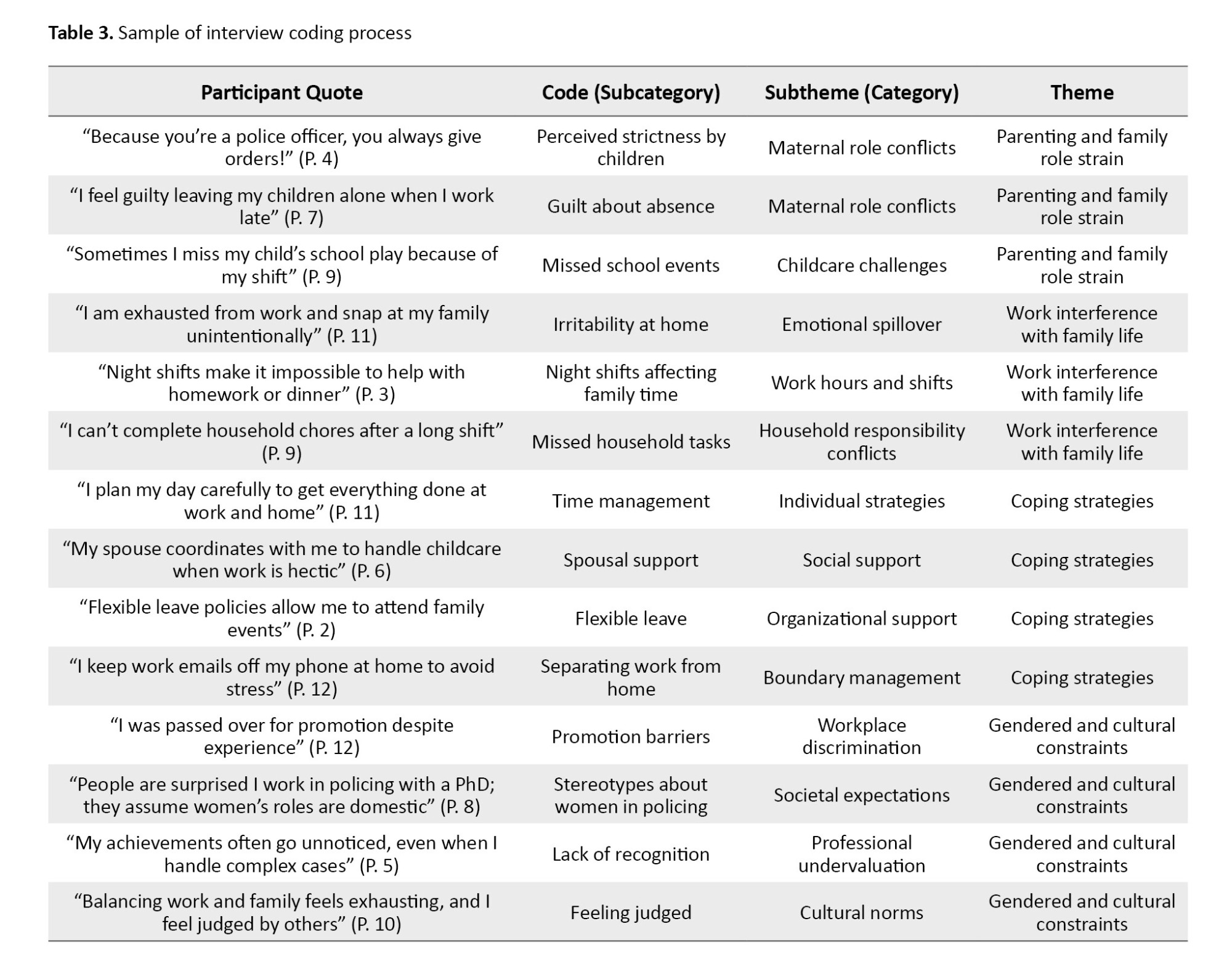
To illustrate the analytic approach, Table 3 shows examples of how participant statements were coded and consolidated into categories and themes. The overall results from this analysis demonstrate that work–family conflict among female police officers is multidimensional, shaped by occupational demands, parenting responsibilities, coping resources, and gendered organizational culture. Parenting and work interference emerged as the most salient stressors, while coping strategies and supportive social networks played a critical mitigating role. Gendered and cultural constraints further complicated the negotiation of professional and familial roles, highlighting the need for targeted organizational policies and family-friendly interventions.
Discussion
This study explored the lived experiences of Iranian female police officers in managing the dual demands of professional and family life. Four major themes emerged—parenting and family role strain, work interference with family life, coping strategies, and gendered and cultural constraints—which together illustrate the multidimensional nature of work–family conflict in this unique occupational and cultural context.
A central finding was the persistent tension between maternal responsibilities and occupational duties. Participants described feelings of guilt, strained relationships with children, and challenges in coordinating family schedules. These experiences align with Role Theory, which posits that role strain occurs when expectations from multiple domains—here, work and family—are incompatible. While studies in other contexts (e.g. India [23]; Canada [24]) also emphasize childcare strain, the Iranian case is intensified by cultural and religious norms that position women as primary caregivers, even when employed in demanding professions. Unlike some Western contexts where institutional childcare support is more common, participants in Iran reported a lack of accessible childcare services and inflexible shift patterns, which reinforced role conflict.
Participants consistently highlighted the intrusion of work into family life, especially due to irregular hours, night shifts, and emotionally draining duties. These findings resonate with Abdullah et al. study in Pakistan [21], which found strong correlations between policing and mental health strain, and with research in India showing job stress as a key driver of work–family conflict [22, 23]. However, the Iranian context introduces unique dynamics: policing often involves moral enforcement and public order tasks shaped by sociocultural values, which increase both workload and emotional stress. As participants noted, the inability to request leave or manage urgent family needs without penalty exacerbated conflict. This reflects an institutional culture that prioritizes operational efficiency over family well-being, leaving women disproportionately disadvantaged.
To navigate these conflicts, officers employed individual (time management, emotional regulation), social (spousal and extended family support), and limited organizational strategies (occasional flexible leave). These findings echo those of Sadeghi and Shayegan [20], who documented the buffering role of family support in Iran’s collectivist culture. Extended kinship networks—particularly grandparents—often compensated for absent mothers, reflecting a culturally embedded coping mechanism less visible in individualistic societies. Yet, reliance on family support cannot fully offset structural barriers. Comparative studies, such as those from Canada [24] and Nigeria [25], demonstrate the value of institutional interventions—childcare facilities, flexible scheduling, and counseling services—that reduce work–family strain. Evidence-based reforms for Iran could include:
1) Establishing on-site childcare centers at police stations; 2) offering flexible or rotational shift scheduling for mothers of young children; 3) providing psychological support programs tailored to female officers.
Finally, participants described systemic gender discrimination, limited promotional opportunities, and societal stereotypes about women in uniform. These findings parallel international evidence from Nigeria [25] and Canada [24], where female officers also report sexism and organizational barriers. However, in Iran, these constraints are amplified by cultural and religious expectations that emphasize women’s domestic responsibilities and question their suitability for policing roles. For example, participants noted that their professional achievements were often overshadowed by assumptions that they belonged primarily in moral policing or administrative duties. Role Theory helps explain this conflict: the “police officer role” is culturally coded as masculine, while the “wife/mother role” is coded as feminine, creating structural incompatibility that women must negotiate daily.
By explicitly applying role theory, this study highlights how overlapping and often contradictory role expectations intensify work–family conflict for female police officers. While the phenomenon is global, the Iranian case illustrates how cultural and religious contexts exacerbate role strain. The persistence of traditional gender norms, lack of institutional childcare, and rigid work structures reinforce the incompatibility between family and professional roles.
To mitigate these challenges, multi-level interventions are essential:
1) Family level: Encouraging spousal cooperation and broader familial involvement in childcare, supported by public awareness campaigns that normalize shared domestic responsibilities; 2) Organizational level: Implementing gender-sensitive reforms, including flexible shifts, childcare services, and transparent promotion pathways; 3) Policy level: Institutionalizing family-friendly labor policies across law enforcement, drawing on successful models from countries such as Canada and India.
Conclusion
This study provides a multidimensional understanding of how Iranian policewomen negotiate the competing demands of professional and family life within a context shaped by cultural expectations and structural constraints. While adaptive strategies and strong family networks enable some balance, the persistence of organizational inflexibility and gendered norms reinforces role strain and limits women’s full professional participation. Based on participants’ lived experiences, several actionable reforms are recommended. At the organizational level, policies should include flexible and rotational shift schedules for mothers, on-site childcare facilities, and transparent, merit-based promotion pathways to reduce gender disparities. At the societal level, public education campaigns and positive media representation of women in law enforcement can help challenge stereotypes and normalize women’s presence in diverse policing roles. Precedents from countries, such as Canada, where family-friendly policies have improved female officers’ retention, and India, where awareness campaigns have broadened acceptance of women in uniform, offer useful models for adaptation in Iran. In conclusion, addressing gendered work–family conflicts is not only essential for the welfare of female officers but also for the overall efficiency and resilience of policing institutions. Meaningful reform requires coordinated action at organizational, cultural, and policy levels to ensure that policewomen are supported both as professionals and as family members.
Limitation
This study has several limitations. The small purposive sample of 15 participants, all of whom were married, restricts the transferability of findings and excludes the perspectives of unmarried, divorced, or younger officers whose experiences may differ significantly. The reliance on self-reported narratives also introduces the possibility of recall or social desirability bias. To strengthen future research, larger and more diverse samples are needed, along with the inclusion of male colleagues and supervisors to provide a broader organizational perspective. Employing mixed-method and longitudinal designs would further enhance understanding of how work–family conflict and coping strategies develop across different stages of policewomen’s careers.
Ethical Considerations
Compliance with ethical guidelines
This study was approved by the Ethics Committee of Qom University, Qom, Iran (Code: IR.QOM.REC.1404.003) and was conducted in accordance with the ethical principles outlined in the Declaration of Helsinki. Verbal informed consent was obtained from all participants after they were informed about the study’s purpose, procedures, and their right to withdraw at any time.
Funding
This research received no specific grant from any funding agency in the public, commercial, or not-for-profit sectors.
Authors contributions
Writing the original draft, review, editing and supervision: Elham Fathi; Data collection: Fatemeh Farajzadeh Chamani; Conceptualization, methodology, investigation and data analysis: All authors.
Conflict of interest
The authors declared no conflict of interest.
Acknowledgements
The authors would like to sincerely thank all the policewomen who generously shared their time and experiences for this study. Their openness and trust made this research possible.
References
Work–family conflict is a form of role conflict that occurs when demands from professional and family domains are incompatible, making it difficult for individuals to fulfill expectations in both spheres [1, 2]. Role theory explains this phenomenon by emphasizing that individuals simultaneously occupy multiple social roles—such as professional, parental, and spousal—and that each role carries its own set of expectations and obligations. When the demands of these roles are incompatible, such as when occupational responsibilities interfere with family duties, individuals experience strain. Over time, this strain may manifest as emotional exhaustion, reduced performance in one or more domains, and heightened interpersonal conflict, making work–family conflict an almost inevitable outcome [3]. In policing, where officers are responsible for public safety, law enforcement, and crime prevention, the intersection of professional and family responsibilities creates heightened tension and stress. Research indicates that police officers frequently experience work–family conflict due to long-term or distant assignments that separate them from their families, increasing psychological strain and reducing motivation and job satisfaction. Imbalances between professional and familial roles can predict burnout, as unresolved work-related issues often carry over into the home, limiting officers’ ability to meet family obligations. This inability to fulfill family role expectations can, in turn, generate family conflict, adding another layer of stress for officers [4–7].
For women in policing, these challenges are compounded by gendered organizational cultures and societal expectations. Police institutions remain largely male-dominated, often characterized by hierarchical structures, rigid masculinity, and systemic gender bias. Female officers frequently encounter barriers, such as unequal career advancement, inadequate organizational support, and various forms of discrimination or harassment. Beyond the workplace, traditional gender norms continue to assign women primary responsibility for domestic and caregiving roles, creating a dual burden that heightens the risk of work–family conflict. The result is a cycle of strain in which professional and family responsibilities directly compete, undermining both personal well-being and professional performance [8-12].
In Iran, women now serve in diverse law enforcement roles, ranging from precinct duties to specialized units [13]. Their presence is increasingly recognized as vital for addressing issues related to social security, vulnerable populations, younger offenders and gender-sensitive policing [14-16]. Nevertheless, female officers continue to face numerous challenges rooted in cultural expectations, restrictive norms, and organizational barriers. Prior Iranian studies have identified factors, such as social prejudice, religious issues, biased job assignments, and limited opportunities for promotion as sources of stress and dissatisfaction [17-20]. Despite these valuable insights, much of the existing research remains descriptive or focused on specific occupational contexts, leaving gaps in understanding the broader phenomenon of work–family conflict among female officers.
Studies in other countries consistently demonstrate that work–family conflict among female police officers is closely tied to broader issues of occupational stress, gender inequality, and discrimination. For example, research in Pakistan has shown a significant association between work–family conflict and mental health problems among married female officers [21]. At the same time, findings from India indicate that job stress both heightens this conflict and undermines job satisfaction, underscoring the need for targeted psychological and organizational interventions [22, 23]. Similarly, Canadian studies highlight persistent gendered disparities in policing: female officers frequently report experiencing daily sexism and relying on adaptive coping strategies that can lead to their experience of not feeling well at home, whereas many male officers tend to dismiss or deny the existence of gender bias [24]. Qualitative research in Nigeria further illustrates the systemic nature of these challenges, documenting gender discrimination, sexual harassment, and entrenched organizational barriers that collectively reinforce work–family conflict and highlight the urgency of policy reform and gender-sensitive practices [25].
These findings confirm that work–family conflict is not only a personal issue but also a structural and cultural problem within policing worldwide. However, the Iranian context adds unique layers of complexity due to cultural norms, gender roles, and organizational structures that shape women’s experiences in distinctive ways.
Despite valuable Iranian studies identifying stressors, such as social prejudice, restrictive cultural expectations, religious considerations, and limited promotional opportunities, these works remain largely descriptive and rarely address the intersection of professional and family domains. The present study, therefore, makes a novel contribution by qualitatively exploring work–family conflict among Iranian policewomen with a focus on how organizational, cultural, and familial factors interact in shaping their lived experiences. By situating these findings within both national and international scholarship, this study extends the global understanding of work–family conflict while highlighting the culturally specific challenges faced by women in Iran’s police force.
Materials and Methods
Research methodology
This study adopted a qualitative content analysis approach to explore the experiences of female police officers regarding work–family conflict. Semi-structured interviews were conducted to capture participants’ narratives in their own words, allowing for flexibility and probing while maintaining consistency across interviews. Conventional content analysis was chosen so that categories and themes could emerge inductively from the data rather than being imposed by pre-existing theories or frameworks [26]. The analytic process itself was inductive, ensuring that participants’ lived experiences guided theme development.
Study population and sampling
The study population comprised female officers employed in the law enforcement agency of Gilan Province, Iran. Participants were recruited through purposive and snowball sampling to ensure relevance and richness of data. Initial participants were identified through professional networks and organizational contacts, and subsequent participants were recommended by interviewees who met the inclusion criteria. Inclusion criteria required that participants: (1) be female, (2) currently employed in law enforcement, (3) have at least two years of work experience to ensure sufficient exposure to work–family dynamics, and (4) have personally experienced or observed work–family conflict. This ensured the sample’s alignment with the study objectives and reduced the risk of including participants with limited relevant experiences. A total of 15 female police officers, from diverse divisions (e.g. administrative, cybercrime, economic security) and with varying ranks (from officer to colonel), were interviewed. Each interview lasted on average 45–60 minutes, and follow-up calls were conducted with three participants for the clarification of key points. All interviews were audio-recorded and transcribed verbatim.
Data collection
An interview guide consisting of broad, open-ended questions was used to elicit in-depth accounts of participants’ experiences. Example questions included: “Can you describe a time when your work interfered with your family life?” and “What strategies have you used to balance work and family responsibilities?” The interviewer probed for further detail and clarification as needed. This flexible structure ensured consistency while allowing participants to elaborate freely. Data collection continued until theoretical saturation was reached, defined as the point at which no new codes or themes emerged during coding and analysis. Saturation was assessed through iterative team discussions and independent reviews of coded transcripts.
Data analysis
Data were analyzed using conventional qualitative content analysis [26]. The process began with repeated readings of transcripts to achieve immersion. Two researchers independently conducted open coding, identifying keywords, phrases, and segments of text. Codes were inductively generated rather than derived from a pre-established framework. A preliminary codebook was developed collaboratively and iteratively refined through constant comparison across transcripts. Related codes were grouped into categories, and categories were consolidated into broader themes through consensus discussions. The coding process was done manually. Discrepancies between coders were discussed until agreement was reached, and when consensus could not be achieved, a third senior researcher adjudicated. Themes were validated by revisiting transcripts and through member checking with selected participants to ensure alignment with their perspectives.
Ethical considerations
The study adhered to ethical research standards. Before interviews, participants were informed of the study’s aims, procedures, and their right to withdraw at any stage without repercussions. Written and verbal informed consent was obtained. To protect confidentiality, participants’ names and identifying details were replaced with numerical codes during transcription and analysis. The use of these codes was solely for organizational purposes and did not compromise anonymity.
Trustworthiness of findings
To enhance rigor, Silverman’s criteria were applied [27]:
Prolonged engagement: Data collection and iterative analysis continued until saturation was reached, with no emergence of new themes. Dual coding: Two researchers independently coded all transcripts and compared the results to enhance reliability and reduce individual bias. Persistent observation: Detailed field notes were maintained to complement interview transcripts and capture contextual nuances. Member checking: Summaries of key findings were shared with several participants, who confirmed that the interpretations reflected their experiences. Transparency of process: Disagreements in coding were resolved through consensus or third-party adjudication, and the full coding process was documented for auditability.
Results
Demographic characteristics of participants
As shown in Table 1, the participants ranged in age from 25 to 51 years (mean age=40 years), with 33% aged 25–35, 47% aged 36–45, and 20% aged 46–51. Their years of service ranged from 2 to 25 years (mean=15.6 years), with 27% having 2–10 years of experience, 40% having 11–20 years, and 33% having over 20 years. All participants were married, and most (80%) had one or two children. The sample included both commissioned and non-commissioned officers: 20% were civilian staff, 27% were non-commissioned officers (staff sergeant to sergeant first class), and 53% were commissioned officers (lieutenant to colonel). Participants represented diverse occupational fields, including administrative affairs (20%), counseling services (20%), cultural and artistic affairs (13%), judicial responsibilities (7%), traffic policing (7%), cybercrime (7%), economic security (7%), and operational units (19%). This diversity provided a broad cross-section of perspectives within the police force.
Themes
Analysis of the qualitative data revealed four main themes, 15 subthemes, and 45 initial codes capturing the central dimensions of work–family conflict among female police officers. These themes represent the key challenges, coping strategies, and contextual factors shaping participants’ experiences. Table 2 provides a detailed overview of the themes, subthemes, and associated codes.
Theme 1: Parenting and family role strain
Participants described tension between professional responsibilities and maternal roles, which frequently led to guilt, relational strain, and emotional exhaustion. This theme encompassed maternal role conflicts, childcare challenges, and emotional and relational strain. In maternal role conflicts, participants reported children perceiving them as overly strict, guilt about being absent, and missed family routines. For example, one participant shared: “When my child reached adolescence, he said: ‘Because you’re a police officer, you always give orders!’ This negatively affected our relationship” (participants 4 [P. 4]).
In childcare challenges, participants described children’s loneliness, missed school events, and conflicting schedules due to work demands, illustrating how maternal responsibilities were disrupted by professional obligations. In emotional & relational strain, participants experienced tension with children, reduced parent–child interaction, and emotional exhaustion from balancing family and work responsibilities. These experiences highlight how dual roles create both practical and emotional strain for female officers, affecting family dynamics and professional identity.
Theme 2: Work interference with family life
The demanding nature of policing—long and unpredictable hours, night shifts, and weekend or holiday duties—directly interfered with family life. This theme included work hours and shifts, job demands, emotional spillover, and household responsibility conflicts.
Work hours and shifts disrupted family routines and limited time with children, while job demands, such as high workloads, urgent tasks, and fatigue affected participants’ ability to meet family responsibilities. Emotional spillover occurred when work stress impacted mood at home, caused irritability, and reduced quality family time. For instance:
“Some days, despite all planning, I still can’t manage all my responsibilities, and this stress exhausts me” (P. 9).
Household responsibility conflicts reflected missed household tasks, sacrificed family time, and the inability to meet family expectations due to work pressures. This theme captures the direct effect of occupational demands on family life, highlighting the emotional and practical consequences of work interference.
Theme 3: Coping strategies
Participants employed strategies at multiple levels to mitigate work–family conflict. This theme included individual strategies, social support, organizational support, and boundary management.
At the individual level, participants used time management, emotional regulation, prioritization of tasks, and separating work from home responsibilities. Social support came from spouses, extended family, and colleagues, particularly for those married to military personnel with shared understanding of job demands.
Organizational support included flexible leave policies, supervisor assistance, and supportive programs that helped participants reduce conflict and maintain work–family balance. In boundary management, participants deliberately separated professional and family roles and managed competing demands to preserve well-being. As one participant noted:
“I try not to bring work stress home, although sometimes it’s difficult” (P. 11).
This theme illustrates how participants leveraged both personal strategies and external resources to cope effectively with work–family conflict.
Theme 4: Gendered and cultural constraints
Cultural norms, gender stereotypes, and organizational structures intensified work–family conflict, shaping participants’ experiences and coping strategies. This theme included workplace discrimination, societal expectations, professional undervaluation, and cultural norms.
Participants described workplace discrimination, including being passed over for promotion, experiencing gender bias, and unequal advancement opportunities. Societal expectations involved stereotypes about women in policing, pressure to fulfill domestic roles, and misconceptions about professional responsibilities. Professional undervaluation reflected lack of recognition, overlooked contributions, and underestimated skills.
In cultural norms, participants highlighted the challenges of negotiating dual roles, balancing societal and organizational expectations, and feeling judged by others. One participant reflected:
“People are surprised when they learn I have a PhD in psychology and work in the police! They think police means only moral policing” (P. 8).
This theme demonstrates how gendered and cultural factors compounded work–family conflict and shaped the strategies participants used to manage professional and family responsibilities.
Example of coding process
To illustrate the analytic approach, Table 3 shows examples of how participant statements were coded and consolidated into categories and themes. The overall results from this analysis demonstrate that work–family conflict among female police officers is multidimensional, shaped by occupational demands, parenting responsibilities, coping resources, and gendered organizational culture. Parenting and work interference emerged as the most salient stressors, while coping strategies and supportive social networks played a critical mitigating role. Gendered and cultural constraints further complicated the negotiation of professional and familial roles, highlighting the need for targeted organizational policies and family-friendly interventions.
Discussion
This study explored the lived experiences of Iranian female police officers in managing the dual demands of professional and family life. Four major themes emerged—parenting and family role strain, work interference with family life, coping strategies, and gendered and cultural constraints—which together illustrate the multidimensional nature of work–family conflict in this unique occupational and cultural context.
A central finding was the persistent tension between maternal responsibilities and occupational duties. Participants described feelings of guilt, strained relationships with children, and challenges in coordinating family schedules. These experiences align with Role Theory, which posits that role strain occurs when expectations from multiple domains—here, work and family—are incompatible. While studies in other contexts (e.g. India [23]; Canada [24]) also emphasize childcare strain, the Iranian case is intensified by cultural and religious norms that position women as primary caregivers, even when employed in demanding professions. Unlike some Western contexts where institutional childcare support is more common, participants in Iran reported a lack of accessible childcare services and inflexible shift patterns, which reinforced role conflict.
Participants consistently highlighted the intrusion of work into family life, especially due to irregular hours, night shifts, and emotionally draining duties. These findings resonate with Abdullah et al. study in Pakistan [21], which found strong correlations between policing and mental health strain, and with research in India showing job stress as a key driver of work–family conflict [22, 23]. However, the Iranian context introduces unique dynamics: policing often involves moral enforcement and public order tasks shaped by sociocultural values, which increase both workload and emotional stress. As participants noted, the inability to request leave or manage urgent family needs without penalty exacerbated conflict. This reflects an institutional culture that prioritizes operational efficiency over family well-being, leaving women disproportionately disadvantaged.
To navigate these conflicts, officers employed individual (time management, emotional regulation), social (spousal and extended family support), and limited organizational strategies (occasional flexible leave). These findings echo those of Sadeghi and Shayegan [20], who documented the buffering role of family support in Iran’s collectivist culture. Extended kinship networks—particularly grandparents—often compensated for absent mothers, reflecting a culturally embedded coping mechanism less visible in individualistic societies. Yet, reliance on family support cannot fully offset structural barriers. Comparative studies, such as those from Canada [24] and Nigeria [25], demonstrate the value of institutional interventions—childcare facilities, flexible scheduling, and counseling services—that reduce work–family strain. Evidence-based reforms for Iran could include:
1) Establishing on-site childcare centers at police stations; 2) offering flexible or rotational shift scheduling for mothers of young children; 3) providing psychological support programs tailored to female officers.
Finally, participants described systemic gender discrimination, limited promotional opportunities, and societal stereotypes about women in uniform. These findings parallel international evidence from Nigeria [25] and Canada [24], where female officers also report sexism and organizational barriers. However, in Iran, these constraints are amplified by cultural and religious expectations that emphasize women’s domestic responsibilities and question their suitability for policing roles. For example, participants noted that their professional achievements were often overshadowed by assumptions that they belonged primarily in moral policing or administrative duties. Role Theory helps explain this conflict: the “police officer role” is culturally coded as masculine, while the “wife/mother role” is coded as feminine, creating structural incompatibility that women must negotiate daily.
By explicitly applying role theory, this study highlights how overlapping and often contradictory role expectations intensify work–family conflict for female police officers. While the phenomenon is global, the Iranian case illustrates how cultural and religious contexts exacerbate role strain. The persistence of traditional gender norms, lack of institutional childcare, and rigid work structures reinforce the incompatibility between family and professional roles.
To mitigate these challenges, multi-level interventions are essential:
1) Family level: Encouraging spousal cooperation and broader familial involvement in childcare, supported by public awareness campaigns that normalize shared domestic responsibilities; 2) Organizational level: Implementing gender-sensitive reforms, including flexible shifts, childcare services, and transparent promotion pathways; 3) Policy level: Institutionalizing family-friendly labor policies across law enforcement, drawing on successful models from countries such as Canada and India.
Conclusion
This study provides a multidimensional understanding of how Iranian policewomen negotiate the competing demands of professional and family life within a context shaped by cultural expectations and structural constraints. While adaptive strategies and strong family networks enable some balance, the persistence of organizational inflexibility and gendered norms reinforces role strain and limits women’s full professional participation. Based on participants’ lived experiences, several actionable reforms are recommended. At the organizational level, policies should include flexible and rotational shift schedules for mothers, on-site childcare facilities, and transparent, merit-based promotion pathways to reduce gender disparities. At the societal level, public education campaigns and positive media representation of women in law enforcement can help challenge stereotypes and normalize women’s presence in diverse policing roles. Precedents from countries, such as Canada, where family-friendly policies have improved female officers’ retention, and India, where awareness campaigns have broadened acceptance of women in uniform, offer useful models for adaptation in Iran. In conclusion, addressing gendered work–family conflicts is not only essential for the welfare of female officers but also for the overall efficiency and resilience of policing institutions. Meaningful reform requires coordinated action at organizational, cultural, and policy levels to ensure that policewomen are supported both as professionals and as family members.
Limitation
This study has several limitations. The small purposive sample of 15 participants, all of whom were married, restricts the transferability of findings and excludes the perspectives of unmarried, divorced, or younger officers whose experiences may differ significantly. The reliance on self-reported narratives also introduces the possibility of recall or social desirability bias. To strengthen future research, larger and more diverse samples are needed, along with the inclusion of male colleagues and supervisors to provide a broader organizational perspective. Employing mixed-method and longitudinal designs would further enhance understanding of how work–family conflict and coping strategies develop across different stages of policewomen’s careers.
Ethical Considerations
Compliance with ethical guidelines
This study was approved by the Ethics Committee of Qom University, Qom, Iran (Code: IR.QOM.REC.1404.003) and was conducted in accordance with the ethical principles outlined in the Declaration of Helsinki. Verbal informed consent was obtained from all participants after they were informed about the study’s purpose, procedures, and their right to withdraw at any time.
Funding
This research received no specific grant from any funding agency in the public, commercial, or not-for-profit sectors.
Authors contributions
Writing the original draft, review, editing and supervision: Elham Fathi; Data collection: Fatemeh Farajzadeh Chamani; Conceptualization, methodology, investigation and data analysis: All authors.
Conflict of interest
The authors declared no conflict of interest.
Acknowledgements
The authors would like to sincerely thank all the policewomen who generously shared their time and experiences for this study. Their openness and trust made this research possible.
References
- Pradhan S. Occupational stress, burnout, work-family conflict, and quality of life among police personnel working in Ranchi [master thesis]. Ranchi: Central Institute of Psychiatry; 2021. [Link]
- Fridayanti H, Indyastuti DL, Anggraeni AI. The effect of work-family conflict on the job stress of the country’s civil apparatus with locus of control as a moderator. International Conference on Research of Educational Administration and Management. 2021; 5(1):269-78. [Link]
- Anglin AH, Kincaid PA, Short JC, Allen DG. Role theory perspectives: Past, present, and future applications of role theories in management research. Journal of Management. 2022; 48(6):1469-502. [DOI:10.1177/01492063221081442]
- Duxbury L, Bardoel E, Halinski M. Bringing the badge home: Exploring the relationship between role overload, work-family conflict, and stress in police officers. Policing and Society. 2021; 31(8):997-1016. [DOI:10.1080/10439463.2020.1822837]
- Karatepe OK, Karadas G. Service employees’ fit, work-family conflict, and work engagement. Journal of Services Marketing. 2016; 30(5):547-60. [DOI:10.1108/JSM-02-2015-0066]
- Lambert EG, Qureshi H, Keena LD, Frank J, Hogan NL. Exploring the link between work-family conflict and job burnout among Indian police officers. The Police Journal: Theory, Practice and Principles. 2019; 92(1):35-55. [DOI:10.1177/0032258X18761285]
- Griffin JD, Sun IY. Do work-family conflict and resiliency mediate police stress and burnout: A study of state police officers. American Journal of Criminal Justice. 2018; 43(2):354-70. [DOI:10.1007/s12103-017-9401-y]
- Lander I. Doing the right masculinities right: The police force as gendered practices. In: Lander I, Ravn S, editor. Masculinities in the Criminological Field. Milton Park: Routledge; 2016. [DOI:10.4324/9781315594132-5]
- Van Ewijk AR. Diversity within police forces in Europe: A case for the comprehensive view. Policing. 2012; 6(1):76-92. [DOI:10.1093/police/par048]
- Brown J, Prenzler T, van Ewijk A. Women in policing. Paper presented at: Encyclopedia of criminology and criminal justice. 27 November 2018; New York, US. [DOI:10.1007/978-1-4614-5690-2_293]
- Silvestri M, Tong S. Women police leaders in Europe: A tale of prejudice and patronage. European Journal of Criminology. 2022;19(5):871-90. [DOI:10.1177/1477370820931867]
- Zamani Bab Gohari A, Ghomashi S, Zeraat A. [The role and position of policewomen in crime prevention in the Iranian legal system (Persian) [Master thesis]. Kashan: University of Kashan; 2014. [Link]
- Kazemian S. [A qualitative study on the preventive role of policewomen in increasing the sense of social security after the Kermanshah earthquake (Persian)]. Culture of Counseling and Psychotherapy. 2021; 48(12):123-64. [DOI:10.22054/qccpc.2021.58399.2627]
- E’tesami S, Adibi A. [Prioritization of indicators affecting the presence of policewomen in society from the perspective of law enforcement experts (Persian)]. Women’s Police Studies. 2024; 40(18):83-113 [Link]
- Sefidgar Z. [The role of policewomen in preventing crimes against children (Persian)]. Ghanonyar Journal. 2020; 15(4):58-602. [Link]
- Ahmadi MH. [The role of policewomen in crime prevention: With an emphasis on victimization of children and women (Persian)]. Women’s Police Studies. 2008; 5(1):64-90. [Link]
- Rajabi Tajamir E. [Institutionalization of restorative justice procedures in the police (Persian)]. Criminal Law and Criminology Researches. 2021; 9(18):167-98. [DOI:10.22034/jclc.2021.285164.1496]
- Moradian M, Karimaei A. [Investigation of motivation and occupational challenges of policewomen (Persian)]. Police Woman. 2012; 6(16):34-52. [Link]
- Moradi Siasar G, Amjedian H, Farmani M, Ghobadi A. [Identifying the challenges faced by police in the admission of women to stadiums in the Islamic Republic of Iran (Persian)]. Police Woman. 2021; 15(34):251-71. [Link]
- Sadeghi P, Shayegan F. [Pathology of employing policewomen in special unit missions (with emphasis on community-oriented policing and controlling sports events) (Persian)]. Women’s Police Journal. 2023; 17(39):29-50. [Link]
- Abdullah T, Haq AU, Khan MI. Work-family conflict and its relationship with emotional well-being of working women in the police. Annals of Social Sciences and Perspective. 2023; 4(2):331-40. [DOI:10.52700/assap.v4i2.299]
- Viegas V, Henriques J. Job stress and work-family conflict as correlates of job satisfaction among police officials. Journal of Police and Criminal Psychology. 2021; 36(2):227-35. [DOI:10.1007/s11896-020-09388-w]
- Bhuvaneswari D, Thirumoorthi P. Women police personnel’s work-family conflict and burnout from individual’s experience: The moderating effect of stressful working environment. Indian Journal of Occupational and Environmental Medicine. 2023; 27(4):327-32. [DOI:10.4103/ijoem.ijoem_194_22.] [PMID]
- Murray SE. Seeing and doing gender at work: A qualitative analysis of Canadian male and female police officers. Feminist Criminology. 2020; 16(1):91-109. [DOI:10.1177/1557085120914351]
- Aborisade RA, Ariyo OG. Gendered challenges in the line of duty: Narratives of gender discrimination, sexual harassment and violence against female police officers. Crim Justice Ethics. 2023; 42(3):214-37. [DOI:10.1080/0731129X.2023.2275965]
- Schreier M. Qualitative content analysis in practice. London: SAGE Publications; 2012. [DOI:10.4135/9781529682571]
- Johnson JL, Adkins D, Chauvin S. A review of the quality indicators of rigor in qualitative research. American Journal of Pharmaceutical Education. 2020; 84(1):7120. [DOI:10.5688/ajpe7120] [PMID]
Type of Study: Original Article |
Subject:
Occupational Health
Send email to the article author
| Rights and permissions | |
 |
This work is licensed under a Creative Commons Attribution-NonCommercial 4.0 International License. |

This is an open access article distributed under the terms of the Creative Commons Attribution License (CC-By-NC), which permits use, distribution, and reproduction in any medium, provided the original work is properly cited and is not used for commercial purposes.
Contact Information