Volume 14, Issue 2 (Spring 2026)
Iran J Health Sci 2026, 14(2): 123-136 |
Back to browse issues page



Ethics code: IR.AJUMS.REC.1400.196
Clinical trials code: IR.AJUMS.REC.1400.196


Download citation:
BibTeX | RIS | EndNote | Medlars | ProCite | Reference Manager | RefWorks
Send citation to:


BibTeX | RIS | EndNote | Medlars | ProCite | Reference Manager | RefWorks
Send citation to:
Alijani Renani H, Asadi M, Zarea K, Haghighizadeh M H. Effect of WhatsApp-based Self-care Education on the General Health of Adolescents With Thalassemia: A Quasi-experimental Study. Iran J Health Sci 2026; 14 (2) :123-136
URL: http://jhs.mazums.ac.ir/article-1-1098-en.html
URL: http://jhs.mazums.ac.ir/article-1-1098-en.html


Department of Pediatric Nursing, School of Nursing and Midwifery, Ahvaz Jundishapur University of Medical Sciences, Ahvaz, Iran. , mahboobeh.asadi71ab@gmail.com
Keywords: Thalassemia, Beta thalassemia, Self-care, General health, Adolescents, WhatsApp-based education, Tele-nursing
Full-Text [PDF 1028 kb]
(250 Downloads)
| Abstract (HTML) (1060 Views)
Data collection tools
The data collection tools included a demographic questionnaire and the GHQ. The demographic questionnaire included age, height, weight, gender, ethnicity, education, father’s literacy, economic status, father’s occupation, mother’s occupation, disease, caregiver, and death of first-degree relatives [17]. The 28-item Goldberg and Hillier GHQ (1987) has four subscales: somatic symptoms (questions 1-7), anxiety symptoms (questions 8-14), social dysfunction symptoms (questions 15-21), and depression symptoms (questions 22-28). The scoring method is based on the Likert scale, with higher scores indicating greater impairment in general health [18]. Goldberg and Williams reported a split-half reliability coefficient of 95% for the entire questionnaire on 853 normal volunteers and outpatients in London [19]. Taghavi (2002) reported the reliability of this questionnaire using three methods: test-retest, split-half, and Cronbach’s α, with values of 70%, 93%, and 90%, respectively (Cronbach’s α reliability was above 0.70) [20].
Intervention
After determining the sample size and obtaining informed consent, 62 participants were assigned to the intervention group (31) and the control group (31) using a nonrandom sequential method, as described previously. The researcher visited the thalassemia ward reception daily to invite eligible adolescents to participate in the study.
Control group
Initially, 31 participants were recruited into the control group. These participants received no additional educational intervention beyond the routine care provided at the thalassemia center. In this setting, routine care consisted of standard nursing interactions during blood transfusion visits, including brief verbal advice about medication adherence (e.g. taking iron chelators), appointment reminders, and general hygiene instructions. No structured educational program, written materials, or follow-up beyond medical care was provided as part of routine care. Participants in the control group completed the demographic questionnaire and the GHQ28 at baseline (pre-test). One month later, they completed the same questionnaires again as a post-test. During this one month, they received only routine care with no self-care education from the research team.
Intervention group
After data collection for the control group, 31 eligible participants were recruited to the intervention group. At baseline, they completed a demographic questionnaire and the GHQ28 (pre-test). In addition, a needs assessment questionnaire was administered to identify each participant’s specific educational needs regarding self-care.
Development of the educational intervention
The design and content of the educational intervention were developed through a systematic process. First, a comprehensive review of the literature was conducted using PubMed, Scopus, and SID (Scientific Information Database) with keywords such as “thalassemia,” “self-care,” “Orem,” “adolescent,” and “general health.” Relevant studies, including Madmoli et al. (2018) [11], Sadek et al. (2020) [14], and Badawy et al. (2023) [13], informed the content. Second, the draft content was reviewed and discussed in a panel of four research members (two pediatric nursing faculty members, one clinical nurse specialist in thalassemia, and one health education expert). The panel evaluated the relevance, clarity, and appropriateness of the content for adolescents aged 1220 years. Third, the content was mapped explicitly onto Orem’s self-care model:
Sessions addressing Desferal injection techniques, blood transfusion safety, and complication prevention were designed to reduce self-care deficits (the gap between therapeutic demands and the individual’s ability to meet them).
Sessions addressing stress management, nutrition, marriage, and family formation were designed to enhance self-care agency (the individual’s capability to perform self-care actions).
The validity of the educational content was assessed using a content validity index (CVI) by four research panel members. Each item was rated on relevance, clarity, and simplicity, and the average CVI was 0.89, indicating good content validity. The reliability of the content (i.e. consistency of delivery) was ensured by using a standardized PowerPoint presentation and a written educational booklet, and by having the same researcher deliver all sessions.
Intervention delivery
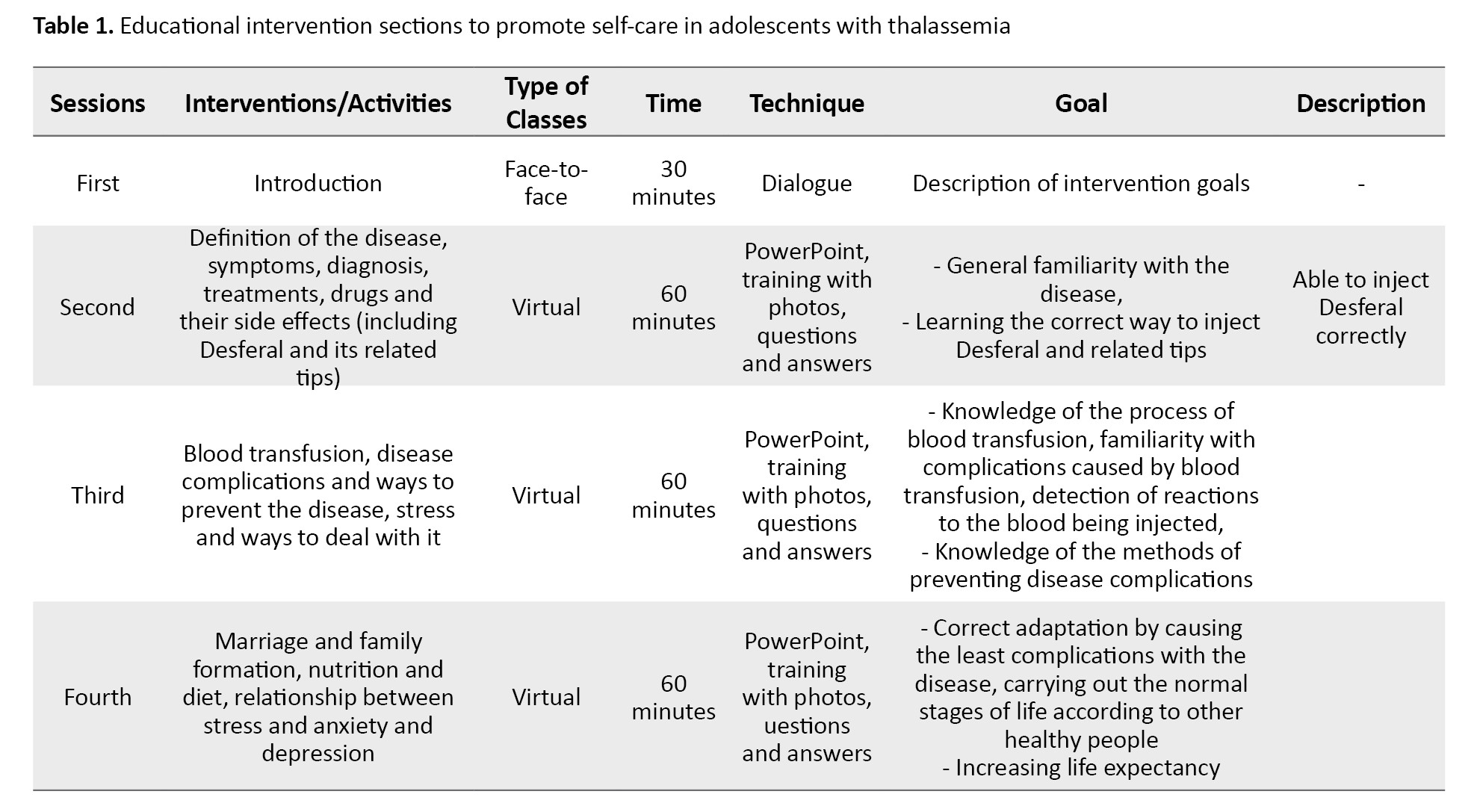
All educational sessions were delivered by the second author, a pediatric nurse with three years of experience in thalassemia care who had received additional training in health education and Orem’s model. The intervention consisted of four weekly sessions, each lasting 4560 minutes. Sessions were delivered in a blended format: one facetoface session (held in the hospital’s blood donation hall) and three sessions conducted virtually via WhatsApp. The WhatsApp platform was chosen for its widespread use among Iranian adolescents, its low cost, and its ability to provide ongoing support and reinforcement between sessions. A dedicated private WhatsApp group was created for the intervention group, and only the researcher and 31 participants were members. Table 1 summarizes session content.
All content was presented in simple, nontechnical language appropriate for adolescents. At the end of each session, a question and answer session was held, and individual clarifications were provided either in the group or via private messages. Each participant also received a printed educational booklet summarizing the content of all four sessions, and private counseling was offered via WhatsApp, if needed.
Prevention of contamination
To minimize the risk of information exchange between the intervention and control groups, participants in the intervention group were explicitly asked to keep the educational content confidential and not to share it with other patients. Moreover, sequential recruitment (control group first, intervention group second) was specifically designed to prevent intervention participants from talking to potential control participants, as the two groups did not overlap in time. However, the authors acknowledge that complete prevention of contamination cannot be guaranteed (e.g. participants might have communicated with peers outside the hospital setting), and this limitation is addressed in the Discussion section. No statistical adjustment for potential contamination was made because the study design did not include a way to measure or model such information exchange.
Control group after the study
To adhere to ethical principles, after the post-test assessments for the intervention group were completed, the same educational booklet and a summary of the WhatsApp content were provided to the control group participants.
To avoid errors in the study, patients in the intervention group were asked to keep intervention details confidential. After the educational sessions and post-test implementation, the educational content was provided to the control group to adhere to ethical principles.
Data analysis
Data were analyzed using SPSS software, version 20 with a significance level of 0.05. All analyses followed the intention-to-treat principle, although the absence of any loss to follow-up meant that per-protocol analyses yielded identical results. Before conducting the main analyses, the normality of the GHQ-28 scores was checked using the Shapiro–Wilk test and visual inspection of histograms and Q-Q plots, and the homogeneity of variances between groups was examined using Levene’s test. For the analysis of covariance (ANCOVA), the assumptions of normality of residuals, homoscedasticity, and homogeneity of regression slopes were tested and satisfied. Independent t-tests and chi-square tests were used to compare the two groups on quantitative and qualitative demographic variables, respectively.
The primary analysis for evaluating the intervention effect on general health was a one‑way ANCOVA. In this model, the post-intervention GHQ-28 total score served as the dependent variable, the pre-intervention GHQ-28 total score was entered as a covariate to control for baseline differences, and group (intervention versus control) was entered as a fixed factor. Because a significant baseline difference in body mass index (BMI) was observed between the two groups, BMI was also included as a second covariate; the group × BMI interaction was tested and found to be non-significant (P=0.55), confirming that BMI did not moderate the intervention effect. The same ANCOVA model was applied separately to each of the four GHQ-28 subscales (somatic symptoms, anxiety, social dysfunction, and depression) as secondary outcomes.
Paired t-tests were performed to examine within-group changes from pre-test to post-test, but the primary conclusion of the study is based on the between-group comparison from the ANCOVA, as this directly tests whether the intervention group improved more than the control group after adjusting for baseline scores. Effect sizes are reported as partial eta squared (η²p) for the ANCOVA results and as Cohen’s d for paired differences, accompanied by 95% confidence intervals (CIs) where applicable. All statistical tests were two-tailed.
Results
As presented in Table 2, the intervention and control groups were comparable at baseline with respect to age, height, and weight, as indicated by independent t-test P values of 0.79, 0.62, and 0.24, respectively.
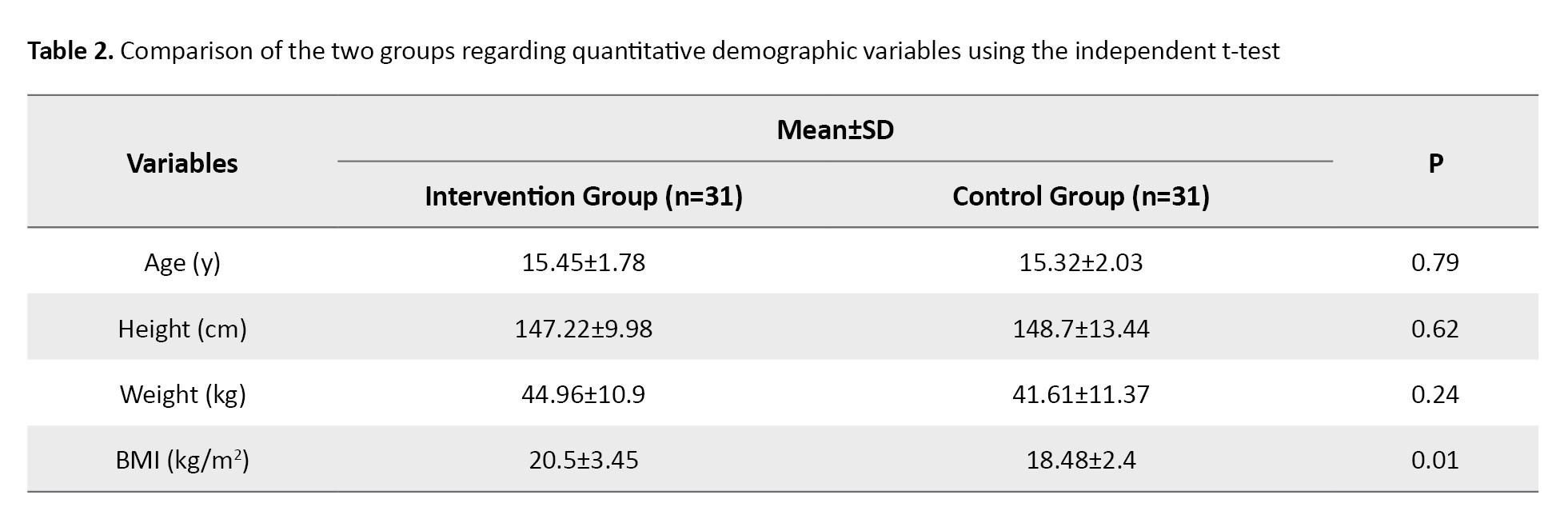
However, a statistically significant difference was observed in BMI, with the intervention group having a higher mean BMI than the control group (20.5±3.5 vs 18.5±2.4 kg/m², P=0.01). Because this baseline difference could potentially confound the intervention effect, BMI was entered as a covariate in the primary ANCOVA model. The ANCOVA results showed that the independent effect of BMI on the post-intervention general health score was not significant [P=0.55), and the group × BMI interaction was also non-significant (F=0.36, P=0.55), indicating that BMI did not moderate the intervention effect. Therefore, the observed difference in BMI between groups did not bias the main findings.
As shown in Table 3, no statistically significant differences were observed between the two groups for any of the qualitative demographic variables (all P>0.05), indicating acceptable homogeneity.
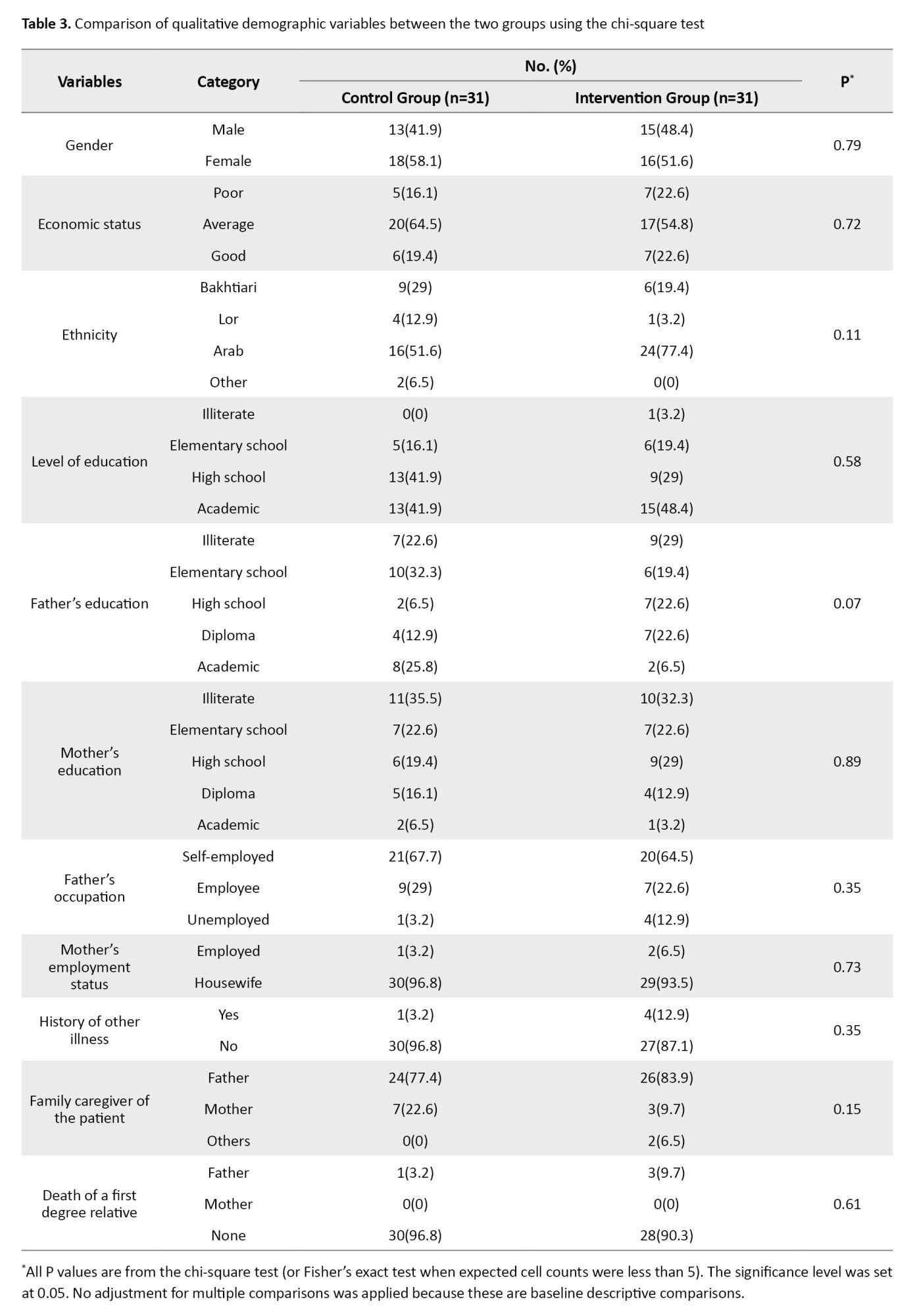
However, the authors acknowledge that for some variables, such as father’s education, the absolute distributions appeared imbalanced despite a non-significant P value (P=0.07). For example, the proportion of fathers with academic education was 25.8% in the control group compared to 6.5% in the intervention group. To ensure that this potential imbalance did not bias the main findings, a sensitivity analysis was conducted by entering father’s education as an additional covariate into the primary ANCOVA model. The results remained essentially unchanged: the group effect on post‑intervention general health remained significant (P<0.001), and the effect size (η²) remained above 0.90. Therefore, the observed imbalance in father’s education did not confound the intervention effect.
Table 4 presents the mean and standard deviation of general health (GHQ28 total score) and its four subscales before and after the intervention for both groups.
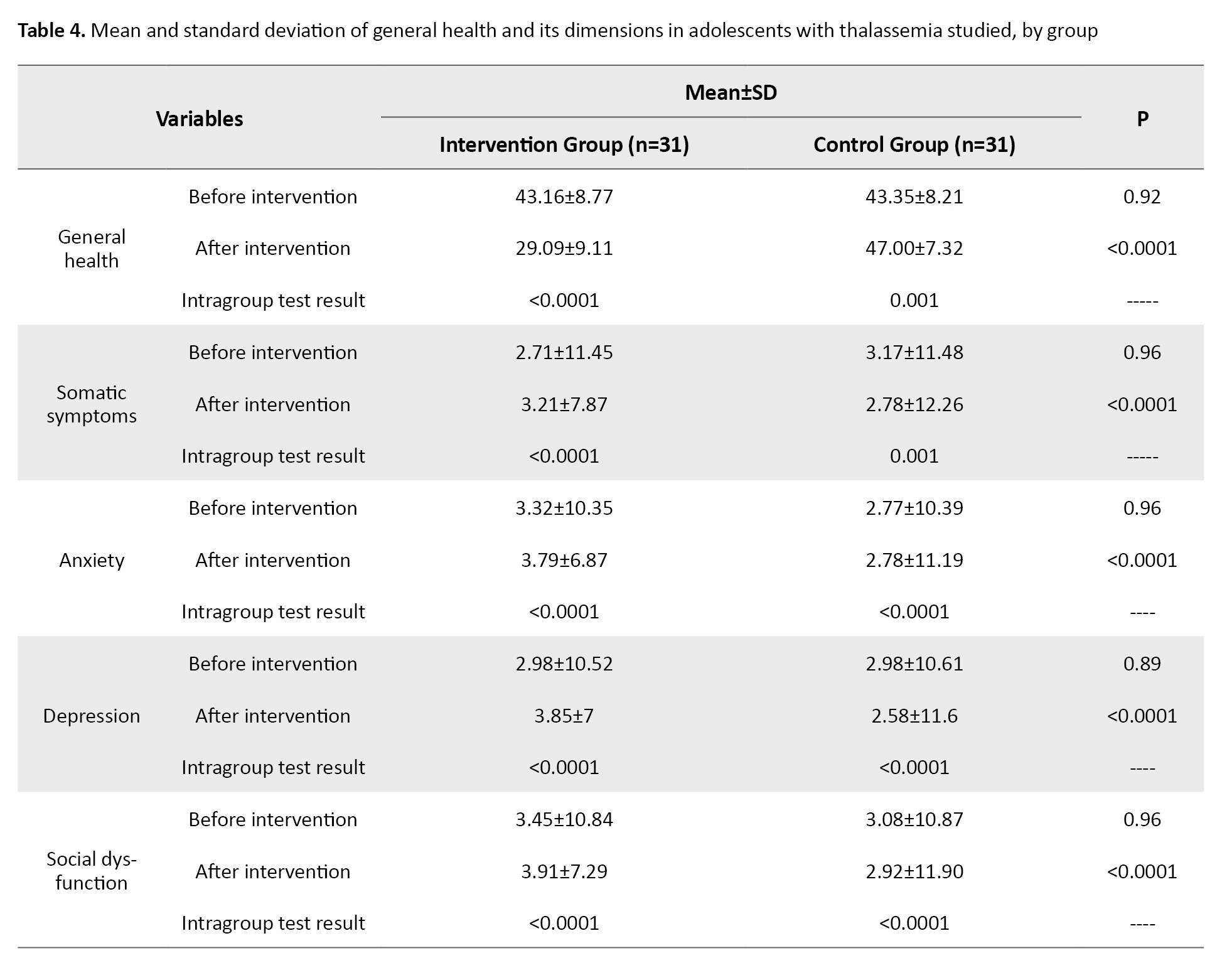
At baseline, there were no significant differences between the intervention and control groups in total general health or any of the subscales (all P>0.05), indicating that the two groups had similar levels of general health before the intervention.
After the intervention, the control group showed a significant worsening in general health (mean total GHQ score increased from 43.4 to 47.0, P=0.001), whereas the intervention group showed a significant improvement (mean total GHQ score decreased from 43.2 to 29.1, P<0.001). The between group difference at post-test was highly significant (P<0.001), favoring the intervention group.
Similar patterns were observed for all four subscales. In the control group, scores on somatic symptoms, anxiety, depression, and social dysfunction all increased significantly from pre-test to post-test (indicating deterioration), while in the intervention group, all subscale scores decreased significantly (indicating improvement). The between group differences at post-test were significant for every subscale (P<0.001). These findings suggest that the self-care education program not only prevented the decline in general health observed in the control group but also actively improved multiple dimensions of health.
To examine the effect of the intervention on general health while controlling for potential confounding variables, a one way ANCOVA was conducted. In this model, the dependent variable was the post intervention total GHQ28 score. The independent variable (fixed factor) was group (intervention versus control). Two variables were entered as covariates: pre intervention total GHQ28 score (to adjust for baseline differences in general health) and BMI (because a significant baseline difference in BMI was observed between the two groups, as reported in Table 2). The ANCOVA model also tested the group × BMI interaction to examine whether the effect of BMI on the outcome differed between groups; this interaction was not significant (F=0.356, P=0.55), confirming that BMI did not moderate the intervention effect.
As shown in Table 5, after controlling for pre-intervention GHQ score and BMI, the effect of group on post intervention general health was highly significant (F=634.19, P<0.001).
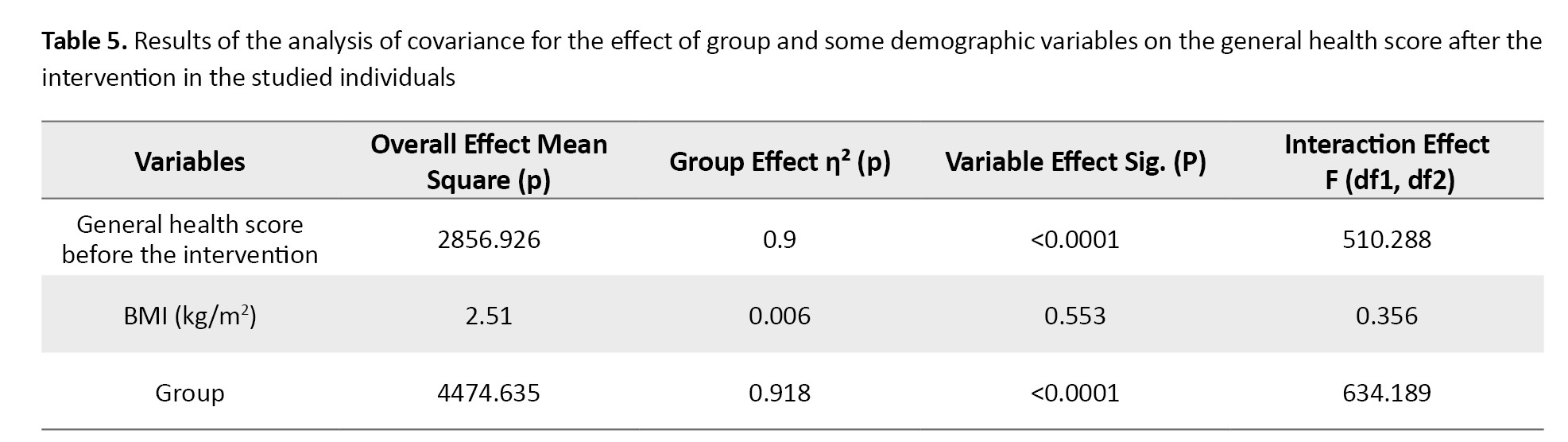
The partial eta squared (η²p) for the group effect was 0.918, indicating that approximately 91.8% of the variance in post-intervention general health scores was explained by the group membership (intervention vs. control) after accounting for the covariates. This is a very large effect size. The pre-intervention GHQ score also had a significant independent effect (F=510.29, P<0.001, η²p=0.900), whereas BMI did not have a significant independent effect (F=0.356, P=0.55, η²p=0.006). These results indicate that the self-care education intervention had a strong and statistically significant positive effect on the general health of adolescents with thalassemia, independent of baseline health status and BMI.
Discussion
This study aimed to determine the impact of self-care education on the general health of adolescents with thalassemia. The two groups were similar in most demographic variables except for BMI; however, after controlling for BMI in the ANCOVA model, its independent and interactive effects were not significant, confirming that BMI did not confound the results. The paired t-test showed that general health significantly improved in the intervention group (mean GHQ‑28 score decreased) while it worsened in the control group (score increased), indicating that self-care education was effective in improving general health. Our findings are consistent with Madmoli et al. (2017), who showed that Orem’s self-care model improved physical health dimensions in beta‑thalassemia major patients [17]. Similarly, Wang et al. (2019) reported that self‑care education improved physical and mental health in breast cancer patients undergoing chemotherapy, which aligns with our results. Self-care in chronic diseases not only helps control symptoms but also aids emotional, psychological, and social adaptation [21]. Promoting self-care behavior helps patients gain greater control over their daily lives and manage their social functioning, thereby improving their quality of life [22]. Thus, the consistency across different chronic conditions supports the generalizability of self-care benefits. The intervention group showed a reduction in somatic symptoms, whereas the control group experienced an increase. This finding is consistent with Madmoli et al. (2017), who also reported that Orem’s model increased physical health in thalassemia patients. The reduction in somatic complaints (e.g. fatigue, bone pain, transfusion reactions) likely reflects better adherence to iron chelation therapy and improved disease management [17, 23]. In contrast, the control group’s worsening suggests that without structured education, physical symptoms may naturally progress over time.
The intervention group showed a significant reduction in anxiety scores, while the control group experienced an increase. This finding is inconsistent with the study by Sargolzaei et al. [24], who reported that a brief peer education program (two 60‑minute sessions) did not reduce anxiety in thalassemia patients. The discrepancy likely stems from differences in intervention design: our program was longer (four sessions), theory-based (Orem’s model), and delivered via a blended platform (face-to-face plus WhatsApp), allowing for deeper engagement and reinforcement. Orem’s model helps individuals with chronic diseases not only control symptoms but also adapt emotionally and socially [22]. By increasing health literacy and empowering adolescents, our intervention reduced uncertainty and perceived threat, thereby lowering anxiety.
Depression scores decreased in the intervention group but increased in the control group. Yengil et al. [25] previously demonstrated a significant relationship between beta-thalassemia major and anxiety, depression, and impaired mental health. Our findings extend this by showing that structured self-care education can mitigate depressive symptoms. The intervention likely changed adolescents’ perspective on life, taught coping strategies, and instilled hope. The physical consequences of thalassemia (e.g. anemia, growth retardation, and bone deformities) often lead to social and emotional problems [26]; however, our results suggest that empowering patients through self-care can partially counteract these negative effects.
Social functioning improved in the intervention group and worsened in the control group. This is consistent with Madmoli et al. [11], who reported that Orem’s self-care model increased social functioning in patients with thalassemia. Similarly, Tarakmeh et al. [27] found that self-care education delivered via telenursing improved self-efficacy in adolescents with thalassemia. The mechanism linking self-care to social functioning appears to be mediated by self-efficacy and perceived control: when adolescents gain practical skills and knowledge, they feel less helpless and more capable of managing daily activities and peer relationships, thereby reducing isolation and improving social participation. Studies have consistently shown that patients with thalassemia experience higher rates of depression and psychological disorders compared to healthy peers [28]; our intervention appears to address these burdens by enhancing self-efficacy.
Conclusion
The results of this quasi-experimental, single-center study suggest that a structured, WhatsApp-based self-care education program based on Orem’s model improves general health and its dimensions (somatic symptoms, anxiety, social dysfunction, and depression) in adolescents with thalassemia. The intervention was associated with a clinically meaningful reduction in GHQ-28 scores (mean decrease of 14.1 points in the intervention group vs a deterioration of 3.6 points in the control group).
However, these findings should be interpreted with caution due to the limitations noted above, including the non-randomized design, small sample size, single-center setting, zero attrition (potential selection bias), possible contamination, Hawthorne effect, and lack of long-term follow-up. Therefore, while integrating such low-cost, accessible self-care programs into standard nursing care for adolescents with thalassemia is worth considering, strong recommendations cannot yet be made. Healthcare policymakers should view these results as preliminary evidence supporting the need for further research. Specifically, randomized controlled trials with larger, multi-center samples, blinded outcome assessment, and longer follow-up (≥6 months) are required to confirm the effectiveness and sustainability of this educational intervention.
Limitations
Although this study showed significant positive results, several limitations must be acknowledged. First, the quasi experimental design with sequential nonrandom allocation (control group recruited first, then intervention group) may have introduced selection and temporal biases (e.g. changes in patient mood, season, or hospital protocols between the two recruitment periods). Second, the study was conducted at a single center (Shahid Beheshti Hospital in Ahwaz City), which limits the generalizability of the findings to other settings or populations. Third, the sample size was relatively small (62 participants), and although the power calculation was adequate, small samples are more susceptible to chance findings and limit subgroup analyses. Fourth, the zero attrition rate, while unusual for a multi-session WhatsApp-based program, may reflect selection bias (e.g. only highly motivated adolescents agreed to participate) rather than the true effectiveness of the intervention. Fifth, despite asking intervention participants to keep the educational content confidential, contamination between groups cannot be completely ruled out, as participants might have communicated with peers outside the hospital setting. Sixth, the Hawthorne effect (improved outcomes due to participants’ awareness of being observed) may have contributed to the positive results. Seventh, the reliance on self-reported measures (GHQ28) may introduce social desirability bias. Eighth, the absence of long-term follow-up (only one month) means the sustainability of the observed improvements remains unknown. Finally, the GHQ28 cutoff of ≥23 restricted the score range, which may limit generalizability to all adolescents with thalassemia (e.g. those with very mild or very severe symptoms were excluded). These limitations should be considered when interpreting the findings.
Ethical Considerations
Compliance with ethical guidelines
This study was approved by the Ethics Committee of Ahvaz Jundishapur University of Medical Sciences, Ahvaz, Iran (Code: IR.AJUMS.REC.1400.196). All procedures were conducted in accordance with the Declaration of Helsinki. Written informed consent was obtained from all participants aged 18-20 years. For participants aged 12-17 years, written assent was obtained from the adolescents themselves, and written consent was obtained from a parent or legal guardian. The research objectives, intervention methods, and the voluntary nature of participation were fully explained to each participant and their family before obtaining consent. Participants were assured of the confidentiality of their data and their right to withdraw from the study at any time without any negative impact on their medical care. After the post-test assessments were completed for the intervention group, the educational content was also provided to the control group to adhere to ethical principles of equitable access to potentially beneficial education.
Funding
This article was extracted from the master's thesis of Mahbubeh Asadi, approved by the Department of Pediatric Nursing, School of Nursing, Ahvaz Jundishapur University of Medical Sciences, Ahvaz, Iran.
Authors contributions
Conceptualization: Houshang Alijani Renani and Mahbubeh Asadi; Methodology: Houshang Alijani Renani; Data curation, investigation and intervention delivery: Mahbubeh Asadi; Validation: Kourosh Zarea and Mohammad Hosein Haghighizadeh; Software: Mohammad Hosein Haghighizadeh; Formal analysis Kourosh Zarea and Mohammad Hosein Haghighizadeh; Writing the original draft: Mahbubeh Asadi; Review and editing: All authors; Supervision Kourosh Zarea and Houshang Alijani Rena; Project administration: Houshang Alijani Renani.
Conflict of interest
The authors declared no conflict of interest.
Acknowledgements
The authors thank the nursing staff of the Thalassemia Ward at Shahid Beheshti Hospital in Ahwaz City for their cooperation and support during data collection. We are also grateful to all adolescents with thalassemia and their families who participated in this study. This research received no specific grant from any funding agency in the public, commercial, or notforprofit sectors.
References
Full-Text: (75 Views)
Introduction
Beta-thalassemia major is the most severe form of thalassemia, and patients require continuous care and treatment through frequent blood transfusions to survive [1]. Approximately 4.5% of the world’s population carries the thalassemia gene [2]. This disease has been reported in 60 countries worldwide, with the highest prevalence in the malaria belt, including Mediterranean countries, parts of West and North Africa, the Middle East, the Indian subcontinent, and Southeast Asia [3]. Iran is also part of the malaria belt. According to the World Health Organization (WHO), approximately 4% of Iran’s population carries the thalassemia gene [4]. Approximately 10% of adolescents are estimated to have chronic health conditions [5]. According to the National Thalassemia Registry of Iran, the median age of thalassemia patients is 15 years, and approximately 77% are under 20 years of age, reflecting the predominantly adolescent and young adult population affected by this condition [6]. Adolescents with beta-thalassemia major experience significant physical, cognitive, psychological, and social changes. These issues include social relationship problems, especially with peers, bone deformities, feelings of helplessness due to dependency on others for care, economic problems, frequent blood transfusions, and the use of iron chelators to reduce iron overload [1]. Despite therapeutic measures for patients with beta-thalassemia major, the symptoms and clinical manifestations of thalassemia, like those of other chronic diseases, affect various aspects of an individual’s and family’s life. The complications of this disease have adverse effects on the physical and mental health and life of the patient and family, leading to long-term problems for the patient, family, and the country’s healthcare system [3]. Studies consistently show that patients with thalassemia have poorer general health compared to their peers. For instance, Salehi et al. (2014) found that social dysfunction and depression are two prominent general health problems in patients with beta-thalassemia major [7]. In chronic disease management, education is a cornerstone of care, and one effective approach to promoting health behaviors is self-care education [8].
Self-care encompasses health behaviors aimed at improving physical well-being or maintaining health through actions, including adherence to dietary guidelines, exercise, seeking preventive or therapeutic services, and following prescribed medical treatments [9]. Through self-care education, the focus shifts from existing limitations to potential abilities, enabling patients to manage their own care, reduce hidden costs, improve quality of life, and enhance daily activities [10]. Orem’s self-care model is a well-established framework for designing such interventions. Orem defines self-care as voluntary and purposeful actions taken by individuals and caregivers to maintain life, promote health, and respond to personal needs. In this study, Orem’s model directly guided the intervention content: the first two educational sessions were designed to address self-care deficits related to therapeutic demands (correct Desferal injection, managing transfusion side effects), while the subsequent sessions focused on self-care agency by empowering adolescents to manage stress, nutrition, and social functioning. Prior research has demonstrated the positive impact of Orem’s model on mental health in patients with thalassemia [11]. Other studies have explored spiritual education [12], self-determination education [13], or structured educational programs [14] in thalassemia, often focusing on self-efficacy or self-care behaviors rather than comprehensive general health outcomes.
While previous work (e.g. Madmoli et al. 2018) [11] has examined the effect of Orem’s model on mental health, a dedicated investigation into a structured, blended (face-to-face and WhatsApp-based) self-care education program specifically targeting adolescents and using a validated, multidimensional 28-item general health questionnaire (GHQ-28) as the primary outcome remains lacking. The novelty of the present study lies in: (1) a hybrid delivery method combining one in-person session with three WhatsApp sessions to enhance accessibility and reinforcement; (2) an exclusive focus on the adolescent age group (12–20 years); and (3) the use of GHQ-28 to capture somatic symptoms, anxiety, social dysfunction, and depression as co-primary dimensions. Given the increasing prevalence of thalassemia and its associated biopsychosocial burden, addressing this gap is crucial. Therefore, this study aimed to determine the effect of a structured, Orem model-based, WhatsApp-assisted self-care education program on the general health of adolescents with thalassemia.
The findings provide evidence for a low-cost, accessible, and easily scalable educational intervention that can be integrated into standard nursing care for adolescents with thalassemia.
The primary outcome of this study was the overall general health score, as measured by the GHQ-28. This instrument provides a comprehensive assessment of an individual’s perceived health status. The secondary outcomes comprised the scores on the four subscales of the GHQ-28, which include somatic symptoms, anxiety, social dysfunction, and depression. The study hypothesis was that adolescents with thalassemia who received the structured, WhatsApp-based self-care education intervention (based on Orem’s model) would demonstrate a significantly greater improvement in general health than those in the control group who received only usual care. Specifically, we hypothesized that the intervention group would show a greater reduction in GHQ-28 total scores from pre-test to post-test (indicating improved general health), whereas the control group would not show such an improvement.
Materials and Methods
Design and setting
This study used a quasi-experimental design with a non-equivalent control group and a pre-test/post-test design [15]. The study was conducted at the thalassemia ward of Shahid Baghaei Hospital in Ahwaz City, Iran, from September 2023 to March 2024. The quasi-experimental design was chosen because random assignment was not feasible given the risk of contamination between groups and the sequential nature of recruitment at a single center.
Participants and sampling
The target population comprised all adolescents with thalassemia who attended the thalassemia center at Shahid Beheshti Hospital during the study period. Participants were selected using a convenience sampling method. The researcher attended the Thalassemia Treatment Center daily at the beginning of working hours to screen admitted patients and identify those who met the eligibility criteria. The inclusion criteria were as follows: age between 12 and 20 years; a confirmed diagnosis of thalassemia for at least one year; an active medical file in the hospital’s thalassemia ward; a score of 23 or higher on the GHQ-28, indicating some impairment in general health; ownership of a mobile phone capable of installing and using WhatsApp; willingness to participate in the study and to receive phone-based education; regular attendance at a specialized center for blood transfusions; having at least minimum literacy; no hearing or speech problems according to medical records; no diagnosed behavioural or mental disorders; no other underlying chronic diseases such as diabetes, heart disease, kidney disease, hepatitis, asthma, or chronic obstructive pulmonary disease; no brain diseases, such as delirium, dementia, or learning disorders; and no participation in similar educational studies during the six months prior to the study. The exclusion criteria were missing more than one educational session; migration or death during the study period; unwillingness to continue participation; development of any acute or chronic disease that would prevent participation; simultaneous participation in another educational program; and development of an acute illness in addition to thalassemia.
Group allocation was performed in a non‑random, sequential manner. First, 31 participants who met the inclusion criteria were recruited into the control group. After completion of all pre‑test assessments and one month of routine care for the control group (with no educational intervention), the intervention group was recruited. Subsequently, 31 eligible participants were recruited into the intervention group. This sequential approach was adopted intentionally to prevent contamination of the control group, as participants in the intervention group received self-care education via a WhatsApp group and could have inadvertently shared the educational content with potential control participants if both groups were recruited concurrently. The authors acknowledge that this sequential allocation may introduce temporal bias, such as changes in patient mood, seasonal variations, or differences in hospital staffing or protocols between the two recruitment periods. This limitation is addressed in the Discussion section.
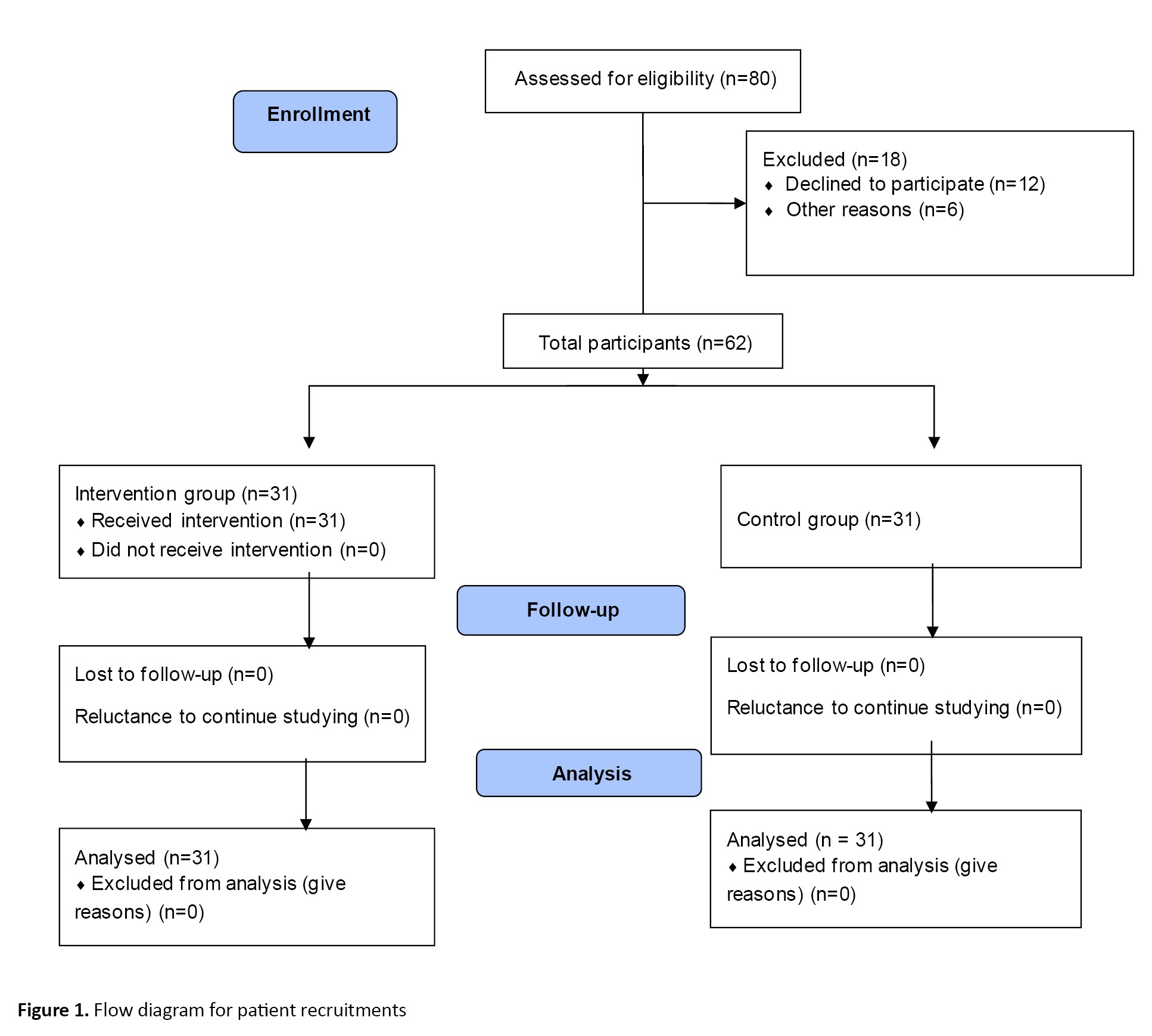
The sample size was determined using MedCalc statistical software, version 20 based on the findings of a previous study by Shams et al. (2017). The calculation assumed an expected mean difference of five points in the GHQ-28 total score between the intervention and control groups, a pooled standard deviation of 6.5 (derived from Shams et al. 2017), a statistical power of 90% (beta=0.1), and a two‑tailed alpha level of 0.05. The initial calculated sample size was 27 participants per group. To account for a potential dropout rate of 15%, we aimed to recruit 31 participants per group, resulting in a total sample size of 62 participants [16]. A total of 80 individuals were assessed for eligibility. Of these, 18 were excluded: 12 declined to participate, four initially agreed but did not attend the thalassemia center, and two had mobile phones that were unreachable. The remaining 62 participants (31 in the control group and 31 in the intervention group) completed the study. Notably, there was no loss to follow-up or attrition in either group; all participants who started the study remained until the end and completed all assessments. The authors recognize that this zero-attrition rate is unusual for a multi-session intervention delivered partly via WhatsApp, and they consider this a potential limitation in the Discussion section, as it may reflect selection bias, particularly high motivation among participants, or intensive follow-up by the researcher. Figure 1 shows a flow diagram of participant recruitment and retention.
Beta-thalassemia major is the most severe form of thalassemia, and patients require continuous care and treatment through frequent blood transfusions to survive [1]. Approximately 4.5% of the world’s population carries the thalassemia gene [2]. This disease has been reported in 60 countries worldwide, with the highest prevalence in the malaria belt, including Mediterranean countries, parts of West and North Africa, the Middle East, the Indian subcontinent, and Southeast Asia [3]. Iran is also part of the malaria belt. According to the World Health Organization (WHO), approximately 4% of Iran’s population carries the thalassemia gene [4]. Approximately 10% of adolescents are estimated to have chronic health conditions [5]. According to the National Thalassemia Registry of Iran, the median age of thalassemia patients is 15 years, and approximately 77% are under 20 years of age, reflecting the predominantly adolescent and young adult population affected by this condition [6]. Adolescents with beta-thalassemia major experience significant physical, cognitive, psychological, and social changes. These issues include social relationship problems, especially with peers, bone deformities, feelings of helplessness due to dependency on others for care, economic problems, frequent blood transfusions, and the use of iron chelators to reduce iron overload [1]. Despite therapeutic measures for patients with beta-thalassemia major, the symptoms and clinical manifestations of thalassemia, like those of other chronic diseases, affect various aspects of an individual’s and family’s life. The complications of this disease have adverse effects on the physical and mental health and life of the patient and family, leading to long-term problems for the patient, family, and the country’s healthcare system [3]. Studies consistently show that patients with thalassemia have poorer general health compared to their peers. For instance, Salehi et al. (2014) found that social dysfunction and depression are two prominent general health problems in patients with beta-thalassemia major [7]. In chronic disease management, education is a cornerstone of care, and one effective approach to promoting health behaviors is self-care education [8].
Self-care encompasses health behaviors aimed at improving physical well-being or maintaining health through actions, including adherence to dietary guidelines, exercise, seeking preventive or therapeutic services, and following prescribed medical treatments [9]. Through self-care education, the focus shifts from existing limitations to potential abilities, enabling patients to manage their own care, reduce hidden costs, improve quality of life, and enhance daily activities [10]. Orem’s self-care model is a well-established framework for designing such interventions. Orem defines self-care as voluntary and purposeful actions taken by individuals and caregivers to maintain life, promote health, and respond to personal needs. In this study, Orem’s model directly guided the intervention content: the first two educational sessions were designed to address self-care deficits related to therapeutic demands (correct Desferal injection, managing transfusion side effects), while the subsequent sessions focused on self-care agency by empowering adolescents to manage stress, nutrition, and social functioning. Prior research has demonstrated the positive impact of Orem’s model on mental health in patients with thalassemia [11]. Other studies have explored spiritual education [12], self-determination education [13], or structured educational programs [14] in thalassemia, often focusing on self-efficacy or self-care behaviors rather than comprehensive general health outcomes.
While previous work (e.g. Madmoli et al. 2018) [11] has examined the effect of Orem’s model on mental health, a dedicated investigation into a structured, blended (face-to-face and WhatsApp-based) self-care education program specifically targeting adolescents and using a validated, multidimensional 28-item general health questionnaire (GHQ-28) as the primary outcome remains lacking. The novelty of the present study lies in: (1) a hybrid delivery method combining one in-person session with three WhatsApp sessions to enhance accessibility and reinforcement; (2) an exclusive focus on the adolescent age group (12–20 years); and (3) the use of GHQ-28 to capture somatic symptoms, anxiety, social dysfunction, and depression as co-primary dimensions. Given the increasing prevalence of thalassemia and its associated biopsychosocial burden, addressing this gap is crucial. Therefore, this study aimed to determine the effect of a structured, Orem model-based, WhatsApp-assisted self-care education program on the general health of adolescents with thalassemia.
The findings provide evidence for a low-cost, accessible, and easily scalable educational intervention that can be integrated into standard nursing care for adolescents with thalassemia.
The primary outcome of this study was the overall general health score, as measured by the GHQ-28. This instrument provides a comprehensive assessment of an individual’s perceived health status. The secondary outcomes comprised the scores on the four subscales of the GHQ-28, which include somatic symptoms, anxiety, social dysfunction, and depression. The study hypothesis was that adolescents with thalassemia who received the structured, WhatsApp-based self-care education intervention (based on Orem’s model) would demonstrate a significantly greater improvement in general health than those in the control group who received only usual care. Specifically, we hypothesized that the intervention group would show a greater reduction in GHQ-28 total scores from pre-test to post-test (indicating improved general health), whereas the control group would not show such an improvement.
Materials and Methods
Design and setting
This study used a quasi-experimental design with a non-equivalent control group and a pre-test/post-test design [15]. The study was conducted at the thalassemia ward of Shahid Baghaei Hospital in Ahwaz City, Iran, from September 2023 to March 2024. The quasi-experimental design was chosen because random assignment was not feasible given the risk of contamination between groups and the sequential nature of recruitment at a single center.
Participants and sampling
The target population comprised all adolescents with thalassemia who attended the thalassemia center at Shahid Beheshti Hospital during the study period. Participants were selected using a convenience sampling method. The researcher attended the Thalassemia Treatment Center daily at the beginning of working hours to screen admitted patients and identify those who met the eligibility criteria. The inclusion criteria were as follows: age between 12 and 20 years; a confirmed diagnosis of thalassemia for at least one year; an active medical file in the hospital’s thalassemia ward; a score of 23 or higher on the GHQ-28, indicating some impairment in general health; ownership of a mobile phone capable of installing and using WhatsApp; willingness to participate in the study and to receive phone-based education; regular attendance at a specialized center for blood transfusions; having at least minimum literacy; no hearing or speech problems according to medical records; no diagnosed behavioural or mental disorders; no other underlying chronic diseases such as diabetes, heart disease, kidney disease, hepatitis, asthma, or chronic obstructive pulmonary disease; no brain diseases, such as delirium, dementia, or learning disorders; and no participation in similar educational studies during the six months prior to the study. The exclusion criteria were missing more than one educational session; migration or death during the study period; unwillingness to continue participation; development of any acute or chronic disease that would prevent participation; simultaneous participation in another educational program; and development of an acute illness in addition to thalassemia.
Group allocation was performed in a non‑random, sequential manner. First, 31 participants who met the inclusion criteria were recruited into the control group. After completion of all pre‑test assessments and one month of routine care for the control group (with no educational intervention), the intervention group was recruited. Subsequently, 31 eligible participants were recruited into the intervention group. This sequential approach was adopted intentionally to prevent contamination of the control group, as participants in the intervention group received self-care education via a WhatsApp group and could have inadvertently shared the educational content with potential control participants if both groups were recruited concurrently. The authors acknowledge that this sequential allocation may introduce temporal bias, such as changes in patient mood, seasonal variations, or differences in hospital staffing or protocols between the two recruitment periods. This limitation is addressed in the Discussion section.
The sample size was determined using MedCalc statistical software, version 20 based on the findings of a previous study by Shams et al. (2017). The calculation assumed an expected mean difference of five points in the GHQ-28 total score between the intervention and control groups, a pooled standard deviation of 6.5 (derived from Shams et al. 2017), a statistical power of 90% (beta=0.1), and a two‑tailed alpha level of 0.05. The initial calculated sample size was 27 participants per group. To account for a potential dropout rate of 15%, we aimed to recruit 31 participants per group, resulting in a total sample size of 62 participants [16]. A total of 80 individuals were assessed for eligibility. Of these, 18 were excluded: 12 declined to participate, four initially agreed but did not attend the thalassemia center, and two had mobile phones that were unreachable. The remaining 62 participants (31 in the control group and 31 in the intervention group) completed the study. Notably, there was no loss to follow-up or attrition in either group; all participants who started the study remained until the end and completed all assessments. The authors recognize that this zero-attrition rate is unusual for a multi-session intervention delivered partly via WhatsApp, and they consider this a potential limitation in the Discussion section, as it may reflect selection bias, particularly high motivation among participants, or intensive follow-up by the researcher. Figure 1 shows a flow diagram of participant recruitment and retention.
Data collection tools
The data collection tools included a demographic questionnaire and the GHQ. The demographic questionnaire included age, height, weight, gender, ethnicity, education, father’s literacy, economic status, father’s occupation, mother’s occupation, disease, caregiver, and death of first-degree relatives [17]. The 28-item Goldberg and Hillier GHQ (1987) has four subscales: somatic symptoms (questions 1-7), anxiety symptoms (questions 8-14), social dysfunction symptoms (questions 15-21), and depression symptoms (questions 22-28). The scoring method is based on the Likert scale, with higher scores indicating greater impairment in general health [18]. Goldberg and Williams reported a split-half reliability coefficient of 95% for the entire questionnaire on 853 normal volunteers and outpatients in London [19]. Taghavi (2002) reported the reliability of this questionnaire using three methods: test-retest, split-half, and Cronbach’s α, with values of 70%, 93%, and 90%, respectively (Cronbach’s α reliability was above 0.70) [20].
Intervention
After determining the sample size and obtaining informed consent, 62 participants were assigned to the intervention group (31) and the control group (31) using a nonrandom sequential method, as described previously. The researcher visited the thalassemia ward reception daily to invite eligible adolescents to participate in the study.
Control group
Initially, 31 participants were recruited into the control group. These participants received no additional educational intervention beyond the routine care provided at the thalassemia center. In this setting, routine care consisted of standard nursing interactions during blood transfusion visits, including brief verbal advice about medication adherence (e.g. taking iron chelators), appointment reminders, and general hygiene instructions. No structured educational program, written materials, or follow-up beyond medical care was provided as part of routine care. Participants in the control group completed the demographic questionnaire and the GHQ28 at baseline (pre-test). One month later, they completed the same questionnaires again as a post-test. During this one month, they received only routine care with no self-care education from the research team.
Intervention group
After data collection for the control group, 31 eligible participants were recruited to the intervention group. At baseline, they completed a demographic questionnaire and the GHQ28 (pre-test). In addition, a needs assessment questionnaire was administered to identify each participant’s specific educational needs regarding self-care.
Development of the educational intervention
The design and content of the educational intervention were developed through a systematic process. First, a comprehensive review of the literature was conducted using PubMed, Scopus, and SID (Scientific Information Database) with keywords such as “thalassemia,” “self-care,” “Orem,” “adolescent,” and “general health.” Relevant studies, including Madmoli et al. (2018) [11], Sadek et al. (2020) [14], and Badawy et al. (2023) [13], informed the content. Second, the draft content was reviewed and discussed in a panel of four research members (two pediatric nursing faculty members, one clinical nurse specialist in thalassemia, and one health education expert). The panel evaluated the relevance, clarity, and appropriateness of the content for adolescents aged 1220 years. Third, the content was mapped explicitly onto Orem’s self-care model:
Sessions addressing Desferal injection techniques, blood transfusion safety, and complication prevention were designed to reduce self-care deficits (the gap between therapeutic demands and the individual’s ability to meet them).
Sessions addressing stress management, nutrition, marriage, and family formation were designed to enhance self-care agency (the individual’s capability to perform self-care actions).
The validity of the educational content was assessed using a content validity index (CVI) by four research panel members. Each item was rated on relevance, clarity, and simplicity, and the average CVI was 0.89, indicating good content validity. The reliability of the content (i.e. consistency of delivery) was ensured by using a standardized PowerPoint presentation and a written educational booklet, and by having the same researcher deliver all sessions.
Intervention delivery
All educational sessions were delivered by the second author, a pediatric nurse with three years of experience in thalassemia care who had received additional training in health education and Orem’s model. The intervention consisted of four weekly sessions, each lasting 4560 minutes. Sessions were delivered in a blended format: one facetoface session (held in the hospital’s blood donation hall) and three sessions conducted virtually via WhatsApp. The WhatsApp platform was chosen for its widespread use among Iranian adolescents, its low cost, and its ability to provide ongoing support and reinforcement between sessions. A dedicated private WhatsApp group was created for the intervention group, and only the researcher and 31 participants were members. Table 1 summarizes session content.
All content was presented in simple, nontechnical language appropriate for adolescents. At the end of each session, a question and answer session was held, and individual clarifications were provided either in the group or via private messages. Each participant also received a printed educational booklet summarizing the content of all four sessions, and private counseling was offered via WhatsApp, if needed.
Prevention of contamination
To minimize the risk of information exchange between the intervention and control groups, participants in the intervention group were explicitly asked to keep the educational content confidential and not to share it with other patients. Moreover, sequential recruitment (control group first, intervention group second) was specifically designed to prevent intervention participants from talking to potential control participants, as the two groups did not overlap in time. However, the authors acknowledge that complete prevention of contamination cannot be guaranteed (e.g. participants might have communicated with peers outside the hospital setting), and this limitation is addressed in the Discussion section. No statistical adjustment for potential contamination was made because the study design did not include a way to measure or model such information exchange.
Control group after the study
To adhere to ethical principles, after the post-test assessments for the intervention group were completed, the same educational booklet and a summary of the WhatsApp content were provided to the control group participants.
To avoid errors in the study, patients in the intervention group were asked to keep intervention details confidential. After the educational sessions and post-test implementation, the educational content was provided to the control group to adhere to ethical principles.
Data analysis
Data were analyzed using SPSS software, version 20 with a significance level of 0.05. All analyses followed the intention-to-treat principle, although the absence of any loss to follow-up meant that per-protocol analyses yielded identical results. Before conducting the main analyses, the normality of the GHQ-28 scores was checked using the Shapiro–Wilk test and visual inspection of histograms and Q-Q plots, and the homogeneity of variances between groups was examined using Levene’s test. For the analysis of covariance (ANCOVA), the assumptions of normality of residuals, homoscedasticity, and homogeneity of regression slopes were tested and satisfied. Independent t-tests and chi-square tests were used to compare the two groups on quantitative and qualitative demographic variables, respectively.
The primary analysis for evaluating the intervention effect on general health was a one‑way ANCOVA. In this model, the post-intervention GHQ-28 total score served as the dependent variable, the pre-intervention GHQ-28 total score was entered as a covariate to control for baseline differences, and group (intervention versus control) was entered as a fixed factor. Because a significant baseline difference in body mass index (BMI) was observed between the two groups, BMI was also included as a second covariate; the group × BMI interaction was tested and found to be non-significant (P=0.55), confirming that BMI did not moderate the intervention effect. The same ANCOVA model was applied separately to each of the four GHQ-28 subscales (somatic symptoms, anxiety, social dysfunction, and depression) as secondary outcomes.
Paired t-tests were performed to examine within-group changes from pre-test to post-test, but the primary conclusion of the study is based on the between-group comparison from the ANCOVA, as this directly tests whether the intervention group improved more than the control group after adjusting for baseline scores. Effect sizes are reported as partial eta squared (η²p) for the ANCOVA results and as Cohen’s d for paired differences, accompanied by 95% confidence intervals (CIs) where applicable. All statistical tests were two-tailed.
Results
As presented in Table 2, the intervention and control groups were comparable at baseline with respect to age, height, and weight, as indicated by independent t-test P values of 0.79, 0.62, and 0.24, respectively.
However, a statistically significant difference was observed in BMI, with the intervention group having a higher mean BMI than the control group (20.5±3.5 vs 18.5±2.4 kg/m², P=0.01). Because this baseline difference could potentially confound the intervention effect, BMI was entered as a covariate in the primary ANCOVA model. The ANCOVA results showed that the independent effect of BMI on the post-intervention general health score was not significant [P=0.55), and the group × BMI interaction was also non-significant (F=0.36, P=0.55), indicating that BMI did not moderate the intervention effect. Therefore, the observed difference in BMI between groups did not bias the main findings.
As shown in Table 3, no statistically significant differences were observed between the two groups for any of the qualitative demographic variables (all P>0.05), indicating acceptable homogeneity.
However, the authors acknowledge that for some variables, such as father’s education, the absolute distributions appeared imbalanced despite a non-significant P value (P=0.07). For example, the proportion of fathers with academic education was 25.8% in the control group compared to 6.5% in the intervention group. To ensure that this potential imbalance did not bias the main findings, a sensitivity analysis was conducted by entering father’s education as an additional covariate into the primary ANCOVA model. The results remained essentially unchanged: the group effect on post‑intervention general health remained significant (P<0.001), and the effect size (η²) remained above 0.90. Therefore, the observed imbalance in father’s education did not confound the intervention effect.
Table 4 presents the mean and standard deviation of general health (GHQ28 total score) and its four subscales before and after the intervention for both groups.
At baseline, there were no significant differences between the intervention and control groups in total general health or any of the subscales (all P>0.05), indicating that the two groups had similar levels of general health before the intervention.
After the intervention, the control group showed a significant worsening in general health (mean total GHQ score increased from 43.4 to 47.0, P=0.001), whereas the intervention group showed a significant improvement (mean total GHQ score decreased from 43.2 to 29.1, P<0.001). The between group difference at post-test was highly significant (P<0.001), favoring the intervention group.
Similar patterns were observed for all four subscales. In the control group, scores on somatic symptoms, anxiety, depression, and social dysfunction all increased significantly from pre-test to post-test (indicating deterioration), while in the intervention group, all subscale scores decreased significantly (indicating improvement). The between group differences at post-test were significant for every subscale (P<0.001). These findings suggest that the self-care education program not only prevented the decline in general health observed in the control group but also actively improved multiple dimensions of health.
To examine the effect of the intervention on general health while controlling for potential confounding variables, a one way ANCOVA was conducted. In this model, the dependent variable was the post intervention total GHQ28 score. The independent variable (fixed factor) was group (intervention versus control). Two variables were entered as covariates: pre intervention total GHQ28 score (to adjust for baseline differences in general health) and BMI (because a significant baseline difference in BMI was observed between the two groups, as reported in Table 2). The ANCOVA model also tested the group × BMI interaction to examine whether the effect of BMI on the outcome differed between groups; this interaction was not significant (F=0.356, P=0.55), confirming that BMI did not moderate the intervention effect.
As shown in Table 5, after controlling for pre-intervention GHQ score and BMI, the effect of group on post intervention general health was highly significant (F=634.19, P<0.001).
The partial eta squared (η²p) for the group effect was 0.918, indicating that approximately 91.8% of the variance in post-intervention general health scores was explained by the group membership (intervention vs. control) after accounting for the covariates. This is a very large effect size. The pre-intervention GHQ score also had a significant independent effect (F=510.29, P<0.001, η²p=0.900), whereas BMI did not have a significant independent effect (F=0.356, P=0.55, η²p=0.006). These results indicate that the self-care education intervention had a strong and statistically significant positive effect on the general health of adolescents with thalassemia, independent of baseline health status and BMI.
Discussion
This study aimed to determine the impact of self-care education on the general health of adolescents with thalassemia. The two groups were similar in most demographic variables except for BMI; however, after controlling for BMI in the ANCOVA model, its independent and interactive effects were not significant, confirming that BMI did not confound the results. The paired t-test showed that general health significantly improved in the intervention group (mean GHQ‑28 score decreased) while it worsened in the control group (score increased), indicating that self-care education was effective in improving general health. Our findings are consistent with Madmoli et al. (2017), who showed that Orem’s self-care model improved physical health dimensions in beta‑thalassemia major patients [17]. Similarly, Wang et al. (2019) reported that self‑care education improved physical and mental health in breast cancer patients undergoing chemotherapy, which aligns with our results. Self-care in chronic diseases not only helps control symptoms but also aids emotional, psychological, and social adaptation [21]. Promoting self-care behavior helps patients gain greater control over their daily lives and manage their social functioning, thereby improving their quality of life [22]. Thus, the consistency across different chronic conditions supports the generalizability of self-care benefits. The intervention group showed a reduction in somatic symptoms, whereas the control group experienced an increase. This finding is consistent with Madmoli et al. (2017), who also reported that Orem’s model increased physical health in thalassemia patients. The reduction in somatic complaints (e.g. fatigue, bone pain, transfusion reactions) likely reflects better adherence to iron chelation therapy and improved disease management [17, 23]. In contrast, the control group’s worsening suggests that without structured education, physical symptoms may naturally progress over time.
The intervention group showed a significant reduction in anxiety scores, while the control group experienced an increase. This finding is inconsistent with the study by Sargolzaei et al. [24], who reported that a brief peer education program (two 60‑minute sessions) did not reduce anxiety in thalassemia patients. The discrepancy likely stems from differences in intervention design: our program was longer (four sessions), theory-based (Orem’s model), and delivered via a blended platform (face-to-face plus WhatsApp), allowing for deeper engagement and reinforcement. Orem’s model helps individuals with chronic diseases not only control symptoms but also adapt emotionally and socially [22]. By increasing health literacy and empowering adolescents, our intervention reduced uncertainty and perceived threat, thereby lowering anxiety.
Depression scores decreased in the intervention group but increased in the control group. Yengil et al. [25] previously demonstrated a significant relationship between beta-thalassemia major and anxiety, depression, and impaired mental health. Our findings extend this by showing that structured self-care education can mitigate depressive symptoms. The intervention likely changed adolescents’ perspective on life, taught coping strategies, and instilled hope. The physical consequences of thalassemia (e.g. anemia, growth retardation, and bone deformities) often lead to social and emotional problems [26]; however, our results suggest that empowering patients through self-care can partially counteract these negative effects.
Social functioning improved in the intervention group and worsened in the control group. This is consistent with Madmoli et al. [11], who reported that Orem’s self-care model increased social functioning in patients with thalassemia. Similarly, Tarakmeh et al. [27] found that self-care education delivered via telenursing improved self-efficacy in adolescents with thalassemia. The mechanism linking self-care to social functioning appears to be mediated by self-efficacy and perceived control: when adolescents gain practical skills and knowledge, they feel less helpless and more capable of managing daily activities and peer relationships, thereby reducing isolation and improving social participation. Studies have consistently shown that patients with thalassemia experience higher rates of depression and psychological disorders compared to healthy peers [28]; our intervention appears to address these burdens by enhancing self-efficacy.
Conclusion
The results of this quasi-experimental, single-center study suggest that a structured, WhatsApp-based self-care education program based on Orem’s model improves general health and its dimensions (somatic symptoms, anxiety, social dysfunction, and depression) in adolescents with thalassemia. The intervention was associated with a clinically meaningful reduction in GHQ-28 scores (mean decrease of 14.1 points in the intervention group vs a deterioration of 3.6 points in the control group).
However, these findings should be interpreted with caution due to the limitations noted above, including the non-randomized design, small sample size, single-center setting, zero attrition (potential selection bias), possible contamination, Hawthorne effect, and lack of long-term follow-up. Therefore, while integrating such low-cost, accessible self-care programs into standard nursing care for adolescents with thalassemia is worth considering, strong recommendations cannot yet be made. Healthcare policymakers should view these results as preliminary evidence supporting the need for further research. Specifically, randomized controlled trials with larger, multi-center samples, blinded outcome assessment, and longer follow-up (≥6 months) are required to confirm the effectiveness and sustainability of this educational intervention.
Limitations
Although this study showed significant positive results, several limitations must be acknowledged. First, the quasi experimental design with sequential nonrandom allocation (control group recruited first, then intervention group) may have introduced selection and temporal biases (e.g. changes in patient mood, season, or hospital protocols between the two recruitment periods). Second, the study was conducted at a single center (Shahid Beheshti Hospital in Ahwaz City), which limits the generalizability of the findings to other settings or populations. Third, the sample size was relatively small (62 participants), and although the power calculation was adequate, small samples are more susceptible to chance findings and limit subgroup analyses. Fourth, the zero attrition rate, while unusual for a multi-session WhatsApp-based program, may reflect selection bias (e.g. only highly motivated adolescents agreed to participate) rather than the true effectiveness of the intervention. Fifth, despite asking intervention participants to keep the educational content confidential, contamination between groups cannot be completely ruled out, as participants might have communicated with peers outside the hospital setting. Sixth, the Hawthorne effect (improved outcomes due to participants’ awareness of being observed) may have contributed to the positive results. Seventh, the reliance on self-reported measures (GHQ28) may introduce social desirability bias. Eighth, the absence of long-term follow-up (only one month) means the sustainability of the observed improvements remains unknown. Finally, the GHQ28 cutoff of ≥23 restricted the score range, which may limit generalizability to all adolescents with thalassemia (e.g. those with very mild or very severe symptoms were excluded). These limitations should be considered when interpreting the findings.
Ethical Considerations
Compliance with ethical guidelines
This study was approved by the Ethics Committee of Ahvaz Jundishapur University of Medical Sciences, Ahvaz, Iran (Code: IR.AJUMS.REC.1400.196). All procedures were conducted in accordance with the Declaration of Helsinki. Written informed consent was obtained from all participants aged 18-20 years. For participants aged 12-17 years, written assent was obtained from the adolescents themselves, and written consent was obtained from a parent or legal guardian. The research objectives, intervention methods, and the voluntary nature of participation were fully explained to each participant and their family before obtaining consent. Participants were assured of the confidentiality of their data and their right to withdraw from the study at any time without any negative impact on their medical care. After the post-test assessments were completed for the intervention group, the educational content was also provided to the control group to adhere to ethical principles of equitable access to potentially beneficial education.
Funding
This article was extracted from the master's thesis of Mahbubeh Asadi, approved by the Department of Pediatric Nursing, School of Nursing, Ahvaz Jundishapur University of Medical Sciences, Ahvaz, Iran.
Authors contributions
Conceptualization: Houshang Alijani Renani and Mahbubeh Asadi; Methodology: Houshang Alijani Renani; Data curation, investigation and intervention delivery: Mahbubeh Asadi; Validation: Kourosh Zarea and Mohammad Hosein Haghighizadeh; Software: Mohammad Hosein Haghighizadeh; Formal analysis Kourosh Zarea and Mohammad Hosein Haghighizadeh; Writing the original draft: Mahbubeh Asadi; Review and editing: All authors; Supervision Kourosh Zarea and Houshang Alijani Rena; Project administration: Houshang Alijani Renani.
Conflict of interest
The authors declared no conflict of interest.
Acknowledgements
The authors thank the nursing staff of the Thalassemia Ward at Shahid Beheshti Hospital in Ahwaz City for their cooperation and support during data collection. We are also grateful to all adolescents with thalassemia and their families who participated in this study. This research received no specific grant from any funding agency in the public, commercial, or notforprofit sectors.
References
- Taheri H, Dostkami M, Khayati R, Rigi A, Allahyari E. Evaluation of spiritual health in adolescents with Thalassemia major. Journal of Zabol Medical School. 2021; 4(1):8-14. [DOI:10.18502/jzms.v4i1.6757]
- Kautsar A, Advani N, Andriastuti M. N-terminal-pro-b-type natriuretic peptide levels and cardiac hemosiderosis in adolescent β-thalassemia major patients. Annals of Pediatric Cardiology. 2019; 12(1):32-7. [DOI:10.4103/apc.APC_49_18] [PMID]
- Arazi S, Karahroudi FA, Rouhani C, Puorhoseingholi A, Vasli P. [The effect of health promoting education plan on adolescents’ lifestyle in patients with thalassemia major (Persian)]. Journal of Nursing Education. 2017; 6(1):16-22. [Link]
- Sadeghloo A, Shamsaee P, Hesari E, Akhondzadeh G, Hojjati H. The effect of positive thinking training on the quality of life of parents of adolescent with thalassemia. International Journal of Adolescent Medicine and Health. 2019; 34(3). [DOI:10.1515/ijamh-2019-0159] [PMID]
- Jay MA, Zylbersztejn A, Herlitz L, Deighton J, Gilbert R, Blackburn R. Chronic health conditions and school absence, exclusions, and non-enrolment: A cohort study using the Education and Child Health Insights from Linked Data database. Journal of Public Health. 2025; 47(3):414-22. [DOI:10.1093/pubmed/fdaf064] [PMID]
- Rezvani Z, Nikzad H, Heydari A. Prevalence of Ten Common Iranian β-thalassemia Mutations Among β-thalassemia Patients in Kashan Using ARMS-PCR. Journal of Genetic Resources. 2025; 11(2):183-90. [DOI:10.22080/jgr.2025.28706.1425]
- Salehi M, Mirbehbahani NB, Jahazi A, Aghebati Amlashi Y. [General health of beta-thalassemia major patients in Gorgan, Iran (Persian)]. Journal of Gorgan University of Medical Sciences. 2014; 16(1):120-5. [Link]
- Darvishpour A, Mansour-Ghanaei R, Mansouri F. The relationship between health literacy, self-efficacy, and self-care behaviors in older adults with hypertension in the north of Iran. Health Literacy Research and Practice. 2022; 6(4):e262-e9. [DOI:10.3928/24748307-20221013-01] [PMID]
- Babazadeh T, Kiani A, Moradi F, Shariat F, Banaye Jeddi M. [The effect of self-care behaviors education on quality of life in patients with type 2 diabetes: A randomized clinical trial (Persian)]. Journal of Fasa University of Medical Sciences. 2017; 6(4):538-47. [Link]
- Habibi Y, Yousefi H, Ghafari S. [The effect of self-care training program on asthma control (Persian)]. Journal of Health and Care. 2018; 20(3):207-14. [DOI:10.29252/jhc.20.3.207]
- Madmoli Y, Akhaghi Dezfuli S, Adavi A, Maraaghi E, Heidari Soureshjani R, Madmoli M. [The effect of orem self-care on mental health of patients with thalassemia major (Persian)]. Journal of Clinical Nursing and Midwifery. 2018; 7(2):108-15. [Link]
- Iri Z, Hojjati H, Akhoondzadah G. [The impact of spiritual self-care education on self-efficacy in adolescents with thalassemia in children’s hospital Taleghani Gonbadkavoos Golestan 2017-18 (Persian)]. Iranian Journal of Nursing Research. 2019; 14(1):8-13. [Link]
- Badawy SF, Okby OM, Omar TK, Ahmed FA. Effect of self-determination theory based intervention on self-care among school age children with thalassemia. Menoufia Nursing Journal. 2023; 8(1):307-32. [Link]
- Sadek EH, Elsayh KI, Mohammed FZ, Mohamed NT, Faheem SS. Effect of an educational program on self-efficacy of adolescents with thalassemia major. Assiut Scientific Nursing Journal. 2020; 8(22):72-85. [DOI:10.21608/asnj.2020.41566.1047]
- González-Alonso F, Guillén-Gámez FD, de Castro-Hernández RM. Methodological analysis of the effect of an anti-bullying programme in secondary education through communicative competence: A pre-test-post-test study with a control-experimental group. International Journal of Environmental Research and Public Health. 2020; 17(9):3047. [DOI:10.3390/ijerph17093047]
- Shams S-A, Moradi Y, Zaker MR. [Effectiveness of self-care training on physical and mental health of patients with diabetic type 2 (Persian)]. Avicenna Journal of Nursing and Midwifery Care. 2017; 25(2):54-60. [DOI:10.21859/nmj-25027]
- Madmoli Y, Samsamipour M, Adavi A, Maraghi E, Bahrami H, Zaker-hosseini N, et al. [Does ORM’s Self-care model affect the physical health of people with major β thalassemia? (Persian)] Scientific Journal of Nursing, Midwifery and Paramedical Faculty. 2019; 5(3):29-42. [Link]
- El-Sayed EM, Seloma YAE. Impact of self-care educational program on knowledge and functional health status of elderly patients with acute heart failure. International Academic Journal of Health, Medicine and Nursing. 2019; 1(2):84-105. [Link]
- Goldberg D, Williams P. A User's Guide to the General Health Questionnaire. Swindon: NFER-Nelson; 1988. [Link]
- Taghavi SMR. [Examining the validity and reliability of the General Health Questionnaire (GHQ) In college students of Shiraz University (Persian)]. Journal of Psychology. 2002; 5(4):381-95. [Link]
- Wang Z, Yin G, Jia R. Impacts of self-care education on adverse events and mental health related quality of life in breast cancer patients under chemotherapy. Complementary Therapies in Medicine. 2019; 43:165-9. [DOI:10.1016/j.ctim.2019.01.027] [PMID]
- Stys AM, Kulkarni K. Identification of self-care behaviors and adoption of lifestyle changes result in sustained glucose control and reduction of comorbidities in type 2 diabetes. Diabetes Spectrum. 2007; 20(1):55-8. [DOI:10.2337/diaspect.20.1.55]
- Rodigari F, Brugnera G, Colombatti R. Health-related quality of life in hemoglobinopathies: A systematic review from a global perspective. Frontiers in Pediatrics. 2022; 10:886674. [DOI:10.3389/fped.2022.886674] [PMID]
- Sargolzaei MS, Khachian A, Seyedoshohadaee M, Haghani H. [The effect of peer education on the anxiety of patients with Thalassemia major: A quasi-experimental study (Persian)]. Iran Journal of Nursing. 2021; 34(129):39-49. [DOI:10.52547/ijn.34.129.39]
- Yengil E, Acipayam C, Kokacya MH, Kurhan F, Oktay G, Ozer C. Anxiety, depression and quality of life in patients with beta thalassemia major and their caregivers. International Journal of Clinical and Experimental Medicine. 2014; 7(8):2165. [PMID]
- Samsamipour M, Madmoli Y, Ahmadimazhin S, Roohafza J, Babolibahmaei A, Rahmati P, et al. [Health-related Quality of Life of Young Adult with beta-Thalassemia Major (Persian)]. Scientific Journal of Nursing, Midwifery and Paramedical Faculty. 2019; 4(4):66-75. [Link]
- Tarakmeh T, Alaee Karahroudy F, Mamiyanloo Yangejeh H, Ghasemi E. [Evaluation of the Effect of Self-care Education on the Self-efficacy of Adolescents with Thalassemia Major (Persian)]. Scientific Journal of Nursing, Midwifery and Paramedical Faculty. 2018; 4(2):59-70. [Link]
- Poormansouri S, Ahmadi M, Shariati A, Keikhaei B. [Quality of life, depression, anxiety and stress in over-18-year-old patients with beta-Thalassemia major (Persian)]. Journal of Iranian Blood Transfusion. 2016; 13(1):72-82. [Link]
Type of Study: Original Article |
Subject:
Health Education
Send email to the article author
| Rights and permissions | |
 |
This work is licensed under a Creative Commons Attribution-NonCommercial 4.0 International License. |

This is an open access article distributed under the terms of the Creative Commons Attribution License (CC-By-NC), which permits use, distribution, and reproduction in any medium, provided the original work is properly cited and is not used for commercial purposes.
Contact Information